The BMS Scale: Why "A5" is Only Half the Story
Learn the secret of the Beef Marbling Standard. Discover why true chefs avoid the mythical BMS 12, and why the ultimate red meat rejects the scale entirely.
The BMS Scale: Why "A5" is Only Half the Story
For most people around the world, "A5" is the ultimate, unquestionable shorthand for beef perfection. If a restaurant menu says "A5 Wagyu," diners assume they are getting the absolute best meat possible.
However, in the highly secretive, ultra-specialized world of Japanese beef grading and high-end Yakiniku, "A5" is actually a surprisingly broad and somewhat vague term. To a true Japanese meat connoisseur, knowing a cow is graded A5 is only the beginning of the conversation.
The real metric that chefs, auctioneers, and master butchers look at is not the letter and number grade. It is a hidden, underlying scale known as the BMS (Beef Marbling Standard). If you want to understand Wagyu on an expert level, you must understand the BMS.
Chapter 1: Deconstructing the "5"
As we have discussed in previous columns, the "A" in A5 simply stands for Yield (how much meat is on the carcass), which matters to the farmer, not the diner. The "5" stands for Quality.
But what exactly constitutes a "5" in Quality?
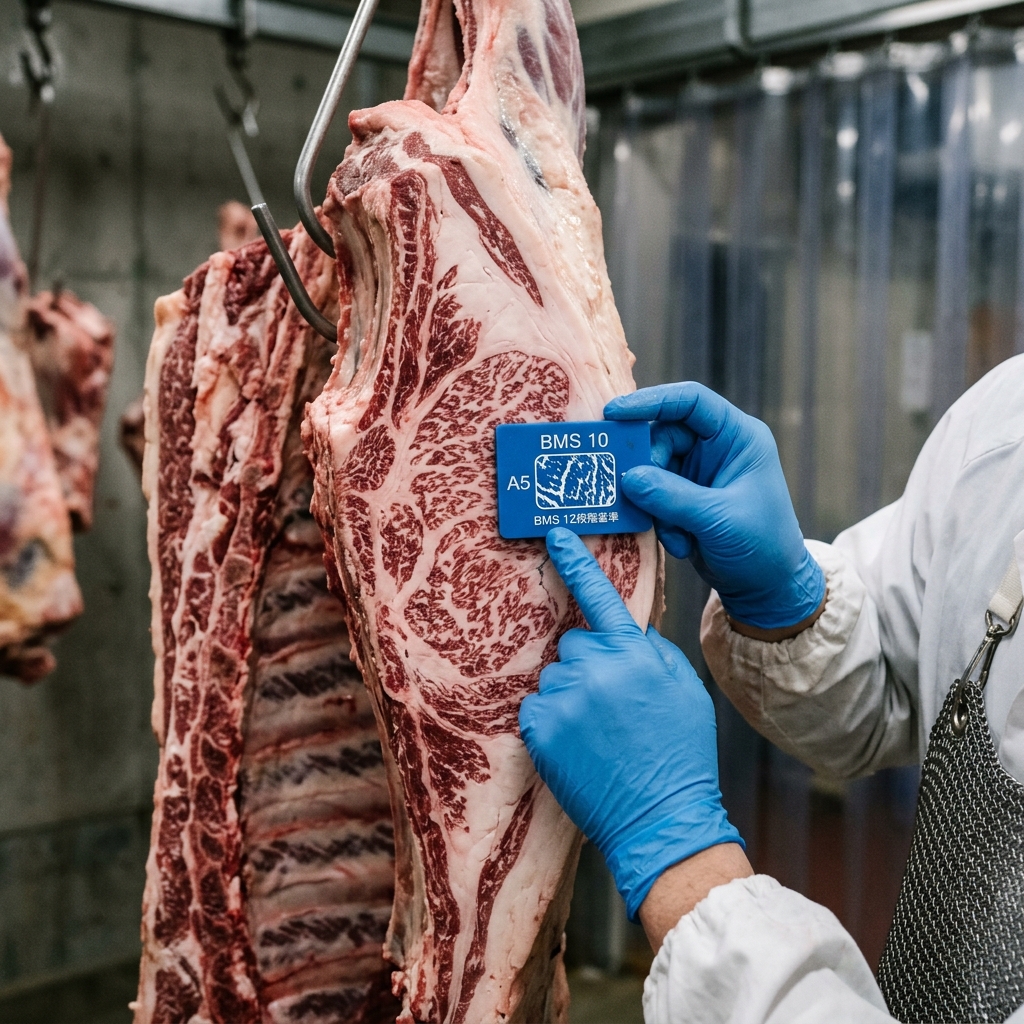
The Quality grade is determined by evaluating four distinct factors: meat color, fat color, firmness/texture, and most importantly, the amount of marbling (sashi). The amount of marbling is measured using the BMS scale, which ranges from 1 to 12.
Here is the secret the industry rarely advertises: To achieve an A5 grade, a cow only needs to score a BMS of 8.
This means that an A5 steak could have a BMS of 8, 9, 10, 11, or 12. And the difference between a BMS 8 and a BMS 12 is absolutely staggering. They do not look the same, they do not cook the same, and they certainly do not taste the same.
Chapter 2: The Mythical BMS 12
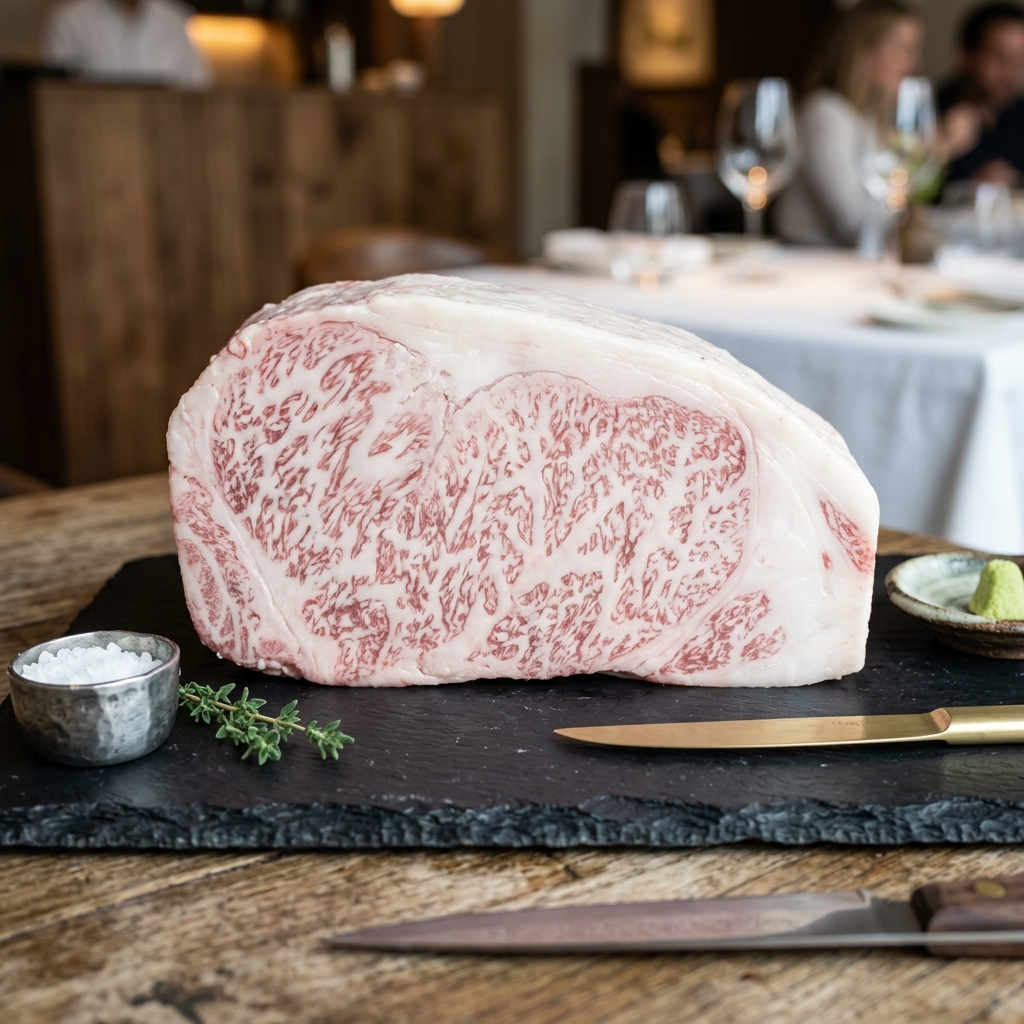
In the competitive world of Wagyu farming, achieving a BMS 12 is the ultimate trophy. A cow that scores a BMS 12 is an incredibly rare genetic anomaly. The meat is almost entirely bright white fat. The red muscle tissue exists only as tiny, pale pink specks scattered across a canvas of lipid.
These carcasses command astronomical prices at auction, often selling for tens of thousands of dollars to high-end restaurants in Tokyo or international buyers in Dubai and Las Vegas. It represents the absolute zenith of human agricultural engineering.
But there is a dark, unspoken secret about BMS 12 among the very top chefs in Japan.
The Edibility Problem
While a BMS 12 is a stunning visual achievement and a massive status symbol, it is practically inedible as a standard meal.
Because the meat is over 60% pure fat, it is overwhelmingly, intensely rich. The human palate and digestive system simply cannot process more than one or two tiny bites of BMS 12 without experiencing severe "fat fatigue" (a feeling of physical sickness and greasiness).
Many of the most respected, artisan Yakiniku chefs in Tokyo will intentionally refuse to buy BMS 11 or 12 beef. They will specifically seek out A5 beef that scores a BMS 8 or 9, or they will even intentionally drop down to the A4 grade. They understand that while a BMS 12 looks incredible on an Instagram feed, a BMS 8 actually tastes better, provides a better chew, and allows the diner to enjoy an entire meal without feeling sick.
Chapter 3: Rejecting the Scale Entirely
The realization that BMS 12 is too rich to eat leads to a profound question: If the highest possible score on the official Japanese beef grading scale does not actually produce the best-tasting meal, is the scale itself fundamentally flawed?
A growing movement of artisan farmers and elite chefs in Japan believe the answer is yes. They argue that the BMS scale measures only the quantity of fat, completely ignoring the quality of the meat (amino acids, iron, myoglobin, and texture).
Taste the Beef That Broke the Scale in Tokyo If you want to understand what Japanese beef tastes like when the farmer completely ignores the BMS scale, you must experience the ancient, unadulterated genetics of Ibusana Beef.
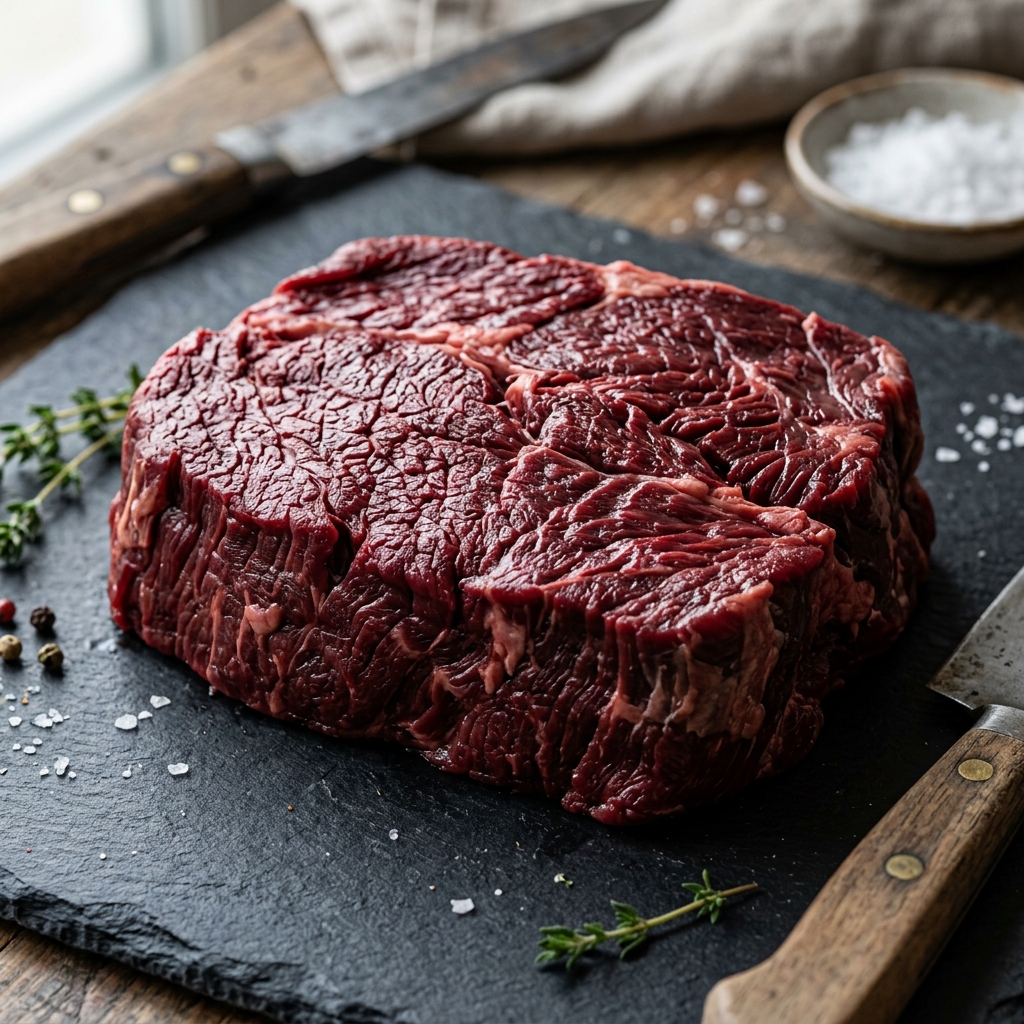
The farmers of Ibusana raise cattle directly descended from the Takenotani Tsurugyu lineage. Because they do not confine the cattle or feed them extreme grain diets, Ibusana beef almost never scores an A5 or a high BMS. The meat is intensely dark crimson red, heavily textured, and packed with complex muscle fibers rather than white marbling.
According to the official grading system, it is "lower quality" than a BMS 12. But according to the palate, it is infinitely superior. It delivers a wild, intense, iron-rich umami that you can eat in large quantities without ever feeling fat fatigue. It is the ultimate expression of "Uma-Aka" (delicious red meat).
Step off the A5 treadmill and experience the profound flavor of beef that defies the grading scale, exclusively at Wagyu Yakiniku Ibusana in Tokyo.

Kazuya Akanuma
Wagyu Specialist | Restaurant Consultant | Serial EntrepreneurA seasoned restaurateur and business owner who has successfully founded and managed premier Sushi venues, traditional Yakiniku grills, and high-end Cafe Bars in Tokyo. As an active restaurant consultant, he possesses a rare, 360-degree understanding of the culinary market. Fueled by a relentless passion for culinary craft, he dines at over 600 establishments annually—ranging from ultra-exclusive, reservation-only masterpieces to legendary neighborhood ramen shops. He leverages his insider access and decades of industry experience to guide global travelers to the absolute summit of authentic Japanese dining.
Related Articles
The Physics of the "Teppanyaki" Surface: Chromium-Steel Thermodynamics, the Leidenfrost Effect, and Wagyu Lipid Liquefaction
The Chemistry of "Umami Synergy": How Wagyu Glutamates and Fermented Condiments Trigger Exponential Taste Receptors