The Physics of the "Teppanyaki" Surface: Chromium-Steel Thermodynamics, the Leidenfrost Effect, and Wagyu Lipid Liquefaction
Uncover the high-temperature physics of elite Teppanyaki cooking. Learn how custom 20mm-thick chromium-steel plates manage thermal conductivity, invoke the Leidenfrost vapor cushion, and perfect Wagyu lipid liquefaction.
The Thermodynamic Ideal of the 20mm Chromium-Steel Plate
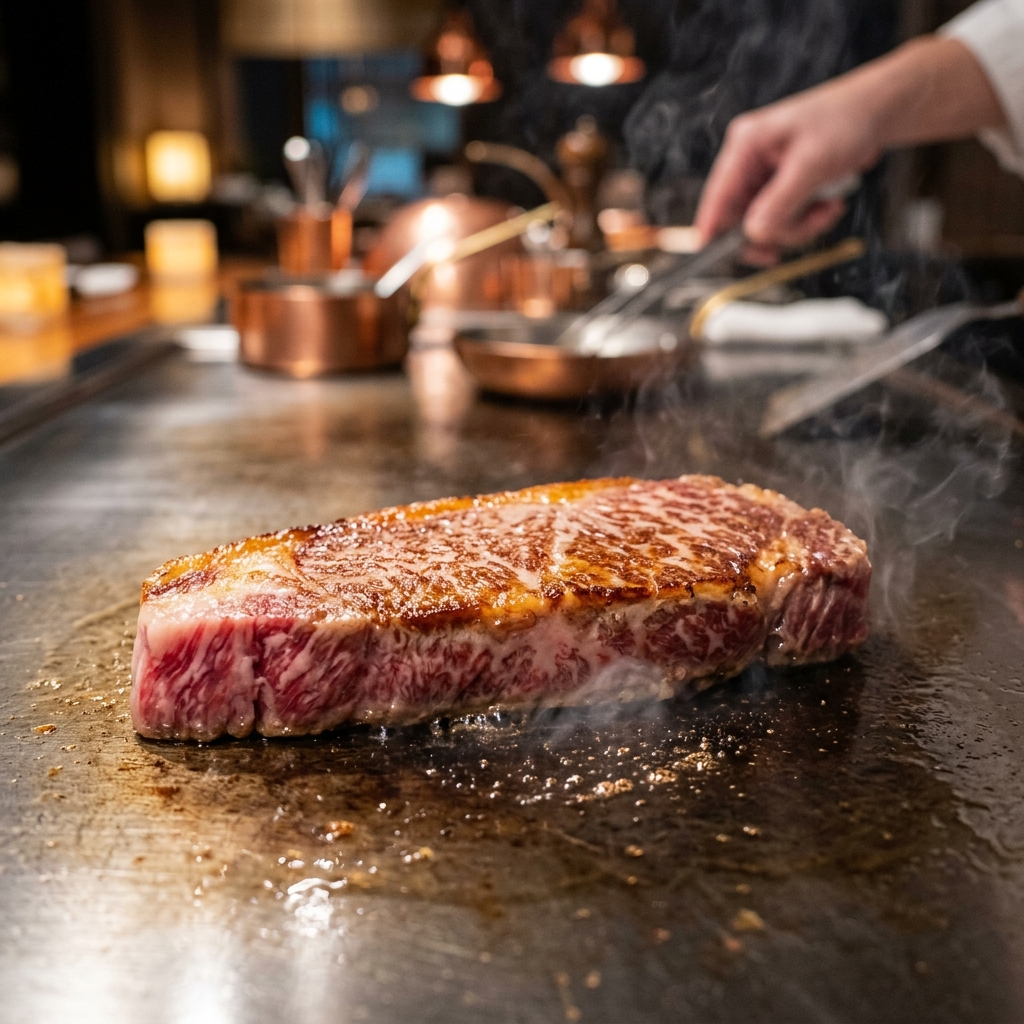
In the theater of Japanese fine dining, Teppanyaki represents the ultimate intersection of performance art and molecular thermodynamics. While Western steakhouse culture relies on open-flame cast-iron grates or high-temperature salamander broilers, elite Japanese Teppanyaki masters operate on massive, highly polished flat griddles.
These plates are not simple sheets of metal; they are custom-engineered 20mm-thick chromium-steel alloy plates designed to optimize specific variables of thermal physics.
       [Thin Steel Griddle] -> Rapid temp drops, uneven heat, meat "stews" in its own juices.
       [20mm Chromium-Steel] -> High thermal inertia, instant heat recovery, flash Maillard sear.
To understand why this exact thickness and material composition are necessary, we must analyze the relationship between heat capacity, thermal conductivity, and the delicate lipid structures of A5 Wagyu.
Thermal Mass and Heat Capacity: Preventing the "Stewing Effect"
When a raw, room-temperature steak is placed onto a hot cooking surface, a sudden thermodynamic exchange occurs. The cold meat absorbs thermal energy from the metal, causing the surface temperature of the grill to instantly drop.
On a thin, residential-grade griddle or standard pan, this temperature drop can exceed 50°C. When the temperature falls below the threshold of the Maillard reaction (approx. 140°C–165°C), the meat’s cellular walls begin to contract and release intracellular moisture. Because the grill surface is not hot enough to instantly vaporize this escaping water, the moisture pools around the steak. The meat effectively begins to stew in its own juices, yielding a grey, rubbery exterior with zero crust.
An elite Teppanyaki plate solves this through raw Thermal Mass ($M$) and Heat Capacity ($C$).
The total heat energy ($Q$) stored in the plate is defined by the equation:
$$Q = m \cdot c \cdot \Delta T$$
Where:
- $m$ is the mass of the plate.
- $c$ is the specific heat capacity of the steel alloy.
- $\Delta T$ is the temperature difference.
With a thickness of 20mm and a total weight often exceeding 150 kilograms, the Teppanyaki plate possesses massive thermal inertia. When a cold slice of Wagyu is placed upon it, the local temperature drop is virtually undetectable (less than 2°C). This allows the plate to deliver uninterrupted, high-density conductive heat directly to the beef, initiating an instantaneous sear.
The Leidenfrost Cushion: Non-Stick Molecular Physics
One of the most remarkable phenomena observed on a high-end Teppanyaki counter is that highly marbled Wagyu does not stick to the highly polished chromium plate, even without the addition of cooking oil. This is a direct application of the Leidenfrost Effect.
When a substance containing moisture (such as beef) contact a metal surface heated significantly above the boiling point of water, the liquid at the immediate interface does not merely boil—it instantly flashes into a pressurized barrier of steam.
                  [Sizzling Wagyu Beef Slice]
            ~~~~~~~~~~~~~~~~~~~~~~~~~~~~~~~~~~~~~~~  <-- Intracellular moisture/lipid
            =======================================  <-- LEIDENFROST STEAM CUSHION (Micro-vapor)
            ---------------------------------------
            ############### CHROMIUM PLATE #######  <-- Heated to exact 200°C
On a Teppanyaki plate heated to its sweet spot of 200°C to 220°C, the escaping moisture from the surface cells of the Wagyu vaporizes so violently that it creates a microscopically thin cushion of high-pressure steam.
This steam layer physically suspends the meat a fraction of a millimeter above the metal, preventing chemical bonding (sticking) between the proteins and the chromium alloy.
As the meat sits on this vapor cushion, the intense dry heat causes the intramuscular fats (specifically the low-melting-point oleic acid) to melt and pool beneath the steak. The steam cushion is replaced by a hot lipid emulsion. The meat is no longer steaming; it is now shallow-frying in its own rendered, pure monounsaturated fat. This creates a uniform, deep-golden crust of incredible crispness, sealing the remaining moisture inside.
Internal Temperature Gradients: Preserving Actin and Melting Lipids
Cooking A5 Wagyu is a delicate balancing act between two opposing biochemical processes: lipid liquefaction and protein denaturation.
| Target / Compound | Optimal Temp Range | Physical Action | Desired Culinary Outcome |
|---|---|---|---|
| Oleic Acid (Fat) | 20°C–25°C | Intramuscular marbling melts completely into a rich, liquid emulsion. | Creates the signature "melt-in-the-mouth" juiciness. |
| Myosin (Protein) | 50°C–55°C | Proteins begin to denature, tenderizing the muscle fibers. | Firm but yielding bite, optimal structural integrity. |
| Actin (Protein) | >66°C | Deep denaturation occurs, squeezing out all cellular water. | DANGER: Meat becomes dry, stringy, and tough. |
Because Wagyu fat melts at room temperature or palm temperature (25°C), the interior of the steak does not need to be cooked to a high temperature to achieve a tender mouthfeel.
The goal of the Teppanyaki chef is to maintain the core temperature of the steak at exactly 52°C to 55°C (Medium-Rare). At this range, the myosin has denatured to provide tenderness, the copious intramuscular fat has fully melted into a luscious liquid state, but the actin proteins remain completely un-denatured, retaining 100% of their cellular moisture.
The 20mm chromium plate’s precise heat control allows the chef to construct a razor-sharp temperature gradient: an ultra-thin, highly caramelized Maillard crust on the exterior, directly bordering a perfectly uniform, warm, liquid-marbled core. This is why Teppanyaki remains the absolute pinnacle of scientific cooking for the world's most luxurious beef.
Kazuya Akanuma
Wagyu Specialist | Restaurant Consultant | Serial EntrepreneurA seasoned restaurateur and business owner who has successfully founded and managed premier Sushi venues, traditional Yakiniku grills, and high-end Cafe Bars in Tokyo. As an active restaurant consultant, he possesses a rare, 360-degree understanding of the culinary market. Fueled by a relentless passion for culinary craft, he dines at over 600 establishments annually—ranging from ultra-exclusive, reservation-only masterpieces to legendary neighborhood ramen shops. He leverages his insider access and decades of industry experience to guide global travelers to the absolute summit of authentic Japanese dining.
Related Articles
The Chemistry of "Umami Synergy": How Wagyu Glutamates and Fermented Condiments Trigger Exponential Taste Receptors
The Chemistry of Charcoal: Binchotan Far-Infrared Thermodynamics vs. Gas & Electric Grills