The Chemistry of Charcoal: Binchotan Far-Infrared Thermodynamics vs. Gas & Electric Grills
Explore the advanced molecular thermodynamics of Kishu Binchotan. Discover how dry radiant far-infrared waves and vaporized lipid smoke create the ultimate Yakiniku crust.
The Thermal Physics of High-End Grills
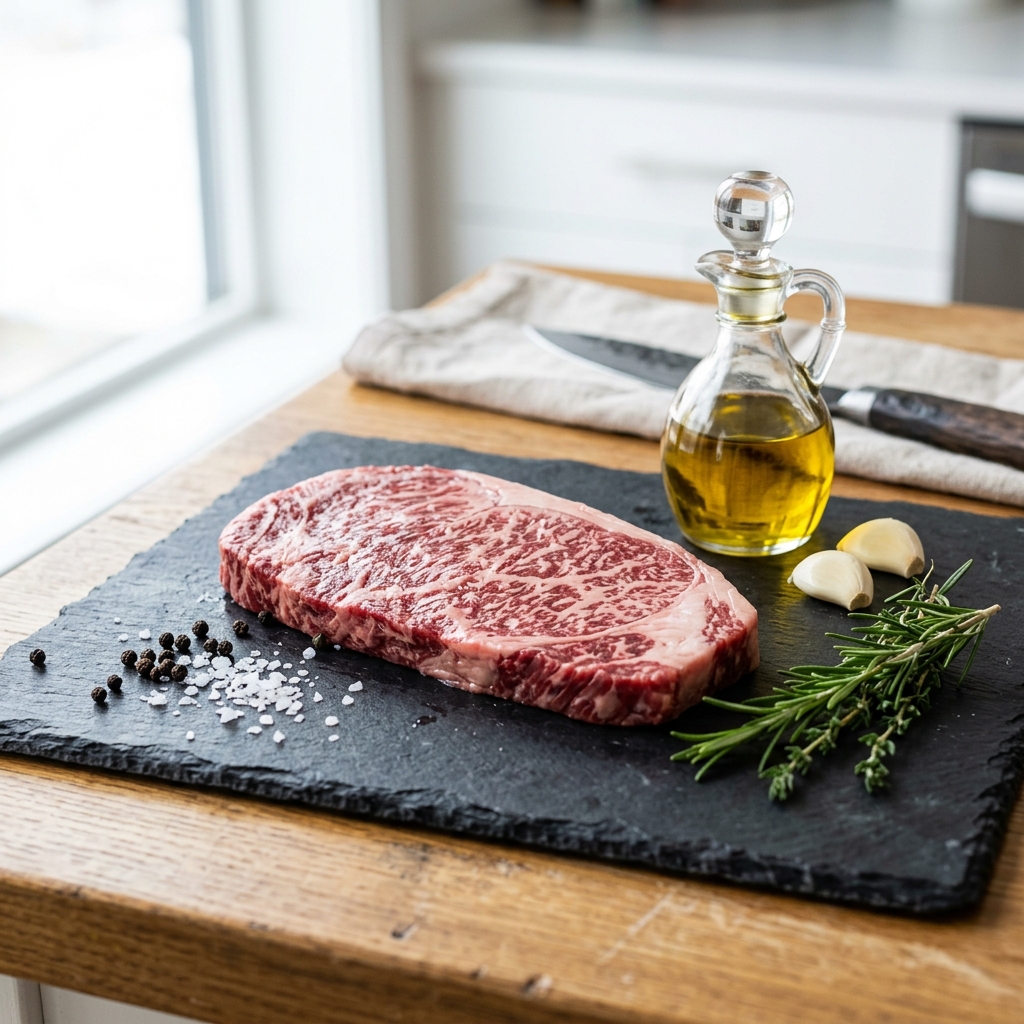
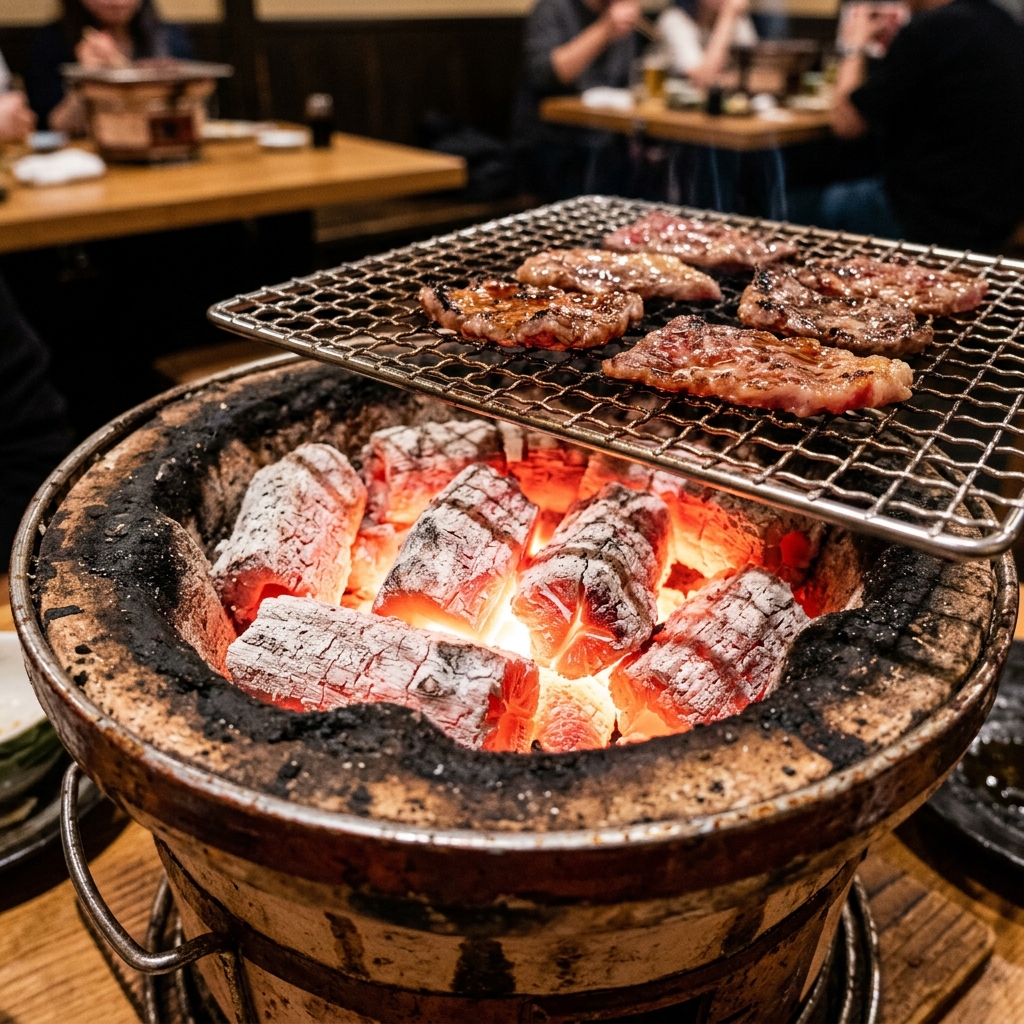
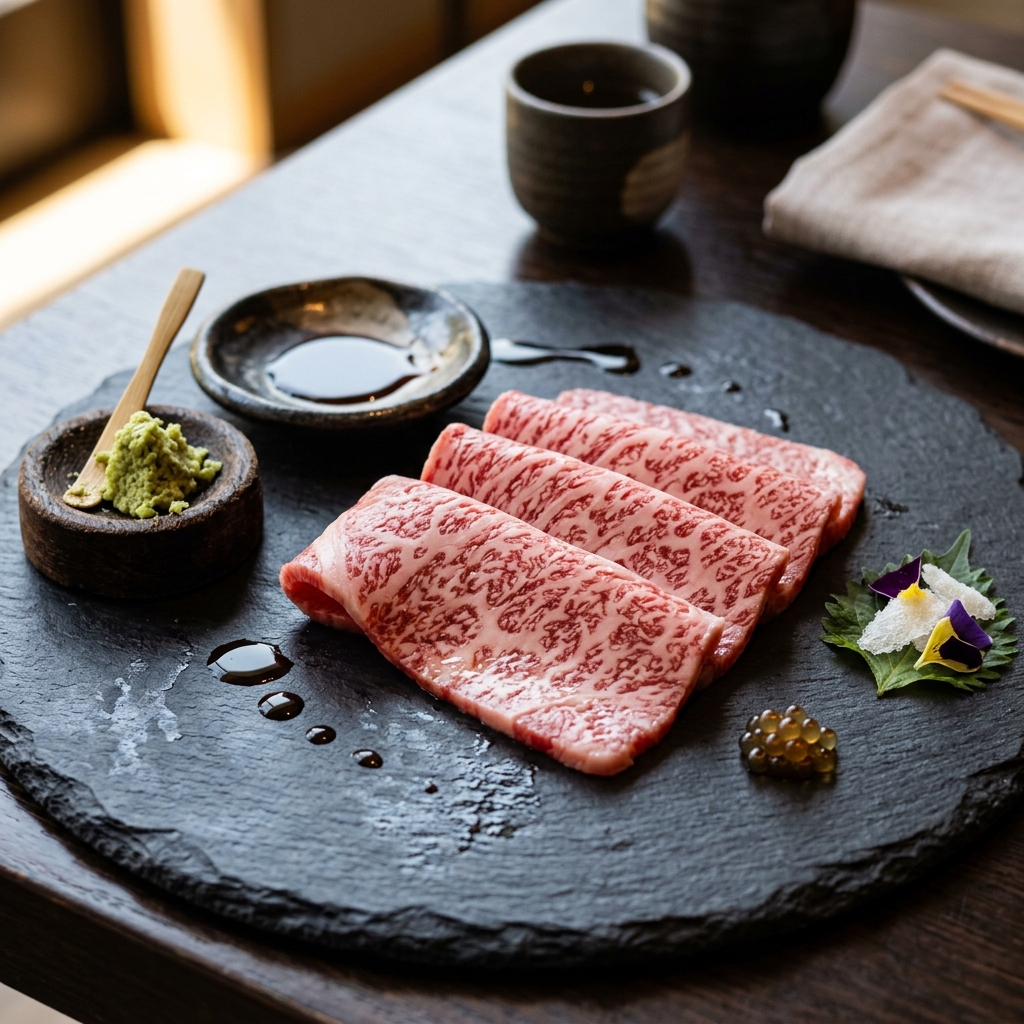
When it comes to grilling Japanese Wagyu beef, the source of heat is not merely a tool for thermal cooking—it is an active ingredient in the chemical and physical transformation of the meat. In elite Yakiniku and Steakhouse establishments across Tokyo, gas burners and electric elements are strictly avoided for top-tier cuts. Instead, the absolute standard is Kishu Binchotan (紀州備長炭), a legendary white oak charcoal crafted in Wakayama Prefecture using traditional methods unchanged since the Edo period.
To understand why Binchotan reigns supreme, we must analyze the molecular thermodynamics of heat transfer and the chemistry of combustion.
Far-Infrared Radiation (FIR): Penetrating to the Core
Traditional heat sources like gas grills cook primarily through convective heat—the transfer of heat via circulating air currents. Because air is a poor conductor, convective cooking relies on heating the meat's surface first, which then slowly transfers heat inward through conduction. For highly marbled Wagyu, this creates a major physical problem: the outer layer becomes overcooked and dried out before the interior fat reaches its melting point.
Binchotan, on the other hand, cooks primarily via Far-Infrared Radiation (FIR).
[CONVECTIVE grates (Gas/Electric)] -> High outer heat, low penetration, dries out surface lipids.
[FAR-INFRARED (Binchotan)]          -> Radiant wave energy, deep molecular activation, uniform melt.
Binchotan burns at a core temperature exceeding 1,000°C (1,832°F), emitting intense radiant electromagnetic waves in the infrared spectrum. These waves do not merely heat the air; they directly target the water and lipid molecules inside the Wagyu beef, causing them to vibrate at high frequencies. This radiant energy penetrates deep into the meat's fibers, cooking it uniformly from within. The result is a perfect, rapid heat transfer that liquefies the intricate intramuscular marbling (the sashi) without drying out the lean muscle fibers.
The Vapor Barrier: Dry Heat vs. Sogginess
One of the most critical, yet overlooked, factors in grilling is the chemical composition of the fuel's combustion.
Gas (Methane / Propane) + O2  ==>  CO2 + H2O (Water Vapor)
Binchotan (Pure Carbon) + O2  ==>  CO2 (Dry Heat)
Gas grills burn methane or propane, a chemical reaction that yields significant amounts of water vapor ($H_2O$). This moisture accumulates on the meat's surface, creating a microscopic steam barrier. This steam prevents the surface temperature from rising rapidly, making it difficult to achieve a perfect crust and often resulting in a slightly soggy texture.
Binchotan is crafted by carbonizing ubame oak at extreme temperatures (over 1,000°C) and quickly smothering it with a mixture of sand, ash, and soil (giving it a characteristic metallic white sheen). It consists of nearly 95% pure carbon, meaning its combustion yields almost zero water vapor. It provides an exceptionally dry, intense radiant heat that instantly vaporizes surface moisture, facilitating an immediate, immaculate Maillard reaction (surface caramelization) that seals in the savory juices.
The Chemistry of Smoke: Lipid-Smoky Synergy
Grilling Wagyu over Binchotan initiates a beautiful chemical feedback loop between the melting beef fat and the burning charcoal.
As the Wagyu is seared, its low-melting-point monounsaturated fats liquefy and drip down onto the glowing embers of Binchotan. Because Binchotan has a highly porous structure (with millions of microscopic cavities), these dripping lipids are instantly vaporized upon contact.
This thermal decomposition (pyrolysis) of Wagyu lipids yields a complex array of aromatic compounds, including syringol (giving a sweet, woody smell) and guaiacol (giving a savory, smoky note). These vaporized compounds rise up and envelop the grilling beef, adhering to the outer crust to form a complex, highly aromatic glaze. This lipid-smoke synergy creates the signature "smoky-sweet" profile that defines authentic charcoal Yakiniku, a textural and aromatic dimension that gas or electric grills simply cannot replicate.
Kazuya Akanuma
Wagyu Specialist | Restaurant Consultant | Serial EntrepreneurA seasoned restaurateur and business owner who has successfully founded and managed premier Sushi venues, traditional Yakiniku grills, and high-end Cafe Bars in Tokyo. As an active restaurant consultant, he possesses a rare, 360-degree understanding of the culinary market. Fueled by a relentless passion for culinary craft, he dines at over 600 establishments annually—ranging from ultra-exclusive, reservation-only masterpieces to legendary neighborhood ramen shops. He leverages his insider access and decades of industry experience to guide global travelers to the absolute summit of authentic Japanese dining.
Related Articles
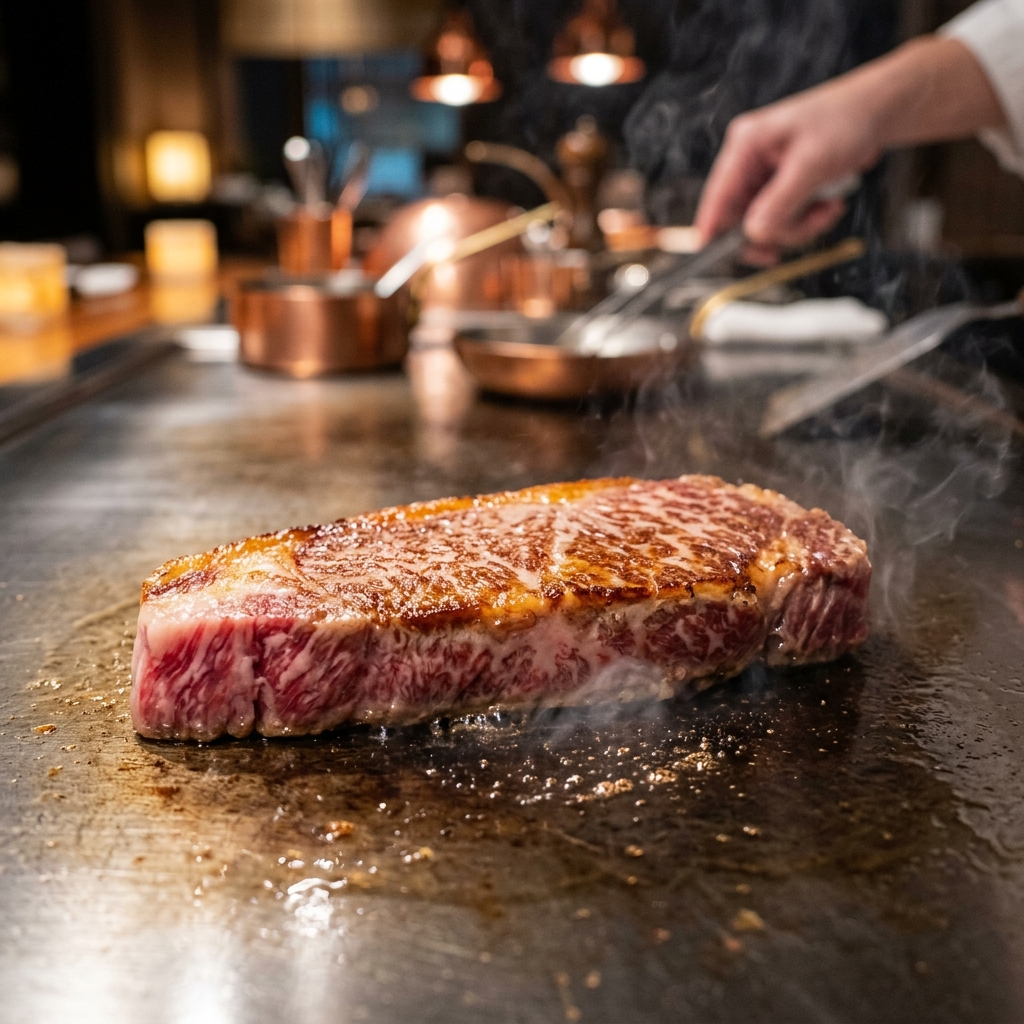
The Physics of the "Teppanyaki" Surface: Chromium-Steel Thermodynamics, the Leidenfrost Effect, and Wagyu Lipid Liquefaction
The Chemistry of "Umami Synergy": How Wagyu Glutamates and Fermented Condiments Trigger Exponential Taste Receptors