Yakiniku Etiquette: How to Grill Like a Tokyo Local
A masterclass in Japanese BBQ culture. Learn the golden rules of Shio before Tare, the art of grilling tongue, and how to transcend standard etiquette with primal fire.
Yakiniku Etiquette: How to Grill Like a Tokyo Local
For many international visitors to Japan, stepping into a high-end Yakiniku (Japanese BBQ) restaurant can be an intimidating experience.
Unlike a Western steakhouse where the chef handles all the cooking, Yakiniku places the responsibility entirely on you. You are presented with a glowing charcoal grill, several small dipping dishes, and plates of incredibly expensive, intricately cut raw Wagyu beef.
There is an unspoken art and a deep etiquette to eating Yakiniku correctly in Japan. If you throw all the meat on the grill at once, or use the wrong sauce for the wrong cut, you are not just wasting expensive beef—you are missing the entire culinary philosophy of the experience.
Here is your masterclass in Yakiniku etiquette, ensuring you grill, dip, and eat exactly like a seasoned Tokyo local.
Chapter 1: The Golden Rule of Order (Shio Before Tare)
The most fundamental rule of Yakiniku etiquette dictates the exact order in which you must eat the meat. The rule is simple: Always move from light to heavy, and always eat Shio (salt) before Tare (sauce).
The Sacred First Bite: Gyutan (Beef Tongue)
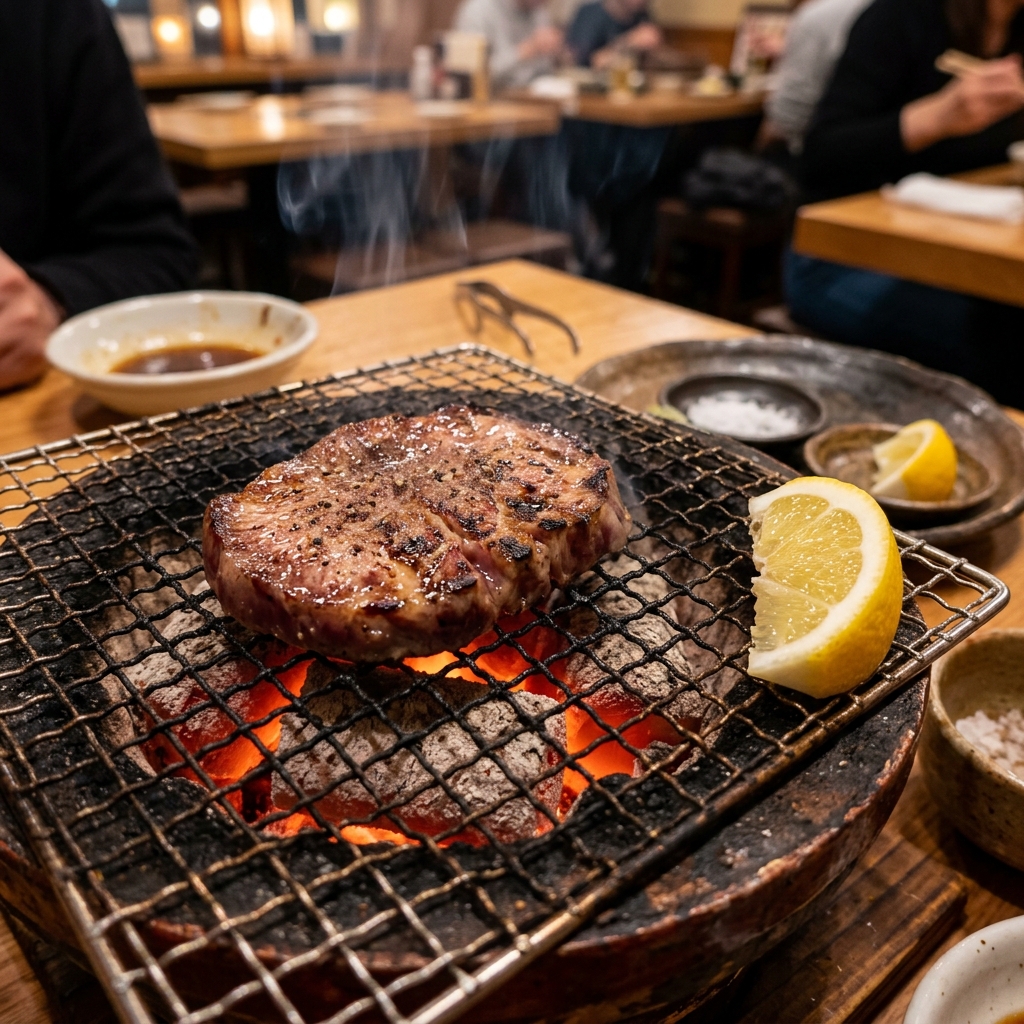
In almost every Yakiniku restaurant in Japan, the meal must begin with Gyutan (Beef Tongue). Tongue has a crisp, snappy texture and a clean, mineral flavor. It is almost always served with a simple sprinkle of salt (Shio) and a wedge of fresh lemon.
How to grill it: Place the tongue on the clean wire mesh. Because it is relatively thin, it cooks very quickly. Wait until the edges begin to curl slightly and the juices pool on top, then flip it once. Do not overcook it. Dip it only in fresh lemon juice. The acidity of the lemon cuts through the initial richness and prepares your palate for the rest of the meal.
Moving to the Heavyweights
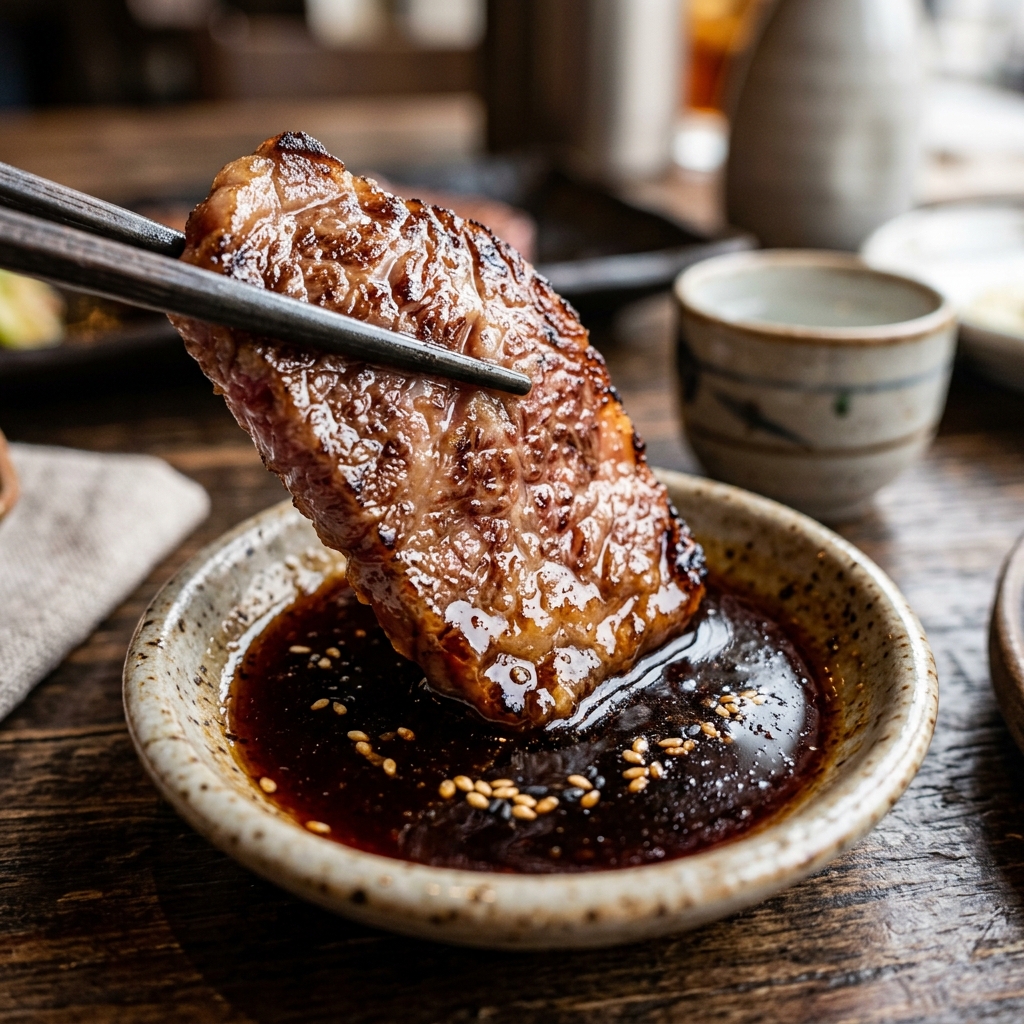
Only after you have finished the salted cuts (like Gyutan or salted Harami) should you move on to the marinated cuts. These are the cuts dripping in Tare—a sweet, savory, glossy soy-based sauce infused with garlic, fruit, and sesame.
If you eat the Tare cuts first, the strong garlic and sweet soy will completely coat your palate, and you will not be able to taste the delicate flavor of the salted cuts afterward. Furthermore, the sugary marinade of the Tare will quickly burn and blacken the grill mesh, ruining any un-marinated meat you try to cook afterward.
Chapter 2: The Art of the Grill
Once you understand the order of eating, you must master the actual act of grilling.
Respect the Mesh
Never throw multiple pieces of meat onto the grill at once. This is not a backyard barbecue. Yakiniku is an exercise in mindfulness. You should only place exactly as many pieces of meat on the grill as you intend to eat in the next 60 seconds (usually just one or two pieces at a time).
If the flames flare up wildly because dripping fat has caught fire, do not panic and do not pour water on it. Simply move the meat to the cooler edge of the grill to let the flames die down.
Understanding Doneness
The amount of time you grill a piece of Wagyu depends entirely on the cut:
- Lean Cuts (Aka-mi): Cuts with less fat should be grilled very lightly, leaving the center rare to medium-rare. Overcooking lean Wagyu will make it tough.
- Fatty Cuts (Karubi, Sirloin): Counterintuitively, extremely fatty A5 cuts should be cooked longer than lean cuts. You want to cook them to medium or even medium-well. Why? Because you must render the intramuscular fat. If you eat heavily marbled A5 rare, the fat will be cold and gelatinous. Grilling it until the fat bubbles and chars slightly unlocks the famous "melt-in-your-mouth" texture and the sweet Wagyu-ko aroma.
The Chopstick Etiquette
In Japanese dining culture, it is considered highly taboo to pass food directly from your chopsticks to someone else's chopsticks (this resembles a funeral ritual involving cremated bones).
Furthermore, you should never use your personal eating chopsticks to place raw meat on the grill. Always use the provided metal tongs (tongs for raw meat, chopsticks for eating). This is both a matter of traditional etiquette and modern food safety.
Chapter 3: Transcending Etiquette - The Primal Fire
The etiquette of Yakiniku—delicate wire meshes, careful timing, and precise dipping sauces—was designed specifically to handle the extreme fragility of highly marbled A5 Wagyu. Because commercial Wagyu is mostly fat, it requires a delicate touch to avoid burning.
But what if you are not eating A5 fat? What if you are eating true, profound red meat?
When you step away from the commercial marbling and embrace the powerful, muscular cuts of ancient Wagyu breeds, the delicate etiquette of the wire mesh is no longer sufficient. True red meat requires a different kind of mastery.
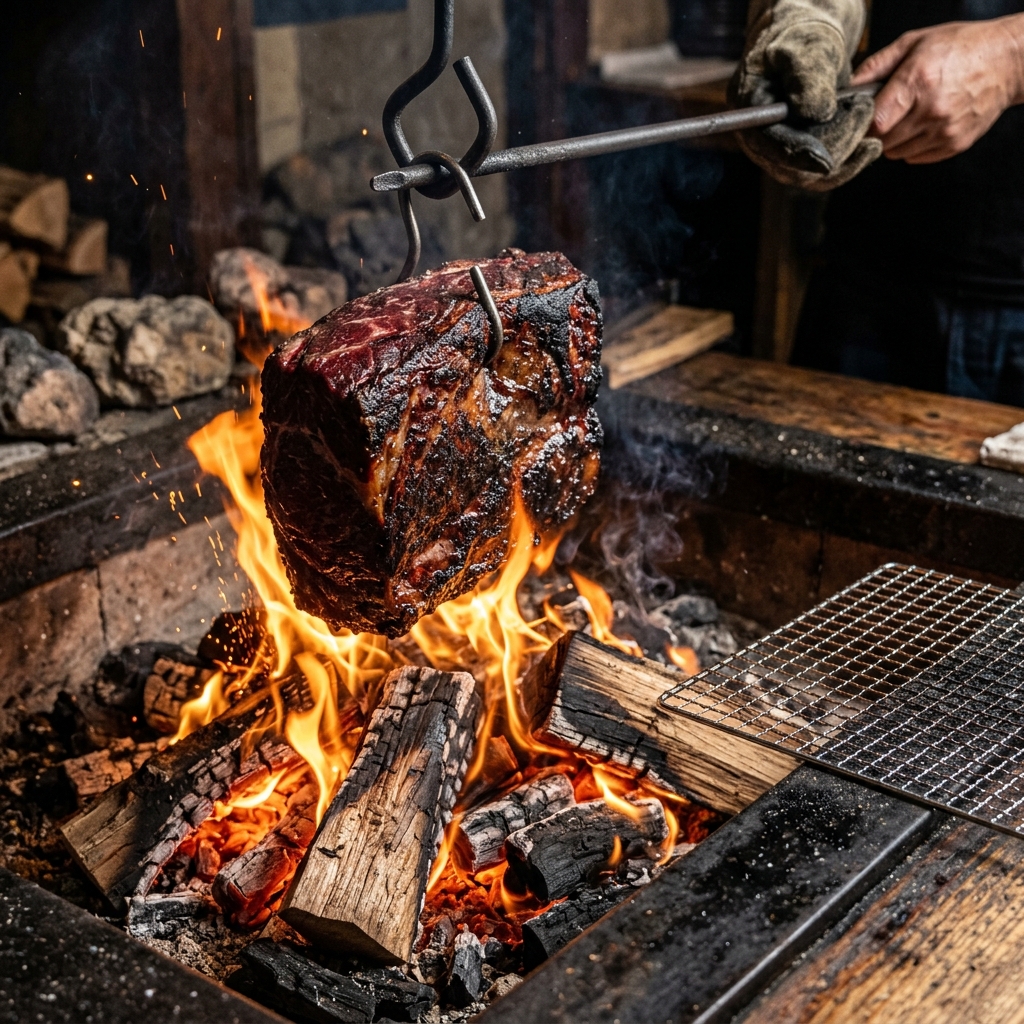
Experience the Ultimate Primal Grilling Mastery in Tokyo If you have mastered the etiquette of standard Yakiniku and are ready to experience the most profound, ancient method of eating Japanese beef, you must abandon the delicate wire mesh.
Wagyu Yakiniku Ibusana, located in Tokyo, completely rewrites the rules of Japanese BBQ. Because they serve exclusively their own incredibly rare, proprietary breed—descended from the ancient Takenotani Tsurugyu—their meat is not fragile. It is incredibly dense, muscular, and packed with dark, iron-rich umami.
You do not cook Ibusana beef lightly on a wire mesh. The master chefs at Ibusana roast thick, massive blocks of this pure red meat directly over a violent, raging open wood fire. This intense heat triggers a massive Maillard reaction, creating a deep, savory crust that delicate A5 fat simply cannot achieve.
It is an experience that transcends standard etiquette and connects you directly to the primal thrill of fire and true "Uma-Aka" (delicious lean meat). To witness this mastery and taste the ultimate evolution of Japanese BBQ, secure your reservation at Wagyu Yakiniku Ibusana in Tokyo.
Kazuya Akanuma
Wagyu Specialist | Restaurant Consultant | Serial EntrepreneurA seasoned restaurateur and business owner who has successfully founded and managed premier Sushi venues, traditional Yakiniku grills, and high-end Cafe Bars in Tokyo. As an active restaurant consultant, he possesses a rare, 360-degree understanding of the culinary market. Fueled by a relentless passion for culinary craft, he dines at over 600 establishments annually—ranging from ultra-exclusive, reservation-only masterpieces to legendary neighborhood ramen shops. He leverages his insider access and decades of industry experience to guide global travelers to the absolute summit of authentic Japanese dining.
Related Articles
Decoding the Yakiniku Menu: A Connoisseur’s Biology Guide to Ordering Rare Offal (Horumon) Cuts
The Sommelier's Blueprint: Molecular Science of Pairing Wagyu with Sake, Wine, and Green Tea