Decoding the Yakiniku Menu: A Connoisseur’s Biology Guide to Ordering Rare Offal (Horumon) Cuts
Conquer the Yakiniku offal list. Learn the structural biology of Mino, Shimochou, and Hatsumoto, and the exact lipid chemistry that pairs them with tare or salt.
The Inbound Frontier: Conquering the Offal Menu
For many international travelers visiting a high-end Tokyo Yakiniku restaurant, the menu is divided into two distinct sections: the familiar, beautifully marbled slices of Sirloin, Ribeye, and Chateaubriand, and a mysterious, often untranslated section labeled Horumon (ホルモン)—organ meats or offal.
While Western beef culture often relegates offal to sausages or discards it entirely, Japanese gastronomy treats Wagyu offal with the exact same molecular rigor, meticulous butchering, and culinary respect as the prime steaks.
[PRIME STEAKS (Sirloin/Ribeye)] - Muscle tissue, uniform lipid distribution (Sashi).
[HORUMON (Offal/Organ Meats)] - High elastin/collagen variation, extreme texture, unique lipid profiles.
To truly master Yakiniku like a Tokyo local, you must cross this final culinary frontier. Decoding the biology, texture mechanics, and seasoning rules of Wagyu Horumon reveals an entirely new world of flavor that is highly prized by elite gastronomes.
The Biology of Texture: Collagen vs. Elastin Ratios
Unlike muscle tissue, which consists of uniform protein fibers, different organ meats possess completely different structural proteins, yielding wildly different textures under heat.
1. Mino (第一胃 - Rumen / First Stomach)
- Structure: High-collagen thick muscle wall of the first stomach.
- Texture: Firm, crunching, and incredibly satisfying.
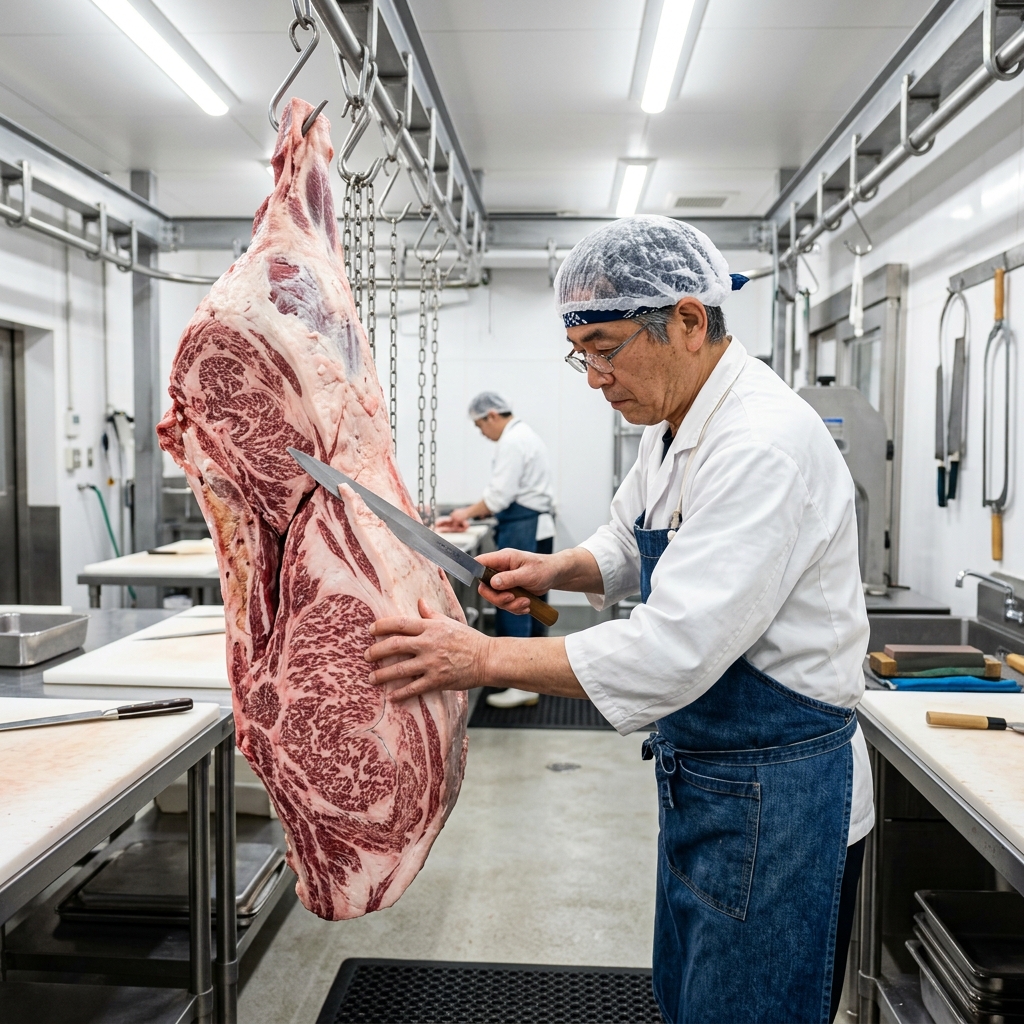
- Butchering Science: Because Mino is tough and thick, master butchers use a highly precise technique of scoring microscopic, parallel slits across the surface (known as Hidden Cuts or Kazari-bouchou). Under heat, these slits cause the tough muscle fibers to curl and expand, transforming a chewy slice into a tender, snapping, and easily masticated delicacy.
2. Shimochou (大腸 - Large Intestine)
- Structure: Highly elastic tubular structure wrapped in dense, thick layers of pure Wagyu fat.
- Texture: Soft, meltingly rich, and intensely savory.
- Grilling Science: Highly dramatic on the grill! Shimochou must be placed skin-side down first to crisp up the connective outer skin. Only at the very end should you flip it to lightly sear the bubbling, gelatinous fat layers. Letting the fat drip into the embers creates a massive puff of aromatic smoke that glazes the cut.
3. Hatsumoto (大動脈 - Aorta / Heart Pipe)
- Structure: Dominately composed of elastin, a rubber-like structural protein that does not break down under heat.
- Texture: Incredibly springy, snappy, and light.
- Flavor Profile: Minimal fat, serving as a clean, highly textural palate cleanser between heavy, marbled cuts.
Seasoning Rules: The Chemistry of Tare vs. Salt Pairing
When ordering Horumon, the staff will always ask: "Tare (sauce) or Shio (salt)?" This is not a matter of personal preference; it is a question dictated by the lipid and protein chemistry of each specific cut.
[HIGH-FAT Offal (Shimochou/Horumon)] + Tare (Caramelization) ==> Neutralizes heavy lipids, deep umami.
[LOW-FAT/TEXTURAL Offal (Hatsu/Mino)] + Salt/Lemon (Acidity)    ==> Highlights clean snap, refreshes palate.
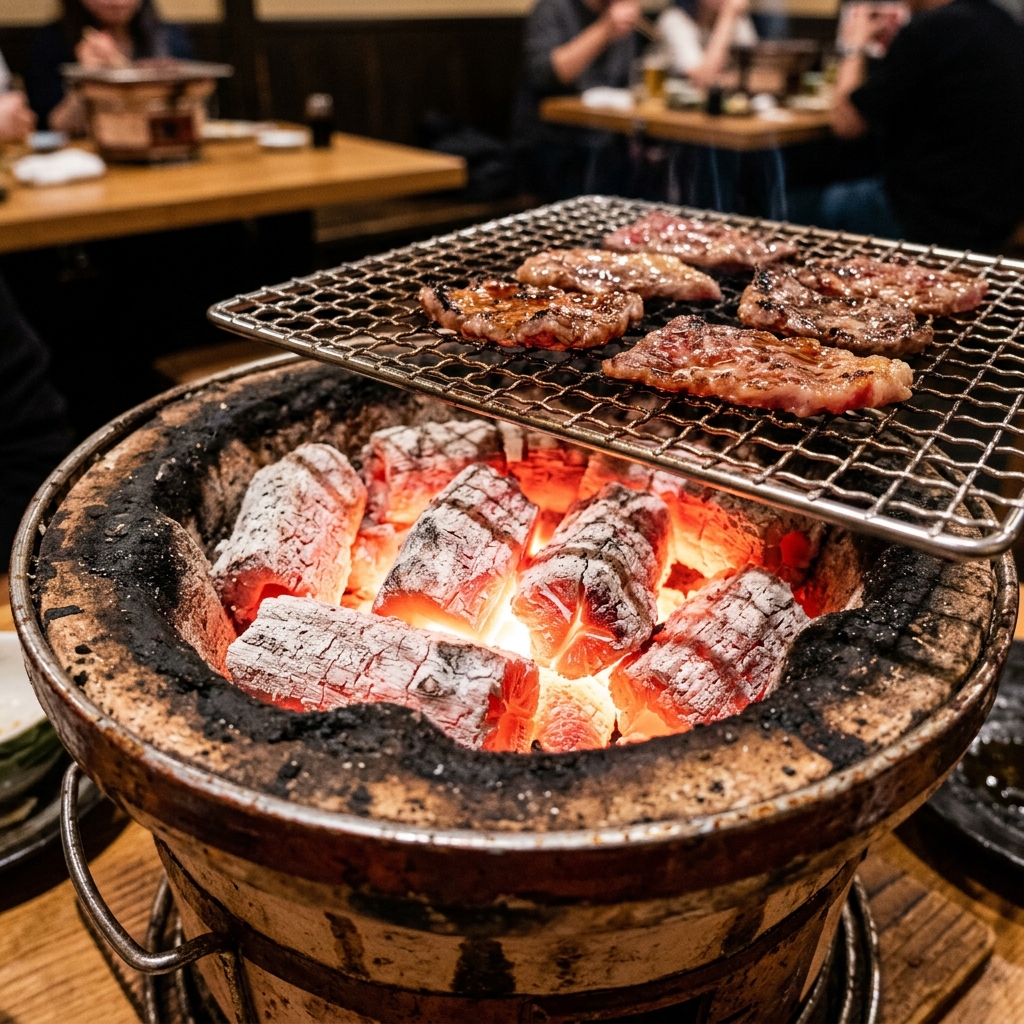
- High-Fat Offal (e.g., Shimochou, Gyarab/Abomasum): Pair with Tare (soy-garlic-miso sauce). The high heat of the charcoal grill causes the sugars and amino acids in the thick, savory tare to caramelize directly on top of the melting Wagyu lipids. This caramelization (the Maillard reaction) creates a deeply complex, sweet, and smoky glaze that cuts through the intense richness of the intestine fat, preventing it from feeling greasy.
- Low-Fat or Textural Offal (e.g., Mino, Hatsumoto, Hatsu/Heart): Pair with Shio (salt and lemon). Because these cuts are appreciated for their clean, metallic iron notes and crunchy textures, a heavy tare would overpower their delicate flavors. A light seasoning of sea salt combined with a squeeze of fresh lemon juice provides the citric acid necessary to cut through the surface proteins, highlighting their clean snap and refreshing the palate.
Kazuya Akanuma
Wagyu Specialist | Restaurant Consultant | Serial EntrepreneurA seasoned restaurateur and business owner who has successfully founded and managed premier Sushi venues, traditional Yakiniku grills, and high-end Cafe Bars in Tokyo. As an active restaurant consultant, he possesses a rare, 360-degree understanding of the culinary market. Fueled by a relentless passion for culinary craft, he dines at over 600 establishments annually—ranging from ultra-exclusive, reservation-only masterpieces to legendary neighborhood ramen shops. He leverages his insider access and decades of industry experience to guide global travelers to the absolute summit of authentic Japanese dining.