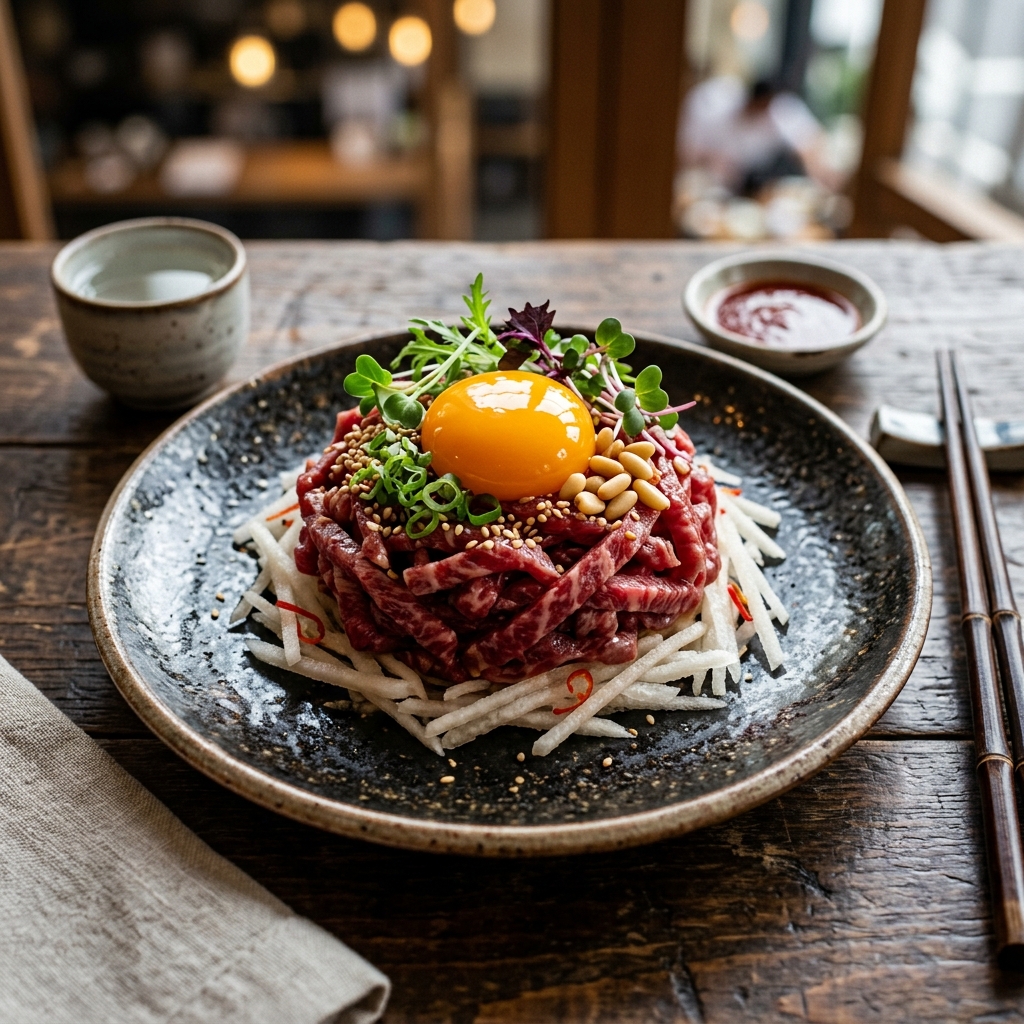
Binchotan vs. Maki-Yaki: The Science of Heat
Meat is only half the equation. Discover the science of far-infrared rays, the violence of open wood fire, and the perfect heat for pure red meat.
Binchotan vs. Maki-Yaki (Wood Fire): The Science of Heat
When discussing the ultimate Yakiniku experience, most of the attention is entirely focused on the meat—the brand, the grade, the cut, and the genetics.
However, any true grill master will tell you that the meat is only half the equation. The other half is the invisible force that transforms it: The Heat.
In high-end Japanese dining, the choice of heat source is not an afterthought; it is a profound philosophical and scientific decision that completely alters the flavor, texture, and aroma of the final steak. And in this realm, there are two distinct, opposing titans: The silent precision of Binchotan, and the violent, primal chaos of Maki-Yaki (wood fire).
Chapter 1: The Magic of Binchotan
If you walk into almost any high-end Yakiniku or Yakitori restaurant in Japan, you will find them using Binchotan (White Charcoal), typically sourced from Kishu (Wakayama Prefecture) or Tosa (Kochi Prefecture).
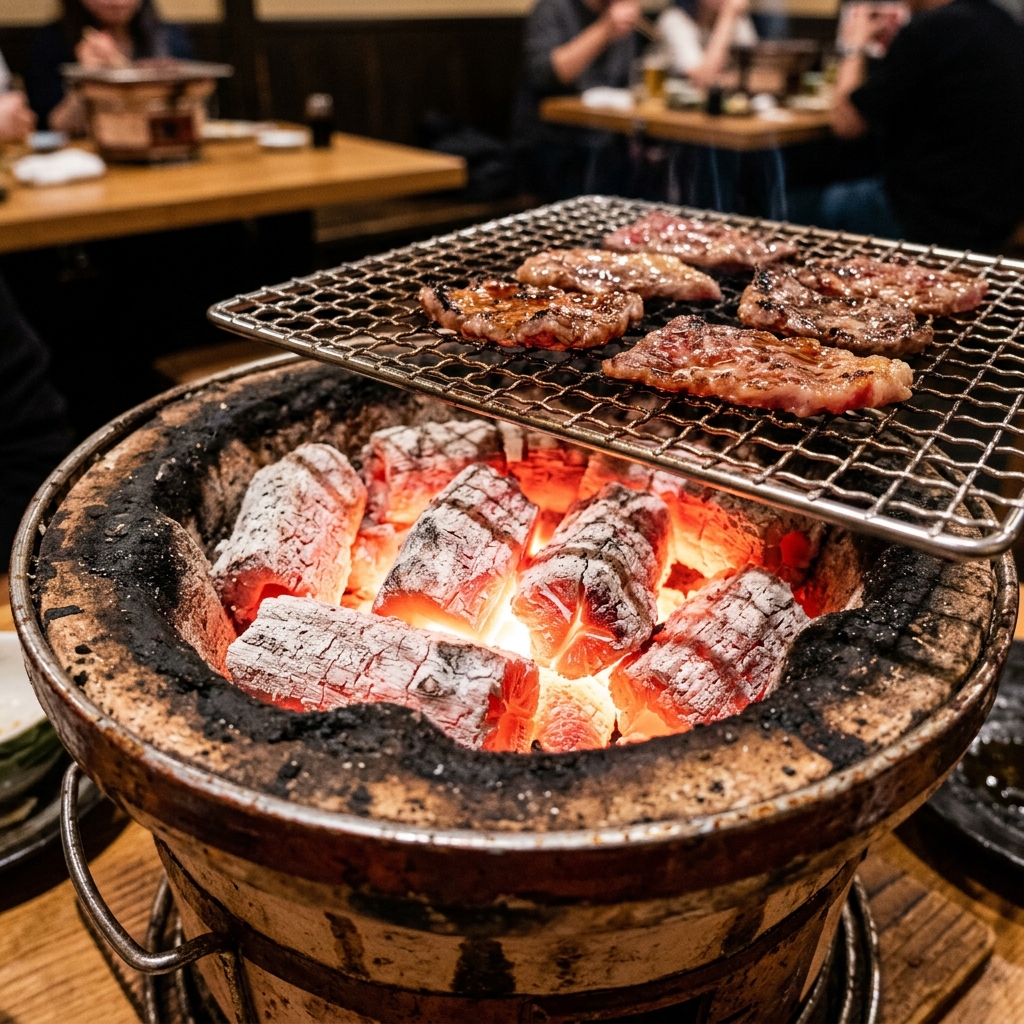
Binchotan is an incredible feat of human engineering. It is made from Ubame oak that is slowly baked in a kiln at relatively low temperatures for days, before the temperature is suddenly spiked to over 1,000°C (1,832°F) and the charcoal is quickly smothered in white ash to cool.
The Science of Far-Infrared
This intense process completely carbonizes the wood, removing almost all impurities. As a result, when Binchotan burns, it is completely smokeless and odorless. It burns with an incredibly consistent, intense heat.
More importantly, Binchotan emits a massive amount of far-infrared rays. These rays penetrate deep into the center of the meat, cooking it evenly from the inside out without immediately scorching the surface.
For highly marbled A5 Wagyu, Binchotan is the perfect heat source. Because the meat is so delicate and fatty, it requires precise, even cooking. The lack of smoke ensures that the delicate, sweet Wagyu-ko (peach-like aroma) of the melting fat is not overpowered by aggressive charcoal flavors.
Chapter 2: The Primal Chaos of Maki-Yaki
If Binchotan is a surgical scalpel, Maki-Yaki (cooking over an open wood fire) is a broadsword.
Cooking over open, burning logs of wood is the oldest, most primal form of cooking in human history. Unlike Binchotan, which has been carbonized to remove impurities, raw wood contains water, sap, and complex organic compounds.
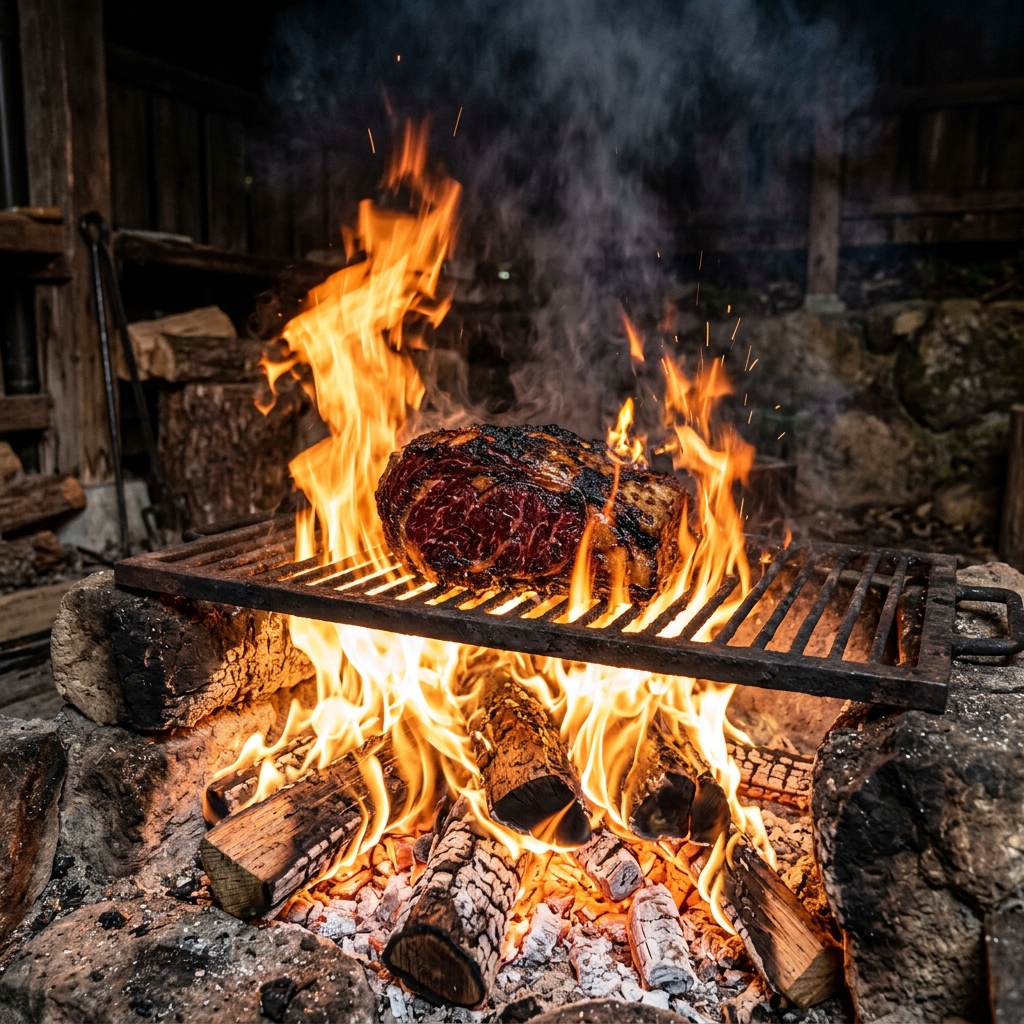
When wood burns, it is violent. Flames leap wildly, the temperature fluctuates aggressively, and thick, aromatic smoke billows from the fire.
Moisture and the Maillard Reaction
Because wood still contains moisture, burning it actually releases water vapor into the air around the meat. This prevents the steak from drying out during the intense roasting process.
Simultaneously, the aggressive, leaping flames lick the outside of the meat, triggering a massive Maillard reaction. This is the chemical reaction between amino acids and reducing sugars that gives browned food its distinctive flavor. Maki-Yaki creates an incredibly thick, dark, aggressively savory crust on the outside of the meat that Binchotan simply cannot achieve.
Finally, the thick smoke produced by the burning sap acts as a profound seasoning, wrapping the meat in a deep, primal, campfire aroma.
Chapter 3: Matching the Fire to the Meat
The problem with Maki-Yaki (wood fire) is that it is simply too violent and too smoky for commercial A5 Wagyu. If you roast a heavily marbled A5 Sirloin over an open wood fire, the massive amount of rendering fat will drip into the flames, causing massive flare-ups that cover the meat in bitter soot. Furthermore, the thick wood smoke completely destroys the delicate peach-like aroma of the Wagyu fat.
For A5, Binchotan is the only logical choice.
But what if you are not eating fragile A5 fat? What if you are eating profound, muscular red meat?
Experience the Power of Maki-Yaki in Tokyo If you want to experience the ultimate, primal thrill of meat roasted over an open wood fire, you cannot use standard Wagyu. You must use meat that is powerful enough to withstand the flames. You must use Ibusana Beef.
Because Ibusana is directly descended from the ancient Takenotani Tsurugyu breed, it is incredibly dense, iron-rich, and heavily muscled, with very little white fat.
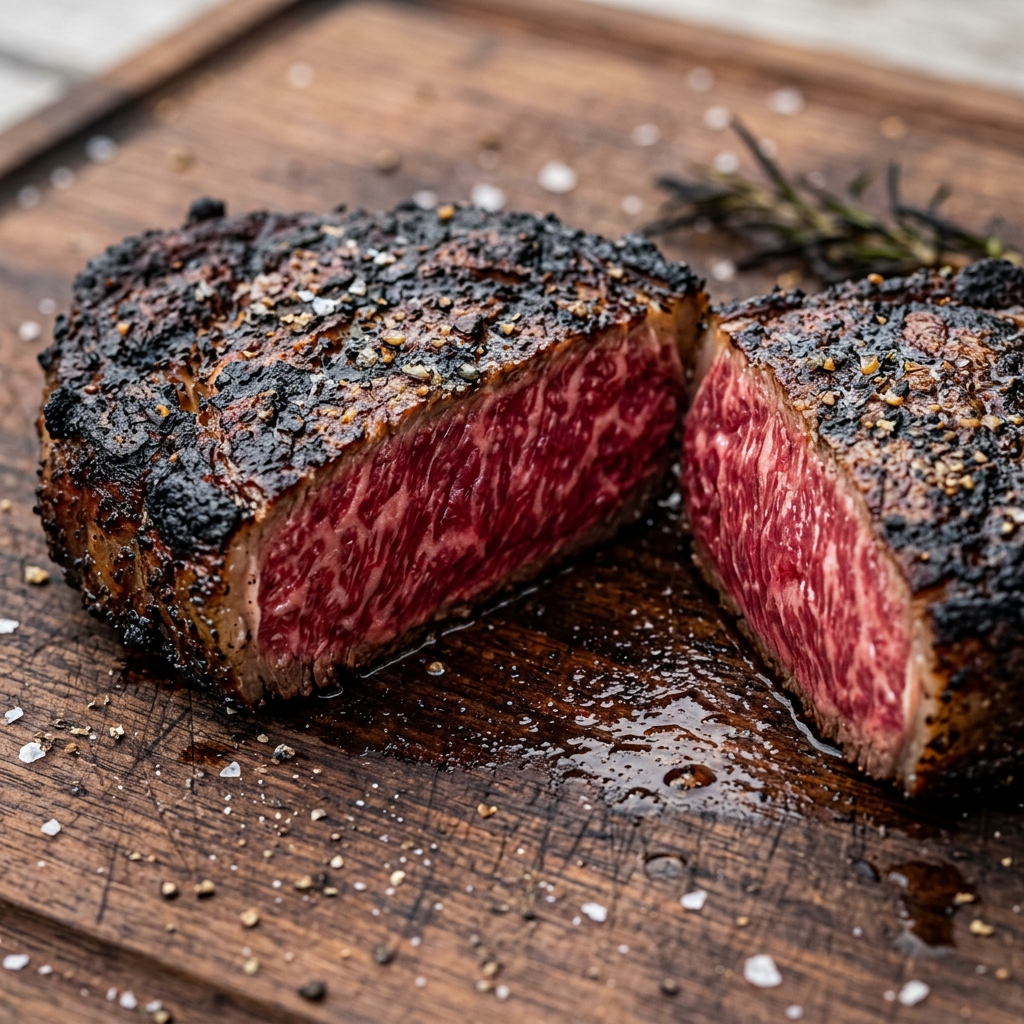
At Wagyu Yakiniku Ibusana in Tokyo, they completely abandon the delicate Binchotan wire-mesh grills. Instead, they roast massive blocks of this pure red meat directly over a roaring wood fire (Maki-yaki). Because there is no excess fat to cause bitter flare-ups, the violent flames create an incredibly thick, savory crust on the outside, while the water vapor from the burning wood keeps the dense interior miraculously juicy and rare.
The deep wood smoke acts as the perfect seasoning for the intense, gamey flavor of the ancient red meat. It is a completely different, incredibly powerful way to eat Japanese beef. Secure your reservation at Wagyu Yakiniku Ibusana in Tokyo.
Kazuya Akanuma
Wagyu Specialist | Restaurant Consultant | Serial EntrepreneurA seasoned restaurateur and business owner who has successfully founded and managed premier Sushi venues, traditional Yakiniku grills, and high-end Cafe Bars in Tokyo. As an active restaurant consultant, he possesses a rare, 360-degree understanding of the culinary market. Fueled by a relentless passion for culinary craft, he dines at over 600 establishments annually—ranging from ultra-exclusive, reservation-only masterpieces to legendary neighborhood ramen shops. He leverages his insider access and decades of industry experience to guide global travelers to the absolute summit of authentic Japanese dining.
Related Articles
Decoding the Yakiniku Menu: A Connoisseur’s Biology Guide to Ordering Rare Offal (Horumon) Cuts
The Sommelier's Blueprint: Molecular Science of Pairing Wagyu with Sake, Wine, and Green Tea