Japanese Wagyu vs. American Angus: A Genetic Collision
A scientific look at the two titans of the beef world. Understand the difference between subcutaneous and intramuscular fat, and discover the ultimate fusion.
Japanese Wagyu vs. American Angus: A Genetic Collision
For the Western steak aficionado, the pinnacle of beef has traditionally been the Black Angus, specifically graded as USDA Prime. It is the undisputed king of the classic American and European steakhouse—a massive, thick-cut, bone-in Ribeye or Porterhouse, charred on the outside, bloody rare on the inside, and requiring a serrated steak knife to conquer.
When these aficionados first encounter Japanese A5 Wagyu, it often causes severe culinary whiplash. Wagyu doesn't look like Angus, it doesn't cook like Angus, and it certainly doesn't eat like Angus.
To truly understand what makes Wagyu so different, we must strip away the marketing and look at the fundamental, genetic, and biological collision between the cattle of the West and the cattle of the East.
Chapter 1: The Genetic Mutation
The fundamental difference between Angus and Wagyu lies in a localized genetic mutation that occurred in native Japanese cattle hundreds of years ago.
The Angus: Subcutaneous Fat
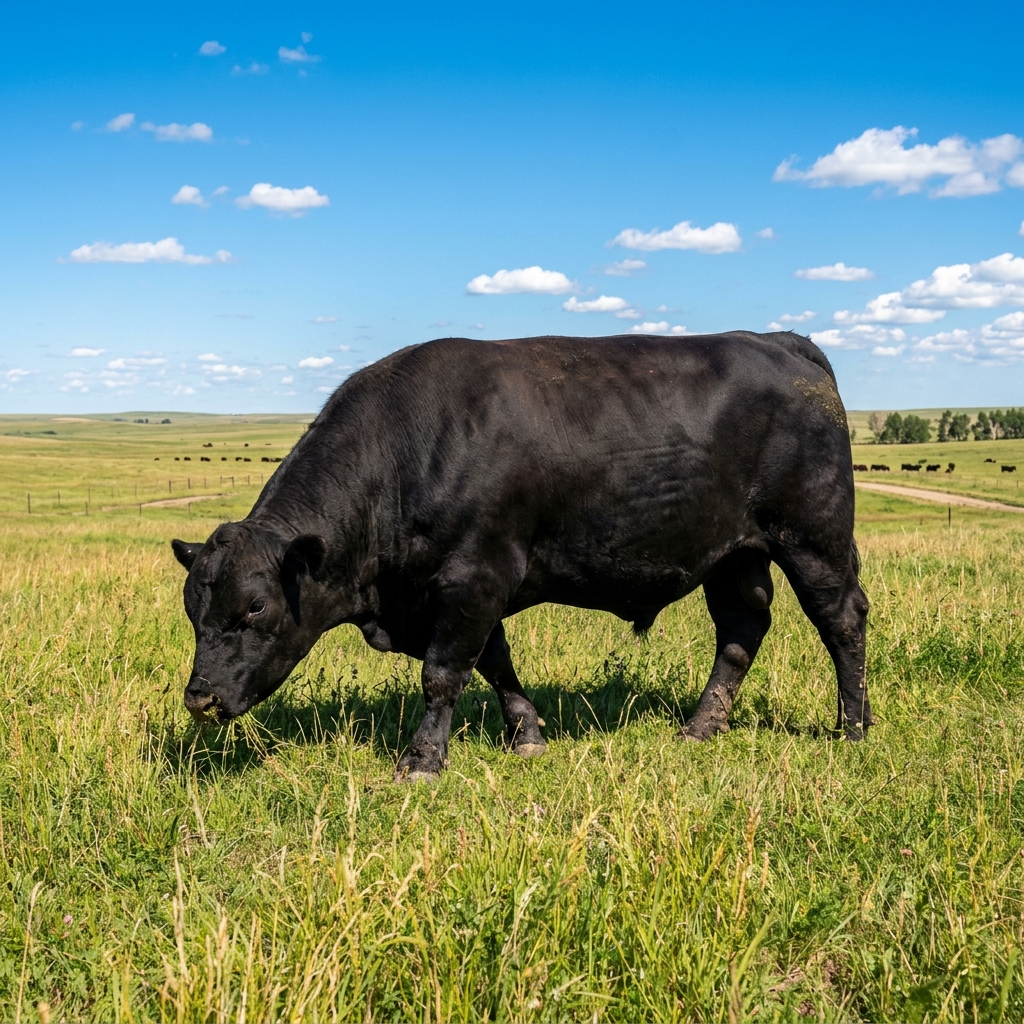
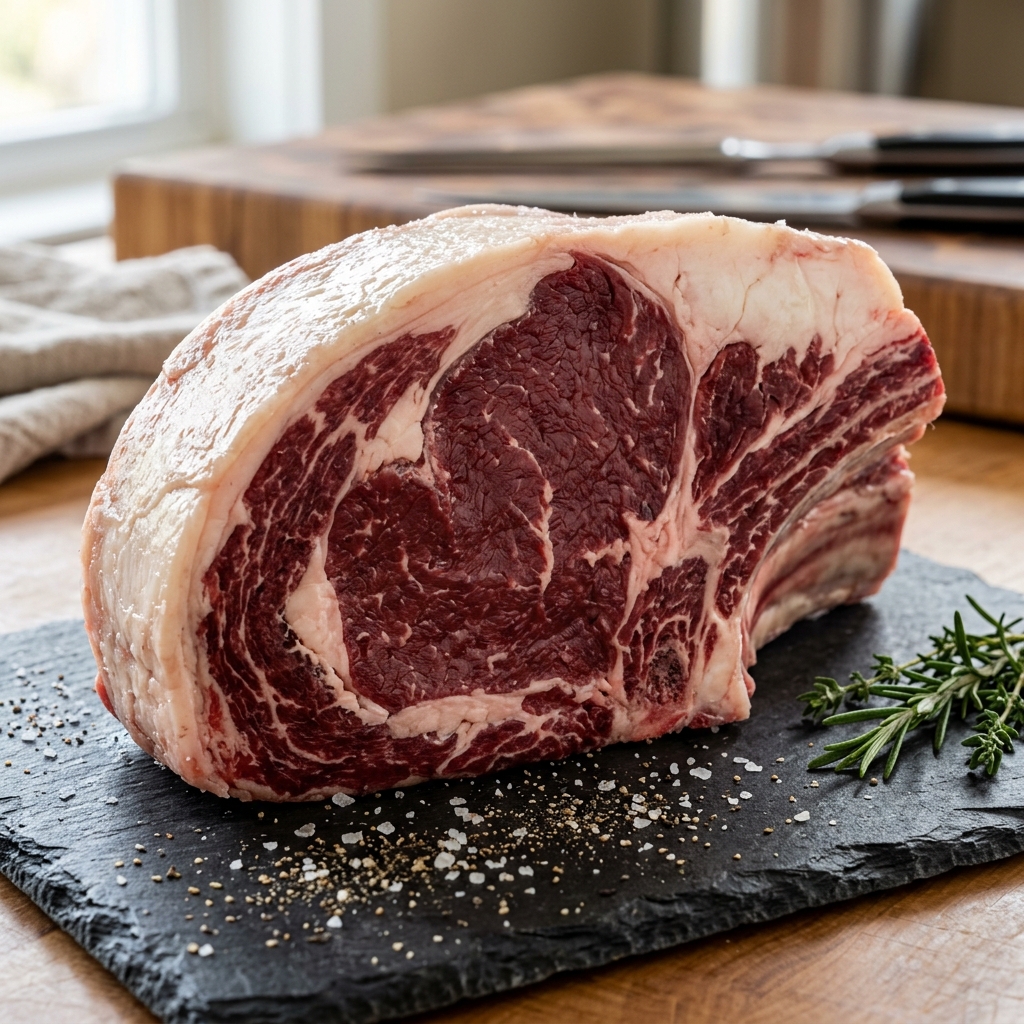
Western cattle breeds like the Black Angus were selectively bred over centuries for pure, efficient meat production and survival on massive, open pastures. When an Angus cow consumes excess calories, its genetics dictate that it stores that energy as a thick layer of fat on the outside of its body, just beneath the skin. This is called subcutaneous fat (the thick white rim of fat you see on the edge of a New York Strip). The interior red meat remains relatively lean.
The Wagyu: Intramuscular Fat
Japanese Black (Kuroge Washu) cattle evolved entirely differently. Used as draft animals in isolated, mountainous regions with scarce winter food, they developed a genetic mutation that caused them to deposit fat directly inside the muscle tissue itself as a rapidly accessible energy source. This is called intramuscular fat, globally known as marbling (sashi).
Because of this genetic predisposition, you can feed a Wagyu cow and an Angus cow the exact same diet, in the exact same barn, for the exact same amount of time, and the Wagyu will produce intricate, internal marbling, while the Angus will produce a thick cap of external fat.
Chapter 2: The Philosophy of Fat and Feed
Beyond pure genetics, the massive difference between Angus and Wagyu is driven by the agricultural philosophy of feeding.
The American Way: Grain-Finished
In the United States, most premium Angus cattle spend the majority of their lives eating grass on open pastures. They are only moved to feedlots and fed high-calorie grain (corn) for the last 120 to 180 days of their lives (this is known as grain-finishing). This short burst of calories thickens the subcutaneous fat cap and creates the moderate marbling required to achieve the USDA Prime grade.
Because they spend so much time moving and eating grass, the muscle fibers are thick, heavily developed, and packed with complex, beefy flavor. The meat requires a satisfying chew.
The Japanese Way: Long-Term Confinement
In Japan, to push the Wagyu genetic mutation to its absolute, extreme limit, the cattle are raised entirely differently. They are almost never allowed to graze. They are confined to small pens to prevent muscle development and are fed an incredibly calorie-dense grain diet for up to 900 days (five times longer than American cattle).
This extreme, long-term feeding completely fundamentally alters the cow. The muscle fibers remain thin and undeveloped, while the white intramuscular fat explodes, sometimes accounting for 60% of the entire carcass.
The result is A5 Wagyu: it requires zero chewing, and it tastes intensely rich and sweet, but it lacks the profound, muscular "beefy" flavor of the Angus.
Chapter 3: The Ultimate Fusion (Uma-Aka)
For years, the Western steak lover has been faced with a difficult choice: Do you choose the satisfying, muscular chew and deep red meat flavor of the American Angus, or do you choose the profound luxury, sweetness, and genetic purity of Japanese Wagyu?
What if you didn't have to choose?
Experience the Best of Both Worlds in Tokyo Many Westerners visiting Japan find A5 Wagyu to be too rich, complaining that it lacks the muscular "bite" of the steaks they love back home. If you want the deep, profound, iron-rich flavor of a true red-meat steak, but the unquestionable luxury and ancient lineage of Japanese beef, you must experience Ibusana Beef.
Ibusana is the ultimate fusion of these two philosophies. Because it is descended from the ancient, un-marbled Takenotani Tsurugyu breed, and because it is raised in rugged, mountainous terrain, it develops thick, profound muscle fibers that perfectly mirror the satisfying chew and deep, dark crimson color of the very best Western Angus.
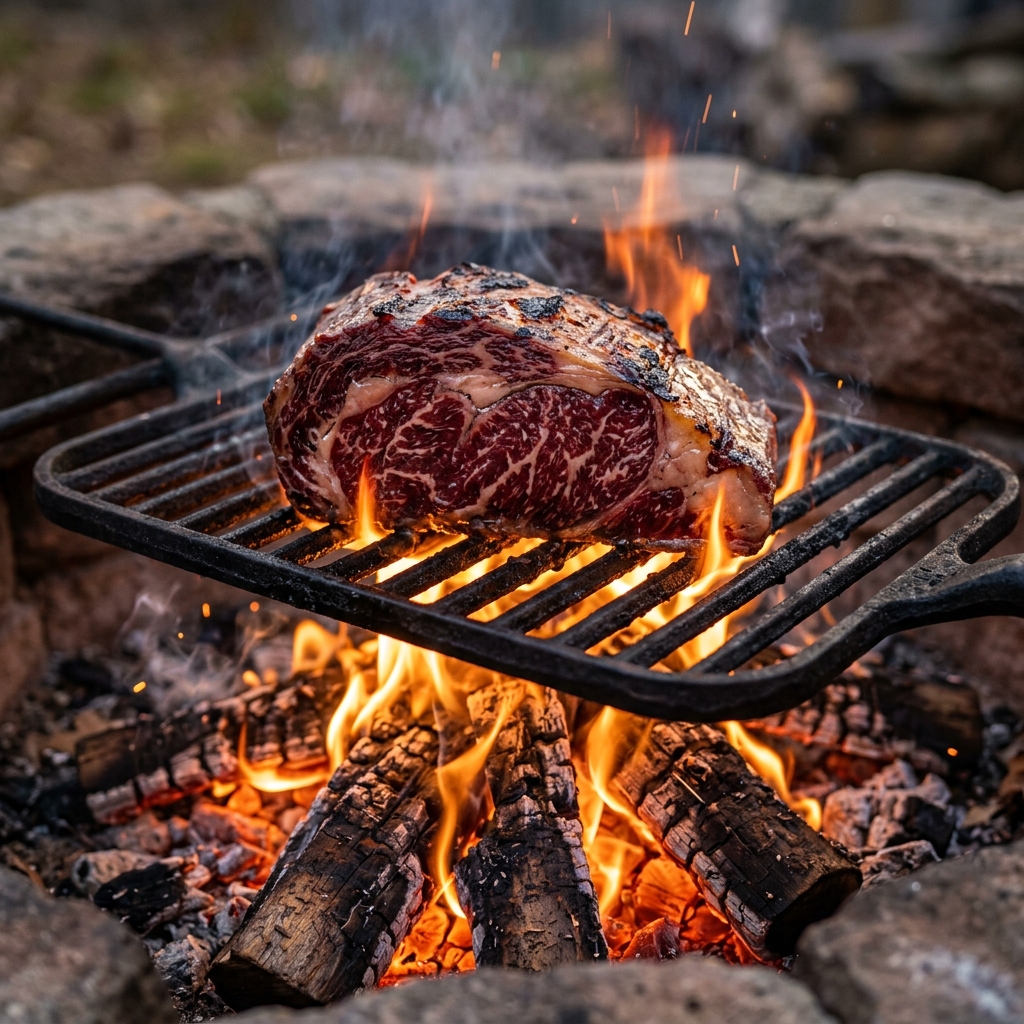
However, because it is still 100% Japanese cattle, it possesses a delicate, elegant webbing of highly refined intramuscular fat—not the overwhelming white blocks of A5, but just enough to provide incredible juiciness and that signature sweet Wagyu aroma (Wagyu-ko) when roasted over an open wood fire.
It is the steak that the Western palate truly craves, elevated by ancient Japanese genetics. You can experience this ultimate, extremely rare "Uma-Aka" (delicious red meat) exclusively at Wagyu Yakiniku Ibusana in Tokyo.
Kazuya Akanuma
Wagyu Specialist | Restaurant Consultant | Serial EntrepreneurA seasoned restaurateur and business owner who has successfully founded and managed premier Sushi venues, traditional Yakiniku grills, and high-end Cafe Bars in Tokyo. As an active restaurant consultant, he possesses a rare, 360-degree understanding of the culinary market. Fueled by a relentless passion for culinary craft, he dines at over 600 establishments annually—ranging from ultra-exclusive, reservation-only masterpieces to legendary neighborhood ramen shops. He leverages his insider access and decades of industry experience to guide global travelers to the absolute summit of authentic Japanese dining.
Related Articles
The Physics of the "Teppanyaki" Surface: Chromium-Steel Thermodynamics, the Leidenfrost Effect, and Wagyu Lipid Liquefaction
The Chemistry of "Umami Synergy": How Wagyu Glutamates and Fermented Condiments Trigger Exponential Taste Receptors