The Thermodynamics of Sukiyaki vs. Shabu-Shabu: Temperature Controls for Delicate Wagyu Lipids
Simmering vs. Swishing. Discover why Japanese hot pot dishes are scientifically engineered at exactly 80–85°C to melt delicate fats without drying out muscle proteins.
The Thermodynamics of Sukiyaki vs. Shabu-Shabu: Temperature Controls for Delicate Wagyu Lipids
When Western diners think of luxury beef, they almost always imagine the intense, direct-heat dry cookery of the grill—the sizzling sear of a steak on cast iron or over glowing charcoal.
Yet, two of Japan’s most famous and prestigious Wagyu preparations, Sukiyaki and Shabu-Shabu, rely on wet, liquid-based heat: simmering in a sweet-savory broth or gently swishing thin slices through hot dashi.
To the steak purist, cooking high-grade marbled beef in hot water might sound like a tragedy.
In reality, it is a triumph of thermodynamic engineering.
Wagyu beef possesses a delicate lipid profile that is highly sensitive to extreme temperatures.
Sukiyaki and Shabu-Shabu are not merely traditional recipes; they are highly evolved thermal control systems designed to melt delicate fats at their exact physical sweet spot while preventing the tough contracting of muscle proteins.
Chapter 1: The Paradox of Melting Fat vs. Tightening Protein
To understand the thermodynamics of Japanese hot pot dishes, we must look at the conflicting thermal properties of Wagyu's two main components: fat and muscle protein.
- The Lipids (Oleic Acid): As established, premium Wagyu fat contains up to 60% oleic acid, giving it a melting point between 18°C and 25°C (64.4°F to 77°F). It liquefies almost instantly at human body temperature.
- The Proteins: Muscle tissue is composed of different proteins that denature and contract at specific temperatures:
- Myosin: Begins to denature and coagulate at 50°C to 55°C (122°F to 131°F). This is the temperature where raw muscle turns into tender, cooked meat (medium-rare).
- Actin: Denatures and contracts violently at temperatures above 66°C (150.8°F). When actin collapses, it squeezes out internal cellular water, turning the meat dry, dense, and tough.
Thermal Scale of Beef Cooking:
┌───────────────────────────┬───────────────────────────┐
│ Temperature Range         │ Physical / Chemical State │
├───────────────────────────┼───────────────────────────┤
│ 18°C - 25°C (64°F - 77°F) │ Wagyu fat fully melts.    │
│ 50°C - 55°C (122°F - 131°F)│ Myosin denatures (Tender) │
│ 66°C+ (151°F+)            │ Actin denatures (Tough)   │
└───────────────────────────┴───────────────────────────┘
The culinary paradox is clear: how do we fully render the delicious, marbled fat of Wagyu without heating the muscle proteins above 66°C and causing them to dry out?
If you cook a thick steak, the high exterior heat (often >200°C) inevitably overcooks the outer layers of protein to melt the interior fats.
Sukiyaki and Shabu-Shabu solve this by using liquid-phase heat transfer, acting as a highly precise temperature buffer.
Chapter 2: The Sweet Simmer: Sukiyaki's Osmotic Glaze
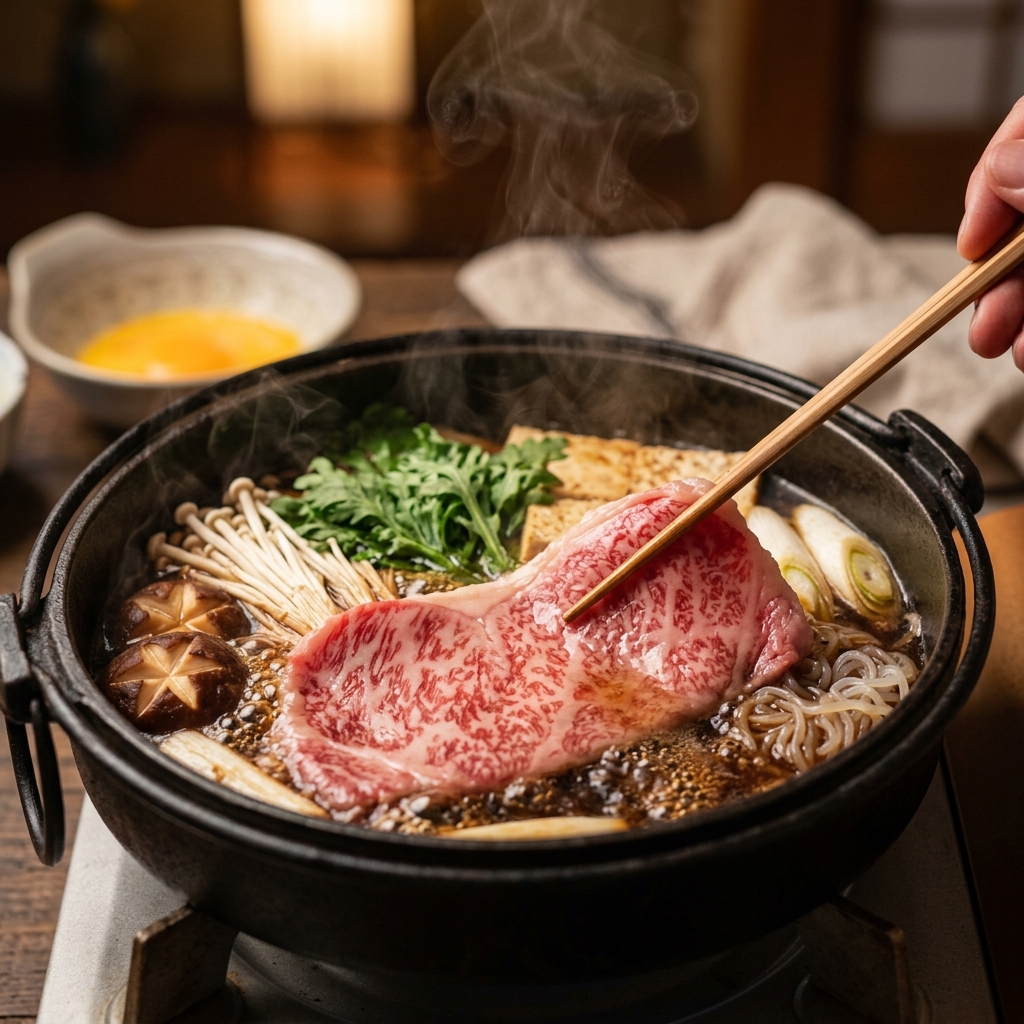
Sukiyaki is a simmered dish cooked in a shallow cast-iron pan using Warishita—a rich, concentrated mixture of soy sauce, sake, mirin, and sugar.
From a thermodynamic perspective, cooking in Warishita is vastly different from cooking in plain water:
- Boiling Point Elevation: The high concentration of sugar and sodium in Warishita increases the density of the liquid, raising its boiling point slightly above 100°C.
- The Simmer Buffer (80°C to 85°C): A skilled Sukiyaki chef or diner never allows the Warishita to reach a violent, rolling boil. Instead, the pan is kept at a gentle, lazy simmer, typically hovering around 80°C to 85°C (176°F to 185°F).
- The Rapid Osmotic Coating: Because the meat sliced for Sukiyaki is exceptionally thin (about 1.5mm to 2mm), placing it in the 80°C liquid causes the heat to transfer instantly to the center of the slice within just 10 to 15 seconds.
The heat is just hot enough to liquefy the intramuscular fat, while the thick, sugary Warishita forms a protective, caramelized glaze over the delicate muscle proteins, blocking them from contracting and squeezing out their juices.
Served dipped in raw, whipped egg yolk, the cool egg instantly stops the cooking process and emulsifies with the warm melted fat and sweet glaze, creating a velvety, rich masterpiece.
Chapter 3: Shabu-Shabu: The Fluid Dynamics of the Swish
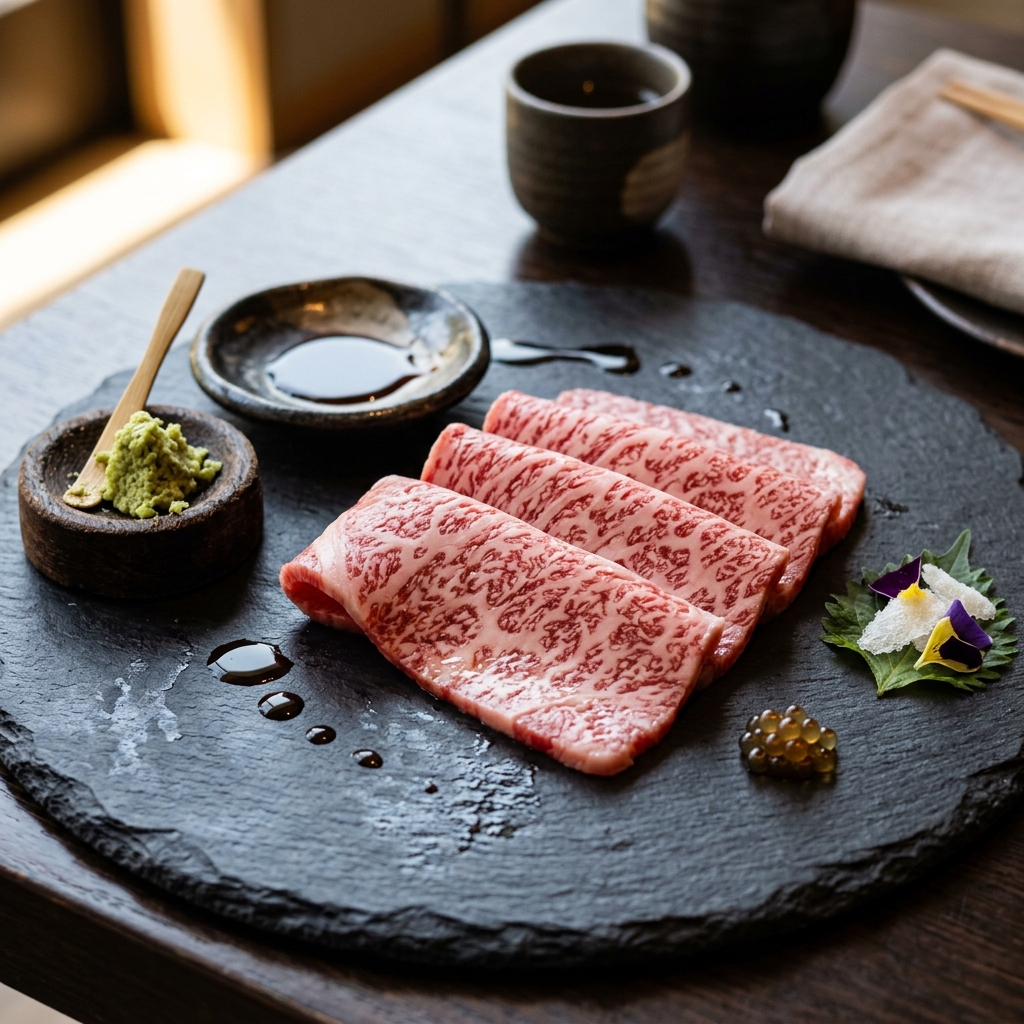
Shabu-Shabu takes liquid thermodynamics to the absolute extreme. The name itself is an onomatopoeia for the sound of thin meat being gently swished back and forth through a simmering broth.
The setup for Shabu-Shabu is a large metal pot filled with water seasoned with kelp (Kombu dashi), heated to a gentle simmer just below boiling (around 90°C to 95°C / 194°F to 203°F).
Here is the physical and thermodynamic sequence of a perfect Shabu-Shabu swish:
- The Thermal Shock Drop: The slice of Wagyu used for Shabu-Shabu is paper-thin (1mm). It is served cold from the refrigerator (around 4°C). When you submerge this cold, thin sheet into the pot and swish it, the localized liquid surrounding the meat instantly drops in temperature from 95°C to roughly 75°C to 80°C.
- Instant Render, Minimal Coagulation: Because the localized water temperature is buffered down to ~80°C, the meat heats up incredibly gently. The low-melting-point oleic acid fat renders instantly, turning the slice translucent. However, because the meat is in the liquid for only 3 to 5 seconds, the actin proteins do not have time to reach their critical collapse temperature of 66°C.
- The Dashi Infusion: As the meat swishes, the water flow washes away a tiny fraction of surface grease, replacing it with the umami-rich glutamic acids of the Kombu dashi.
The result is a slice of Wagyu that is chemically transformed: its fats are fully rendered and warm, its muscle fibers are barely cooked and perfectly tender, and its flavor is cleanly infused with savory dashi. It is a level of culinary and thermal precision that no dry-heat grill can ever replicate.
Kazuya Akanuma
Wagyu Specialist | Restaurant Consultant | Serial EntrepreneurA seasoned restaurateur and business owner who has successfully founded and managed premier Sushi venues, traditional Yakiniku grills, and high-end Cafe Bars in Tokyo. As an active restaurant consultant, he possesses a rare, 360-degree understanding of the culinary market. Fueled by a relentless passion for culinary craft, he dines at over 600 establishments annually—ranging from ultra-exclusive, reservation-only masterpieces to legendary neighborhood ramen shops. He leverages his insider access and decades of industry experience to guide global travelers to the absolute summit of authentic Japanese dining.
Related Articles
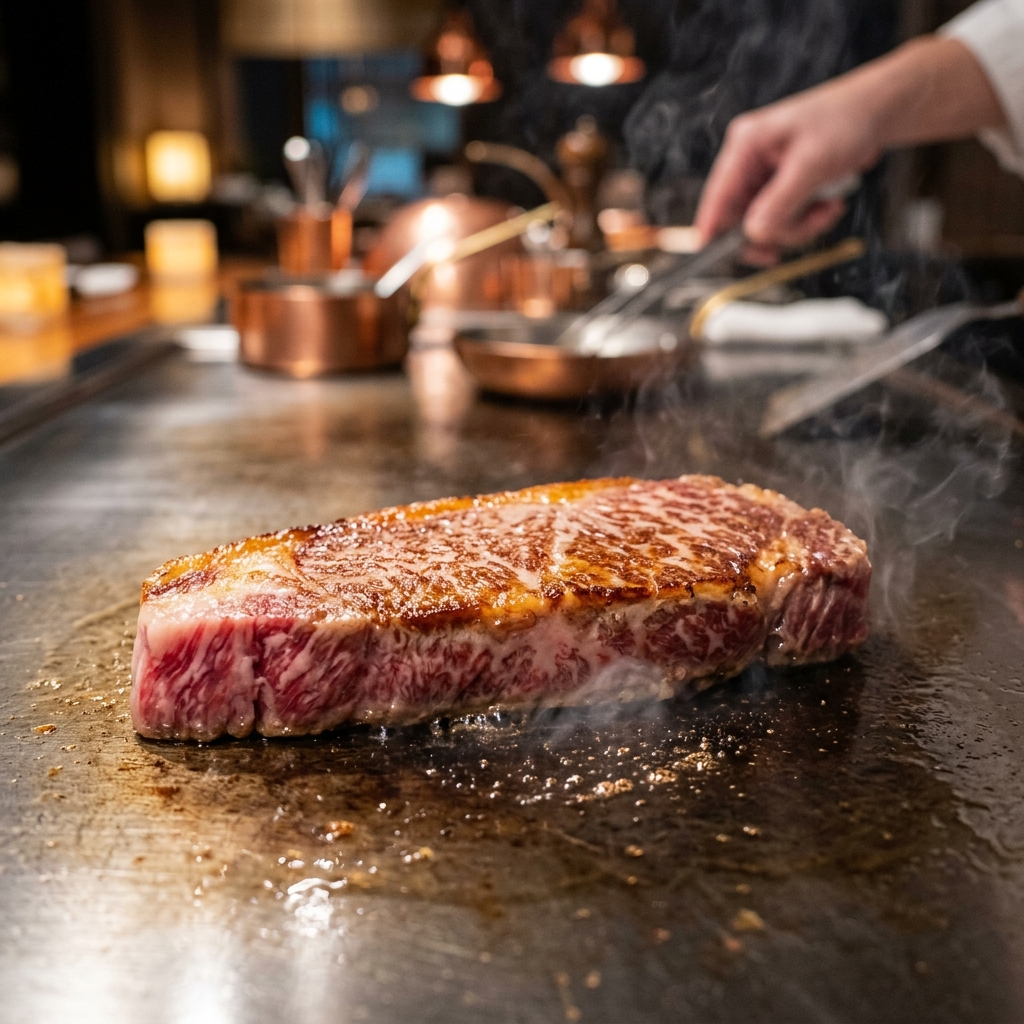
The Physics of the "Teppanyaki" Surface: Chromium-Steel Thermodynamics, the Leidenfrost Effect, and Wagyu Lipid Liquefaction
The Chemistry of "Umami Synergy": How Wagyu Glutamates and Fermented Condiments Trigger Exponential Taste Receptors