The Science of Wagyu Aroma: Wagyu-ko vs. The Primal Maillard
A deep dive into the chemistry of cooking Wagyu. Discover the difference between the sweet scent of melting fat and the primal, savory aroma of roasting true red meat.
The Science of Wagyu Aroma: Wagyu-ko vs. The Primal Maillard
When we talk about the experience of eating Wagyu, we almost always focus entirely on texture. The famous "melt-in-your-mouth" sensation dominates the conversation, the marketing, and the grading system.
But true culinary experts know that flavor is inextricably linked to the olfactory system. Scent is often the primary driver of taste. In the world of high-end Japanese beef, the aroma released during the cooking process is considered just as crucial, if not more so, than the marbling itself.
However, not all Wagyu smells the same. The delicate aroma of a heavily marbled A5 Kuroge (Japanese Black) is scientifically distinct from the violent, savory aroma of ancient, highly exercised red meat.
To truly master the nuances of Wagyu, you must understand the two completely contrasting aromatic profiles that dominate the high-end Yakiniku scene: Wagyu-ko (Wagyu Aroma) and the Primal Maillard Reaction.
Chapter 1: Wagyu-ko and the Scent of the Peach
"Wagyu-ko" (和牛香) literally translates to "Wagyu Aroma." It is a specific, highly coveted, and incredibly distinct scent that is unique almost exclusively to highly marbled Japanese Black cattle.
If you have ever walked into a high-end Sukiyaki restaurant or a premium A5 Yakiniku establishment, you have smelled Wagyu-ko. It does not smell like roasting beef; it smells remarkably like heated fruit.
The Chemistry of the Lactone
Scientifically, Wagyu-ko is a complex mixture of volatile organic compounds, but it is primarily driven by lactones—specifically gamma-nonalactone and gamma-decalactone—and various aldehydes.
Remarkably, these are the exact same chemical compounds that give peaches and coconuts their sweet, creamy, and fruity aromas.
This sweet, fruit-like scent does not exist in the lean muscle fibers. It is entirely locked within the intramuscular fat (the white marbling). When high-quality Wagyu fat—which is incredibly high in monounsaturated oleic acid—is heated to exactly 80°C (176°F), these lactones are violently released into the air.
The Low-Heat Cooking Requirement
Because Wagyu-ko is tied to the low melting point of oleic acid, it is incredibly delicate. If you subject A5 Wagyu to extreme, raging fire, the fat will simply burn, and the delicate peach-like lactones will be destroyed, replaced by the acrid smell of burning lipid.
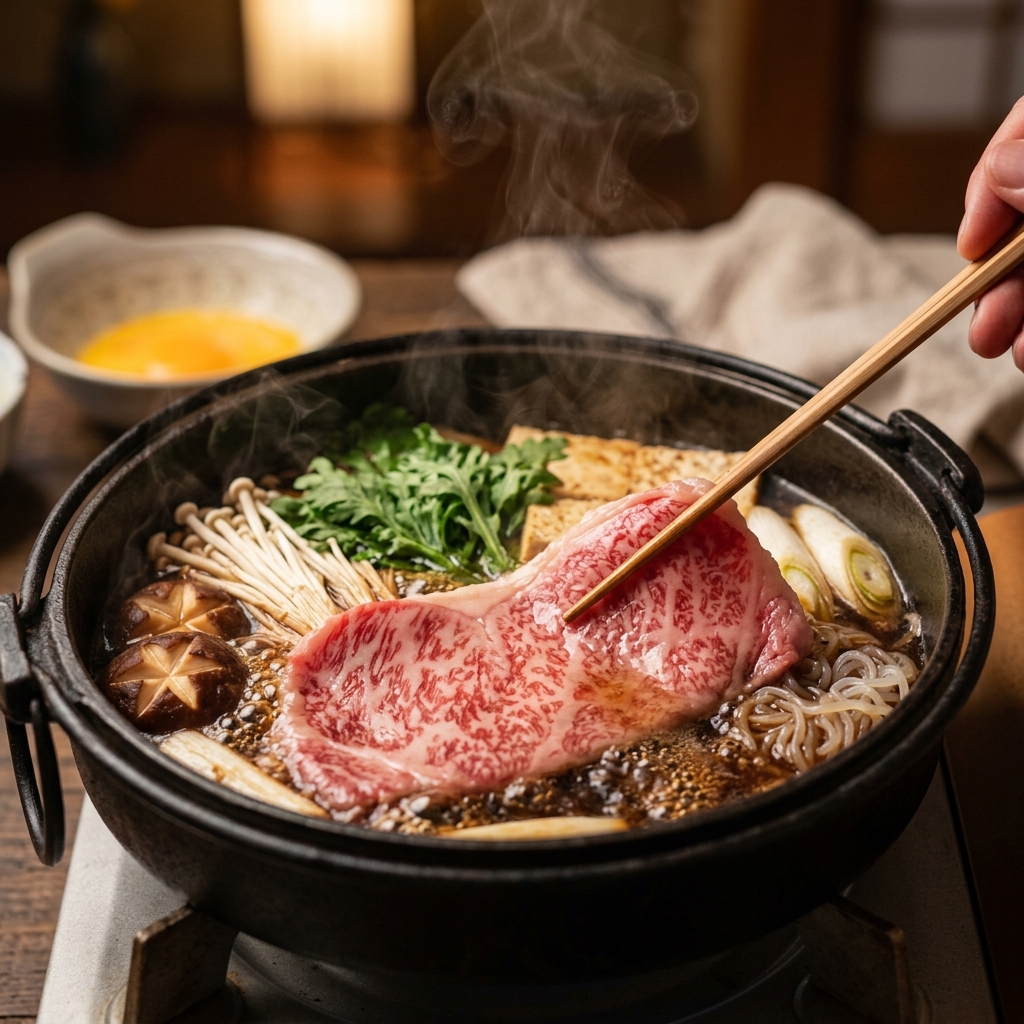
This is why traditional Japanese cooking methods for highly marbled Wagyu, such as Sukiyaki (simmered beef in a shallow iron pot) or Shabu-Shabu (lightly swished in hot broth), are so popular. They gently heat and melt the fat at low temperatures, maximizing the release of the sweet Wagyu-ko.
It is an aroma that triggers an immediate psychological sense of immense richness and culinary luxury. But it is an aroma of melting fat, not of roasting meat.
Chapter 2: The Primal Maillard Reaction
For centuries, before the modern obsession with A5 marbling and Wagyu-ko began in Japan, humans were drawn to a very different scent of cooking meat. This is the aroma of the Maillard Reaction.
Discovered by French chemist Louis-Camille Maillard in 1912, the Maillard reaction is a complex, almost chaotic chemical process that occurs when amino acids (from protein) and reducing sugars react under intense, dry heat (usually beginning around 140°C to 165°C / 285°F to 330°F).
Unlike Wagyu-ko, which comes from melting fat at low temperatures, the Maillard reaction comes from searing the actual muscle fibers at high temperatures.
The Chemistry of the Crust
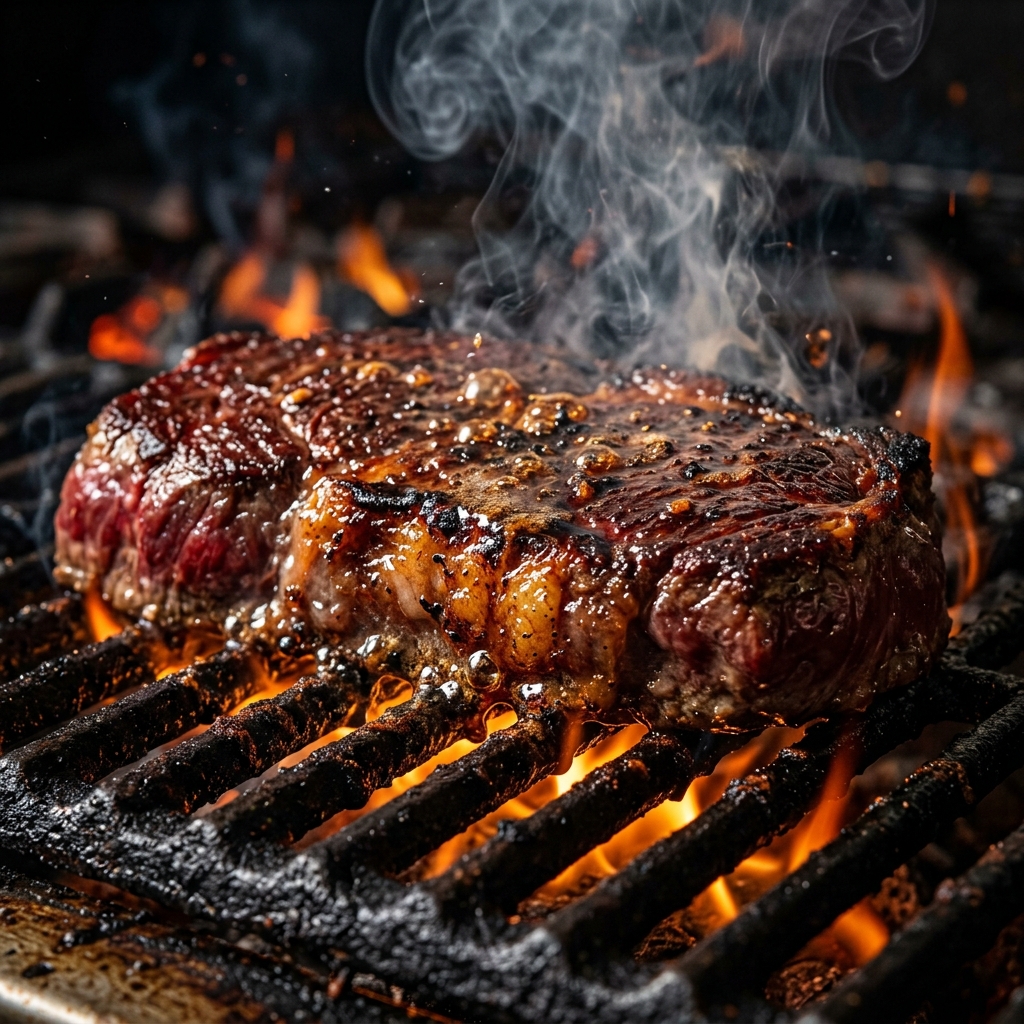
When you take a thick cut of highly exercised, dark red meat that is rich in iron, myoglobin, and complex amino acids, and subject it to a screaming hot cast-iron grill or an open wood fire, the surface undergoes a violent and profound transformation.
The proteins and sugars break down and immediately recombine into hundreds of new, incredibly complex, savory, roasted, and slightly bitter aromatic compounds. These include pyrazines, pyrroles, and thiophenes. This process creates the dark, crispy, deeply caramelized crust on the outside of the steak.
The Scent of the Wild
This aroma is not delicate, and it is certainly not sweet like peaches. It is deep, earthy, roasted, and fiercely savory. It is the primal, mouth-watering smell of a roaring campfire, of roasted nuts, of deeply browned crust and sizzling juices.
While the sweet lactones of Wagyu-ko appeal to our modern desire for luxury and richness, the Maillard reaction triggers an ancient, deeply hardwired carnivorous response in the human brain. It signals sustenance, fire, and survival. It is the authentic, unadulterated aroma of true red meat.
Chapter 3: The Choice Between Fat and Fire
For the modern culinary traveler in Japan, understanding these two aromatic profiles allows you to choose exactly what kind of Wagyu experience you want to have.
If you seek the pinnacle of modern, engineered luxury—a dining experience defined by extreme richness, delicate sweetness, and melting softness—you should seek out A5 Japanese Black and cook it gently. You are chasing the Wagyu-ko.
However, if you want to experience the powerful, visceral thrill of eating deeply flavored meat, you must abandon the pursuit of extreme white fat and seek out a cut that can withstand the intense, violent heat required to trigger a massive Maillard reaction.
Experience the Ultimate Primal Aroma in Tokyo If you have already experienced the sweet, delicate Wagyu-ko of A5 beef, you owe it to yourself to experience the absolute pinnacle of the primal Maillard reaction. You must experience the raw power of true, ancient red meat.
Ibusana Beef, raised exclusively in Miyazaki Prefecture, is the ultimate "Uma-Aka" (delicious lean meat) Wagyu. Because it utilizes the ancient, un-marbled genetics of the Takenotani Tsurugyu breed, the meat is incredibly dense, dark crimson red, and packed with complex amino acids, myoglobin, and iron, while containing very little white intramuscular fat.
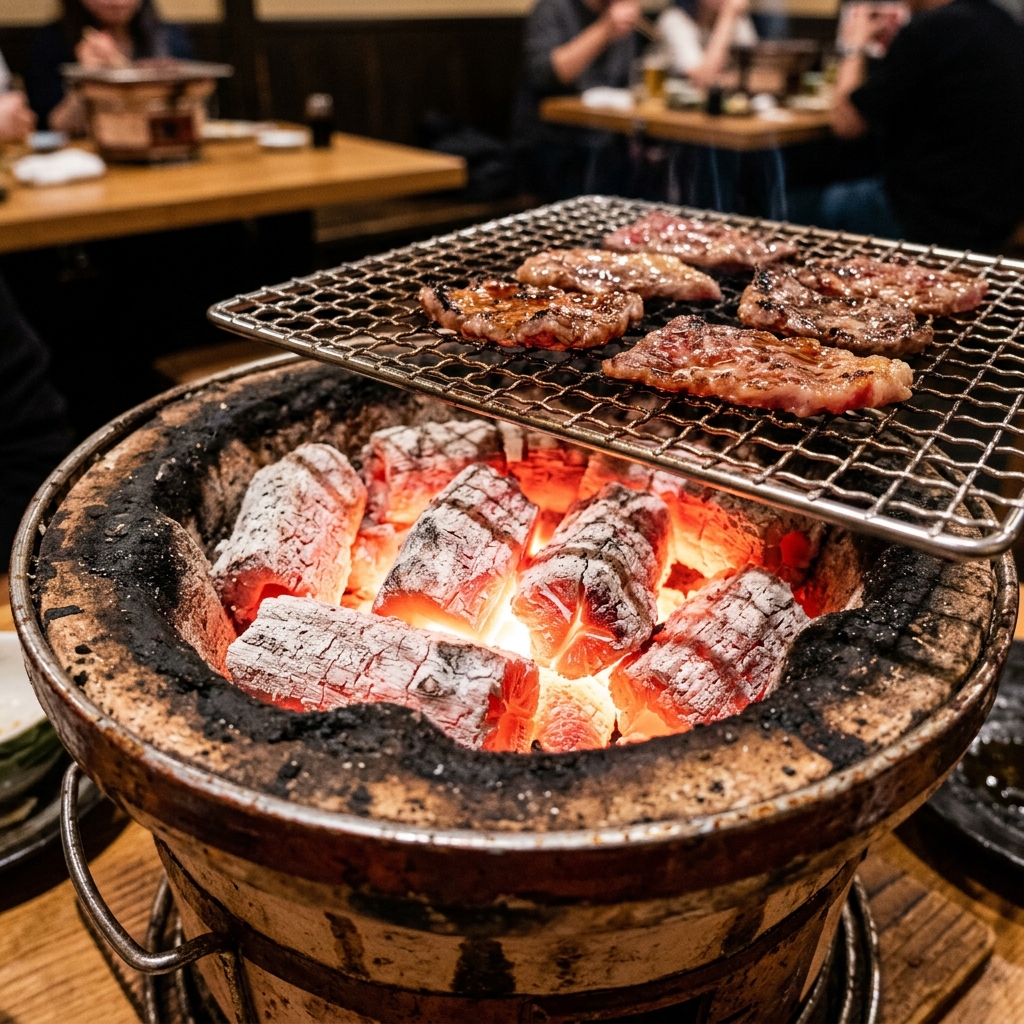
When a thick block of Ibusana is subjected to the intense heat of a traditional open wood fire, it does not release the sweet scent of melting peach-like fat. Instead, the extreme heat triggers a massive, profound Maillard reaction across the dense muscle fibers. The resulting aroma is staggeringly powerful—deep, roasted, savory, and entirely wild.
It is an aromatic experience that cuts through the modern illusions of luxury and connects you directly to the ancient, carnivorous soul of eating meat. You can experience this unforgettable, primal aroma exclusively at Wagyu Yakiniku Ibusana in Tokyo.
Kazuya Akanuma
Wagyu Specialist | Restaurant Consultant | Serial EntrepreneurA seasoned restaurateur and business owner who has successfully founded and managed premier Sushi venues, traditional Yakiniku grills, and high-end Cafe Bars in Tokyo. As an active restaurant consultant, he possesses a rare, 360-degree understanding of the culinary market. Fueled by a relentless passion for culinary craft, he dines at over 600 establishments annually—ranging from ultra-exclusive, reservation-only masterpieces to legendary neighborhood ramen shops. He leverages his insider access and decades of industry experience to guide global travelers to the absolute summit of authentic Japanese dining.
Related Articles
The Physics of the "Teppanyaki" Surface: Chromium-Steel Thermodynamics, the Leidenfrost Effect, and Wagyu Lipid Liquefaction
The Chemistry of "Umami Synergy": How Wagyu Glutamates and Fermented Condiments Trigger Exponential Taste Receptors