The Four Breeds of Wagyu: Beyond the Japanese Black
Wagyu is more than just marbling. Explore the history of the four official breeds of Japanese cattle, and discover the ancient, purebred "living fossil" that predates them all.
The Four Breeds of Wagyu: Beyond the Japanese Black
When you order "Wagyu" in a Michelin-starred restaurant in London, New York, or even Tokyo, you are almost certainly eating one specific type of cattle. The intense, snowflake-like marbling, the sweet peach-like aroma, the incredibly soft, melting texture—these are all the hallmarks of the Japanese Black (Kuroge Washu).
This specific breed is so utterly dominant in the commercial market that for 99% of the world, the word "Wagyu" and the breed "Japanese Black" are entirely synonymous.
But they are not.
The term "Wagyu" (和牛) simply translates directly to "Japanese Beef." Under strict Japanese agricultural law, there are actually four distinct breeds that legally qualify for this prestigious title. Each breed was developed for a specific purpose, in a specific region, and each offers a wildly different culinary experience.
Furthermore, beyond these four modern classifications lies a deeper, older, and much more ancient history of purebred cattle that completely defies what we think of as Wagyu today. To truly understand Japanese beef, you must look beyond the black coat.
Chapter 1: The Meiji Restoration and the Birth of Modern Wagyu
For over a thousand years, due to Buddhist influences and imperial decrees, the consumption of meat from four-legged animals was largely banned in Japan. Cattle were not raised for food; they were highly prized working animals, essential for plowing rice paddies, forestry, and transporting heavy goods across steep mountainous terrain.
This changed dramatically during the Meiji Restoration in the late 19th century. As Japan rapidly opened its borders to the West, the government actively encouraged the adoption of Western diets, including the consumption of beef, believing it was necessary to build a physically stronger nation.
However, the native Japanese cattle were small and slow-growing compared to European breeds. In a massive, nationwide agricultural effort, the government imported thousands of foreign cattle—including Shorthorn, Devon, Brown Swiss, and Simmental—and aggressively crossbred them with the native Japanese working cattle. The goal was to increase the body size and milk production of the domestic herds.
This period of rapid, somewhat chaotic genetic mixing continued for decades. Eventually, the government realized that the distinct working characteristics of the native cattle were being lost. In the early 20th century, the borders were closed to foreign cattle imports, and the crossbreeding stopped.
The resulting distinct regional variations of these crossbred herds were eventually stabilized and officially classified into the four distinct Wagyu breeds we recognize today.
Chapter 2: The Four Official Breeds
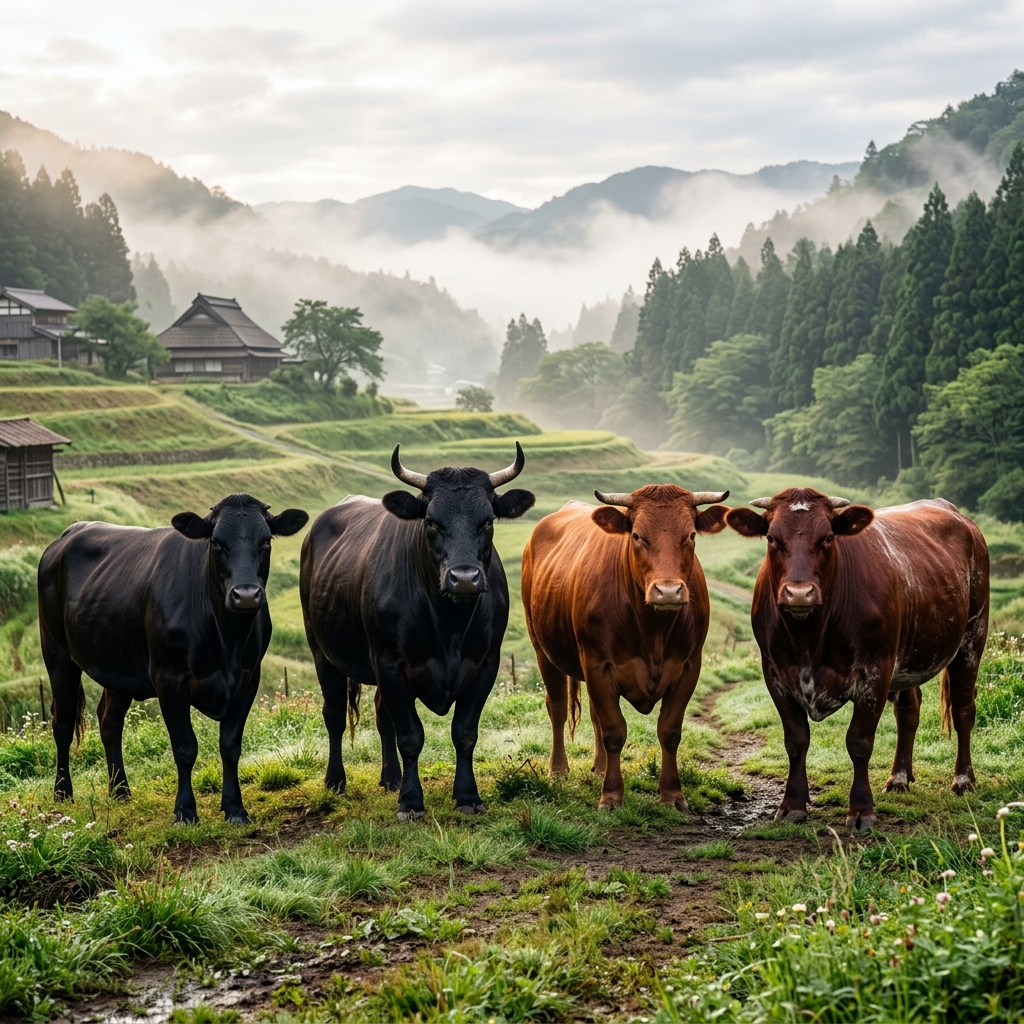
Each of the four official breeds offers a completely different expression of Japanese beef.
1. Japanese Black (Kuroge Washu - 黒毛和種)
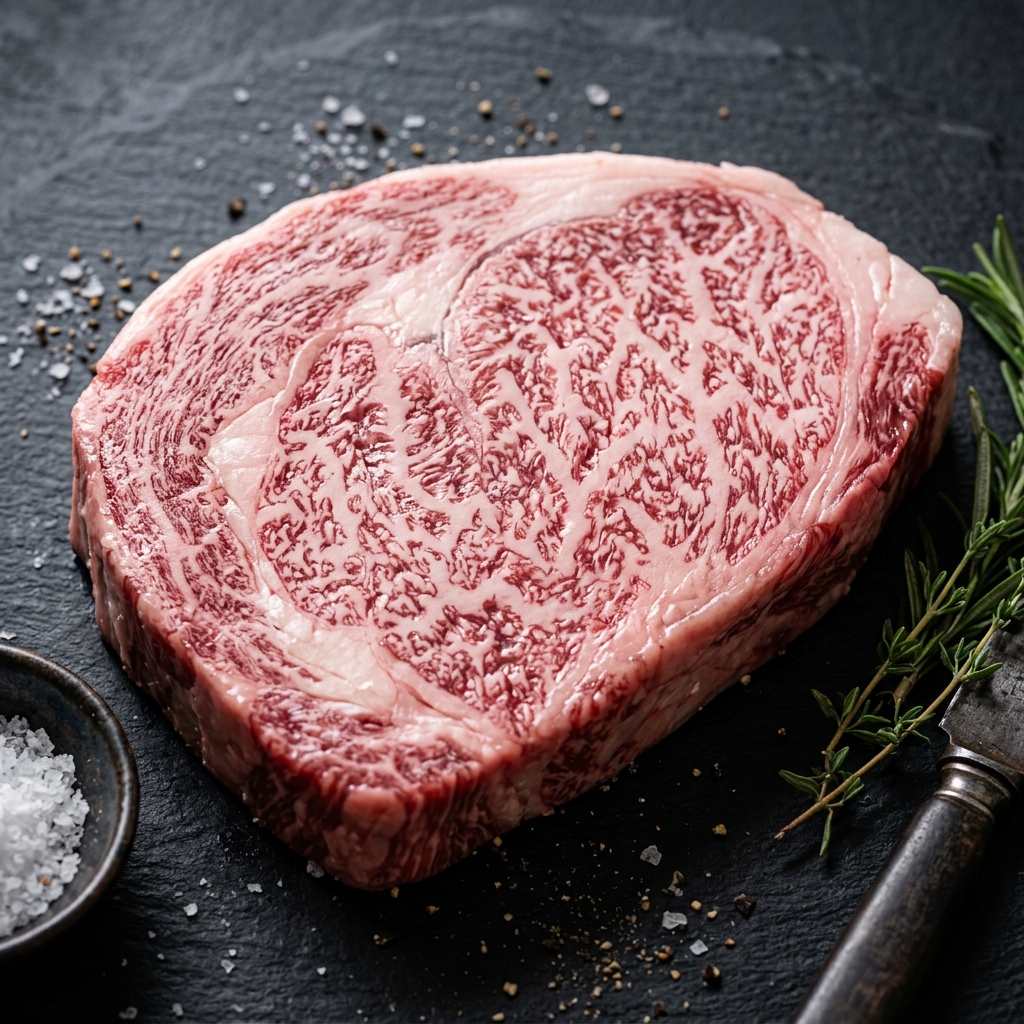
Accounting for over 95% of all Wagyu raised in Japan today, the Japanese Black is the undisputed commercial king. Raised across the entire country, from Hokkaido to Okinawa, this breed possesses a unique, highly localized genetic mutation that causes it to deposit fat directly inside the muscle tissue (intramuscular fat).
This is the marbling (sashi) that defines modern Wagyu. Almost every famous regional brand you have heard of—Kobe Beef, Matsusaka Beef, Omi Beef, Yonezawa Beef—is derived entirely from the Japanese Black breed. They are the ultimate expression of extreme, melting fat.
2. Japanese Brown / Red (Akage Washu - 褐毛和種)
Also known as Akaushi (Red Cow), this breed is primarily raised in Kumamoto Prefecture and Kochi Prefecture (Tosa Akaushi). Because the native cattle in these regions were crossed heavily with Simmental and Korean Hanwoo cattle during the Meiji era, the resulting breed is significantly larger and much leaner than the Kuroge.
Akaushi meat is highly prized by those who find Kuroge too fatty. It produces a meat that is lower in fat, higher in lean muscle mass, and possesses a milder, cleaner, very approachable beef flavor.
3. Japanese Shorthorn (Nihon Tankaku Washu - 日本短角和種)
Found almost exclusively in the cold, northern Tohoku region (particularly Iwate and Aomori), the Shorthorn was developed by crossing native cattle with imported Dairy Shorthorns.
Unlike the Kuroge, which are typically confined to barns, Shorthorns are hardy enough to be raised on open, mountainous pastures (a practice known as Natsuyama-Fuyusato). Because they exercise heavily, their meat is highly lean, incredibly savory, and remarkably rich in amino acids (umami). It lacks the sweet, melting fat of the Kuroge, but makes up for it with a powerful, deeply satisfying meaty chew.
4. Japanese Polled (Mukaku Washu - 無角和種)
This is the rarest of the four official breeds, accounting for only a few hundred head of cattle in all of Japan. Raised primarily in Yamaguchi Prefecture, they were developed by crossing native cattle with imported Aberdeen Angus. As the name suggests, they are hornless (polled). They grow quickly and produce a very dark, incredibly lean, heavily beef-forward meat that is completely devoid of the intricate marbling seen in the Kuroge.
Chapter 3: The Danger of Genetic Narrowing and the Living Fossil
While the Japanese Black produces the world-famous A5 marbling, its absolute dominance in the commercial market has created a serious, existential crisis for the Wagyu industry: genetic narrowing.
Because the current grading system overwhelmingly rewards maximum white fat, farmers are heavily incentivized to breed exclusively from a very small pool of "super sires" (elite bulls that have proven to consistently produce highly marbled offspring). As a result, the genetic diversity of the Japanese Black is shrinking rapidly. We have engineered a cow that is absolutely perfect at producing fat, but we are slowly losing the original, robust, biologically diverse genetics of the native Japanese cattle.
If a disease were to strike, or if the climate changes dramatically, this highly homogenized, pampered breed could be at serious risk.
To find the true, original soul of Wagyu—before the Meiji crossbreeding with Western cattle, and before the modern obsession with maximizing marbling—you have to look beyond the four official breeds. You have to look for the "living fossils."
The Ancient Bloodline: Takenotani Tsurugyu
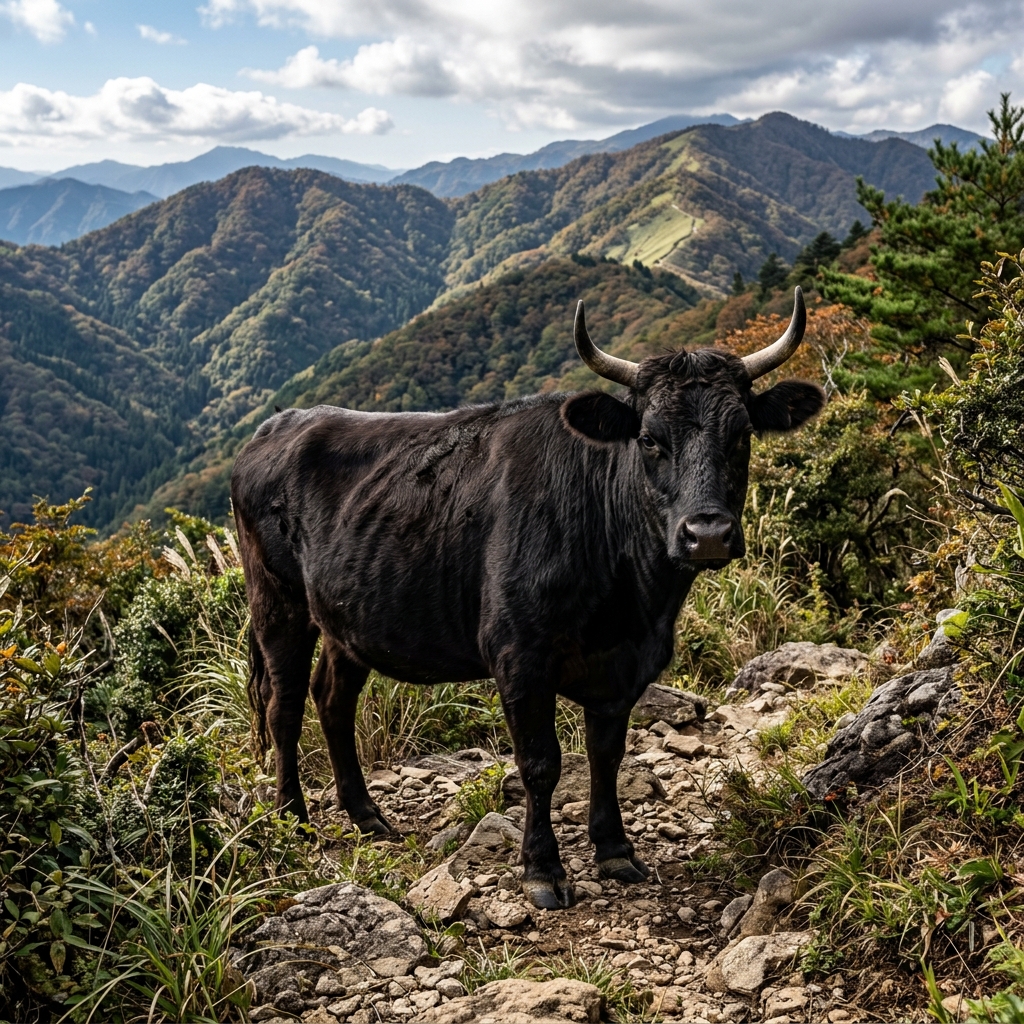
Hidden deep in the steep, isolated mountains of Niimi City in Okayama Prefecture lies a herd of cattle that escaped the Meiji crossbreeding efforts entirely. This is the legendary Takenotani Tsurugyu (竹の谷蔓牛).
Considered Japan's oldest purebred lineage, these cattle are physically smaller, wildly muscular, and retain all the fierce, hardy characteristics of the original Japanese working cattle from the Edo period. Crucially, because they were never crossed with Western dairy breeds, and never bred for fat, they possess almost zero genetic predisposition for the intense marbling seen in modern Japanese Blacks.
Their meat is a profound, dark crimson red. It is tough, gamey, and fiercely savory, demanding a powerful chew. It is the absolute antithesis of modern A5 Wagyu. It is an unadulterated glimpse into the past, representing the true, original starting point of Japanese beef history.
Experience the Reborn Ancient Bloodline in Tokyo The Takenotani Tsurugyu is an incredible piece of living history, but its pure, heavily exercised red meat can sometimes be almost too tough or challenging for the modern culinary palate. But what if you could harness that profound, ancient, iron-rich umami and refine the texture just enough to create the ultimate culinary masterpiece?
Ibusana Beef, raised exclusively in Miyazaki Prefecture, is the direct, evolutionary descendant of the Takenotani Tsurugyu. By carefully crossing these ancient, purebred genetics with select Japanese Black cattle in a stress-free environment, the farmers of Ibusana have achieved the impossible.
They have retained the deep, complex, wild red meat flavor and powerful umami of the Takenotani while creating a texture that yields beautifully to the teeth. It completely rejects the extreme white fat of modern A5 in favor of the ultimate "Uma-Aka" (delicious lean meat).
You can experience this incredibly rare fusion of ancient genetics and masterful refinement exclusively at Wagyu Yakiniku Ibusana in Tokyo.
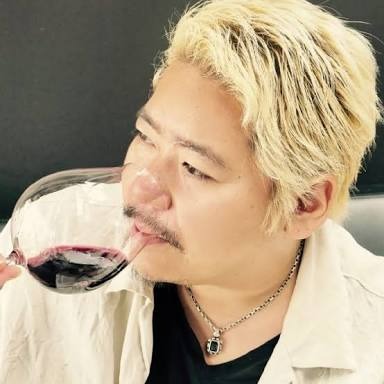
Kazuya Akanuma
Wagyu Specialist | Restaurant Consultant | Serial EntrepreneurA seasoned restaurateur and business owner who has successfully founded and managed premier Sushi venues, traditional Yakiniku grills, and high-end Cafe Bars in Tokyo. As an active restaurant consultant, he possesses a rare, 360-degree understanding of the culinary market. Fueled by a relentless passion for culinary craft, he dines at over 600 establishments annually—ranging from ultra-exclusive, reservation-only masterpieces to legendary neighborhood ramen shops. He leverages his insider access and decades of industry experience to guide global travelers to the absolute summit of authentic Japanese dining.
Related Articles
The Physics of the "Teppanyaki" Surface: Chromium-Steel Thermodynamics, the Leidenfrost Effect, and Wagyu Lipid Liquefaction
The Chemistry of "Umami Synergy": How Wagyu Glutamates and Fermented Condiments Trigger Exponential Taste Receptors