The Evolution of Yakiniku: From Post-War Scraps to High-End Gastronomy
Trace the fascinating history of Japanese BBQ. Discover how the pursuit of luxury is causing the most exclusive restaurants to return to the ancient roots of red meat.
The Evolution of Yakiniku: From Post-War Scraps to High-End Gastronomy
In the modern culinary landscape, "Yakiniku" (Japanese BBQ) is globally recognized as an experience synonymous with extreme luxury.
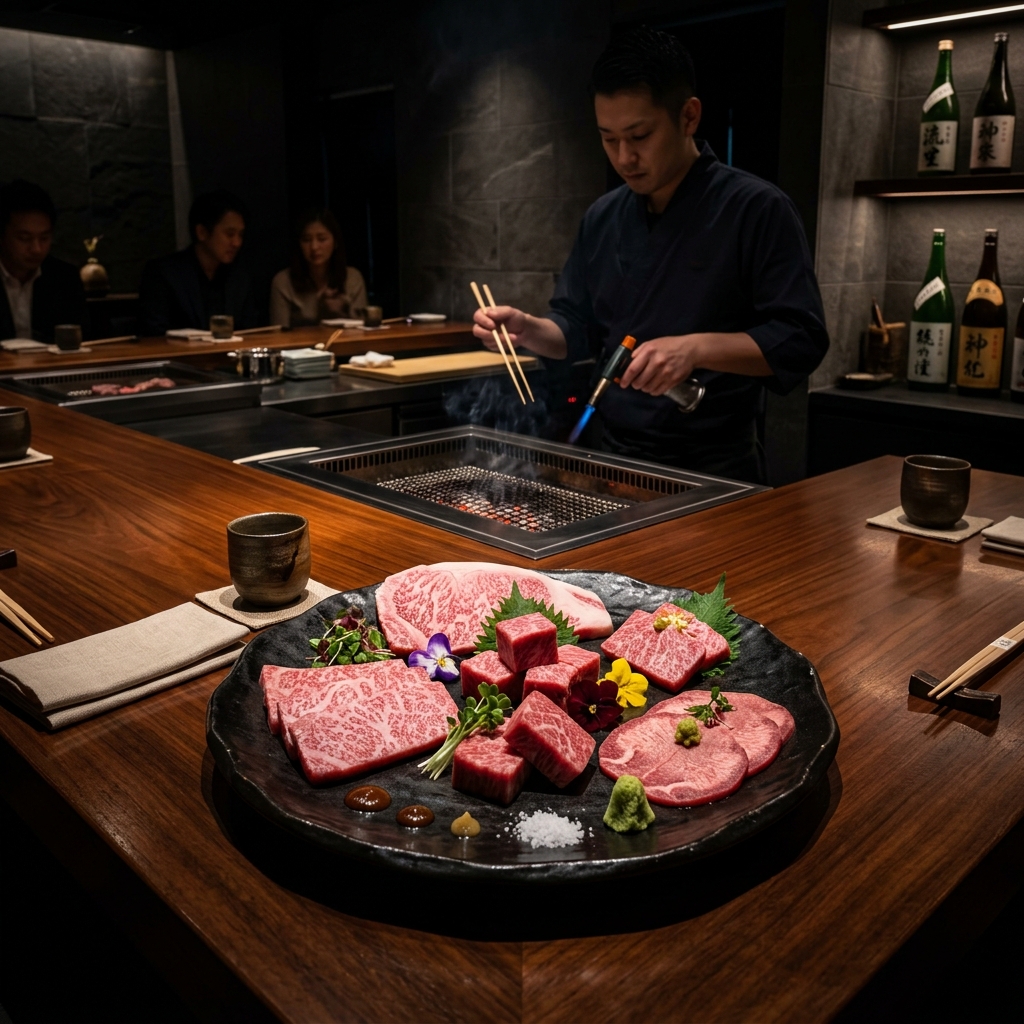
When international travelers visit Tokyo, sitting at a pristine, polished wood counter while a master chef meticulously grills an A5 Wagyu Chateaubriand over Binchotan charcoal is often at the very top of their culinary bucket list. It is presented as a refined, elegant, and deeply traditional Japanese art form.
However, the culture of grilling beef in Japan is surprisingly young. In a country with thousands of years of recorded culinary history, Yakiniku in its current form simply did not exist until the mid-20th century. To truly understand the modern obsession with high-end Wagyu, and to appreciate where the culinary avant-garde is heading next, we must trace Yakiniku back to its fascinating, gritty, and incredibly humble roots.
Chapter 1: The Humble Roots and the Black Market
For much of its history, Japan had strict religious and cultural bans on the consumption of meat, particularly beef. While these bans were officially lifted during the Meiji Restoration (1868) by the Emperor in an attempt to encourage Westernization and build a stronger populace, beef remained an extreme luxury far out of reach for the common citizen for almost another century.
The true birth of Yakiniku as a popular, working-class culture occurred in the desperate, chaotic aftermath of World War II.
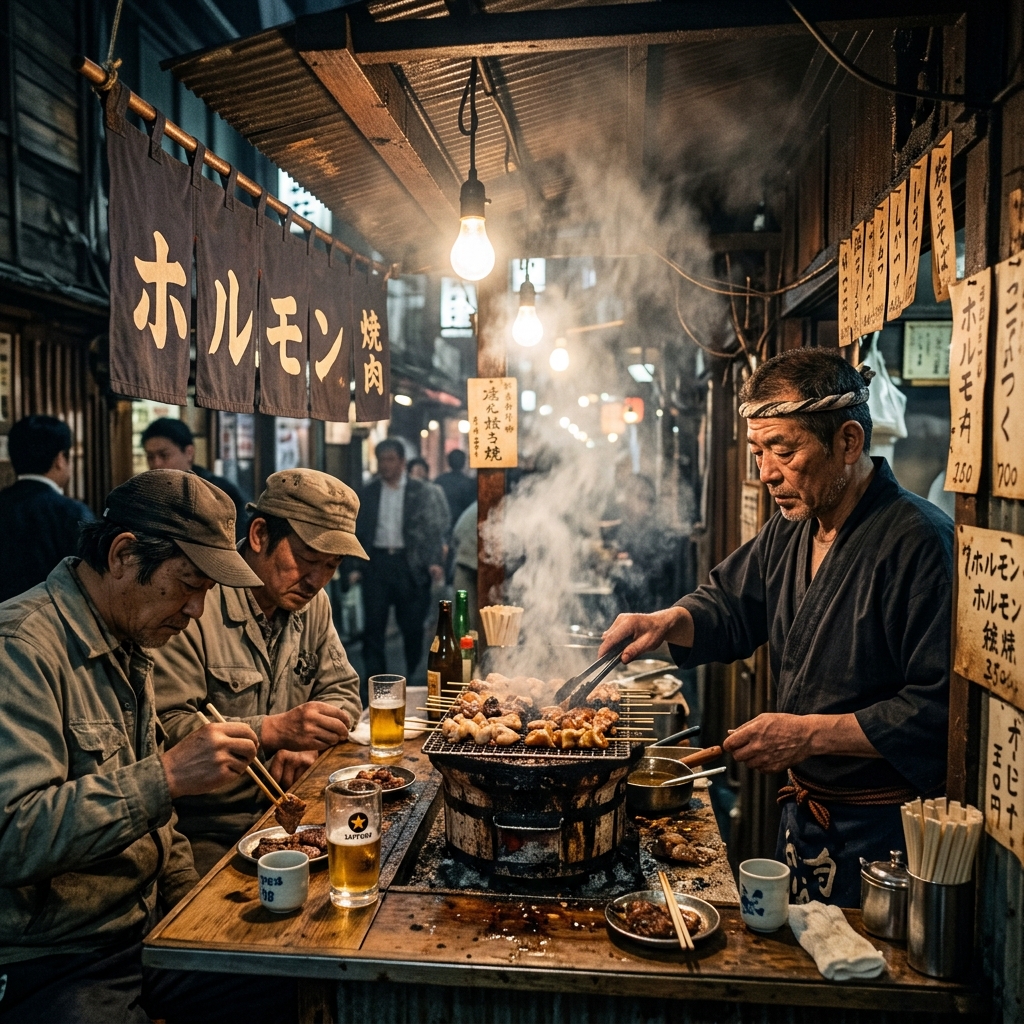
During the late 1940s and early 1950s, food in Japan was incredibly scarce. In the sprawling black markets of Osaka and Tokyo, Korean immigrants (Zainichi Koreans) began grilling the discarded internal organs of cows and pigs—items that traditional Japanese butchers considered garbage and threw away.
This was the birth of Horumon-yaki.
The word "Horumon" is often said to derive from the Kansai dialect phrase horu mono, which literally means "things to be thrown away." It was cheap, highly caloric, deeply flavorful, and crucially, it kept the working class alive during the toughest years of the Showa era. It was grilled over rudimentary charcoal braziers in smoke-filled, gritty alleyways, always accompanied by cheap alcohol. It was a food of survival, not luxury.
Chapter 2: The Economic Miracle and the Rise of Wagyu
As Japan entered its unprecedented period of rapid economic growth in the 1960s, 70s, and 80s (the Japanese Economic Miracle), the nation's palate and purchasing power evolved dramatically.
The working class now had disposable income. They no longer wanted to eat only the "discarded" organs out of necessity; they wanted to eat the prized red meat (Aka-mi) and the premium cuts (Karubi, Rosu). Yakiniku began to transition from a gritty street-food survival mechanism into a popular family dining experience.
This economic boom coincided perfectly with a major shift in the Japanese agricultural industry. Farmers developing the Japanese Black (Kuroge Washu) cattle breed realized that by confining the cattle to barns and feeding them incredibly high-calorie grain diets, they could produce meat with unprecedented amounts of white intramuscular fat (marbling).
As the Japanese economy soared, so did the demand for visual luxury. Marbling became the ultimate status symbol. By the 1990s and 2000s, the A5 grading system was entrenched as the gospel of beef quality.
Yakiniku restaurants evolved to match this new luxury product. The smoke-filled rooms and cheap braziers were replaced with downdraft exhaust systems, private rooms, and omakase-style menus. Yakiniku had officially morphed into high-end gastronomy.
Chapter 3: The Modern Pivot and the Return to the Source
Today, modern Tokyo Yakiniku is a highly refined, globally celebrated culinary art form. The meat is presented like jewelry, and the service is impeccable.
However, a fascinating and dramatic shift is currently occurring at the absolute pinnacle of this industry.
The most avant-garde chefs, the most demanding gourmands, and the true connoisseurs have realized that the pursuit of A5 marbling has hit a ceiling. When meat becomes 60% fat, you lose the essence of what makes beef delicious. You lose the chew, you lose the iron, and you lose the complex umami.
The cutting-edge of Yakiniku is now pivoting away from extreme fat, and looking backward. They are searching for the profound, robust, deeply meaty flavors that defined the very origins of eating beef, long before artificial fattening and the A5 grading system took over.
Experience the Ultimate Evolution in Tokyo If you want to experience the very cutting edge of Tokyo's high-end Yakiniku scene—a place that completely rejects the modern obsession with white fat and returns to the profound, ancient roots of red meat—you must visit Wagyu Yakiniku Ibusana.
Ibusana does not serve standard A5 Wagyu. They exclusively serve their own proprietary breed, directly descended from the ancient Takenotani Tsurugyu (Japan's oldest purebred lineage). By utilizing these ancient genetics, they have created a meat that is incredibly dense, dark red, and packed with complex, iron-rich umami.
Roasting a thick cut of Ibusana over an open wood fire is the ultimate evolution of Yakiniku. It is a luxurious, high-end culinary experience, but the flavor is entirely primal. It is the deep, satisfying, unadulterated taste of pure "Uma-Aka" (delicious lean meat) that the modern Wagyu industry left behind in its pursuit of fat.
Reserve your table and taste the future (and the ancient past) of Japanese BBQ exclusively at Wagyu Yakiniku Ibusana in Tokyo.
Kazuya Akanuma
Wagyu Specialist | Restaurant Consultant | Serial EntrepreneurA seasoned restaurateur and business owner who has successfully founded and managed premier Sushi venues, traditional Yakiniku grills, and high-end Cafe Bars in Tokyo. As an active restaurant consultant, he possesses a rare, 360-degree understanding of the culinary market. Fueled by a relentless passion for culinary craft, he dines at over 600 establishments annually—ranging from ultra-exclusive, reservation-only masterpieces to legendary neighborhood ramen shops. He leverages his insider access and decades of industry experience to guide global travelers to the absolute summit of authentic Japanese dining.
Related Articles
The Samurai Feast: Sengoku Military Rations, Edo Evasion Codes, and the Secret Origin of Medicinal Beef
The Forgotten Breeds: Restoring the Sacred Shorthorn (Nihon Tankaku-shu) and Polled (Nihon Mukaku-shu) Genetics