The Samurai Feast: Sengoku Military Rations, Edo Evasion Codes, and the Secret Origin of Medicinal Beef
Explore the hidden history of meat-eating during Japan's centuries of Buddhist meat bans. Discover Sengoku samurai high-energy rations, Edo-era "medicinal beef" loopholes, and the secret preservation of pure Wagyu lineages.
The 1,200-Year Ban and the Shadows of Gastronomy
In contemporary global gastronomy, Japanese Wagyu is celebrated as a pinnacle of culinary refinement. Yet, for over a millennium, eating beef in Japan was not only a cultural taboo but a state-sanctioned crime. In 675 AD, Emperor Tenmu issued the first imperial decree banning the consumption of cattle, horses, dogs, monkeys, and chickens, heavily influenced by Buddhist tenets of reincarnation and Shinto concepts of ritual purity (kegare).
For twelve centuries, this prohibition shaped the Japanese culinary landscape. However, human desire and military necessity are powerful forces. Beneath the surface of official decrees lay a fascinating history of subversion, secret samurai feasts, and clever legal loopholes that ultimately preserved the precious genetic lineages of modern Wagyu.
Sengoku Guerrilla Rations: Beef on the Battlefield
During the chaotic Sengoku Period (1467–1603), constant warfare forced military commanders (daimyo) to re-evaluate their strict dietary habits. On the battlefield, soldiers required dense, high-protein energy sources to sustain prolonged physical exertion.
Some far-sighted commanders recognized that cattle—hitherto used strictly as draft beasts in rice paddies—possessed immense nutritional value.
       [Official Shinto/Buddhist Taboo] -> "Eating four-legged beasts defiles the soul"
                                                 |
                       (Military Necessity / Portuguese Contact)
                                                 |
       [Sengoku Battlefield Exception]  -> High-protein energy, raw vitality for battle
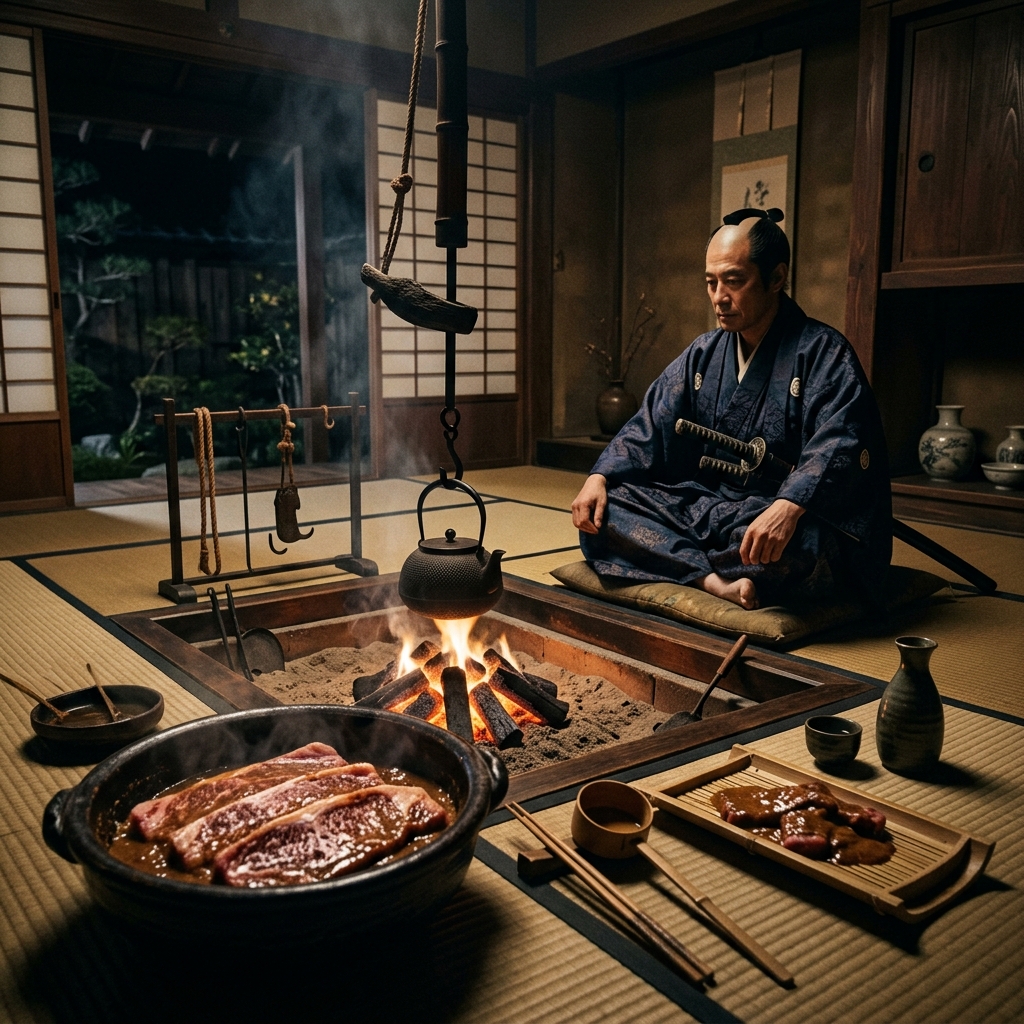
Christian daimyo, such as Takayama Ukon, openly embraced beef consumption under the influence of Portuguese missionaries, who introduced European beef-eating customs. In a famous historical account during the Siege of Odawara (1590), Ukon hosted a secret beef feast for prominent generals, including Toyotomi Hideyoshi and Kuroda Kanbei.
Hideyoshi, despite officially enforcing anti-Christian edicts later on, reportedly found the meat exceptionally delicious and recognized its utility in restoring physical vigor to fatigued warlords.
Edo Loopholes: The Rise of "Medicinal Beef" (Kusuri-gui)
When the Tokugawa Shogunate established lasting peace in 1603, the ban on meat was strictly reinstated. Yet, the taste for beef did not disappear. To bypass the laws of the Shogunate without incurring execution or exile, Edo-period citizens and samurai developed ingenious euphemisms and legal fictions.
The most famous loophole was the concept of Kusuri-gui (薬喰い), or "medicinal eating."
Because Shinto taboos focused on eating meat for pleasure or luxury, eating meat to cure an illness or restore physical vitality was deemed a necessary evil. If a samurai was weak, elderly, or suffering from joint pain, a physician could prescribe "medicinal beef" as a restorative tonic.
To further distance themselves from the sin of slaughter, citizens developed colorful botanical code names for animal meats based on the seasons and colors:
- Botan (Peony): Wild Boar (due to the pinkish-red meat arranged in flower-like patterns).
- Momiji (Maple): Venison (since maple leaves turn deep red in autumn, matching the deer-hunting season).
- Sakura (Cherry Blossom): Horsemeat (reflecting the bright pink hue of fresh horse meat).
- Hikone-Gyu: Beef marinated in fermented miso, packed in wooden barrels, and labeled as a "life-prolonging drug."
The Hikone Domain: The Shogun's Secret Supplier
The epicentre of this underground beef trade was the Hikone Domain (modern-day Shiga Prefecture), ruled by the powerful Ii Clan, who served as the chief advisors (Tairo) to the Tokugawa Shogunate.
Remarkably, Hikone was the only domain in all of Japan officially permitted by the Shogunate to slaughter cattle. Ostensibly, this permission was granted because Hikone produced the leather for the Shogun’s military drums and samurai armor. However, the byproduct of this leather industry was a steady supply of high-quality beef.
 [Hikone Domain (Ii Clan)] -> Officially licensed for cattle slaughter (for armor leather)
                                      |
                     (Byproduct: Intramuscular Marbled Beef)
                                      |
              [Gyuniku no Misozuke (Miso-Marinated Medicinal Beef)]
                                      |
           Sent to: Tokugawa Shogun, Mito Clan, and Daimyo as a "Tonic"
The master craftsmen of Hikone developed Gyuniku no Misozuke (牛肉の味噌漬)—premium cuts of beef preserved in thick, fermented miso paste. This preservation method served two purposes: it kept the meat fresh during the long journey to Edo (modern-day Tokyo), and it allowed the recipients to consume it under the guise of taking a "thick medicine."
Historical records show that influential figures like Tokugawa Nariaki (the lord of the Mito Domain) were absolute fanatics for Hikone's miso-marinated beef, writing frantic letters begging the Ii Clan for more shipments when supplies ran low.
Genetics of Isolation: How the Taboo Saved the Tajima Lineage
The long history of beef prohibition had an unexpected and profound impact on the genetics of Japanese cattle. Because cattle could not be legally transported, sold, or crossbred across regional domain borders, small pockets of cattle populations remained in complete geographical isolation for centuries.
In the rugged, mountainous terrain of the Tajima region (modern-day northern Hyogo Prefecture), farmers kept their draft cows inside their family homes (umaya), treating them as treasured companions. The steep mountains prevented cross-breeding with outside cattle, forcing generations of closed-loop, highly selective breeding.
This extreme isolation protected the Tajima-Gyu (但馬牛) bloodline from genetic contamination, particularly in the late 19th century when Japan opened its borders and aggressively crossbred local cattle with massive Western breeds like Simmental and Devon.
When the crossbreeding frenzy threatened to wipe out Japan's native genetics, it was the hidden, isolated mountain lineages—preserved by the old isolationist draft-animal culture—that remained pure.
Today, every single modern Tajima-derived Wagyu (including Kobe Beef and Matsusaka Beef) traces its lineage directly back to these isolated, taboo-sheltered mountain draft cows, making the 1,200-year ban the ultimate, accidental savior of the world's most luxurious beef genetics.
Kazuya Akanuma
Wagyu Specialist | Restaurant Consultant | Serial EntrepreneurA seasoned restaurateur and business owner who has successfully founded and managed premier Sushi venues, traditional Yakiniku grills, and high-end Cafe Bars in Tokyo. As an active restaurant consultant, he possesses a rare, 360-degree understanding of the culinary market. Fueled by a relentless passion for culinary craft, he dines at over 600 establishments annually—ranging from ultra-exclusive, reservation-only masterpieces to legendary neighborhood ramen shops. He leverages his insider access and decades of industry experience to guide global travelers to the absolute summit of authentic Japanese dining.
Related Articles
The Forgotten Breeds: Restoring the Sacred Shorthorn (Nihon Tankaku-shu) and Polled (Nihon Mukaku-shu) Genetics
Is Wagyu Halal? The Molecular Rigor of Halal Certification, Aseptic Slaughterhouses, and Islamic Gastronomy in Japan