The Bloodlines: How One Bull Changed the World
The incredible story of Yasufuku. Understand the danger of extreme genetic inbreeding in modern Wagyu, and why the ancient Takenotani bloodline is the ultimate escape route.
The Bloodlines: How One Bull Changed the World
When you eat Wagyu, you are not just eating meat; you are eating the result of one of the most intense, highly engineered agricultural breeding programs in human history.
Unlike Western cattle, which have been mixed and crossbred across vast continents for centuries, Japanese cattle have been isolated on a mountainous island. Furthermore, they were heavily restricted within individual prefectures for hundreds of years. This geographic isolation created incredibly concentrated, distinct bloodlines.
To truly understand modern Wagyu, you must understand its genetics. And to understand its genetics, you must know the name of a single bull born in Hyogo Prefecture in 1980.
Chapter 1: The Legend of Yasufuku
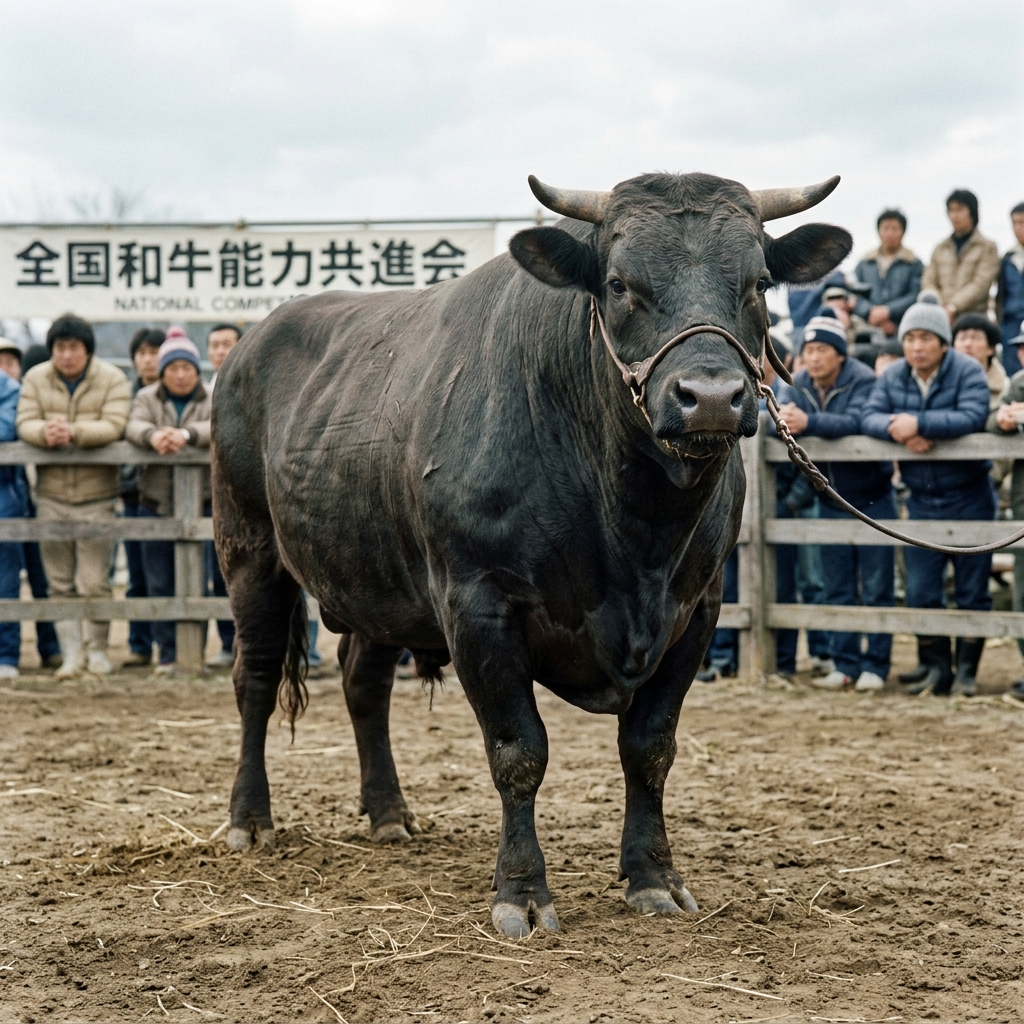
In 1980, a Tajima (Kobe) calf was born named Yasufuku. As he grew, farmers noticed something extraordinary. When Yasufuku was bred with cows, his offspring consistently produced meat with a level of marbling (sashi) that had never been seen before in the history of Japanese agriculture.
He possessed a genetic mutation that allowed his offspring to convert grain into pure white intramuscular fat with terrifying efficiency.
Yasufuku became an absolute legend. His semen was collected and distributed across the entire country. Farmers from Hokkaido to Kyushu scrambled to inject his genetics into their local herds to boost their marbling scores and win national competitions.
By the time Yasufuku died in 1993, he had sired over 40,000 calves. But his legacy did not stop there. His sons and grandsons inherited his extreme marbling gene, and they too became the dominant studs of the industry.
Today, it is estimated that over 80% of all Japanese Black cattle alive today carry the DNA of Yasufuku. He is the grandfather of modern Wagyu.
Chapter 2: The Danger of the Bottleneck
Yasufuku's incredible genetics revolutionized the industry, allowing farmers to consistently produce the A5 marbling that global markets demanded. But this success came with a terrifying hidden cost.
By relying so heavily on the genetics of a single bull, the Japanese Wagyu industry created one of the most extreme genetic bottlenecks in agricultural history.
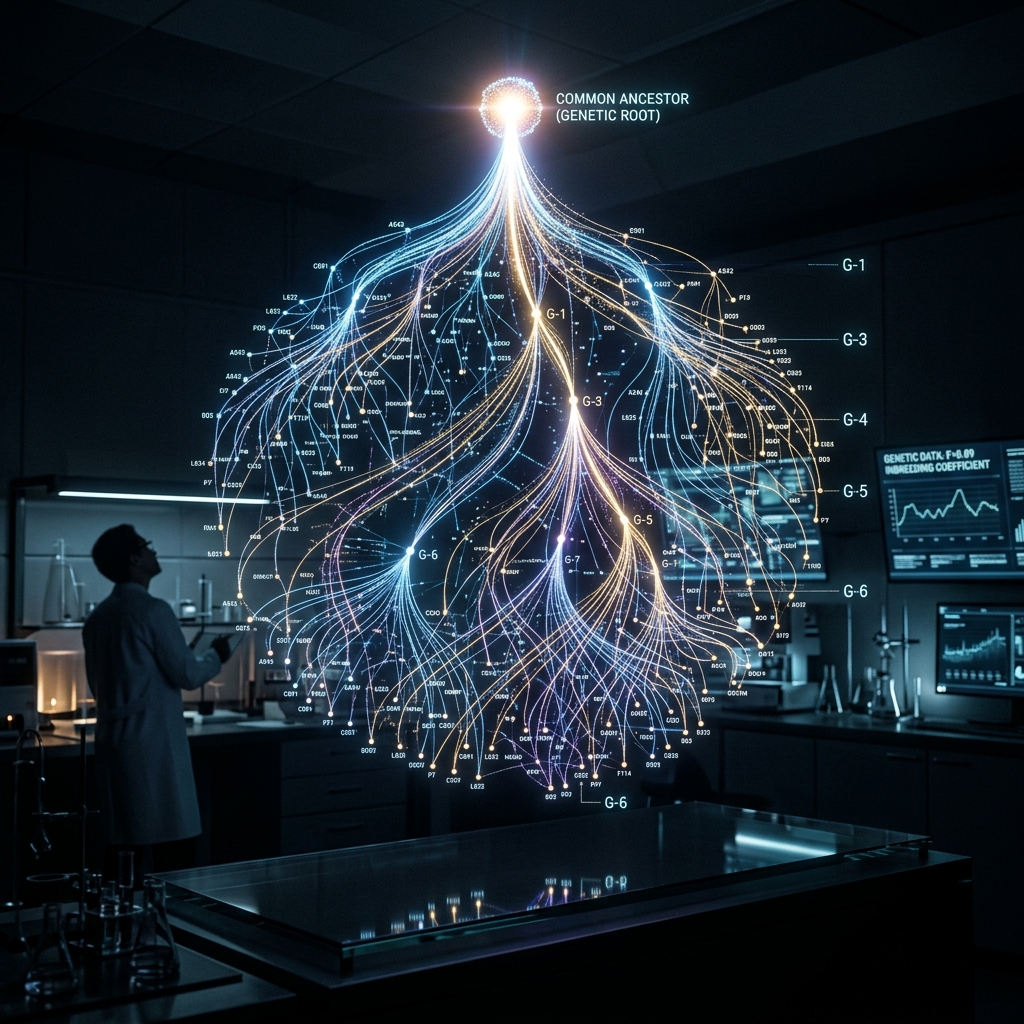
The Threat of Inbreeding
Today, if a farmer mates a random Wagyu cow with a random Wagyu bull, there is a very high mathematical probability that they are closely related—often half-siblings or first cousins sharing Yasufuku's DNA.
This extreme inbreeding leads to severe biological vulnerabilities. The cattle become physically weaker, more susceptible to disease, and heavily reliant on antibiotics and hyper-controlled indoor environments to survive. Furthermore, from a culinary perspective, extreme inbreeding leads to homogenization. When 80% of the cows have the exact same grandfather, the meat begins to taste exactly the same, no matter what prefecture it comes from. The unique, regional flavors of Wagyu are slowly being erased by the pursuit of pure white fat.
Chapter 3: The Genetic Escape Route (Uma-Aka)
If the entire Wagyu industry is trapped in a genetic bottleneck caused by the pursuit of marbling, how does a true meat connoisseur find beef that is robust, healthy, and completely unique in flavor?
They must look to the past. They must find an outcross—a bloodline that completely predates the Yasufuku mutation.
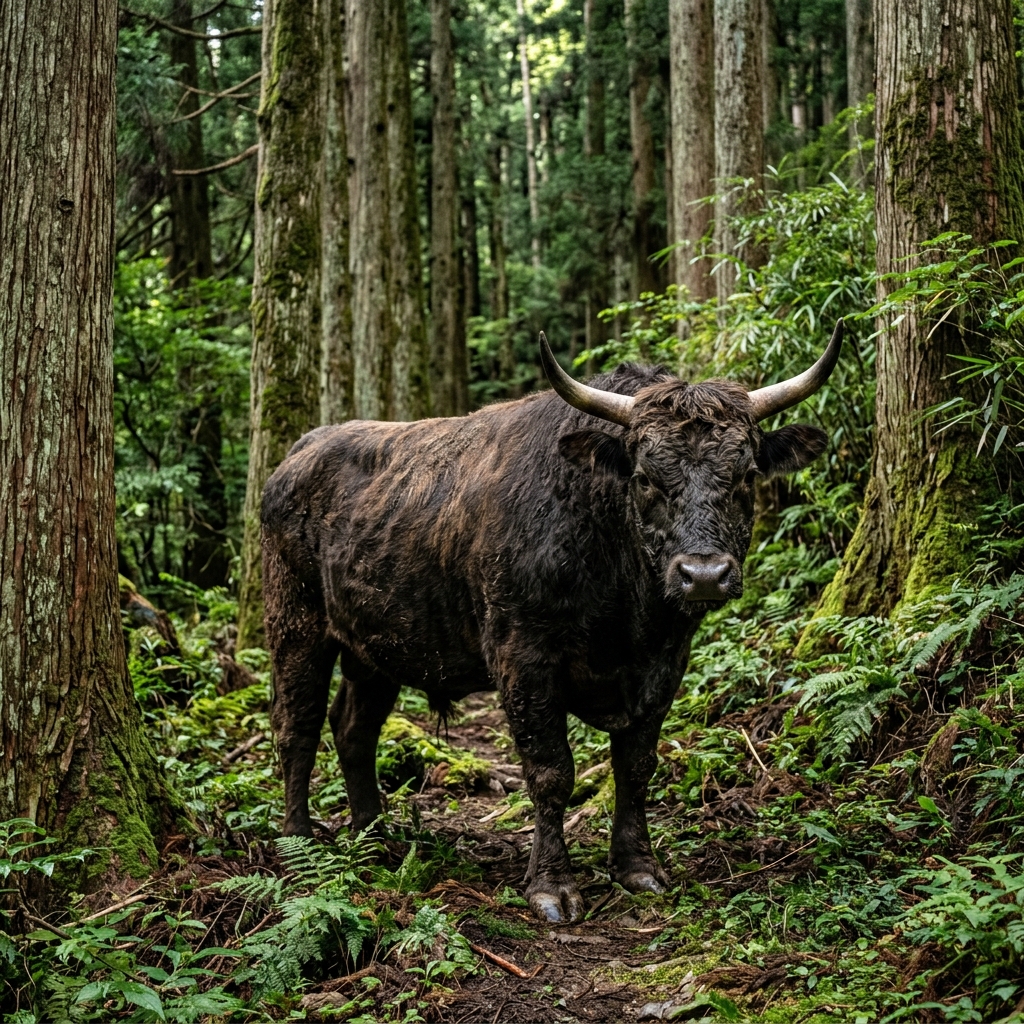
Taste the Ancient Bloodline in Tokyo If you want to taste what Japanese beef tasted like before extreme inbreeding homogenized the industry, you must experience the ancient genetics of Ibusana Beef.
Ibusana is a miraculous genetic escape route. It is directly descended from the Takenotani Tsurugyu, Japan’s oldest surviving native cattle bloodline (dating back to the 1830s in Okayama). This bloodline is completely separated from the modern Yasufuku marbling bottleneck.
Because Ibusana possesses these ancient, untainted genetics, the cattle are incredibly robust, healthy, and deeply connected to their natural terroir in Miyazaki. Their meat does not taste like every other A5 Wagyu on the market. Instead of white fat, their genetics produce incredibly dense, iron-rich, profoundly flavorful red meat (Uma-Aka).
It is a wild, primal, and deeply historical flavor that cannot be engineered in a modern lab. To experience this incredibly rare, un-inbred ancient Japanese beef, secure your reservation at Wagyu Yakiniku Ibusana in Tokyo.
Kazuya Akanuma
Wagyu Specialist | Restaurant Consultant | Serial EntrepreneurA seasoned restaurateur and business owner who has successfully founded and managed premier Sushi venues, traditional Yakiniku grills, and high-end Cafe Bars in Tokyo. As an active restaurant consultant, he possesses a rare, 360-degree understanding of the culinary market. Fueled by a relentless passion for culinary craft, he dines at over 600 establishments annually—ranging from ultra-exclusive, reservation-only masterpieces to legendary neighborhood ramen shops. He leverages his insider access and decades of industry experience to guide global travelers to the absolute summit of authentic Japanese dining.
Related Articles
The Samurai Feast: Sengoku Military Rations, Edo Evasion Codes, and the Secret Origin of Medicinal Beef
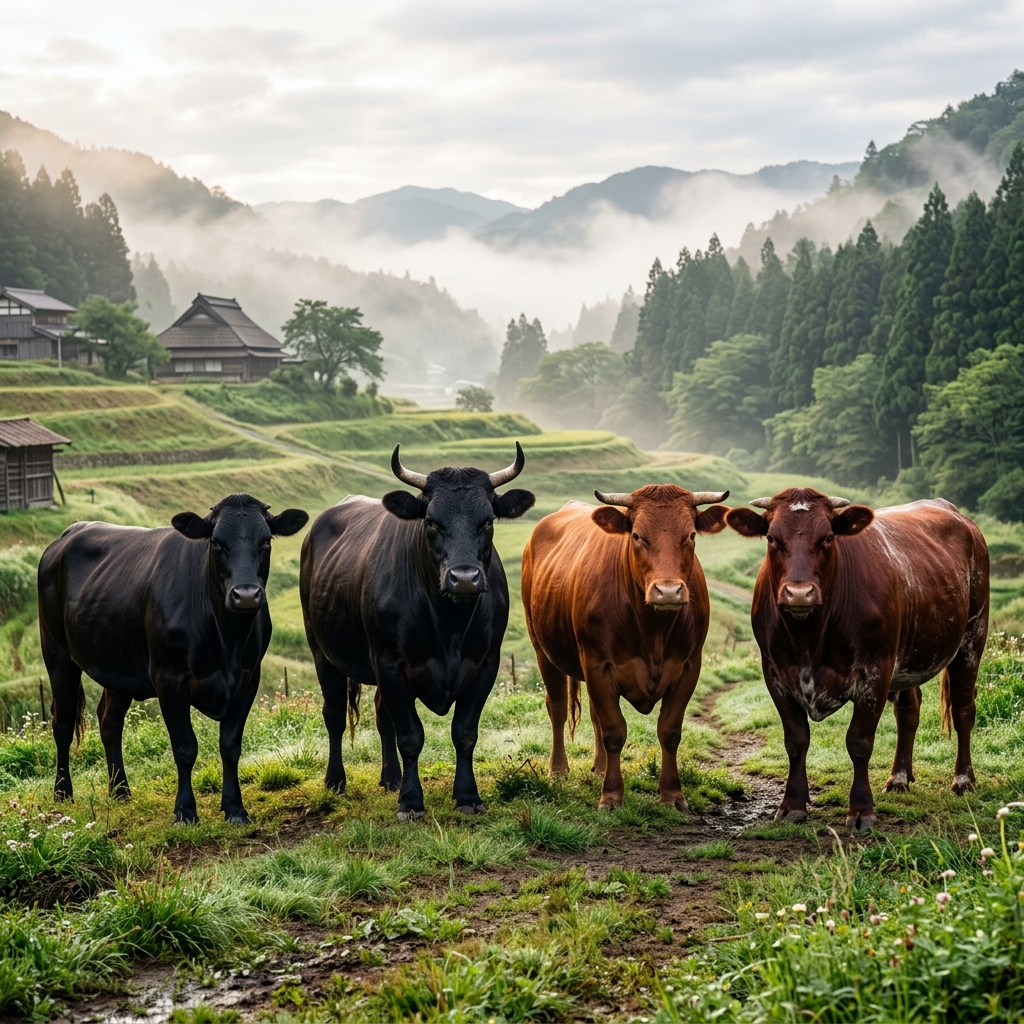
The Forgotten Breeds: Restoring the Sacred Shorthorn (Nihon Tankaku-shu) and Polled (Nihon Mukaku-shu) Genetics