The Art of Aging: Why Wagyu Defies Western Steakhouse Rules
Why do you rarely see 60-day dry-aged A5 Wagyu? Discover the science of aging meat, the danger of oxidizing fat, and the ultimate red meat canvas.
The Art of Aging: Why Wagyu Defies Western Steakhouse Rules
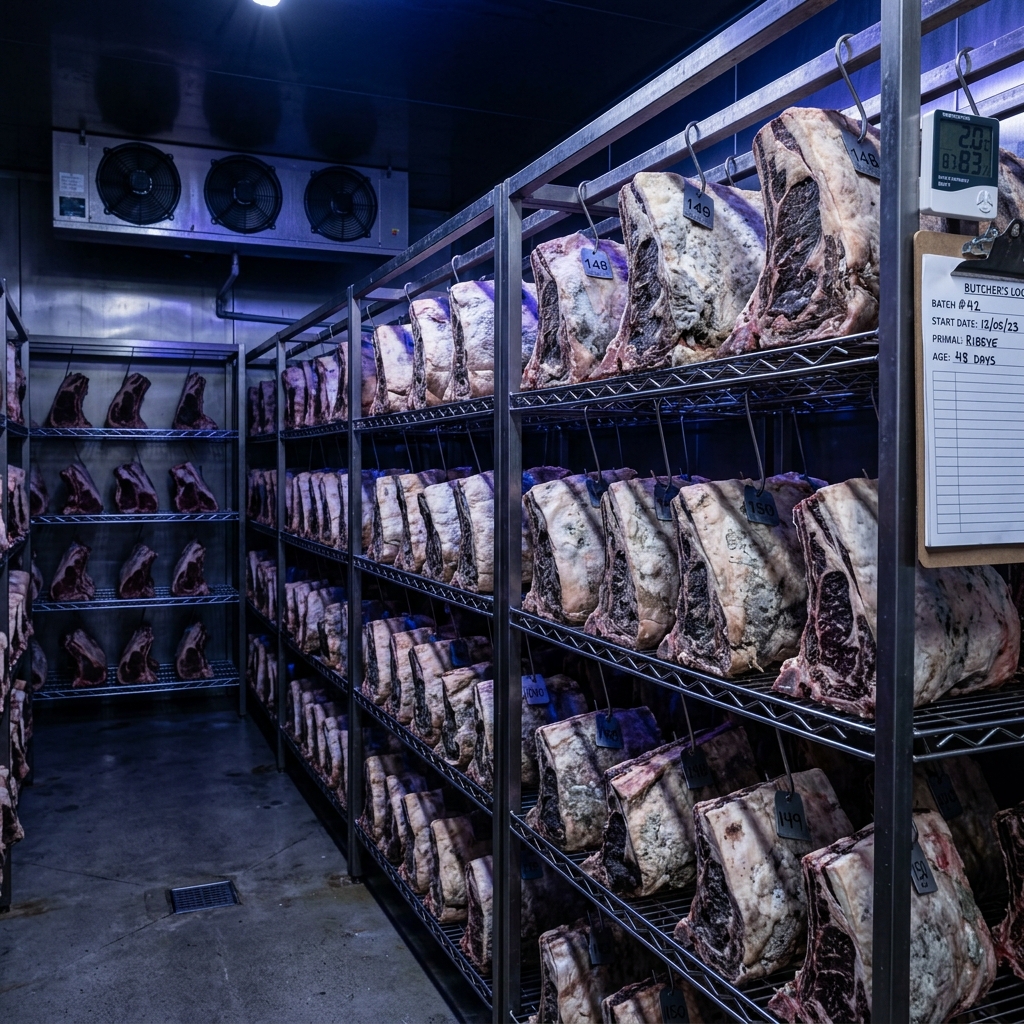
In the world of high-end Western gastronomy, the ultimate mark of a premium steak is not just the grade of the beef, but how long it has been aged. Walk into any Michelin-starred steakhouse in New York or London, and you will inevitably see a glass-walled, temperature-controlled room filled with massive cuts of beef covered in a thick layer of white mold.
"45-Day Dry-Aged Ribeye" or "60-Day Dry-Aged Porterhouse" are the gold standards of the Western culinary elite.
However, when you travel to Japan to experience the absolute pinnacle of beef—A5 Wagyu—you will almost never see the words "Dry-Aged" on the menu.
Why does the most expensive beef in the world seemingly ignore the most prestigious culinary technique in the steak world? The answer lies in the fundamental chemistry of aging, and why extreme marbling is actually the enemy of extreme aging.
Chapter 1: The Science of Dry Aging
To understand why Wagyu defies the rules, we must first understand what dry aging actually does to meat.
Dry aging is a highly controlled process of controlled decomposition. Beef is kept in a specialized environment with exact temperature, humidity, and airflow for anywhere from 30 to over 100 days. During this time, two critical things happen:
- Moisture Loss: The beef slowly loses water, which evaporates into the air. Because muscle tissue is roughly 75% water, the meat literally shrinks in size. As the water leaves, the beef flavor becomes incredibly concentrated.
- Enzymatic Breakdown: The natural enzymes present in the muscle tissue begin to break down the tough connective tissues and complex proteins. As the proteins break down into simple amino acids, they generate entirely new, complex flavor compounds—often described as nutty, earthy, or resembling blue cheese.
The Requirement: Pure Protein
For dry aging to work its magic, it requires protein (muscle). The enzymes need muscle fibers to break down, and the moisture loss relies on the water content present inside those muscle fibers. Dry aging is, at its core, the profound transformation of red meat.
Chapter 2: The Problem with Aging Fat
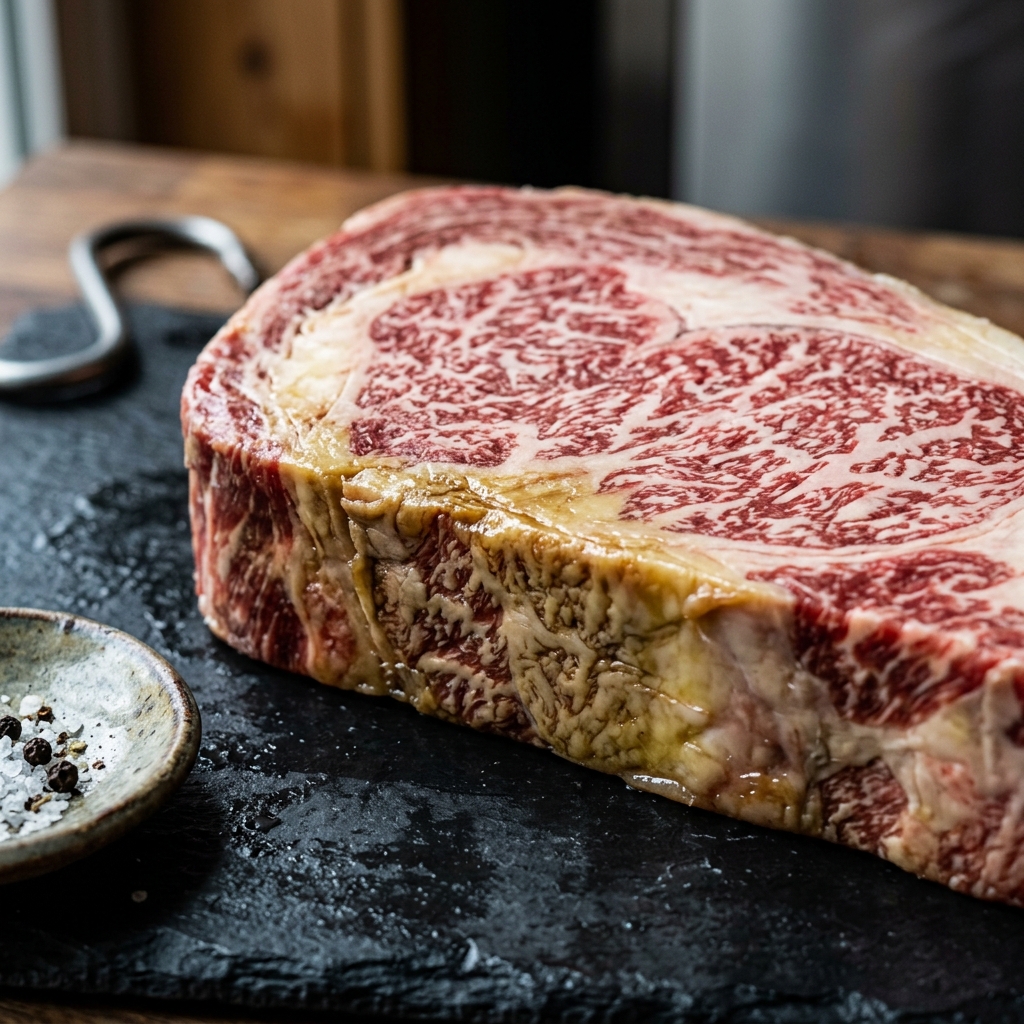
Now, let us look at A5 Wagyu. By definition, a top-tier A5 cut is often 50% to 60% intramuscular fat.
Here is the scientific reality that the Wagyu industry rarely advertises: Fat does not age. It only oxidizes.
While enzymes work wonders on breaking down tough muscle proteins, they do absolutely nothing to fat. Furthermore, fat does not contain water, so it does not evaporate and concentrate flavor like muscle tissue does.
The Danger of Oxidation
When you expose the extreme white fat of A5 Wagyu to oxygen for 45 or 60 days in a dry-aging room, it does not become nutty or complex. Instead, the fat begins to oxidize. It turns a sickly yellow color, and it begins to take on the unpleasant, rancid smell of old, stale grease.
Because A5 is already incredibly tender due to the sheer volume of melting fat, it simply does not need the enzymatic breakdown of dry aging to make it soft. And because it lacks a high volume of red muscle tissue, there is very little protein for the enzymes to transform into complex flavors.
Attempting to dry-age an A5 Sirloin for 60 days is not a culinary upgrade; it is often a very expensive mistake that ruins the delicate, peach-like aroma (Wagyu-ko) of the fresh fat.
Chapter 3: The Canvas for Extreme Aging
If A5 Wagyu is incompatible with dry aging, does that mean you cannot experience the profound depth of dry-aged Japanese beef?
No. It simply means you must abandon the pursuit of fat and return to the pursuit of muscle.
Experience the Ultimate Aged Red Meat in Tokyo To truly harness the power of dry aging in Japan, you need a specific type of cow. You need a cow with incredibly dense, robust muscle fibers. You need a cow with low water content and very little intramuscular fat. You need the ultimate "Uma-Aka" (delicious red meat).
You need Ibusana Beef.
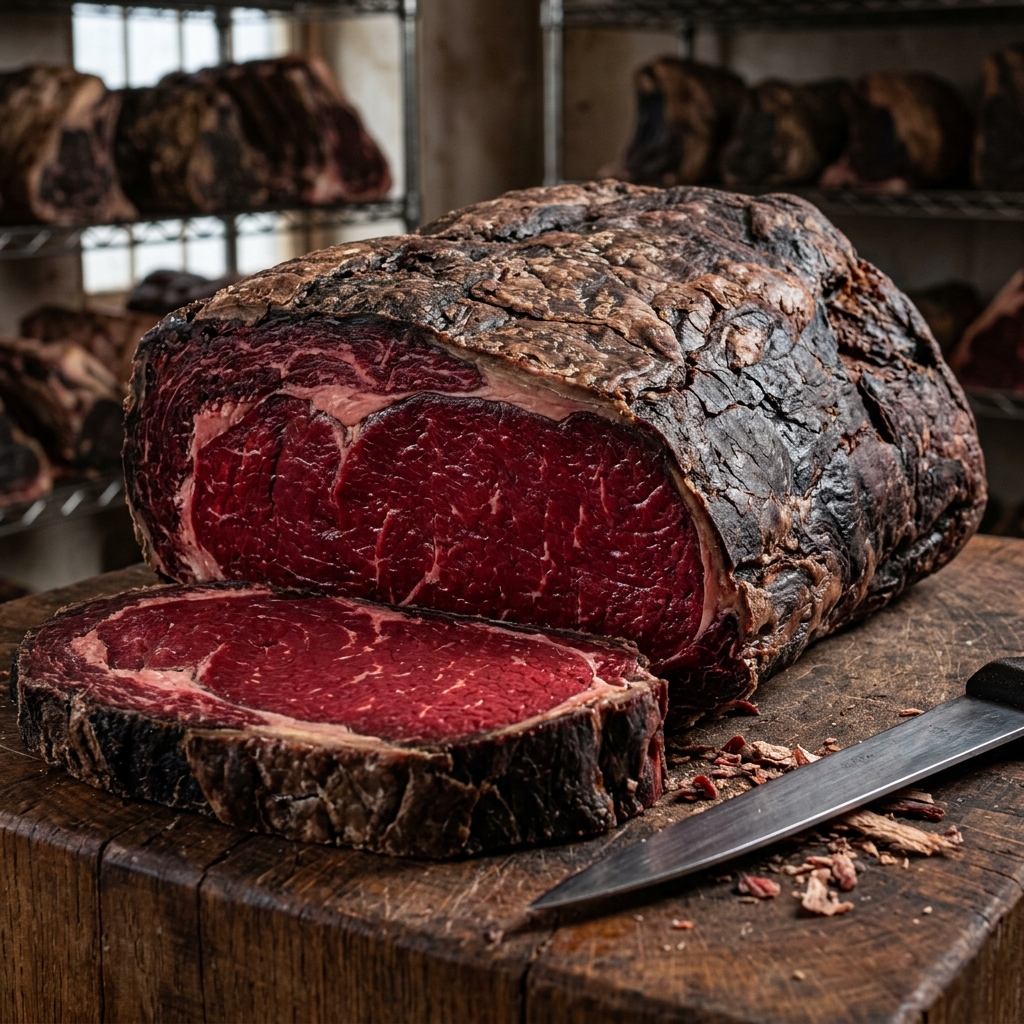
Because Ibusana is directly descended from the ancient, un-marbled Takenotani Tsurugyu lineage, it is the absolute perfect canvas for extreme dry aging. The meat is so dense and muscular that it can withstand 60, 90, or even 120 days of dry aging without spoiling.
During this time, because there is no excessive white fat to oxidize and turn rancid, the natural enzymes go to work entirely on the pure, iron-rich muscle fibers. The aging process takes the wild, intense flavor of the Ibusana terroir and concentrates it into something unimaginably deep, savory, and profound—rivaling the greatest aged steaks of the West, but utilizing the ancient genetics of the East.
To taste the absolute pinnacle of aged Japanese red meat, reserve your table at Wagyu Yakiniku Ibusana in Tokyo.
Kazuya Akanuma
Wagyu Specialist | Restaurant Consultant | Serial EntrepreneurA seasoned restaurateur and business owner who has successfully founded and managed premier Sushi venues, traditional Yakiniku grills, and high-end Cafe Bars in Tokyo. As an active restaurant consultant, he possesses a rare, 360-degree understanding of the culinary market. Fueled by a relentless passion for culinary craft, he dines at over 600 establishments annually—ranging from ultra-exclusive, reservation-only masterpieces to legendary neighborhood ramen shops. He leverages his insider access and decades of industry experience to guide global travelers to the absolute summit of authentic Japanese dining.
Related Articles
The Physics of the "Teppanyaki" Surface: Chromium-Steel Thermodynamics, the Leidenfrost Effect, and Wagyu Lipid Liquefaction
The Chemistry of "Umami Synergy": How Wagyu Glutamates and Fermented Condiments Trigger Exponential Taste Receptors