The A5 Illusion: Why the Highest Grade Doesn't Always Mean the Best Taste
Deconstructing the Japanese beef grading system. Discover why the pursuit of extreme white fat is ending, and why true gourmands are seeking profound red meat.
The A5 Illusion: Why the Highest Grade Doesn't Always Mean the Best Taste
If you have ever dined at a high-end Japanese restaurant in Tokyo, London, or New York, or even browsed a premium butcher shop online, you have almost certainly encountered the term "A5 Wagyu."
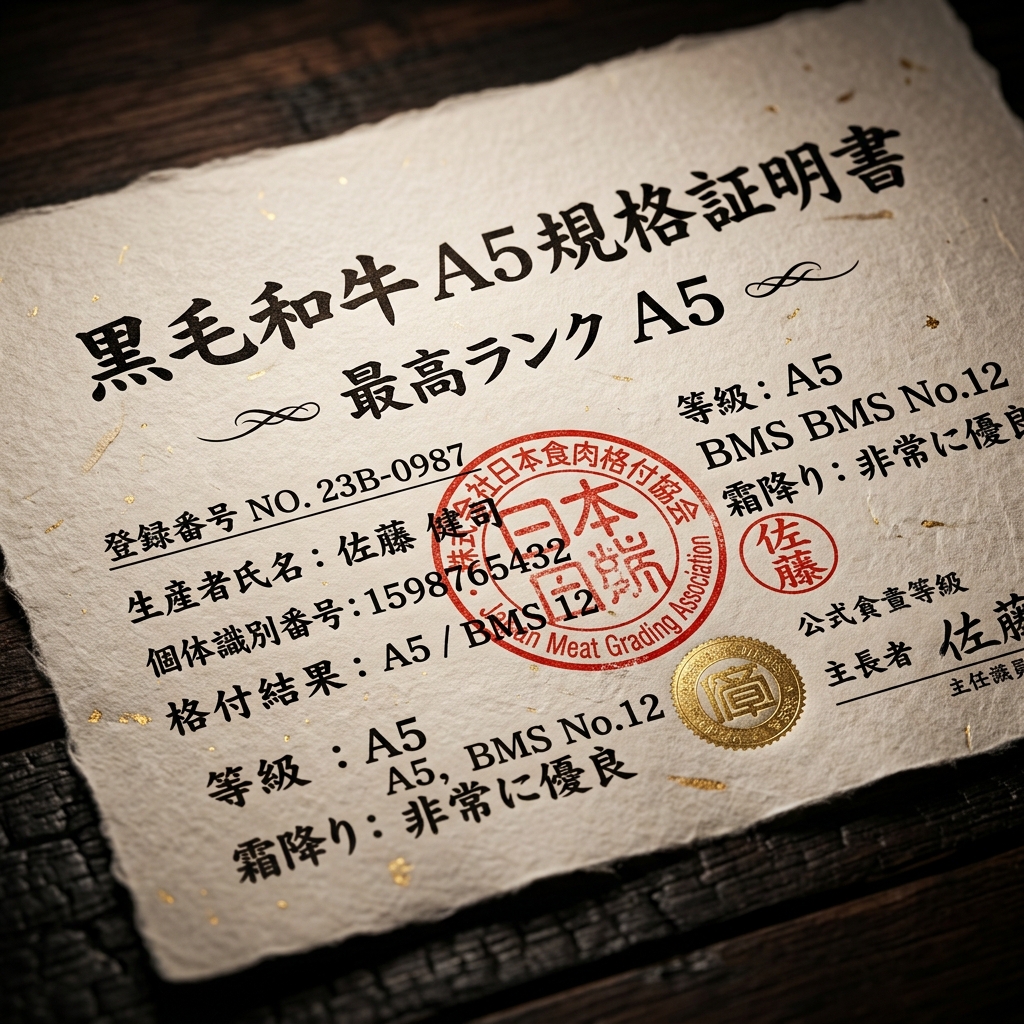
It is presented as the absolute, undisputed pinnacle of culinary luxury. Menus highlight it in bold, golden letters. Certificates of authenticity, stamped with official red seals, are proudly displayed on restaurant walls. Diners and chefs alike are conditioned to believe that ordering A5 guarantees the greatest, most flavorful beef experience on earth.
But what if this is an illusion? What if the A5 rating—the golden standard of Japanese Wagyu—actually tells you almost nothing about how the meat tastes?
To understand why the most exclusive gourmands and avant-garde chefs in Tokyo are beginning to look beyond the A5 label, we must deconstruct exactly what the Japanese meat grading system measures, and more importantly, what it completely ignores.
Chapter 1: Deconstructing the Grade
The Japanese beef grading system, administered by the Japan Meat Grading Association (JMGA), is undeniably the strictest, most meticulous meat evaluation system in the world. However, the grade itself (like "A5" or "B4") is composed of two distinct parts that are fundamentally misunderstood by almost all consumers.
The Letter: Yield Grade (A, B, C)
The letter in the grade refers strictly to the Yield Grade. It measures the proportion of meat obtained from a specific section of the carcass (typically between the 6th and 7th rib) compared to the overall weight of the animal.
- A: Above average yield.
- B: Average yield.
- C: Below average yield.
Crucially, this letter is purely an economic indicator for the butcher, the farmer, and the distributor. An "A" means the farmer raised a cow with an excellent meat-to-bone ratio, making it highly profitable to butcher and sell. The letter "A" has absolutely zero correlation with the flavor, tenderness, aroma, or quality of the meat you eat. A diner cannot taste the difference between Yield A and Yield B. When you pay a premium for "A" grade meat, you are paying for the farmer's efficiency, not your culinary experience.
The Number: Quality Grade (1 to 5)
The number in the grade refers to the Quality Grade, which is determined by evaluating four distinct factors:
- Beef Marbling (BMS)
- Meat Color and Brightness
- Firmness and Texture of Meat
- Color, Luster, and Quality of Fat
While all four metrics are considered, the final grade is overwhelmingly dictated by the first metric: the Beef Marbling Standard (BMS). The BMS runs on a scale from 1 to 12. To achieve a Quality Grade of "5", the beef must score a BMS of between 8 and 12.
If a cow scores an 8, it gets a 5. If it scores a 12, it gets a 5. This is the only metric that matters for the coveted "5" rating.
Chapter 2: The Problem with the Marbling Metric
Herein lies the grand illusion of A5 Wagyu. The BMS score, which dictates the highest grade, is entirely a visual assessment.
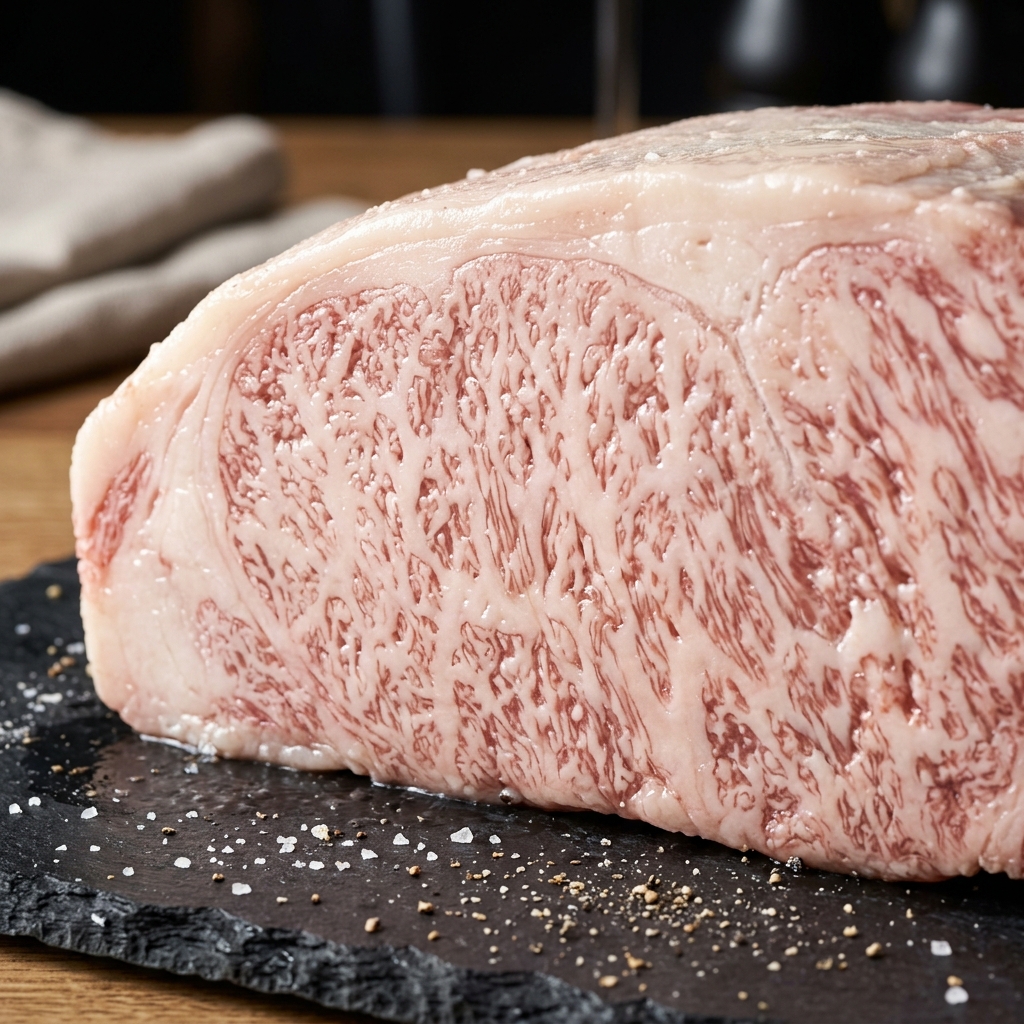
When the grader evaluates the carcass, they look at the cross-section of the ribeye and score it based entirely on the amount of white fat visible within the red meat. It is a measurement of volume and distribution.
If a cow has a staggering amount of white fat, it scores a BMS 12, securing its A5 status. However, the official grading system does not test for the things that actually matter when you eat the meat:
- Oleic Acid Content: The chemical compound responsible for the actual "melting" sensation and the sweet aroma of the fat. Two cows can look identical with a BMS of 12, but if one has low oleic acid, the fat will feel heavy and greasy rather than melting.
- Muscle Fiber Density: The structure of the red meat itself, which dictates the "chew" and texture. A5 grading ignores the quality of the muscle.
- Umami Concentration: The depth of the savory flavor inherent in the lean meat, created by complex amino acids. Fat has no umami; the flavor comes entirely from the red meat, which the A5 system actively penalizes by rewarding maximum fat.
Therefore, "A5" simply means "a cow with an exceptionally high yield of meat that contains an extreme, overwhelming amount of visual white fat." It is a guarantee of extreme richness, not a guarantee of complex flavor.
The Inevitability of "Fat Fatigue"
For many diners, this extreme fat content results in a phenomenon known in the high-end culinary world as "fat fatigue."
The first bite of an A5 BMS 12 steak is undeniably a luxurious, melting experience. It dissolves on the tongue like butter. The second bite is incredibly rich. By the third or fourth bite, however, the overwhelming amount of lipid coats the palate. The meat begins to feel heavy, greasy, and difficult to finish.
Because the meat is sometimes up to 60% fat, you are no longer eating beef in the traditional sense; you are consuming pure, high-quality tallow. The sheer volume of lipids overpowers any subtle umami or beefy flavor that the small amount of remaining red meat might have possessed. It is a spectacular novelty, but it is rarely a meal you want to eat in large quantities.
Chapter 3: The Rebellion and The Rise of "Uma-Aka"
As the global obsession with extreme marbling reaches its peak, the true connoisseurs, avant-garde chefs, and discerning gourmands in Tokyo are quietly shifting their focus. They are looking past the golden A5 certificate and seeking out something much more difficult to achieve, much rarer, and much more satisfying: profound red meat flavor.
This rebellion against the A5 illusion is centered around the concept of "Uma-Aka" (旨赤)—which translates to "delicious lean meat."
Instead of cows engineered to produce maximum white fat through restricted movement and calorie-dense grain diets in climate-controlled barns, these purists are seeking out cattle raised with natural roughage, ample exercise, and strong, ancient bloodlines. They want meat that requires a satisfying chew. They want meat that releases deep, complex, iron-rich umami with every single bite. They want fat to act as a subtle, sweet accent to the protein, rather than the main course itself.
They are no longer interested in the illusion of visual fat; they are demanding the profound reality of true beef flavor.
Experience the Rejection of the A5 Illusion in Tokyo If you wish to understand why true Wagyu experts are looking beyond the A5 grade, you must taste the absolute pinnacle of the "Uma-Aka" movement.
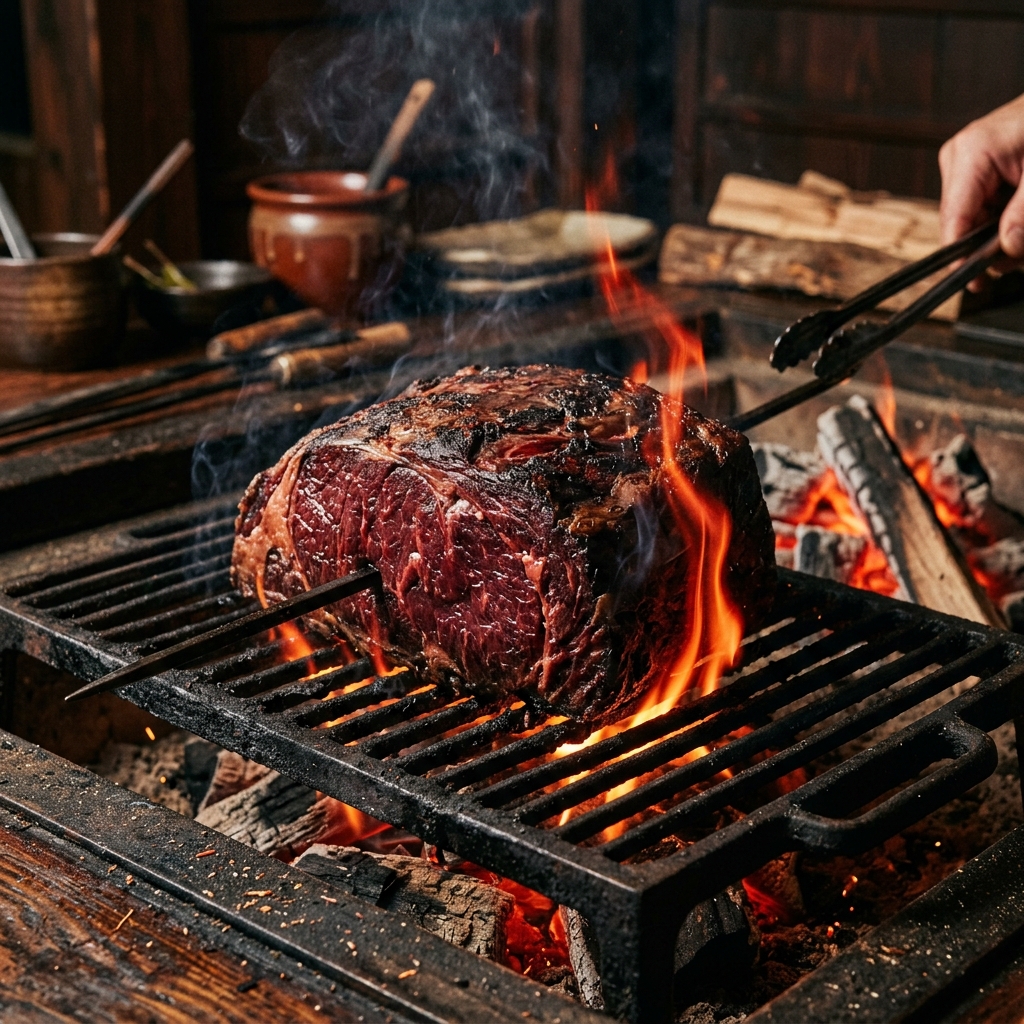
Ibusana Beef, raised exclusively in Miyazaki Prefecture, is the ultimate rejection of extreme marbling and the A5 illusion. By utilizing the incredibly rare, ancient genetics of the Takenotani Tsurugyu (Japan's oldest purebred lineage), the farmers of Ibusana produce a profoundly dark, iron-rich red meat. It relies entirely on deep, complex umami and a powerful, satisfying chew rather than overwhelmingly sweet fat.
Roasting a thick block of Ibusana over a traditional wood fire delivers an eating experience that an A5 BMS 12 cut simply cannot replicate. It does not melt away instantly; it lingers. It is visceral, wild, and incredibly satisfying from the first bite to the last, never inducing the "fat fatigue" of commercial Wagyu.
You can experience this ultimate red meat, and break free from the A5 illusion forever, exclusively at Wagyu Yakiniku Ibusana in Tokyo.
Kazuya Akanuma
Wagyu Specialist | Restaurant Consultant | Serial EntrepreneurA seasoned restaurateur and business owner who has successfully founded and managed premier Sushi venues, traditional Yakiniku grills, and high-end Cafe Bars in Tokyo. As an active restaurant consultant, he possesses a rare, 360-degree understanding of the culinary market. Fueled by a relentless passion for culinary craft, he dines at over 600 establishments annually—ranging from ultra-exclusive, reservation-only masterpieces to legendary neighborhood ramen shops. He leverages his insider access and decades of industry experience to guide global travelers to the absolute summit of authentic Japanese dining.
Related Articles
The Physics of the "Teppanyaki" Surface: Chromium-Steel Thermodynamics, the Leidenfrost Effect, and Wagyu Lipid Liquefaction
The Chemistry of "Umami Synergy": How Wagyu Glutamates and Fermented Condiments Trigger Exponential Taste Receptors