Tare vs. Salt: The Lipid-pairing Science That Directs Yakiniku Aesthetics
Deconstruct the physical chemistry of salt vs. tare on Wagyu lipids. Understand how sodium ions alter melting points and how sugar-protein tare glaze triggers melanoidin caramelization.
Tare vs. Salt: The Lipid-pairing Science That Directs Yakiniku Aesthetics
If you sit down at any high-end Yakiniku grill in Tokyo, the server will inevitably ask you a fundamental question before placing the beef on the table:
"Tare (sauce) or Shio (salt)?"
For most diners, this is treated as a simple matter of personal preference—whether you prefer a sweet, savory glaze or a clean, mineral finish. However, in the realm of molecular gastronomy, this choice represents a profound chemical fork in the road.
Because premium Japanese Wagyu is defined by its massive concentration of delicate, low-melting-point intramuscular lipids, the seasoning is not just a condiment; it is a active chemical reactant. Choosing between salt and tare alters the physical melting point of the fat, changes the rate of surface caramelization, and dictates the molecular compounds that form when the meat is kissed by the flame.
Chapter 1: The Molecular Physics of Salt (Shio)
To understand the science of salting Wagyu, we must look at how sodium chloride ($NaCl$) interacts with muscle tissue and fat.
When high-quality salt crystals are sprinkled onto the surface of a marbled Wagyu slice, they immediately begin to dissolve in the microscopic surface moisture, creating a highly concentrated brine. This triggers three critical physical and chemical reactions:
- Osmotic Dehydration: The high sodium concentration on the exterior pulls water molecules out of the muscle cells via osmosis. This creates a dry, concentrated film of proteins and sugars on the surface—the perfect environment for a rapid, high-heat Maillard reaction.
- Lipid Melting Point Alteration: Sodium ions ($Na^+$) physically interact with the polar heads of lipid molecules. This interaction slightly destabilizes the lipid crystalline structure, lowering the physical melting point of the fat. This is why salted Wagyu feels noticeably more liquid and less greasy on the tongue; the fat liquefies at a lower temperature, blending instantly with the saliva.
- Trigeminal Cleansing: Salt stimulates the saliva glands, producing a high volume of amylase-rich saliva. This saliva physically cleanses the palate, stripping the rich, waxy coat of fat off the tongue and making the next bite feel fresh rather than heavy.
Salt (Shio) vs. Tare Molecular Dynamics:
┌─────────────────────────┬──────────────────────────┬──────────────────────────┐
│ Dimension               │ Salt (Shio) Chemistry    │ Tare Sauce Chemistry     │
├─────────────────────────┼──────────────────────────┼──────────────────────────┤
│ Primary Reactant        │ Sodium & Chloride Ions   │ Reducing Sugars & Aminos │
├─────────────────────────┼──────────────────────────┼──────────────────────────┤
│ Surface Dynamic         │ Rapid dehydration,       │ Emulsification, sugar    │
│                         │ clean Maillard sear      │ caramelization barrier   │
├─────────────────────────┼──────────────────────────┼──────────────────────────┤
│ Lipid Pairing Goal      │ Lowers melting point,    │ Masks gamey notes, binds │
│                         │ strips heavy mouthfeel   │ fat into savory glaze    │
└─────────────────────────┴──────────────────────────┴──────────────────────────┘
Chapter 2: The Secondary Maillard Reactions of Tare
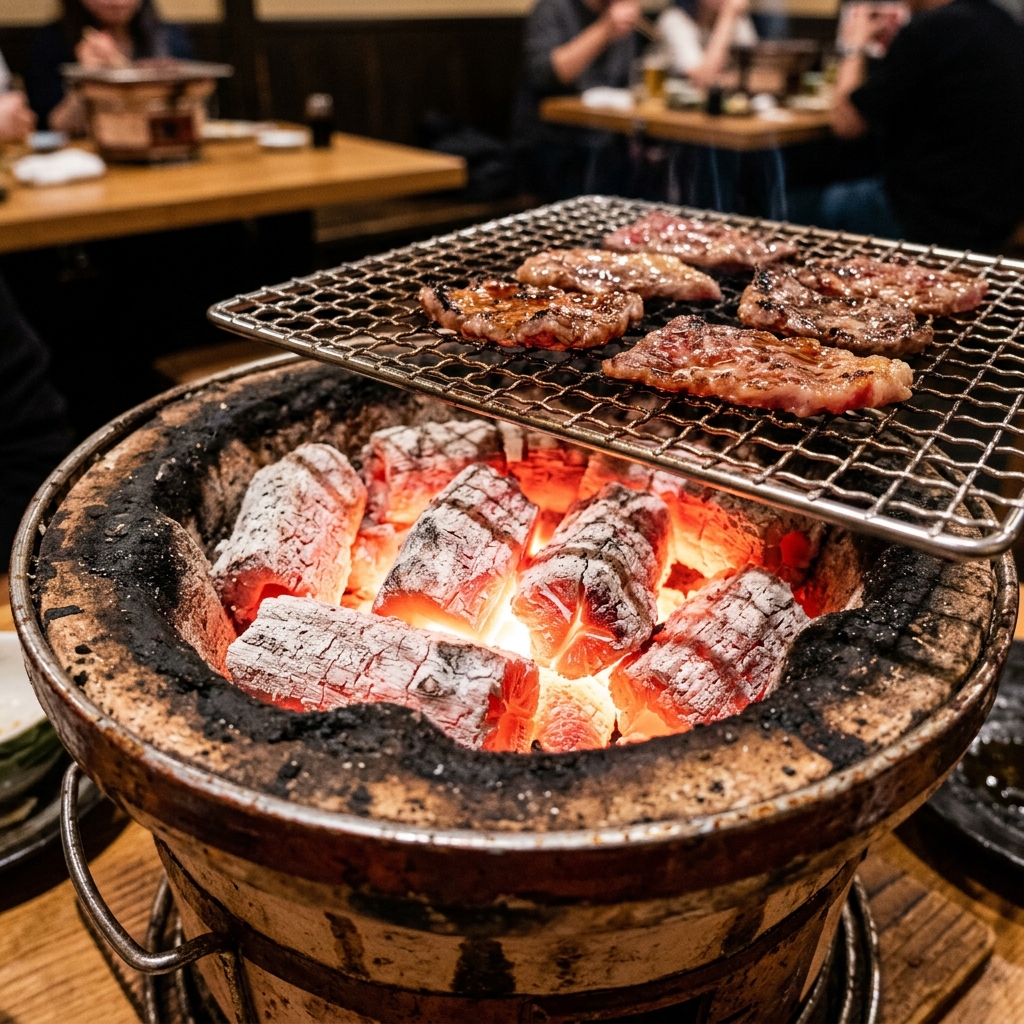
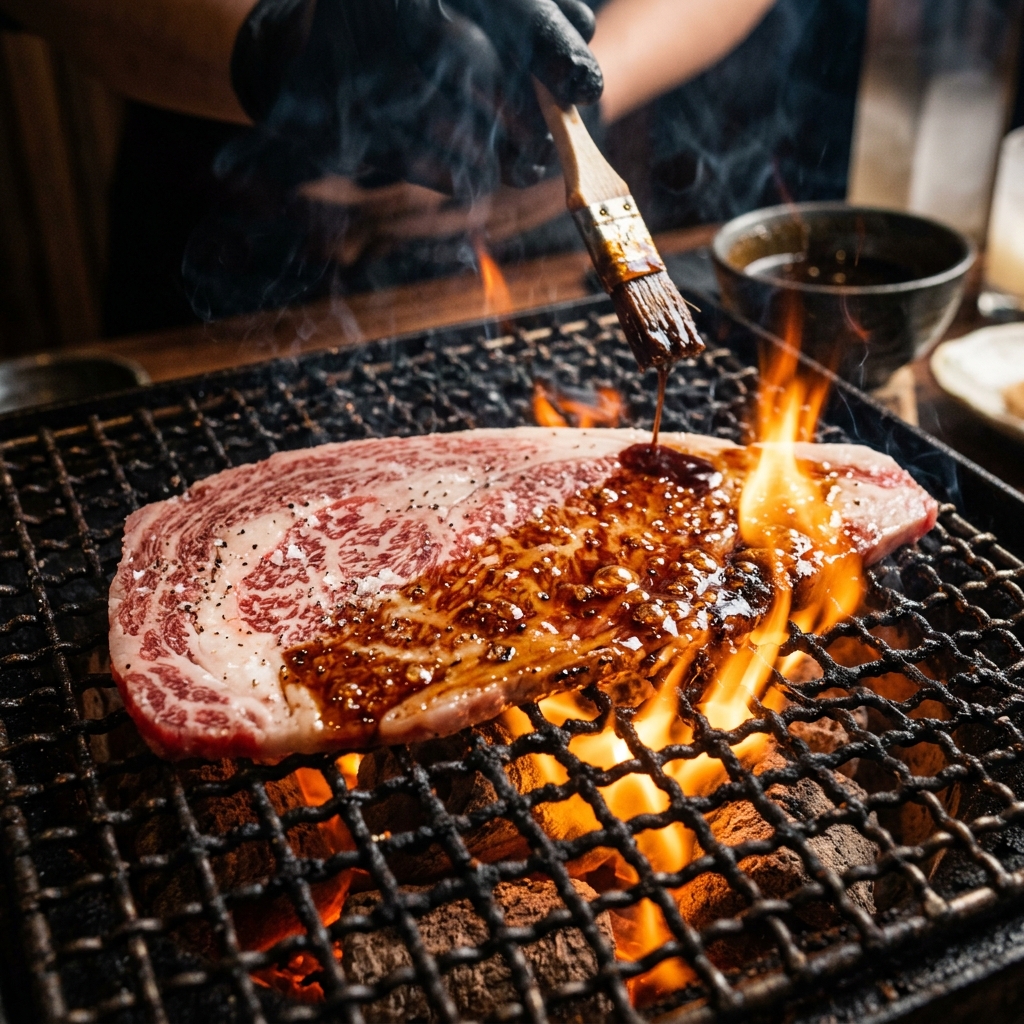
Brushing a cut of Wagyu with Tare (a aged blend of naturally brewed soy sauce, mirin, sake, and sugar) introduces a completely different chemical pathway.
Tare is a dense solution of reducing sugars (fructose and glucose from mirin) and complex amino acids (synthesized during the long fermentation of soy sauce). When this wet glaze hits the hot grill, it undergoes caramelization and secondary Maillard reactions simultaneously:
- Melanoidin Synthesis: The sugars in the tare react violently with the proteins in the meat juice, creating deep-brown compounds called melanoidins. These molecules are responsible for the dark, rich, almost chocolate-like aroma of charred yakiniku.
- Lipid Emulsification: As the intramuscular fat melts and renders out, it does not simply drop onto the coals. Instead, the organic acids and natural lecithin in the soy-based tare act as natural emulsifiers. The melting fat and the tare blend together on the grill, creating a glossy, rich sauce-fat emulsion that clings beautifully to the beef.
- Pyrolytic Volatilization: When drops of this fat-sauce emulsion drip onto the heat source below, they volatilize, sending up a rich smoke packed with furans and pyrazines. This smoke coats the meat, sealing it in a highly aromatic, caramelized shell.
Chapter 3: The Custom Pairing Matrix at Yakiniku Ibusana
Because different cuts of Wagyu have vastly different ratios of fat to muscle, a master chef does not apply tare or salt randomly.
At Wagyu Yakiniku Ibusana in Tokyo, the menu is structured around a precise molecular pairing matrix designed to optimize the unique chemistry of their signature Ibusana Beef:
- The Marbled Elite (Sankaku-Bara, Sirloin): Highly marbled cuts are paired strictly with Shio. Because these cuts are already packed with sweet, low-melting-point oleic acid, adding a sweet tare would create sensory overload. The clean sodium ions are used to lower the lipid melting point, enhance the natural sweetness of the fat, and keep the mouthfeel incredibly clean and sharp.
- The Crimson Muscle (Shin-Shin, Togarashi): Lean, iron-rich red meat cuts are paired with Tare. The iron in myoglobin has a natural, metallic tang that can taste slightly bitter when cooked plain. The reducing sugars and rich umami of aged tare coat these red muscle fibers, completely neutralizing the bitter metallic notes and replacing them with a robust, sweet-savory synergy.
- The Offal Frontier (Mino, Horumon): Connective-tissue-heavy offal cuts require the emulsifying power of Tare. The long caramelization of the sugars creates a thick, aromatic lacquer that perfectly complements the chewy, textured bite of the offal, turning what could be a tough chew into an explosion of sweet, caramelized umami.
By understanding the molecular physics of how salt cuts through grease and how tare emulsifies lipids, dining at Yakiniku Ibusana becomes more than a meal—it is an exploration of edible chemistry, where every bite is scientifically calibrated for sensory perfection.
Step off the A5 treadmill and experience the profound flavor of beef that defies the grading scale, exclusively at Wagyu Yakiniku Ibusana in Tokyo.
Kazuya Akanuma
Wagyu Specialist | Restaurant Consultant | Serial EntrepreneurA seasoned restaurateur and business owner who has successfully founded and managed premier Sushi venues, traditional Yakiniku grills, and high-end Cafe Bars in Tokyo. As an active restaurant consultant, he possesses a rare, 360-degree understanding of the culinary market. Fueled by a relentless passion for culinary craft, he dines at over 600 establishments annually—ranging from ultra-exclusive, reservation-only masterpieces to legendary neighborhood ramen shops. He leverages his insider access and decades of industry experience to guide global travelers to the absolute summit of authentic Japanese dining.
Related Articles
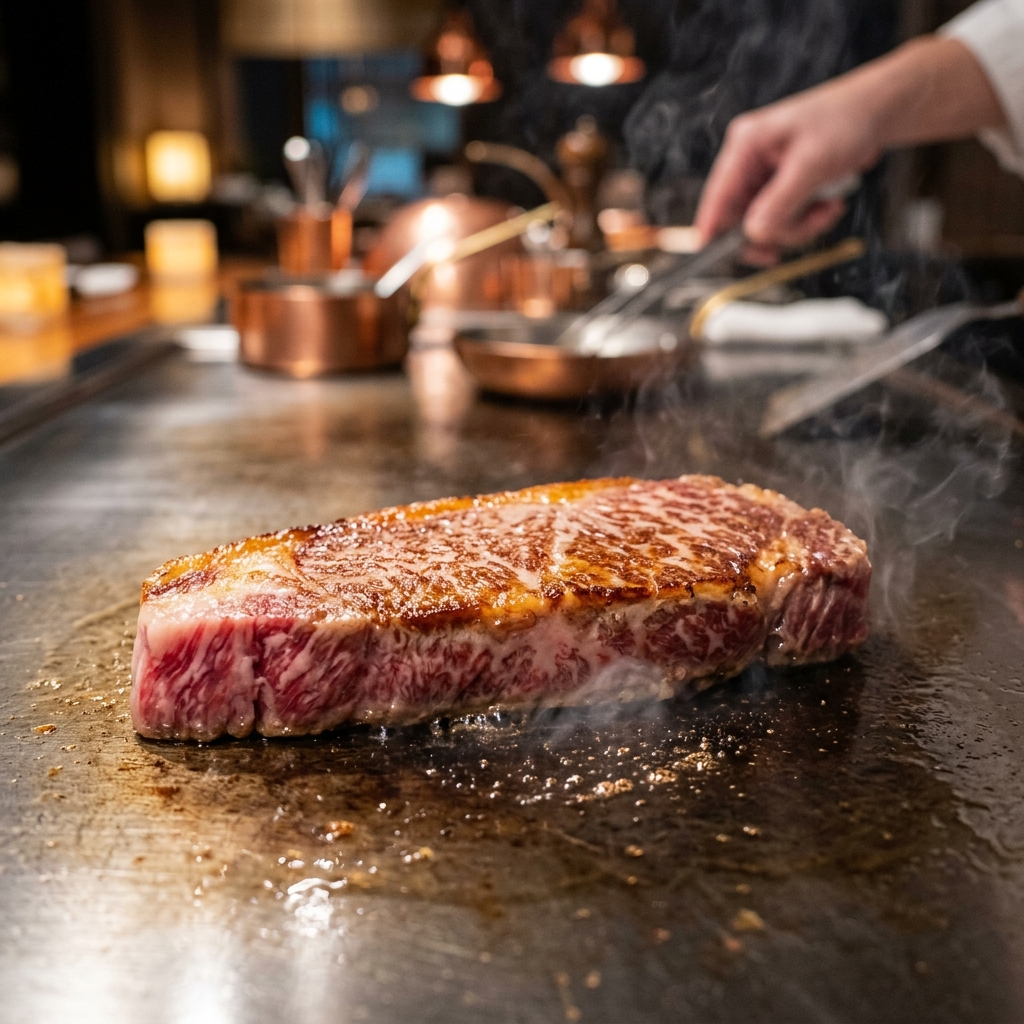
The Physics of the "Teppanyaki" Surface: Chromium-Steel Thermodynamics, the Leidenfrost Effect, and Wagyu Lipid Liquefaction
The Chemistry of "Umami Synergy": How Wagyu Glutamates and Fermented Condiments Trigger Exponential Taste Receptors