The Pyrolysis of Wood: Why Maki-Yaki Creates a Textural Dimension Beyond Gas and Charcoal
Explore the advanced thermodynamics of wood-fire pyrolysis. Discover why wood water vapor convection and phenolic compounds create a crispy, juicy steak beyond charcoal and gas.
The Pyrolysis of Wood: Why Maki-Yaki Creates a Textural Dimension Beyond Gas and Charcoal
When we talk about grilling elite beef, the debate almost always centers around heat source. Traditionalists advocate for the white-hot infrared glow of binchotan charcoal, while modern high-volume steakhouses champion the precision and high BTU output of gas broilers.
But in the absolute highest echelons of Japanese culinary science, a third, far more complex method is taking center stage: Maki-yaki (wood-fire grilling).
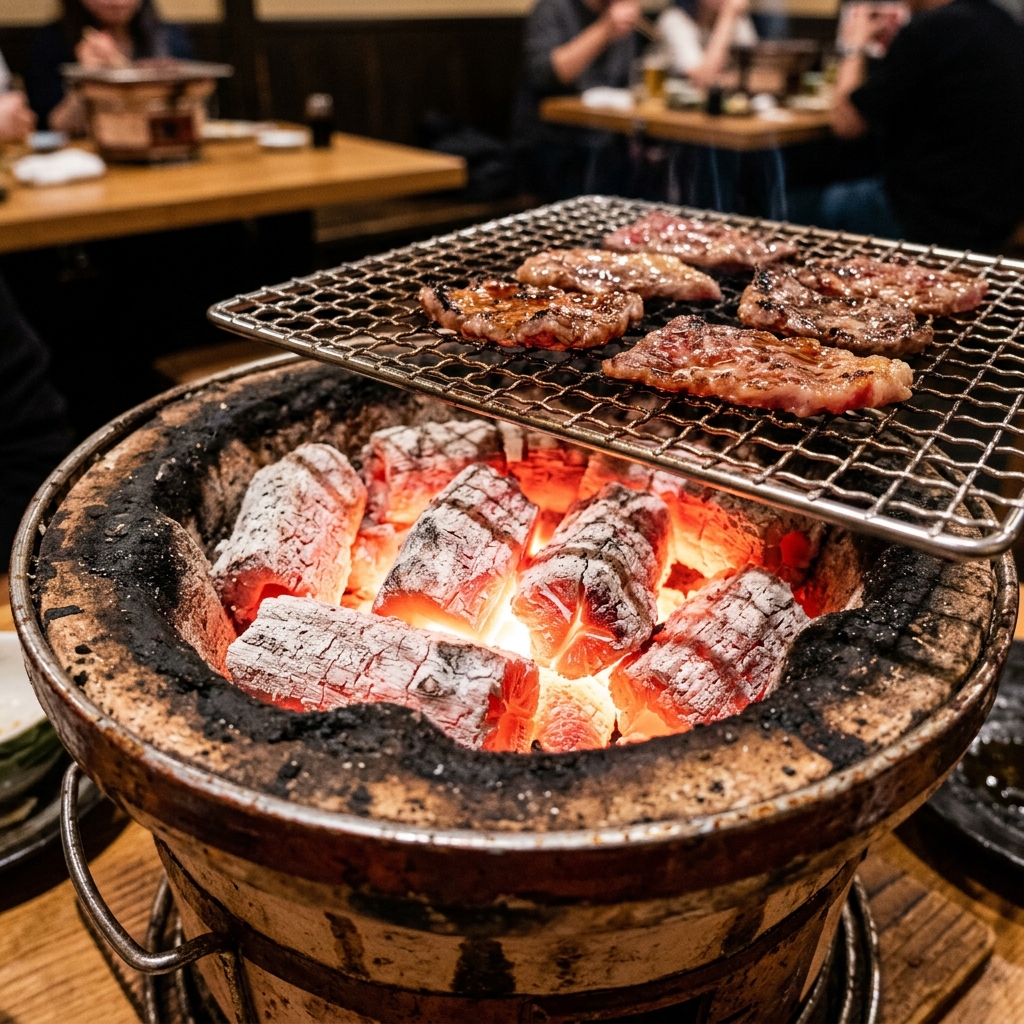
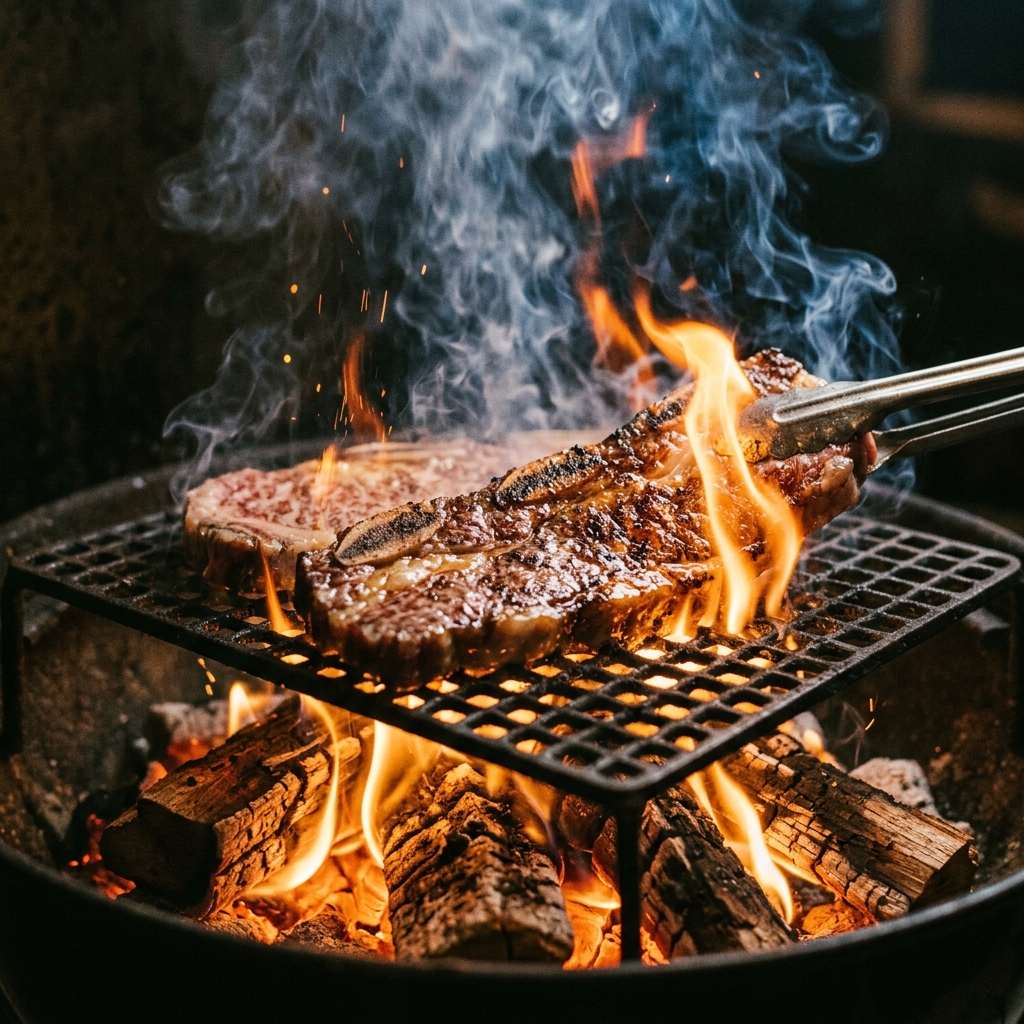
To the untrained eye, cooking over burning logs looks like a rustic, primitive return to basics. In reality, it is an advanced thermodynamic and chemical process. By harnessing the pyrolysis of wood, wood-fire cooking introduces chemical compounds and thermal dynamics that gas and charcoal are physically incapable of replicating, transforming the outer layer of Wagyu into a crispy, aromatic micro-crust while locking in an unparalleled degree of internal moisture.
Chapter 1: The Chemistry of Pyrolysis and Aromatic Fusion
To understand why wood creates a superior flavor, we must look at the molecular structure of wood and what happens to it when heated. Unlike charcoal, which is almost pure carbon and burns with minimal smoke, raw wood is a complex organic composite of three polymer networks: cellulose, hemicellulose, and lignin.
When wood is heated, it undergoes pyrolysis—the thermal decomposition of organic material in the absence of complete combustion. As the temperature rises, these polymers break down at different rates, releasing a complex cocktail of volatile organic compounds:
Thermal Decomposition of Wood Polymers:
┌────────────────┬───────────────────┬──────────────────────────────────────────┐
│ Polymer        │ Decomposition Temp│ Resulting Aromatic Compounds             │
├────────────────┼───────────────────┼──────────────────────────────────────────┤
│ Hemicellulose  │ 200°C - 260°C     │ Furans & Pyrans                          │
│                │                   │ (Sweet, caramel, and baked-bread aromas) │
├────────────────┼───────────────────┼──────────────────────────────────────────┤
│ Cellulose      │ 240°C - 350°C     │ Acetic acid & Furans                     │
│                │                   │ (Mild tang and deeper toasted notes)     │
├────────────────┼───────────────────┼──────────────────────────────────────────┤
│ Lignin         │ 280°C - 500°C     │ Phenolic compounds (Guaiacol, Syringol)  │
│                │                   │ (Classic woody smoke, clove-like spice)  │
└────────────────┴───────────────────┴──────────────────────────────────────────┘
When Wagyu is cooked over open wood flames, these freshly synthesized volatile gases wash over the meat. The fat-soluble phenolic molecules, such as guaiacol and syringol, bind instantly with the melting intramuscular lipids on the steak's surface.
This creates a brand-new flavor profile: the heavy grease of the Wagyu fat is chemically tempered and uplifted by the sweet, spicy, and woody notes of the wood smoke, transforming what could be a cloying bite of fat into a highly complex, multi-layered gastronomic experience.
Chapter 2: The Water Vapor Convection Barrier
While the flavor chemistry of wood fire is extraordinary, its thermodynamic behavior is where it truly outclasses gas and charcoal.
When you burn gas (methane or propane), the combustion process releases a high volume of water vapor as a byproduct ($CH_4 + 2O_2 \rightarrow CO_2 + 2H_2O$). This creates an extremely humid cooking environment. While this sounds ideal for preventing dryness, it actually hinders the Maillard reaction (the browning of meat proteins and sugars) because the excess moisture prevents the meat's surface from reaching the required 140°C (284°F) for browning. The result is a steak that is boiled on the outside before it is seared.
Charcoal, conversely, is extremely dry. It produces almost no water vapor, radiating pure, intense infrared heat. While this creates a superb sear, the intense dry heat rapidly evaporates the meat’s natural juices, pulling internal moisture out through capillary action and drying out the outer millimeters of the steak.
Wood-fire (Maki-yaki) represents the perfect thermodynamic synthesis:
- Active Moisture Release: Raw hardwood contains 15% to 20% bound moisture. As the logs burn, they gradually release this moisture as a gentle, continuous stream of water vapor.
- The Micro-Humidity Shield: This water vapor rides the hot convection currents rising from the fire. When it hits the cold surface of the Wagyu, it creates a temporary, localized humidity barrier.
- Gelatinization over Desiccation: This microscopic shield slows down surface evaporation just enough to prevent the muscle fibers from drying out and tightening. Instead of dry desiccation, the outer connective tissues undergo rapid gelatinization, forming an incredibly tender, gelatinous layer just beneath the surface.
- The Ultimate Sear: Once the initial surface moisture is driven off by the licking flames, the Maillard reaction occurs rapidly, producing a thin, paper-crisp outer crust that encases an incredibly juicy, plump, and tender interior.
Chapter 3: The Maki-yaki Culinary Frontier at Ibusana
Harnessing the physics of pyrolysis and wood convection is not a task for amateur chefs. It requires an intimate understanding of wood species, moisture content, and flame aerodynamics.
Standard hardwoods like oak provide stable, high-density heat, while fruitwoods like cherry or apple contribute sweet lactone-like aromas. The chef must masterfully control the air intake and the height of the meat above the coals, constantly moving the cuts between licking flames (for rapid Maillard browning) and soft embers (for lipid melting).
This sensory complexity is why wood-fire grilling is regarded as the ultimate frontier of Wagyu preparation. By moving beyond the dry heat of charcoal and the damp heat of gas, wood-fire cooking coaxes a deep, ancestral flavor from the beef, creating a texture where the crispness of the charred crust beautifully contrasts with the luscious, melting core of purebred Wagyu.
The deep wood smoke acts as the perfect seasoning for the intense, gamey flavor of the ancient red meat. It is a completely different, incredibly powerful way to eat Japanese beef. Secure your reservation at Wagyu Yakiniku Ibusana in Tokyo to experience this wood-fire thermodynamic masterpiece firsthand.

Kazuya Akanuma
Wagyu Specialist | Restaurant Consultant | Serial EntrepreneurA seasoned restaurateur and business owner who has successfully founded and managed premier Sushi venues, traditional Yakiniku grills, and high-end Cafe Bars in Tokyo. As an active restaurant consultant, he possesses a rare, 360-degree understanding of the culinary market. Fueled by a relentless passion for culinary craft, he dines at over 600 establishments annually—ranging from ultra-exclusive, reservation-only masterpieces to legendary neighborhood ramen shops. He leverages his insider access and decades of industry experience to guide global travelers to the absolute summit of authentic Japanese dining.
Related Articles
The Physics of the "Teppanyaki" Surface: Chromium-Steel Thermodynamics, the Leidenfrost Effect, and Wagyu Lipid Liquefaction
The Chemistry of "Umami Synergy": How Wagyu Glutamates and Fermented Condiments Trigger Exponential Taste Receptors