Osmosis and Beef: The Chemical Secrets of Salting Wagyu for Maximum Umami Retention
An in-depth chemical breakdown of protein denaturation, moisture draw, and cellular osmosis to achieve the perfect crust on Japanese Wagyu.
Osmosis and Beef: The Chemical Secrets of Salting Wagyu for Maximum Umami Retention
Few debates rage hotter in the culinary world than the question of when to salt meat.
Some chefs insist that salting must be done hours before cooking, while others swear that salting immediately before throwing the meat onto the grill is the only way to prevent it from drying out.
When dealing with standard Western steaks, these debates are lively. But when dealing with Japanese Wagyu—where a single steak can cost hundreds of dollars and a fraction of a millimeter of moisture loss can ruin its delicate mouthfeel—the science of salting is no longer a matter of opinion. It is a matter of strict biological chemistry and cellular osmosis.
To salt Wagyu correctly, we must understand how sodium ions interact with muscle proteins, water distribution, and the physics of the grill.
Chapter 1: The Three Phases of the Osmotic Cycle
The moment sodium chloride (NaCl) crystals land on the surface of raw beef, they initiate a highly predictable, three-phase chemical chain reaction driven by osmosis—the movement of water molecules through a semi-permeable membrane from a region of low solute concentration to high solute concentration.
The Osmotic Salting Timeline:
┌─────────────────────────┬─────────────────────────┬─────────────────────────┐
│ Phase 1: 0 - 10 Mins    │ Phase 2: 15 - 30 Mins   │ Phase 3: 40+ Mins       │
├─────────────────────────┼─────────────────────────┼─────────────────────────┤
│ Moisture Drawn Out      │ Salt Dissolves in Pool  │ Brine Re-absorbed       │
│ Surface: Wet & Slick    │ Surface: Highly Slick   │ Surface: Dry & Cured    │
└─────────────────────────┴─────────────────────────┴─────────────────────────┘
Phase 1: The Extraction (Minutes 0 to 10)
Immediately after salting, the salt crystals sit on the dry surface of the meat. Because the concentration of solute (salt) on the exterior is vastly higher than inside the muscle cells, water is drawn out of the beef’s cells via osmosis. Within 5 to 10 minutes, a thin film of moisture forms on the surface of the meat, dissolving the salt crystals.
Phase 2: The Slick Pool (Minutes 15 to 30)
By minute 20, the salt has fully dissolved into a highly concentrated, hypertonic brine solution that pools on the meat’s surface. If you attempt to grill the meat at this exact moment, you will commit a cardinal culinary sin.
The heat of the grill will be forced to evaporate this surface pool of water before any browning (Maillard reaction) can occur. Because water boils at 100°C (212°F) and the Maillard reaction requires temperatures above 140°C (284°F), grilling now will essentially steam the exterior of your beautiful Wagyu, leaving it grey, boiled, and devoid of a crust.
Phase 3: The Reabsorption (Minutes 40 and beyond)
As time passes, the dissolved sodium and chloride ions begin to break down the tight structure of the muscle fibers. The concentrated salt solution penetrates deep into the muscle tissues, disrupting the electrical charges of the protein filaments.
As the proteins relax, their capacity to hold water increases dramatically. The muscle cells act like a vacuum, sucking the highly seasoned brine back into the meat. By minute 45, the surface of the meat is completely dry once again. The salt is now inside the muscle fibers, chemically bound to the proteins.
Chapter 2: The Chemistry of Protein Relaxation
Why does pre-salting make the meat more tender and juicier, rather than drying it out? The answer lies in myofibrillar proteins—specifically actin and myosin, which form the structural grids of muscle tissue.
In raw, unsalted beef, these protein filaments are tightly coiled and bound together, holding water molecules weakly in the interstitial spaces between them. When the meat is heated, these proteins contract aggressively, squeezing out water like a wrung-out sponge. This is why overcooked meat becomes dry and rubbery.
However, when sodium ions ($Na^+$) and chloride ions ($Cl^-$) penetrate the muscle tissue during Phase 3 of the salting cycle:
- They accumulate around the positive and negative charges of the protein filaments.
- The like charges repel each other, forcing the tightly bound actin and myosin filaments to push apart and "relax."
- This structural relaxation creates vastly more physical space within the cells to trap water molecules.
Because the proteins are pre-relaxed, when the Wagyu is grilled, the fibers contract far less violently. The moisture remains chemically trapped inside the meat, resulting in an exceptionally juicy interior.
Chapter 3: The Physics of the Ultimate Wagyu Crust
Wagyu beef poses a unique challenge: because it contains such an incredibly high volume of fat, the window of time to sear the exterior without melting all the internal marbled fat is extremely small. You need an instantaneous sear—which means you must have a completely dry meat surface to maximize thermal transfer.
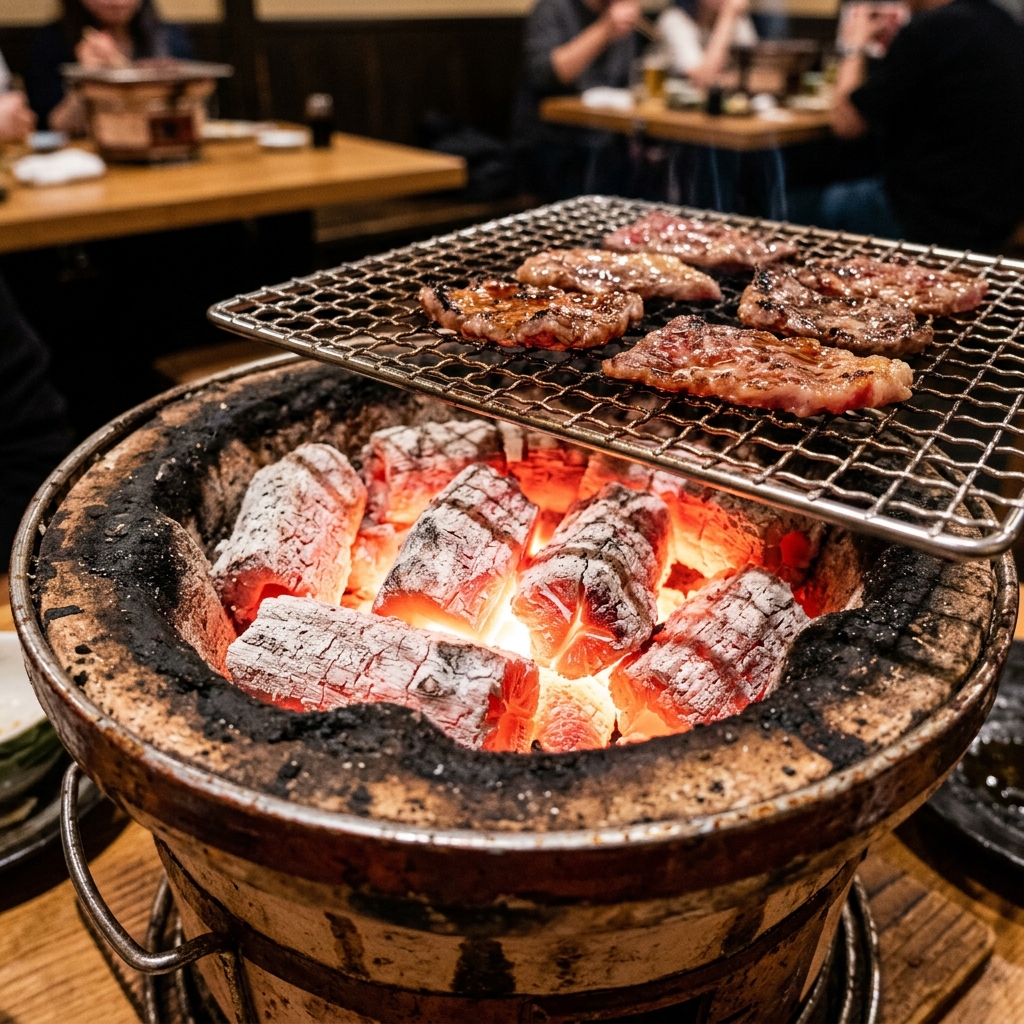
If you grill Wagyu immediately after salting (Phase 1) or during the slick phase (Phase 2), the heat energy is wasted vaporizing surface moisture. This delays the crust formation, forcing you to keep the meat on the heat longer, which liquefies the precious marbled fat inside and causes it to drip into the coals, leading to bitter flare-ups.
The Golden Rules of Salting Wagyu:
- The "Under 3 or Over 40" Rule:
- Option A (Immediate): Salt the Wagyu immediately before placing it on the grill (within 3 minutes). The salt crystals remain solid, the surface remains dry, and you achieve an instantaneous sear.
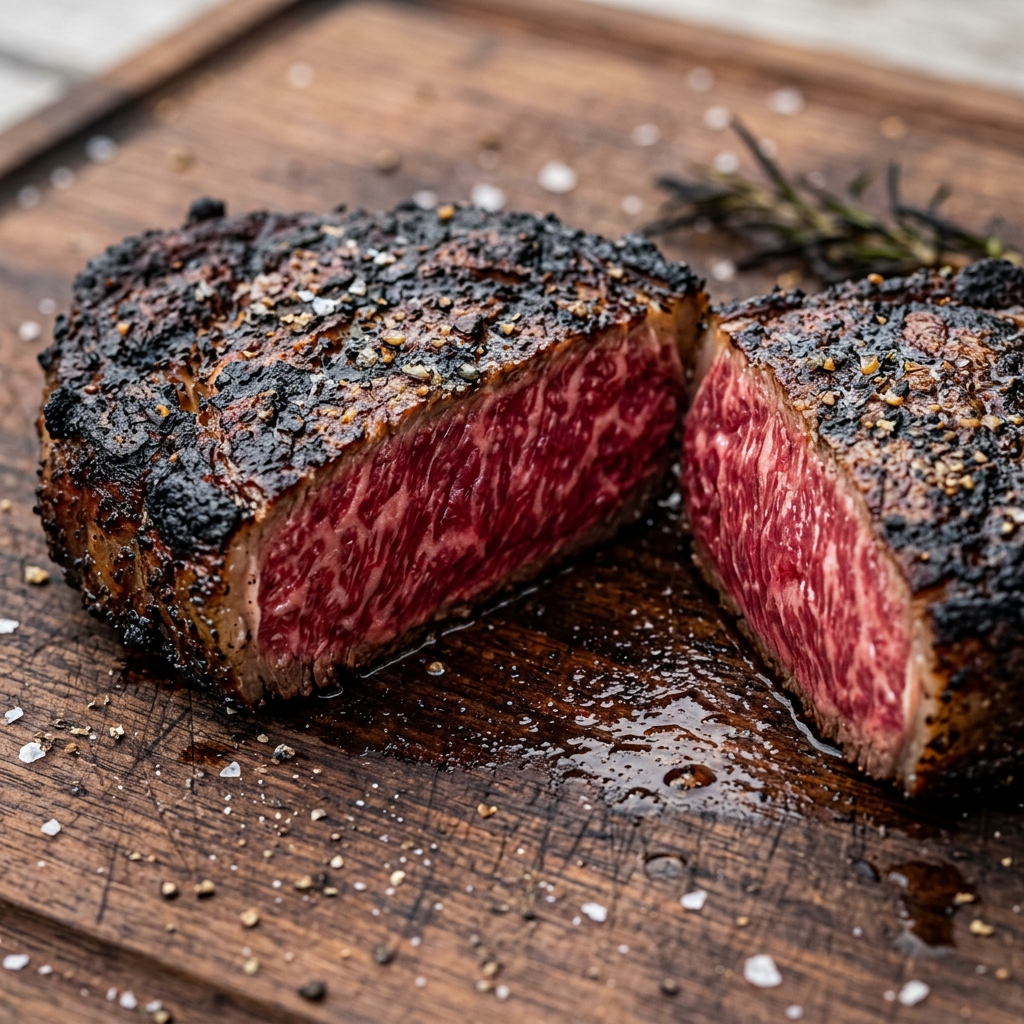
- Option B (Dry Brine): Salt the Wagyu at least 45 to 60 minutes before cooking. Allow the entire 3-phase osmotic cycle to complete. The brine will be fully reabsorbed, the proteins relaxed, and the surface bone-dry for a perfect crust.
- Never Salt in the Middle: Never grill Wagyu between 10 and 35 minutes after salting.
- Salt Particle Size: Use a medium-grain flake salt (like Maldon or Fleur de Sel) for immediate salting to add textural crunch, or fine sea salt for dry brining to ensure fast cellular penetration.
Kazuya Akanuma
Wagyu Specialist | Restaurant Consultant | Serial EntrepreneurA seasoned restaurateur and business owner who has successfully founded and managed premier Sushi venues, traditional Yakiniku grills, and high-end Cafe Bars in Tokyo. As an active restaurant consultant, he possesses a rare, 360-degree understanding of the culinary market. Fueled by a relentless passion for culinary craft, he dines at over 600 establishments annually—ranging from ultra-exclusive, reservation-only masterpieces to legendary neighborhood ramen shops. He leverages his insider access and decades of industry experience to guide global travelers to the absolute summit of authentic Japanese dining.
Related Articles
The Physics of the "Teppanyaki" Surface: Chromium-Steel Thermodynamics, the Leidenfrost Effect, and Wagyu Lipid Liquefaction
The Chemistry of "Umami Synergy": How Wagyu Glutamates and Fermented Condiments Trigger Exponential Taste Receptors