How to Cook Wagyu: The Molecular Guide to Cooking Temperature, Surface Maillard, and Internal Lipid Liquefaction
A molecular gastronomy guide to cooking Wagyu. Discover the science of the 25°C melting point, skillet thermodynamics, Maillard crusts, and fluid-retaining resting protocols.
How to Cook Wagyu: The Molecular Guide to Cooking Temperature, Surface Maillard, and Internal Lipid Liquefaction
Purchasing a genuine piece of Japanese A5 Wagyu is an investment in culinary art. But once that beautifully marbled steak is in your home kitchen, excitement is often replaced by sheer terror. Home cooks, accustomed to cooking thick USDA steaks, frequently apply the same high-heat, aggressive searing techniques to Wagyu—only to watch their expensive steak liquefy into a puddle of grease and dry, overcooked muscle fibers.
Cooking Wagyu successfully is not about following a simple recipe; it is an exercise in applied physics and lipid chemistry.
Because Kuroge Washu fat is physically and chemically distinct from any other beef on earth, you must completely re-engineer your approach to skillet temperature, heat transfer, and resting dynamics to capture the meat at its absolute gastronomic peak.
Chapter 1: The Chemistry of the 25°C Melting Point
To understand why traditional steakhouse methods fail, we must look at the melting point of Wagyu fat.
In standard Western beef (Angus or Hereford), the fat is rich in saturated stearic acids, giving it a high melting point between 35°C to 40°C (95°F to 104°F). This fat remains solid at room temperature and even during the early stages of chewing, requiring high heat to break down.
Genuine Japanese Wagyu is genetically designed to produce massive concentrations of monounsaturated fatty acids (principally oleic acid). This dramatically lowers the physical melting point of the fat to between 20°C to 25°C (68°F to 77°F).
Western Beef vs. Japanese Wagyu Lipid melting points:
┌─────────────────────────┬──────────────────────────┬──────────────────────────┐
│ Characteristic          │ Western Angus Beef Fat   │ Japanese Kuroge Washu Fat│
├─────────────────────────┼──────────────────────────┼──────────────────────────┤
│ Physical Melting Point  │ 35°C - 40°C (95°F-104°F) │ 20°C - 25°C (68°F-77°F)  │
├─────────────────────────┼──────────────────────────┼──────────────────────────┤
│ State at Room Temp      │ Solid, waxy              │ Semi-liquid, oily        │
├─────────────────────────┼──────────────────────────┼──────────────────────────┤
│ Behavior in Pan         │ Requires high heat render│ Renders instantly, melts │
└─────────────────────────┴──────────────────────────┴──────────────────────────┘
This ultra-low melting point creates two major cooking challenges:
- Pan Evacuation: If you place a cold Wagyu steak onto a screaming-hot cast-iron skillet, the delicate intramuscular fat will render out instantly, escaping the meat and leaving the pan flooded with liquid fat while the muscle fibers collapse and dry out.
- The "Cold Sear" Solution: To prevent this fat loss, you must start with a highly chilled steak (taken straight from the refrigerator). This keeps the internal fat solid during the initial moments of cooking, allowing a beautiful crust to form on the exterior before the heat penetrates and liquefies the interior lipids.
Chapter 2: The Thermodynamics of the Skillet
The second phase of cooking Wagyu is mastering skillet thermodynamics and the Maillard reaction.
Because Wagyu fat renders so quickly, you do not need to add any cooking oil or butter to the pan. Simply trim a small piece of fat from the edge of the steak and rub it over the hot skillet to create a microscopic layer of lubrication.
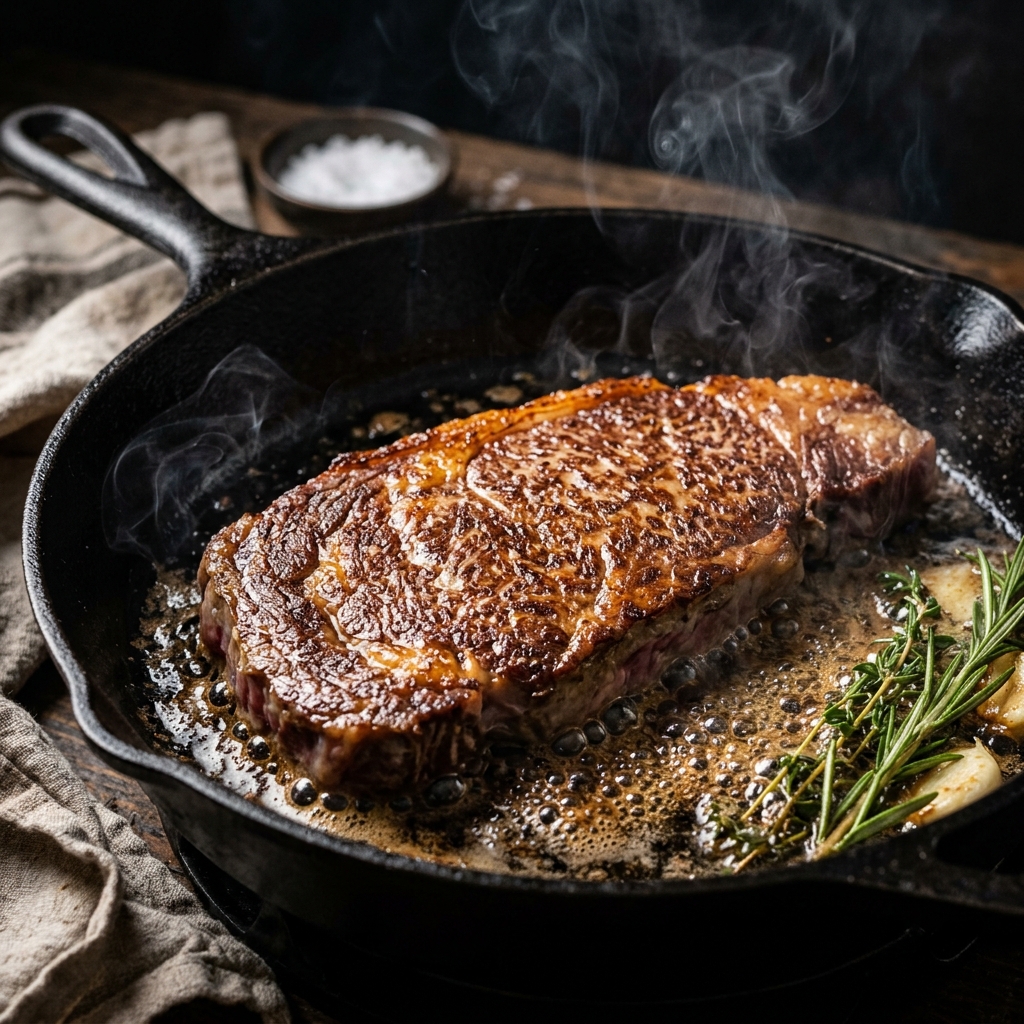
- Skillet Choice: A heavy cast-iron skillet or carbon steel pan is essential. These pans have high thermal mass, meaning they retain heat when the cold steak is introduced, preventing the pan temperature from dropping and boiling the meat in its own rendered fat.
- The Maillard Threshold: The Maillard reaction—which generates the savory, nutty, and sweet notes of the crust—requires a surface temperature of 140°C to 165°C (284°F to 330°F).
- Rapid Heat Transfers: Because A5 Wagyu is typically sliced relatively thin (around 1.5 to 2 cm) compared to thick American ribeyes, the heat will travel to the center incredibly fast. You should cook Wagyu over medium-high heat, searing the steak for only 60 to 90 seconds per side. This is just enough time to trigger the surface Maillard reaction without sending a destructive wave of heat to the center.
Chapter 3: Cellular Fluid Retention and the Resting Phase
The final, most critical, and most frequently skipped phase of cooking Wagyu is the resting phase.
When meat is cooked, the muscle proteins contract, squeezing water and melted fat out of the cells and into the extracellular space. If you cut into the steak immediately after removing it from the heat, these pressurized fluids will instantly flood onto the cutting board, leaving the steak dry and greasy.
Melted Lipid Migration During Cooking and Resting:
┌─────────────────────────┬──────────────────────────┬──────────────────────────┐
│ Stage                   │ Lipid Location           │ Physical Result          │
├─────────────────────────┼──────────────────────────┼──────────────────────────┤
│ 1. Cold State           │ Intramuscular (Solid)    │ Firm, cold marbling      │
├─────────────────────────┼──────────────────────────┼──────────────────────────┤
│ 2. Hot Pan (Cooking)    │ Renders, expands, moves  │ Pressurized fluid state  │
│                         │ to extracellular space   │                          │
├─────────────────────────┼──────────────────────────┼──────────────────────────┤
│ 3. Resting (Off heat)   │ Cools slightly, re-binds │ Trapped liquid gold,     │
│                         │ with muscle fibers       │ ultimate juicy bite      │
└─────────────────────────┴──────────────────────────┴──────────────────────────┘
By resting the steak on a warm plate for 3 to 5 minutes (roughly equal to the cooking time), the muscle fibers begin to relax and re-expand. Crucially, the rendered internal fat cools slightly, rising back toward its 25°C threshold and becoming more viscous.
This viscosity allows the melted fat to bind with the natural beef juices and get reabsorbed into the relaxed muscle fibers. When you finally slice and bite into the rested Wagyu, the fat is trapped inside the cells as "liquid gold," exploding on your palate as a rich, harmonious, and juicy emulsion rather than dripping uselessly onto the plate.
At Wagyu Yakiniku Ibusana in Tokyo, this culinary thermodynamics is taken to a professional art form. The chefs slice and serve cuts like Sankaku-Bara and Shin-Shin at the exact thickness required for rapid heat transfer, guiding diners on the precise seconds to grill each slice to ensure the fat liquefies beautifully inside the meat without escaping into the fire.
Step off the A5 treadmill and experience the profound flavor of beef that defies the grading scale, exclusively at Wagyu Yakiniku Ibusana in Tokyo.

Kazuya Akanuma
Wagyu Specialist | Restaurant Consultant | Serial EntrepreneurA seasoned restaurateur and business owner who has successfully founded and managed premier Sushi venues, traditional Yakiniku grills, and high-end Cafe Bars in Tokyo. As an active restaurant consultant, he possesses a rare, 360-degree understanding of the culinary market. Fueled by a relentless passion for culinary craft, he dines at over 600 establishments annually—ranging from ultra-exclusive, reservation-only masterpieces to legendary neighborhood ramen shops. He leverages his insider access and decades of industry experience to guide global travelers to the absolute summit of authentic Japanese dining.
Related Articles
The Physics of the "Teppanyaki" Surface: Chromium-Steel Thermodynamics, the Leidenfrost Effect, and Wagyu Lipid Liquefaction
The Chemistry of "Umami Synergy": How Wagyu Glutamates and Fermented Condiments Trigger Exponential Taste Receptors