The History of Wagyu: From Workhorses to Luxury Dining
Trace the fascinating evolution of Japanese Wagyu. Discover how ancient draft animals transformed into the most expensive and revered beef in the culinary world.
The History of Wagyu: From Workhorses to Luxury Dining
Today, the word Wagyu (和牛) is globally synonymous with ultra-premium luxury, astronomical price tags, and buttery, marbled steaks. But the journey of Japanese cattle from muddy rice paddies to Michelin-starred restaurants is a fascinating tale of isolation, meticulous breeding, and cultural shifts.
The Ancient Era: Cattle as Tools, Not Food
For most of Japan's history, eating meat—particularly beef—was strictly prohibited. Following the introduction of Buddhism in the 6th century, imperial decrees banned the consumption of cattle, horses, dogs, and monkeys.
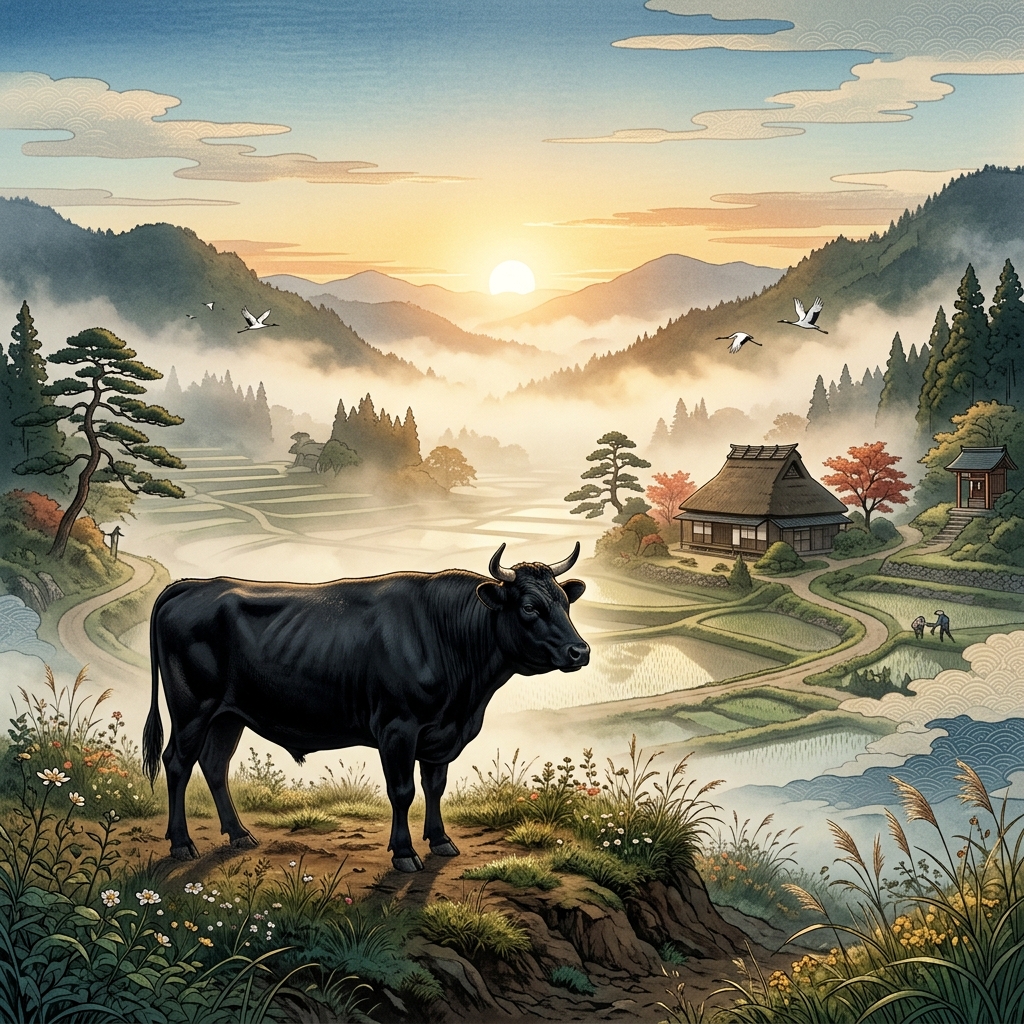
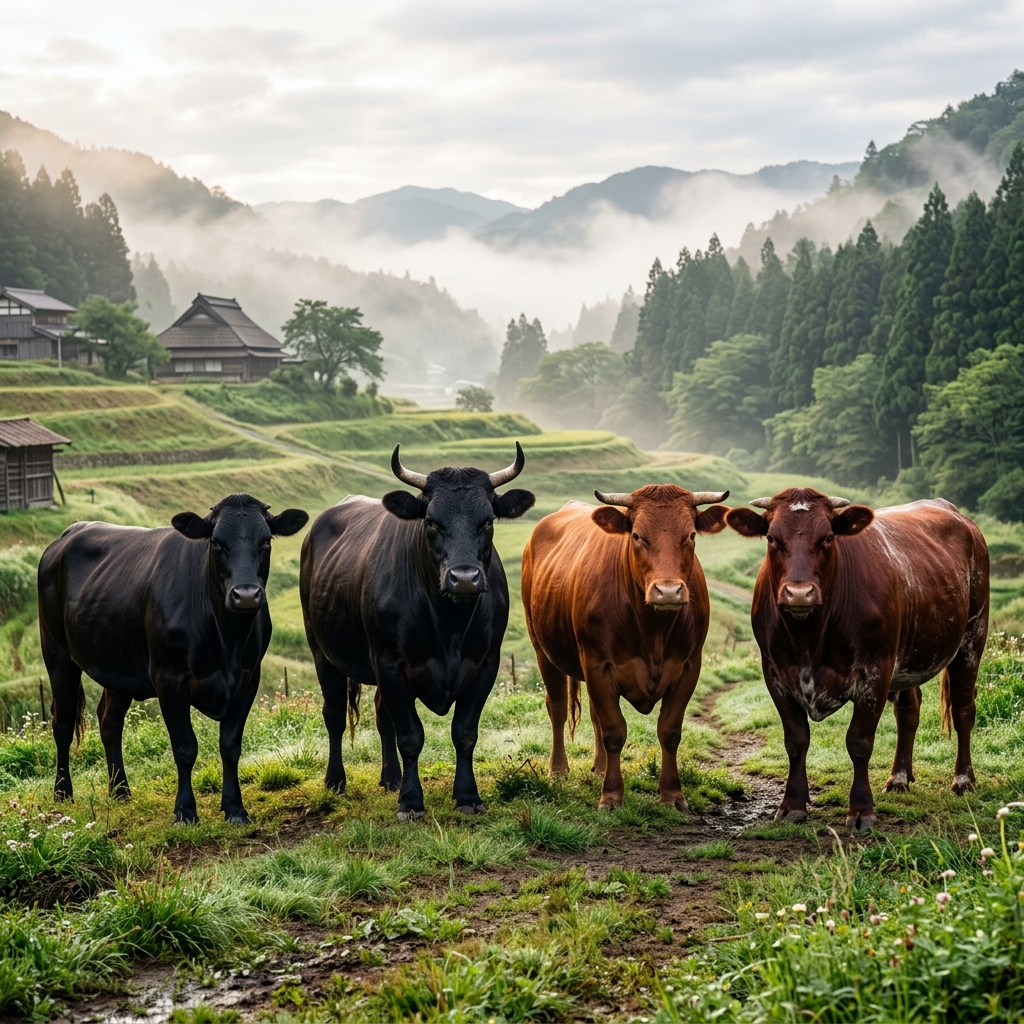
For over a millennium, cattle in Japan were highly valued, but strictly as draft animals used for agriculture and transportation. Because Japan's mountainous terrain made large-scale farming difficult, cattle were bred for physical endurance and strength to pull plows through small, terraced rice fields. This specific physical requirement unknowingly laid the genetic foundation for modern Wagyu: the animals naturally developed a biological mechanism to store energy as intra-muscular fat (marbling) to provide bursts of energy during hard labor.
The Opening of Japan and the Meat Revolution
Everything changed in 1868 with the Meiji Restoration. Japan opened its borders to the West, ending centuries of isolation. The new Meiji Emperor, aiming to Westernize and strengthen the nation, publicly consumed beef, effectively lifting the ancient taboo.
Suddenly, beef consumption became a symbol of modernity and progress. The famous dish Sukiyaki was born during this era as a way to adapt beef to Japanese tastes.
The Crossbreeding Phase
To meet the sudden demand for beef and improve the size of the native draft cattle, the Japanese government imported foreign breeds (such as Brown Swiss, Shorthorn, and Devon) to crossbreed with the native stock.
While this increased the size of the animals, it drastically reduced the quality of the meat and the animals' effectiveness as workhorses. By the 1920s, the government realized the mistake and completely halted foreign crossbreeding, closing the genetic pool forever.
The Preservation of Pure Bloodlines
Following the halt of foreign crossbreeding, Japan began isolating and refining specific regional strains of cattle, leading to the creation of the four modern Wagyu breeds:
- Japanese Black (Kuroge Washu) - Makes up 90% of all Wagyu.
- Japanese Brown (Akage Washu)
- Japanese Polled (Mukaku Washu)
- Japanese Shorthorn (Nihon Tankaku Washu)
However, a critical part of this history lies in the tiny, isolated pockets of Japan where native cattle were never crossbred with foreign stock. These ancient, purebred lineages are known as "Tsuru-gyu" (蔓牛).
The oldest and most legendary of these purebred lineages is the Takenotani Tsurugyu (竹の谷蔓牛) from Okayama. These ancient cattle retain the true, original genetics of Japanese Wagyu, possessing a profound, wild, and incredibly deep meat flavor that was lost in the modern pursuit of extreme fat marbling.
The Modern Grading System
In the late 20th century, Japan introduced the JMGA (Japanese Meat Grading Association) system, which heavily rewarded the amount of shimofuri (marbling). This led to the modern era of A5 Kobe, Matsusaka, and Omi beef, where cattle are fed specialized grain diets and pampered to produce meat that melts in the mouth.
However, as the global palate matures, many culinary experts are looking back to the past, seeking the deep, true beef flavor of ancient lineages rather than just fat.
Taste the Ancient History of Wagyu To truly understand the history of Wagyu, one must taste its origins. While almost all modern Wagyu is bred for extreme fat, Moriki Livestock in Miyazaki Prefecture has dedicated itself to preserving the ancient Takenotani Tsurugyu bloodline.
By crossing this ancient purebred with Japanese Black, they created "Ibusana Beef"—a meat that captures the profound, original "Uma-Aka" (delicious lean meat) flavor of Japan's past. You can experience this incredibly rare historical beef exclusively at Wagyu Yakiniku Ibusana in Tokyo.
Kazuya Akanuma
Wagyu Specialist | Restaurant Consultant | Serial EntrepreneurA seasoned restaurateur and business owner who has successfully founded and managed premier Sushi venues, traditional Yakiniku grills, and high-end Cafe Bars in Tokyo. As an active restaurant consultant, he possesses a rare, 360-degree understanding of the culinary market. Fueled by a relentless passion for culinary craft, he dines at over 600 establishments annually—ranging from ultra-exclusive, reservation-only masterpieces to legendary neighborhood ramen shops. He leverages his insider access and decades of industry experience to guide global travelers to the absolute summit of authentic Japanese dining.
Related Articles
The Samurai Feast: Sengoku Military Rations, Edo Evasion Codes, and the Secret Origin of Medicinal Beef
The Forgotten Breeds: Restoring the Sacred Shorthorn (Nihon Tankaku-shu) and Polled (Nihon Mukaku-shu) Genetics