Gyutan (Beef Tongue)
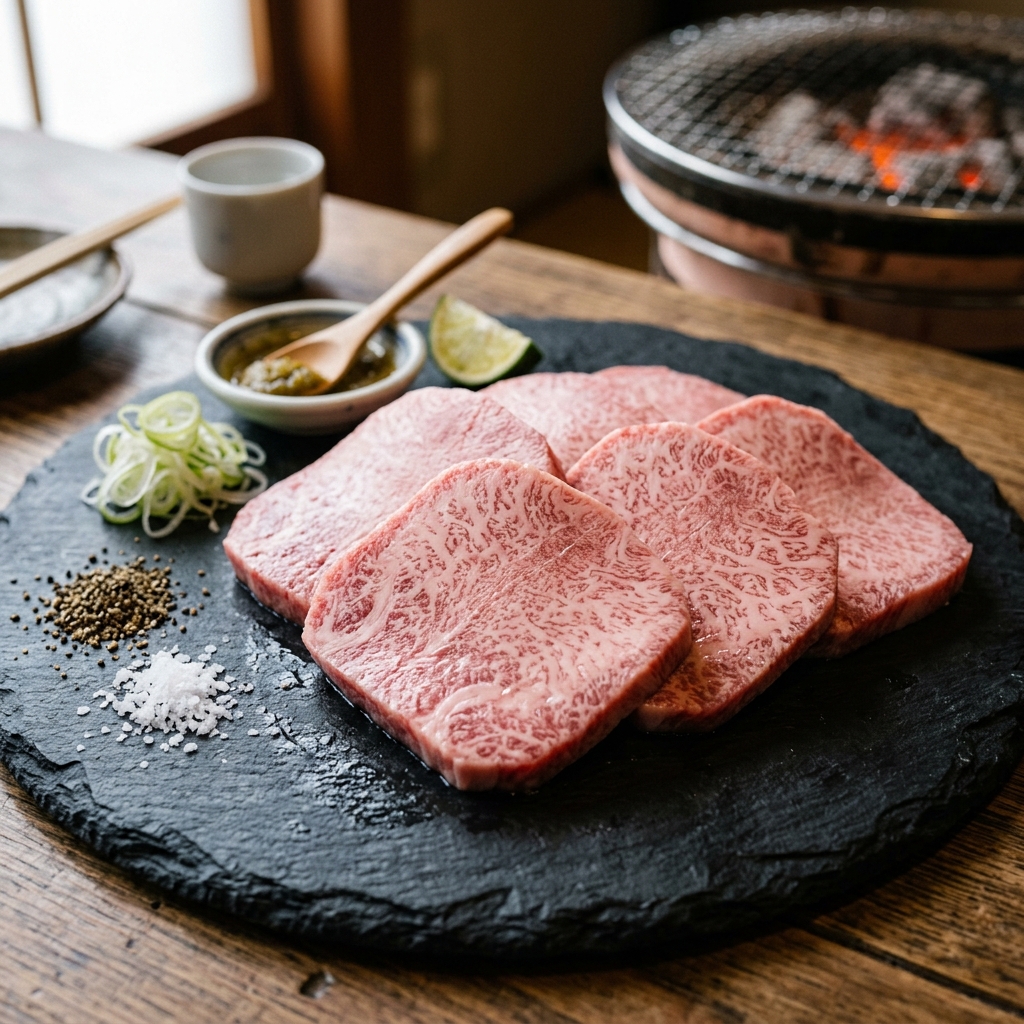
The defining ritual of Japanese Yakiniku. The thick, premium base of the tongue (Toku-jo) delivers an addictive crunchy texture followed by melting richness.
Perfect Grill Time
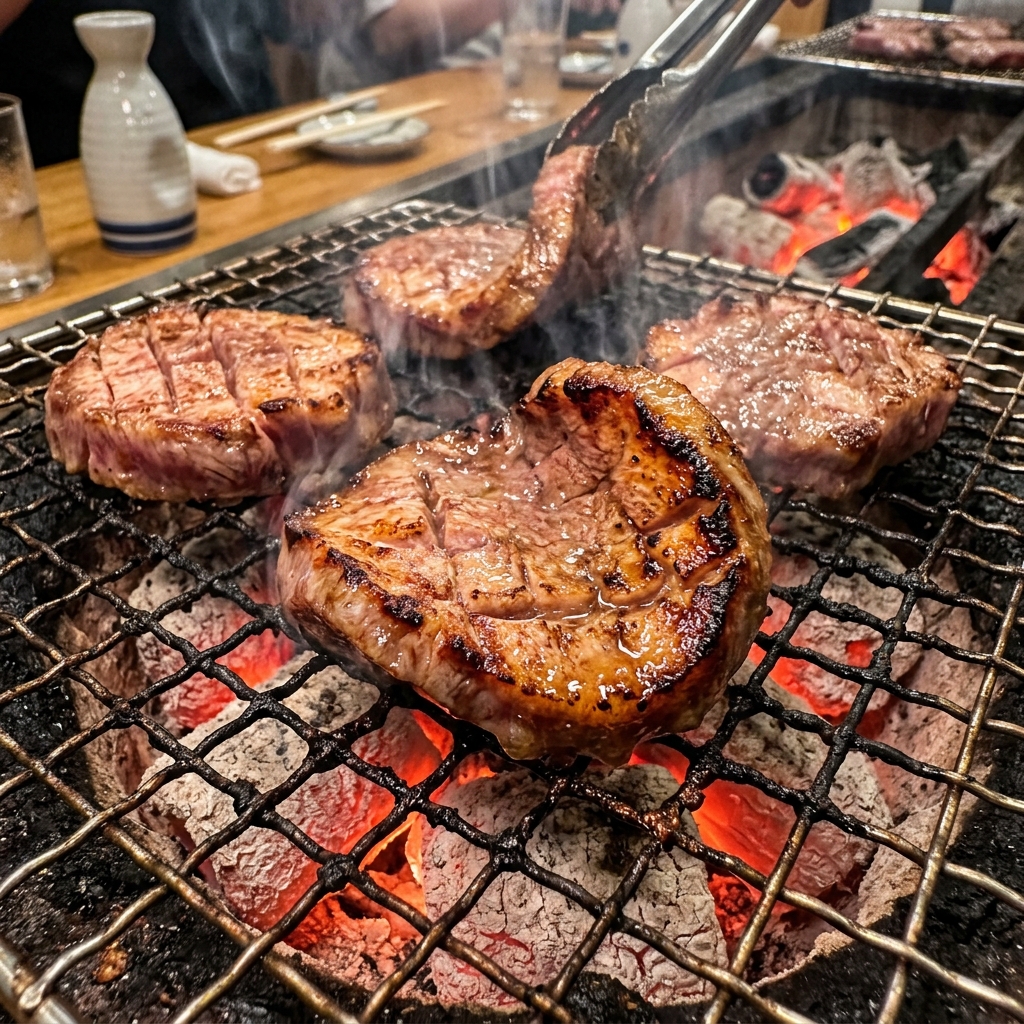
Medium. Thick slices must be grilled on high heat until the edges curl and the surface develops a crispy, savory golden-brown crust.
Best Seasoning
Salt and Lemon (Shio-Tan). The extreme acidity of the lemon cuts entirely through the rich fat, while the salt enhances the crunchy texture.
Gyutan (Beef Tongue): The Unorthodox Delicacy
When exploring the world of Japanese Yakiniku, the single most defining ritual is the first order of the meal. In almost every Yakiniku restaurant in Japan, regardless of price or prestige, the meal always begins with the same cut: Gyutan (Beef Tongue).
While eating tongue might seem intimidating or unusual to many Western diners, in Japan, it is an absolute obsession. It is prized for its unique, crunchy-yet-tender texture and its incredibly clean, savory flavor.
Chapter 1: The Anatomy of the Tongue
The beef tongue is not a single, uniform piece of meat. It is a massive, complex organ, and the quality of the meat changes drastically depending on which part of the tongue you are eating.
Yakiniku chefs generally divide the tongue into three sections:
- Tan-saki (The Tip): The very front of the tongue. Because the cow uses the tip constantly to pull grass, it is extremely tough, chewy, and lean. It is rarely served as steak and is usually minced for stews or sausages.
- Tan-naka (The Middle): The middle section. This is the standard cut of tongue served in most casual restaurants. It is moderately tender and has a good, beefy flavor.
- Tan-moto or Toku-jo (The Base/Root): The absolute premium cut. This is the very back of the tongue, deep within the jaw. Because it doesn't move as much as the tip, it is incredibly tender. Furthermore, it naturally accumulates a massive amount of fat.
When you order "Toku-jo Tan" (Super Premium Tongue) at a high-end Wagyu restaurant, you receive thick slices from the base. Visually, it is stunning. The meat is pale pink, completely interlaced with a fine, dense web of white marbling. It looks more like high-grade tuna belly than beef.
Chapter 2: The Art of the Grill (Gyutan)
Grilling premium Wagyu tongue is an art form. The texture of tongue is completely unique; it has a satisfying, crisp "snap" when you bite into it, followed immediately by melting tenderness and rich fat. To achieve this, it must be cooked with precision.
Grilling Technique
High-end Toku-jo tongue is almost always served thick-cut and heavily scored (slashed) on the surface to help the heat penetrate.
- High, Direct Heat: Place the thick slices directly over the hottest part of the Binchotan charcoal.
- The Curl: As the tongue cooks, the intense heat will cause the thick slices to shrink and curl upwards at the edges. This is exactly what you want.
- The Golden Crust: The goal is to aggressively sear the outside until it turns a savory golden-brown and becomes slightly crispy. The scoring on the meat will open up like a flower, allowing the flames to crisp the edges.
- The Perfect Doneness: The ideal doneness for thick-cut tongue is Medium. The outside must be crispy to provide the signature "crunch," but the inside should be hot, juicy, and pale pink to ensure the fat has rendered.
Seasoning
There is only one correct way to season premium beef tongue in Japan: Salt and Fresh Lemon Juice (Shio-Tan).
Tongue is almost never marinated in soy tare. The heavy sauce would destroy the delicate, clean flavor of the fat. The extreme acidity of the fresh lemon juice acts as a blade, cutting straight through the richness of the root fat, while the salt enhances the savory crunch of the crust. It is the perfect, refreshing start to a heavy meat meal.
Chapter 3: The Black Tongue (Ibusana)
A5 Wagyu Tongue (from a Japanese Black steer) is famous for its pale color and massive fat content. But what happens when you extract the tongue from a pure, ancient Japanese cow that has not been heavily grain-fed for fat?
You get the legendary Kuro-tan (Black Tongue).
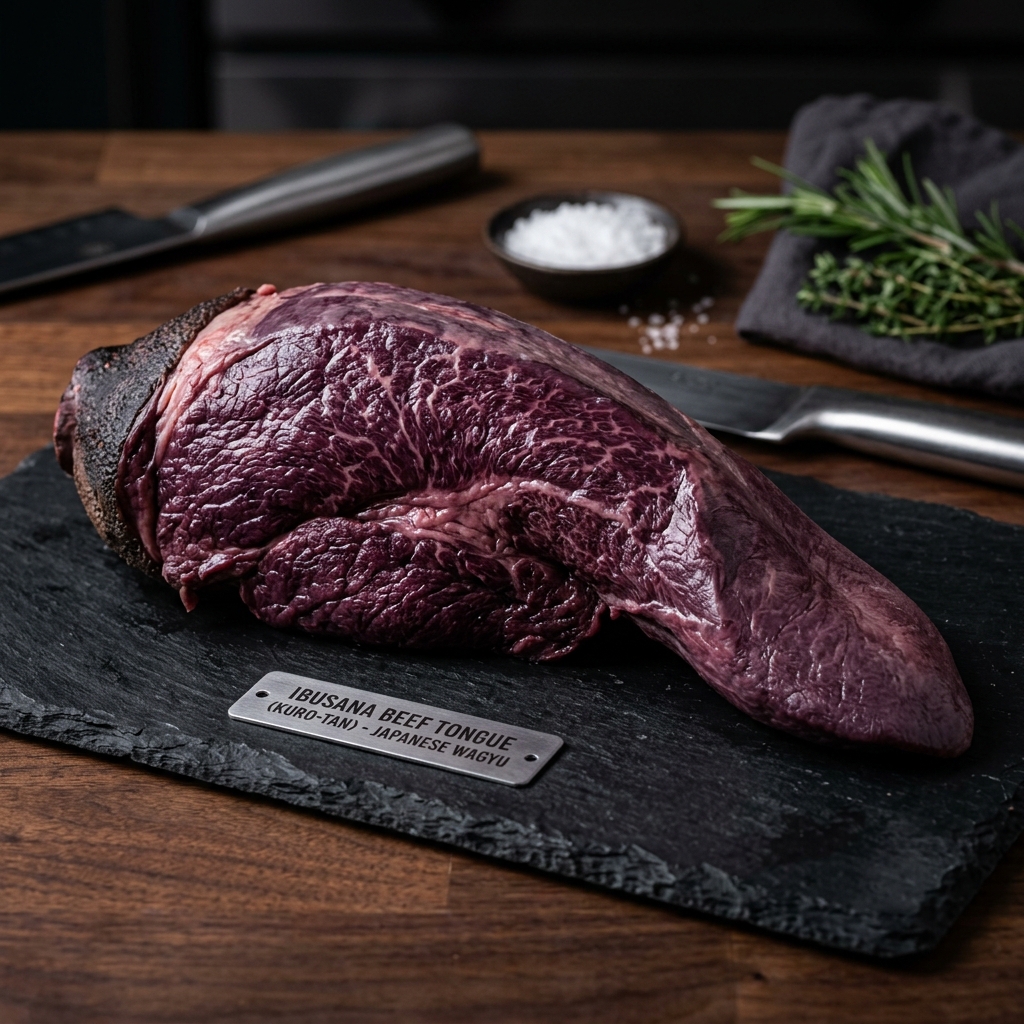
The Rarest Tongue in Japan The tongue of an Ibusana Beef cow is a completely different organ from standard A5 Wagyu. Because Ibusana genetics are inherently wilder and more muscular, their tongues are incredibly dense.
When you see Ibusana Kuro-tan raw, it is not pale pink. It is a striking, deep purple-red color, visually demonstrating its massive iron and myoglobin content. The fat is far less aggressive, allowing the true, incredibly beefy flavor of the muscle to dominate.
Because only about 15 Ibusana cows are harvested every year, securing a whole tongue is nearly impossible for most restaurants. However, at Wagyu Yakiniku Ibusana in Tokyo, they serve this impossibly rare cut. When grilled over their signature wood fire, the Ibusana tongue develops an even more aggressive, satisfying crunch, while the dense muscle delivers a profound, lingering umami that pale A5 tongues simply cannot match. It is the ultimate expression of Uma-Aka (delicious red meat) in its most unique form.
If you are lucky enough to dine on a day when Kuro-tan is available, it will change your understanding of Yakiniku forever. Book your table at Wagyu Yakiniku Ibusana in Tokyo.