Joshu Wagyu
The Sukiyaki Masterpiece. Raised in the incredibly water-rich, pristine environment of Gunma Prefecture, this Wagyu offers a robust, structurally sound red meat that perfectly synergizes with traditional Japanese broths.
Joshu Wagyu: The Sukiyaki Masterpiece
Gunma Prefecture, historically known as the Joshu region, holds a very specific and revered place in Japanese culinary history. It is a region defined by its rugged mountains, its powerful, dry winter winds, and its absolute mastery of the ingredients required for Japan's most famous beef dish: Sukiyaki.
At the center of this culinary heritage is Joshu Wagyu (上州和牛).
Gunma is one of the few places in Japan that naturally produces every single world-class ingredient needed for the perfect hot pot, from the famous Shimonita Negi (leeks) to the finest konjac (shirataki noodles). It is only fitting that the Wagyu raised in this environment is specifically engineered, both through genetics and terroir, to be the ultimate companion to these ingredients. This comprehensive, multi-part master guide will explore the rich water sources of Gunma, the unique, slightly firmer texture of Joshu Wagyu, its unparalleled synergy with traditional broths, and the contrast it presents to Wagyu designed solely for the steakhouse.
Chapter 1: The Blessing of the Tone River
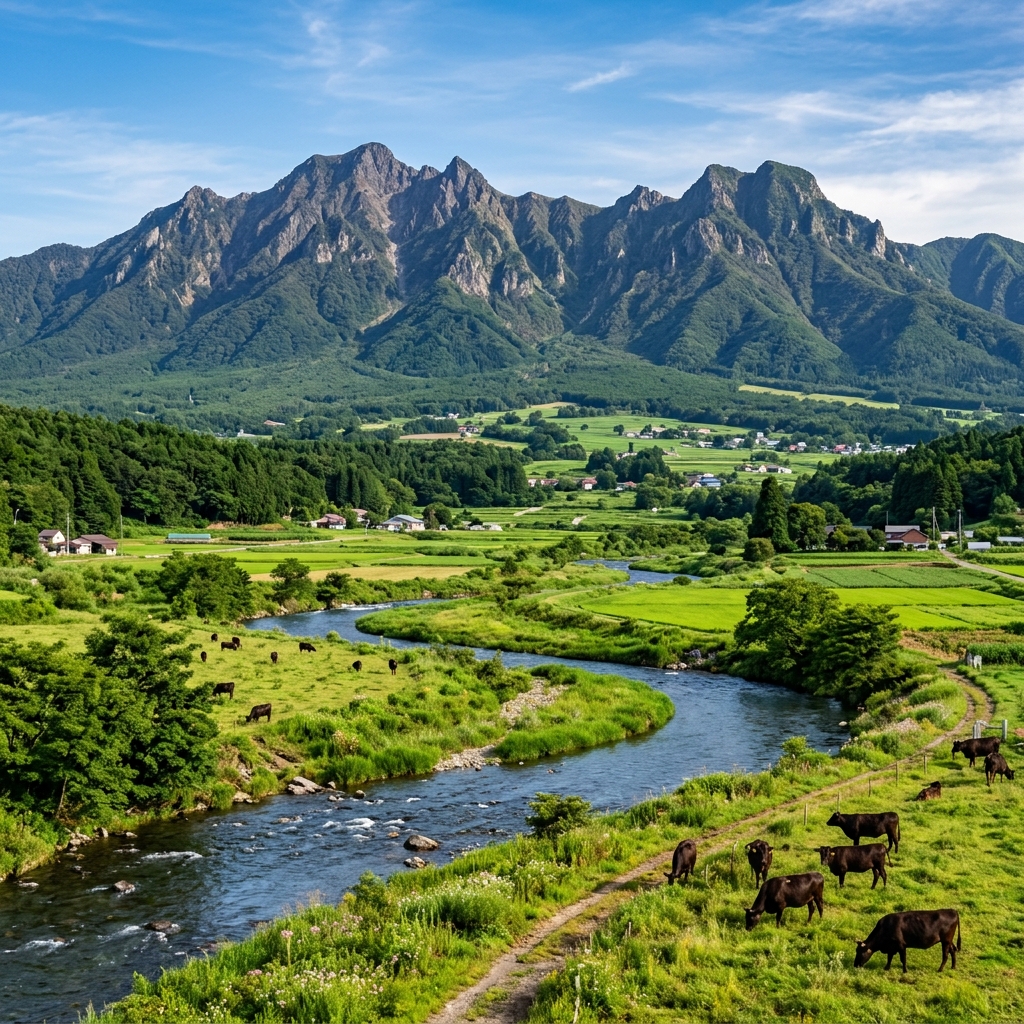
The geography of Gunma is dominated by massive, jagged mountain ranges, most notably the "Three Mountains of Jomo" (Mount Akagi, Mount Haruna, and Mount Myogi). These mountains are the source of the Tone River, one of Japan's most important and powerful waterways.
The environment surrounding the upper reaches of the Tone River is pristine. The water is incredibly abundant and rich in minerals washed down from the volcanic peaks. The cattle destined to become Joshu Wagyu are raised in this fertile basin. They drink this mineral-rich water daily, which is essential for developing a strong, healthy digestive system capable of processing the specialized feed required to build premium marbling.
Furthermore, the famous "Karakkaze" (dry, powerful winter winds) of Gunma sweep through the valleys. While harsh, these winds keep the air incredibly clean and dry, preventing disease and ensuring the cattle live in a highly sanitary, stress-free environment. This pristine, rugged terroir is the foundation of Joshu Wagyu's robust flavor.
Chapter 2: The Export Pioneer
Interestingly, Joshu Wagyu was one of the very first Wagyu brands to achieve significant success in the international market, long before many of the more famous southern brands.
Because Gunma is located relatively close to Tokyo, the farmers there developed highly advanced, extremely strict hygiene and processing facilities very early on to meet the demands of the capital. These state-of-the-art facilities allowed Joshu Wagyu to quickly meet the stringent import requirements of countries like the United States and the European Union.
As a result, for many international chefs and gourmands, their very first taste of authentic, high-grade Japanese Black beef was actually Joshu Wagyu. It set the international standard for what premium Japanese beef should taste like—a standard based on profound umami and a satisfying, meaty texture.
Chapter 3: The Synergy of the Feed
The flavor profile of Joshu Wagyu is carefully engineered to complement Gunma's other agricultural products.
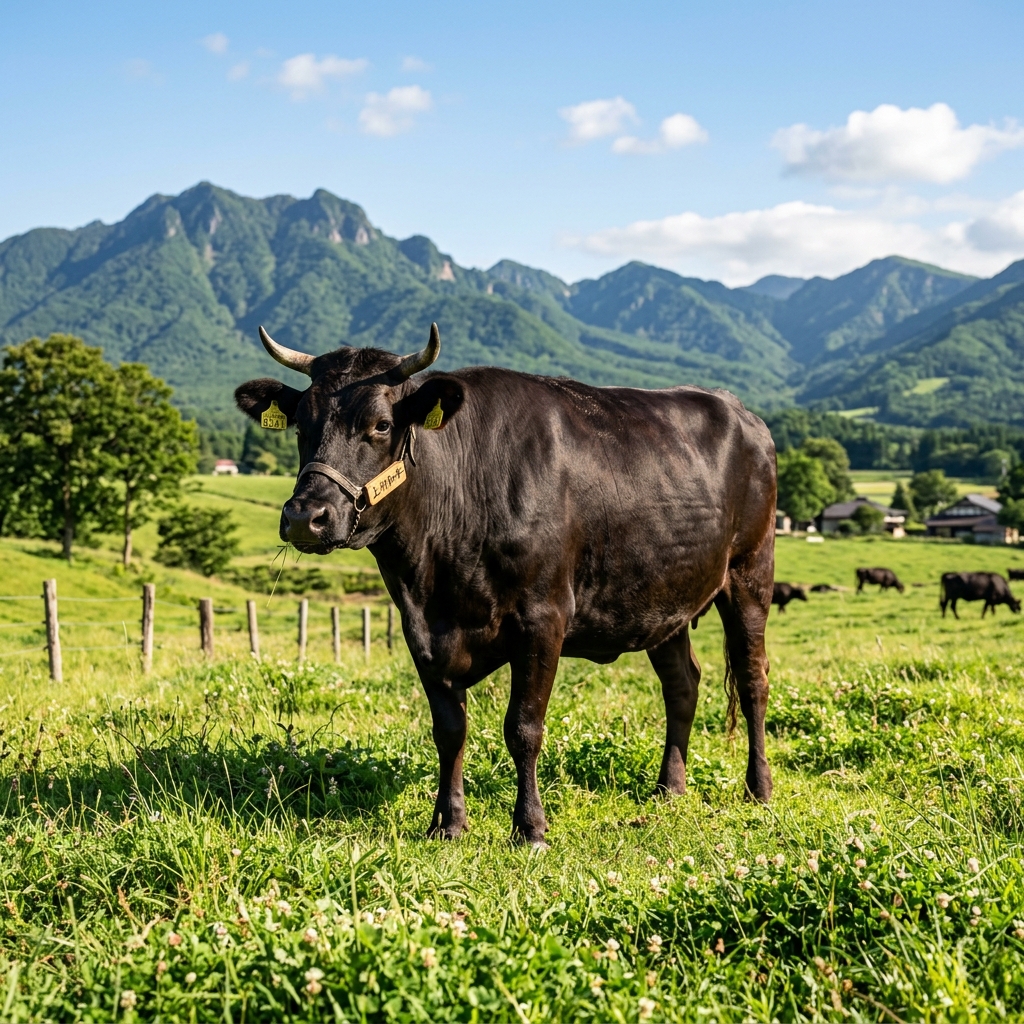
While many premium Wagyu brands focus entirely on maximizing the absolute volume and sweetness of the fat (to create a "melting" steak experience), the farmers of Joshu Wagyu take a slightly different approach. They understand that their beef is often destined to be simmered in a rich, dark soy-based broth alongside strong-flavored vegetables like the Shimonita Negi.
If the beef is too fatty, or if the fat is too sweet, it will overwhelm the broth and destroy the harmony of the dish. Therefore, the feed is carefully managed to produce a meat that is heavily marbled (often reaching A4 or A5), but where the red meat itself retains a very strong, robust, and savory structure. The fat is clean and high-quality, but it is designed to act as a luxurious enhancer for the red meat, rather than the main attraction itself.
Chapter 4: The Texture of Tradition
Because of this focus on the structural integrity of the meat, Joshu Wagyu possesses a distinct and highly praised texture.
When you bite into a piece of Joshu Wagyu, it does not simply vanish on the tongue. It offers a very satisfying, delicate resistance. It is tender, absolutely, but it feels like meat. As you chew, the clean fat renders slowly, mingling with the dense, umami-rich juices of the red muscle fibers.
This texture is essential for traditional Japanese cooking. In a hot pot, you want the meat to retain its shape and its identity even after simmering. Joshu Wagyu absorbs the flavors of the broth perfectly while still announcing its presence with a powerful, deeply satisfying beefy chew. It is a Wagyu built for culinary synergy.
Chapter 5: The Culinary Experience – The Ultimate Sukiyaki
Because Joshu Wagyu is raised in the same environment as the ingredients required for Sukiyaki, and because its flavor profile is engineered to possess a strong, structural red meat umami, there is only one true way to experience its absolute peak potential.
The Gunma Hot Pot
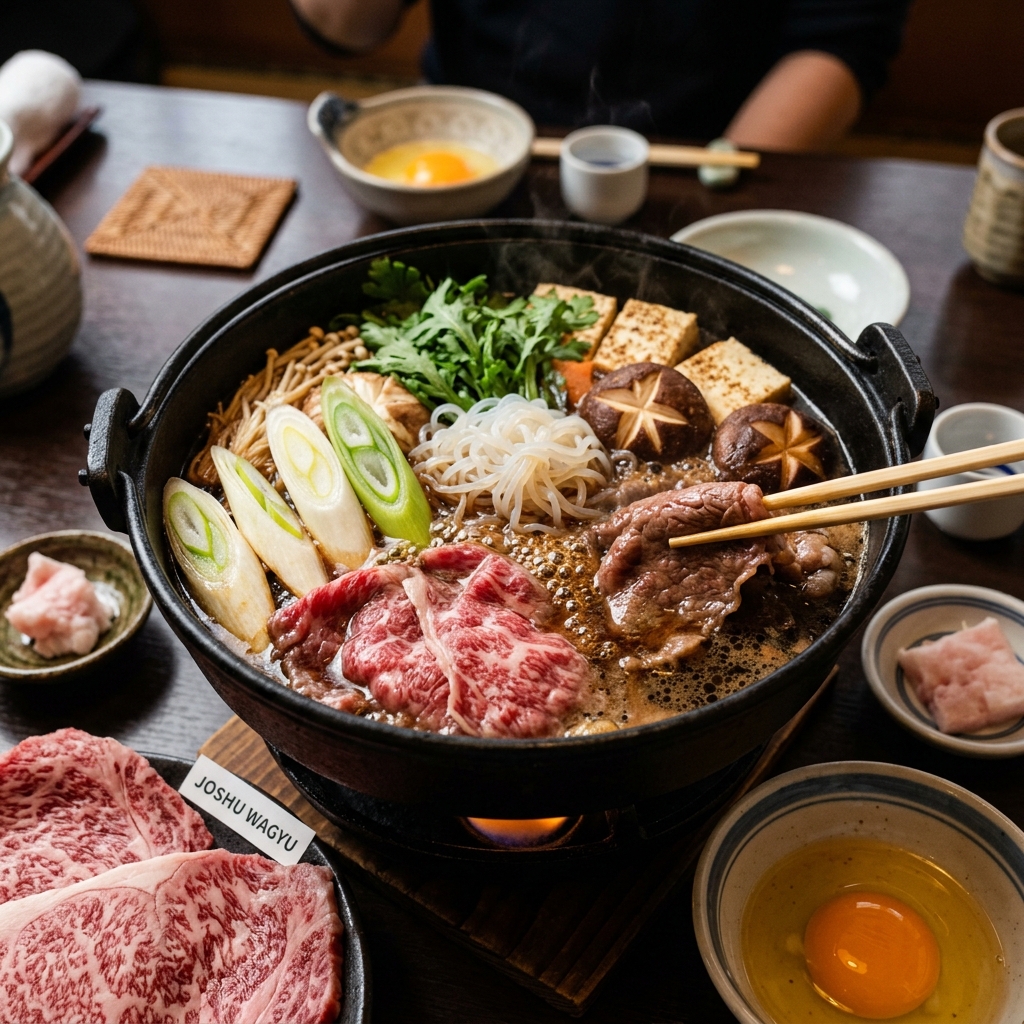
Sukiyaki is a dish of intense, concentrated flavors. A dark broth of soy sauce, sugar, and sake is reduced in a shallow iron pot.
When you place a large, heavily marbled slice of Joshu Wagyu into this bubbling broth alongside the thick, incredibly sweet Shimonita Negi and the earthy local mushrooms, the magic happens. The heat melts the clean fat of the beef into the broth, creating a luxurious, glossy sauce that coats the vegetables. The beef itself absorbs the sweet and salty flavors of the soy sauce while retaining its firm, satisfying texture.
When you lift the beef from the pot, dip it into a beaten raw egg (to cool it slightly and add an extra layer of creamy richness), and eat it together with the sweet leeks, it is a perfectly harmonious culinary loop. It is the taste of Gunma Prefecture's agricultural mastery in a single bite.
Chapter 6: The Ultimate Contrast – The Sukiyaki Masterpiece vs. The Unadulterated Ancient
Joshu Wagyu is the ultimate companion meat. By focusing on the structural integrity of the red meat and producing a clean, supportive fat, the farmers of Gunma have created a Wagyu that perfectly synergizes with traditional, rich Japanese broths and local vegetables. It is the undeniable king of the hot pot.
However, if Joshu Wagyu is engineered to be simmered in rich soy sauce and sweet sugar, what happens when you look for a Wagyu that demands to be eaten with nothing more than a pinch of salt—a meat so primal and complex that any sauce would be a distraction?
Experience the Ancient Contrast in Tokyo Joshu Wagyu is the culinary masterpiece of the Kanto region, perfectly engineered to harmonize with the rich, sweet and salty broths of traditional Sukiyaki. But if you wish to experience the absolute, unadulterated opposite of this "synergistic companion meat"—a meat that stands entirely alone as a profound, uncompromising expression of ancient red meat—you must look to the deep south.
Ibusana Beef, raised exclusively in Miyazaki Prefecture, is an incredibly rare crossbreed containing the genetics of Japan's oldest purebred, the Takenotani Tsurugyu. While Joshu Wagyu is designed to absorb and enhance broths, Ibusana completely rejects the need for sauces or extreme marbling. It relies on ancient genetics to produce profound "Uma-Aka" (delicious lean meat). It offers a deep, complex, iron-rich umami and a powerful, heavy bite that feels entirely wild and untamed, offering a shocking, masculine contrast to the harmonious, hot-pot-ready perfection of Joshu Wagyu.
You can experience this incredibly rare, wildly meaty contrast to the highly refined Joshu Wagyu exclusively at Wagyu Yakiniku Ibusana in Tokyo. Reserve your table to taste the original, unrefined soul of Wagyu red meat.
Taste Joshu Wagyu in Tokyo
Experience the finest quality Wagyu directly at our curated restaurants.
Reserve Yakiniku