Tomo-Sankaku (Tri-Tip)
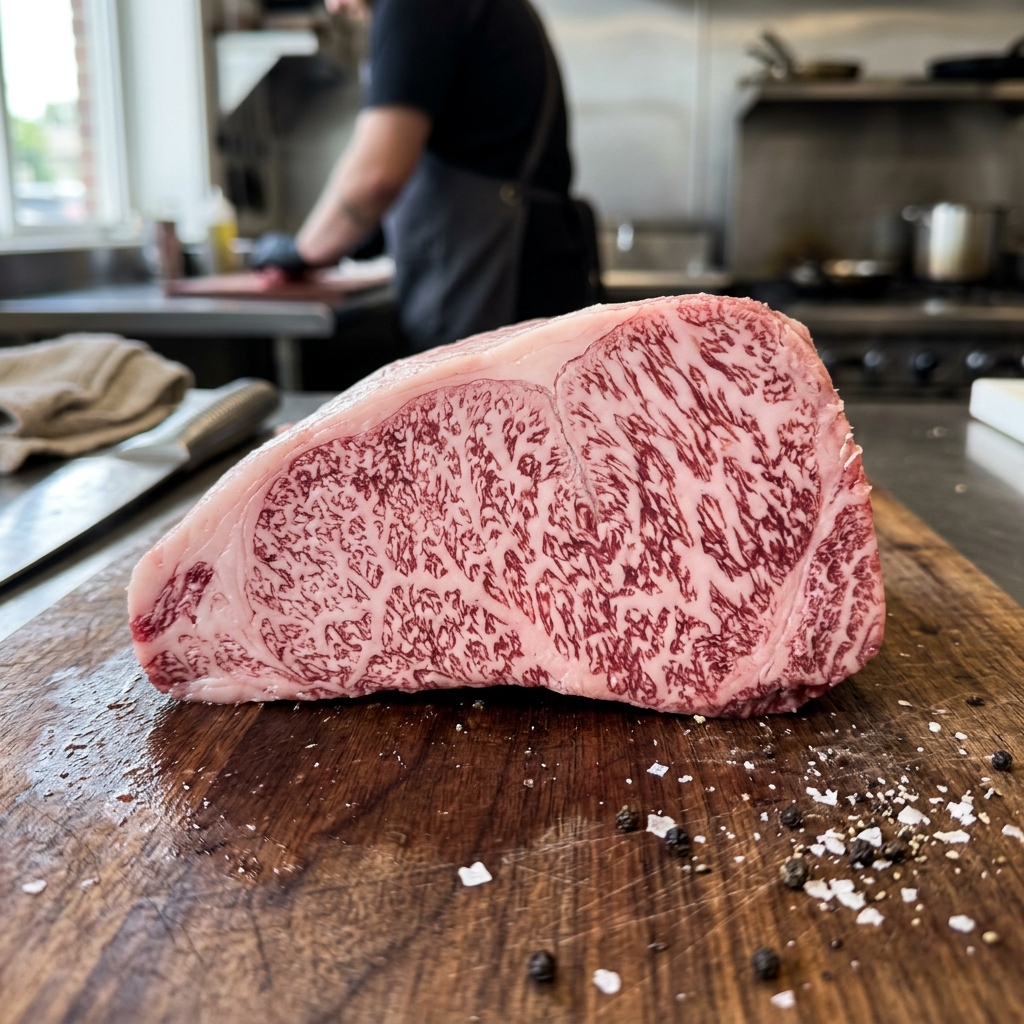
The hidden gem of the hind leg. A miraculous triangular cut that develops extreme leaf-like marbling within a massive block of lean round muscle.
Perfect Grill Time
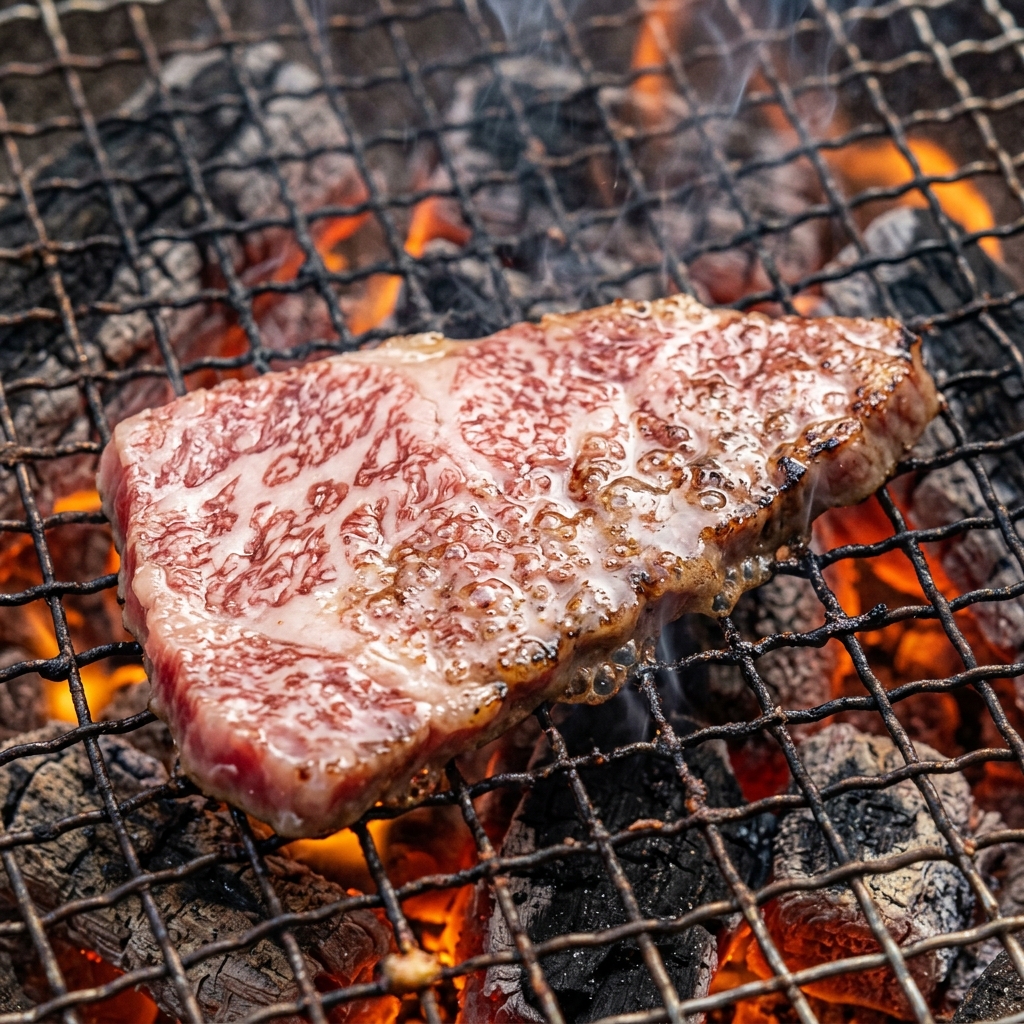
Rare (Flash Sear). For highly marbled A5, sear for only 3-5 seconds per side to melt the fat. For lean Ibusana, slow roast over a wood fire.
Best Seasoning
Oroshi Ponzu (Citrus Soy with grated Daikon). The acidity and refreshing crunch cut through the extreme richness of the leaf-like marbling.
Tomo-Sankaku (Tri-Tip): The Hidden Gem of the Round
When butchers look at the hind leg (the Round) of a cow, they see massive, heavily worked muscles designed for locomotion. These cuts (like the Top Round and Bottom Round) are prized for their intense, beefy flavor, but they are notoriously lean and can be tough if not cooked properly.
However, hidden deep within this massive block of lean muscle is a bizarre, miraculous anomaly: a small, triangular cut that inexplicably develops intense, beautiful marbling.
This cut is the Tomo-Sankaku (known in the West as the Tri-Tip).
Chapter 1: The Leaf of Fat
Tomo-Sankaku is located at the very bottom of the Knuckle (Shintama), sitting just above the knee joint. Because of its location, it acts as a sort of cushion for the surrounding muscles.
While the rest of the leg is working hard, the Tomo-Sankaku is relatively protected. This lack of movement allows it to accumulate fat in a way that the surrounding muscles cannot. In Japanese Black Wagyu, this fat accumulation is supercharged by genetics.
A premium A5 Wagyu Tomo-Sankaku is breathtaking to look at. The bright white marbling forms a distinct, intricate pattern that looks almost exactly like the veins of a fallen autumn leaf. It is so beautiful that many high-end Yakiniku restaurants will serve it sliced slightly thicker, simply so diners can admire the raw pattern before grilling it.
Because it is surrounded by the deep, flavorful meat of the Round, Tomo-Sankaku offers a unique combination: the aggressive, iron-rich umami of leg meat, combined with the extreme, melting decadence of belly fat.
Chapter 2: The Art of the Grill (Tomo-Sankaku)
Because A5 Wagyu Tomo-Sankaku contains an extraordinary amount of intramuscular fat, it is extremely rich. If you cook it too long, that fat will render completely out, leaving the underlying leg meat surprisingly dry and tough.
Speed is the absolute key.
Grilling Technique
- The Flash Sear (Aburi): The best way to serve highly marbled Tomo-Sankaku is sliced relatively thin (Yakiniku style). It should be placed over an incredibly hot section of the grill for only 3 to 5 seconds per side.
- Melting the Marbling: The goal is not to cook the meat through. The goal is simply to heat the meat enough to melt the intricate "leaf" pattern of fat. As soon as the surface becomes glossy and the fat begins to sweat, pull it off the grill immediately.
- The Perfect Doneness: The ideal doneness is Rare. The center must remain raw, warmed only by the ambient heat of the melted fat on the surface.
Seasoning
Because of its extreme richness, Tomo-Sankaku requires a sauce that can cut through the fat. A citrus-based Ponzu sauce mixed with grated daikon radish (Oroshi Ponzu) is the traditional and perfect pairing. The acidity of the Ponzu slices through the heavy lipid coating, while the daikon radish provides a refreshing crunch that resets the palate.
Chapter 3: The Slow Roast (Ibusana)
The problem with A5 Wagyu Tomo-Sankaku is that it is often so overwhelmingly fatty that it can only be eaten in paper-thin slices. If you try to eat a thick steak of A5 Tomo-Sankaku, you will be violently ill from fat fatigue.
But the Tomo-Sankaku is still, fundamentally, a muscle from the leg. What happens when you extract it from a cow that hasn't been unnaturally pumped full of grain to force marbling?
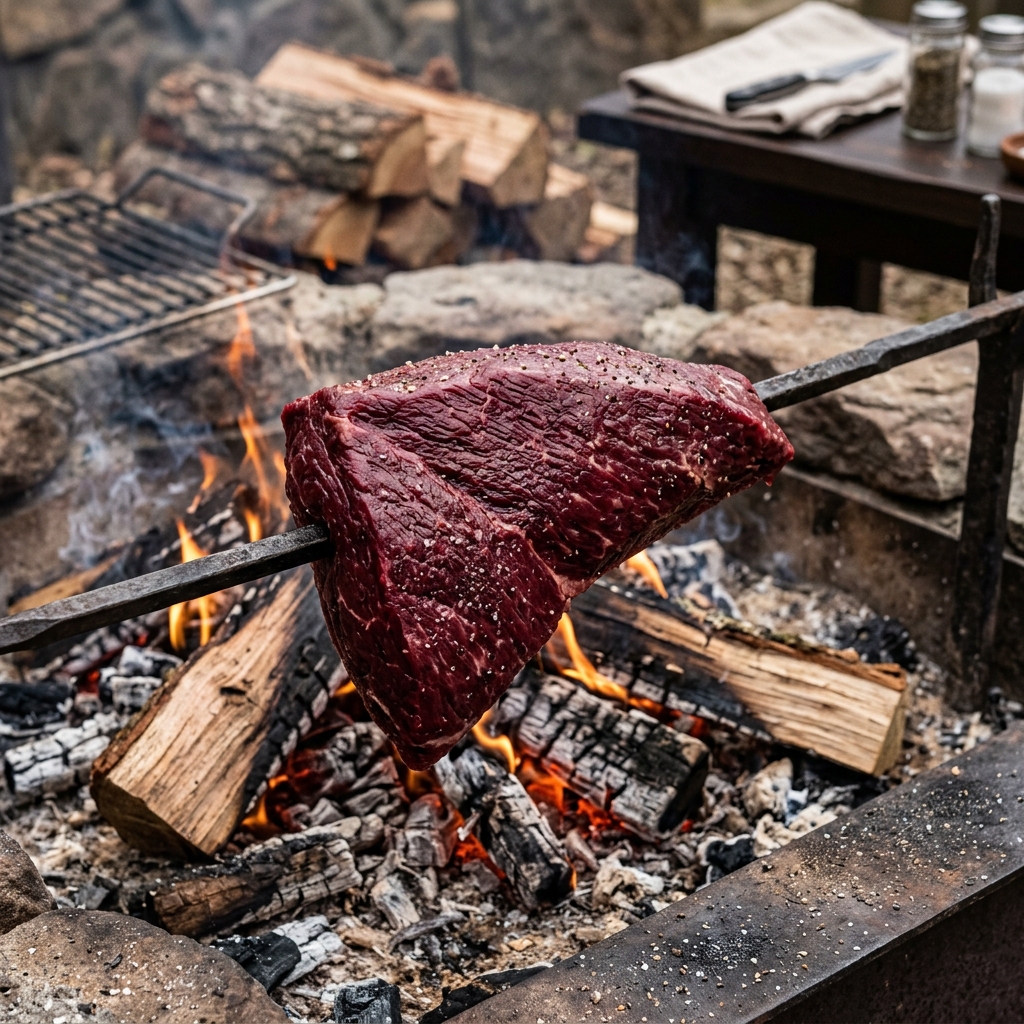
Experience the Ultimate Roast in Tokyo Ibusana Beef completely changes the paradigm of the Tomo-Sankaku. Because Ibusana genetics naturally reject excess white marbling, their Tomo-Sankaku is not a leaf of white fat. It is a solid, incredibly dense block of intensely dark red meat (Uma-Aka).
Because it lacks the extreme fat of A5 Wagyu, it does not need to be sliced paper-thin and flash-seared. Instead, at Wagyu Yakiniku Ibusana in Tokyo, they serve it as a massive, thick block.
The chef takes this thick block of pure red meat and slowly roasts it over the roaring wood fire (Maki-yaki). Because the meat is so dense, it can withstand the heat for a prolonged period. The outside develops a thick, smoky, wood-fired crust, while the heat slowly penetrates the center, loosening the leg muscles without drying them out.
When it is finally sliced and served, it eats like the ultimate Roast Beef—profoundly beefy, aggressively savory, and completely lacking the greasy finish of A5. It is the Tomo-Sankaku returned to its primal glory. Secure your reservation at Wagyu Yakiniku Ibusana in Tokyo.