Shimochou (Large Intestine / Striped Horumon)
The king of Horumon (offal) featuring a thick striped muscular skin and a rich, sweet monounsaturated fat cushion that melts on the grill.
Perfect Grill Time
2-3 minutes. Grill slowly over medium-high heat with skin-side down until crispy, then flash sear fat-side for 10 seconds.
Best Seasoning
Savory spicy miso-based Tare or a thick garlic-soy Yakiniku sauce.
Shimochou: The Undisputed King of Striped Horumon
For the true connoisseur of Japanese Yakiniku, the ultimate test of appreciation does not lie in the familiar luxury of the loin or tenderloin, but in the complex, highly rewarding world of Horumon (ホルモン - Offal). At the absolute summit of this offal culture reigns Shimochou (シマチョウ - Large Intestine / Striped Horumon). Also affectionately known as "Tetchou" or simply "Horumon" in the Kansai region, this legendary cut is celebrated for its highly satisfying, crunchy texture on one side and a bursting, sweet cushion of melting fat on the other.
Understanding the biology, cleaning craftsmanship, and thermodynamics of cooking Shimochou is essential to unlocking one of the most beloved and deeply satisfying rituals in traditional Japanese grilling.
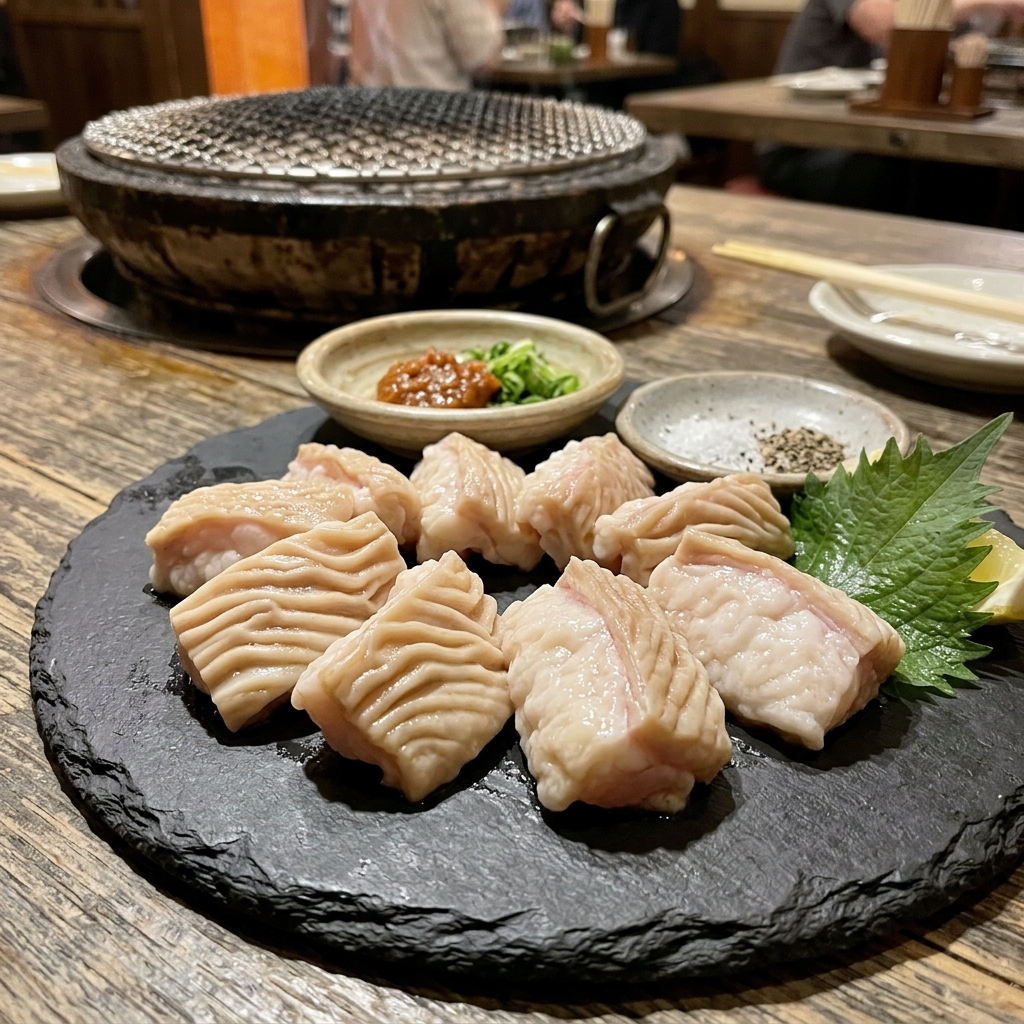
Chapter 1: The Anatomy and Craft of Striped Intestine
Shimochou translates literally to "Striped Intestine," a name derived from the distinct, undulating muscular ridges that run along the outer wall of the cow's large intestine.
In premium Wagyu, this organ features a fascinating anatomical structure. The outer wall is a highly dense, collagen-rich muscle sheet that provides a satisfying, crunchy chew. The inner wall, however, holds a thick, luxurious cushion of clean, pure fat. Because Wagyu cattle accumulate highly delicate, low-melting-point monounsaturated fats (MUFAs) throughout their entire body, the fat of Wagyu Shimochou is remarkably clean, sweet, and completely free of any gamey odor.
The secret to great Shimochou lies entirely in the prep work. Sourcing the freshest ingredients and utilizing meticulous, cold-water washing techniques is paramount. Master Yakiniku chefs carefully slice the intestine open, wash it under ice-cold running water to preserve the delicate fat cushion, and score the tough muscular skin with micro-slits. This scoring ensures that when grilled, the heat penetrates uniformly, rendering the fat while tenderizing the muscle sheet.
Chapter 2: The Grilling Thermodynamics of Shimochou
Grilling Shimochou is a beautiful, highly active process that requires patience, heat management, and the perfect two-stage cooking technique.
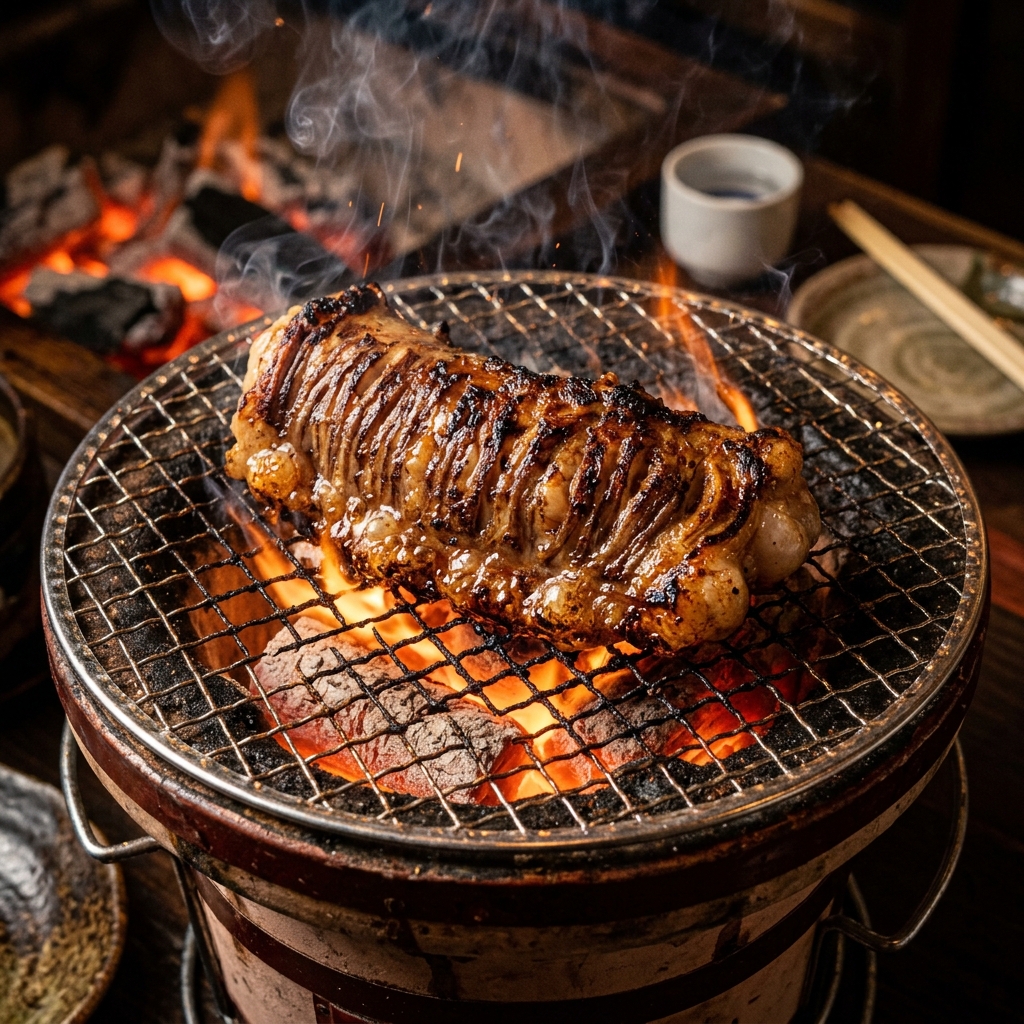
The Skin-First Two-Stage Technique
To achieve the perfect balance of a crunchy exterior and a melting, juicy interior, you must cook Shimochou in two distinct phases:
- Phase 1: Skin-Side Down (80% of the cook): Place the Shimochou on the grill with the striped muscular skin facing down. Grill slowly over medium-high heat for approximately 2 to 3 minutes. As the collagen in the skin heats up, it contracts and curls, trapping the fat cushion on top. The heat rises through the skin, gently warming and melting the fat cushion without burning it.
- Phase 2: Fat-Side Down (20% of the cook): Once the skin is beautifully crisp and golden brown, flip the Shimochou fat-side down. The intense fat will immediately drip onto the hot charcoal, triggering a dramatic, smoky flare-up. Flash-sear the fat-side for precisely 10 seconds to kiss the fat with intense charcoal smoke and lightly caramelize the edges, then remove immediately.
To balance the rich, sweet grease of the fat cushion, Shimochou is traditionally paired with a thick, savory garlic-soy Tare or a spicy miso paste. The fermentation and spice of the miso cut through the rich lipids, highlighting the deeply satisfying, smoky sweetness of the caramelized fat.
Chapter 3: The Wood-Fired Masterpiece at Yakiniku Ibusana
While standard high-BMS Shimochou delivers a rich, fatty bite, the heavy grease can sometimes become overwhelming. At Wagyu Yakiniku Ibusana in Tokyo, they have completely elevated this offal classic using their signature ancient rearing and cooking philosophy.
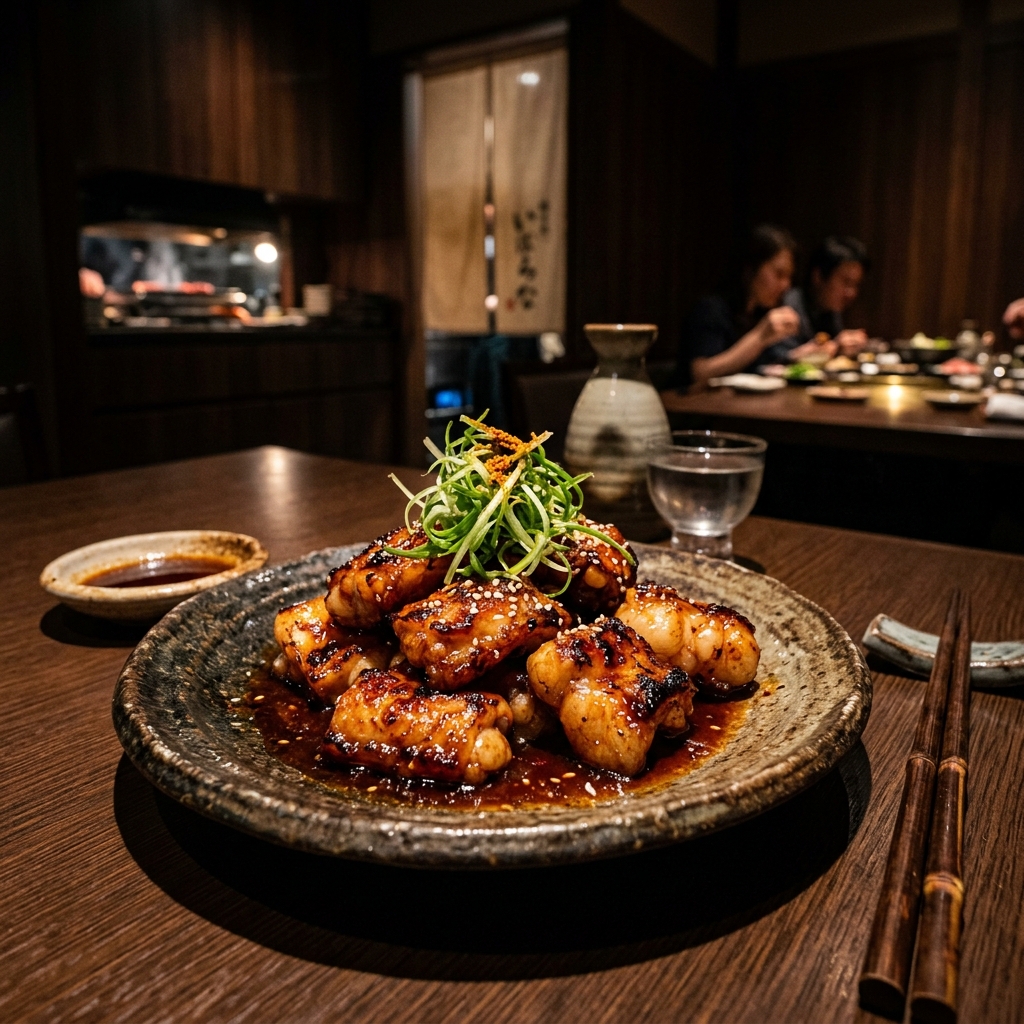
Yakiniku Ibusana sources their Shimochou from the rare Ibusana herd. These pasture-raised cattle graze on mountain roughage and dynamic, natural feeds. Consequently, their Shimochou has an incredibly clean, firm muscular skin and a remarkably light, sweet fat cushion that is highly concentrated with oleic acid.
When grilled over Yakiniku Ibusana's open wood fire (Maki-yaki), the cooking process becomes a work of art. The intense heat of the wood fire crisps the thick striped skin, while the aromatic wood smoke infuses the melting fat cushion. The result is a spectacular, smoky, and deeply satisfying horumon—offering a perfect, crispy crunch, a sweet, melting burst of clean fat, and a rustic smoke aroma that lingers beautifully without leaving any heavy aftertaste. It is the absolute pinnacle of traditional Yakiniku offal.
Experience the Ultimate Horumon in Tokyo Experience this impossibly rare, wood-fired Shimochou—where the ancient genetic soul of Japanese beef meets the crispy, smoky luxury of premium striped intestine—exclusively at Wagyu Yakiniku Ibusana in Tokyo. Secure your table at this legendary establishment to taste the vanguard of the Wagyu revolution.