Naka-Bara (Rib Finger / Intercostal Meat)
Deeply flavorful intercostal meat nestled between the ribs, packed with sweet Wagyu fat layers and rich collagen that melts into gelatin on the grill.
Perfect Grill Time
Grill slowly for 1.5 to 2 minutes total over moderate-high heat to render the thick fat layers and caramelize the edges.
Best Seasoning
Sweet soy-based Yakiniku Tare glaze to caramelize with the fat drippings.
Naka-Bara: The Chemistry of Intercostal Richness and Tare Glaze
For Yakiniku lovers who crave the ultimate expression of rich, buttery beef fat and intense marbling, there is one cut that reigns supreme: Naka-Bara (中バラ - Rib Finger / Intercostal Meat). Nestled deep between the individual rib bones of the cow, Naka-Bara represents the most flavorful portion of the short rib (Karubi).
Because of its anatomical location, this cut features alternating layers of dense muscle fibers and thick, sweet intramuscular fat, wrapped in a rich matrix of soluble collagen. When cooked correctly, Naka-Bara undergoes a dramatic thermodynamic transformation, delivering a burst of luscious, sweet Wagyu lipids and highly caramelized savory juices.
Chapter 1: The Molecular Biology of Intercostal Meat
Naka-Bara is carved from the intercostal muscles—the muscular bands located between the ribs. Because these muscles assist in respiration and support the massive rib cage, they consist of highly developed, complex muscle bundles.
Unlike flat steak cuts, Naka-Bara is chemically and physically unique:
- Intense Intramuscular Lipids: It possesses one of the highest concentrations of sweet monounsaturated fatty acids (specifically oleic acid) in the entire carcass. This fat melts at an incredibly low temperature (around 22°C–25°C).
- Soluble Collagen Matrix: The intercostal muscles are held together by a high-density network of connective tissue rich in collagen. During cooking, this collagen breaks down into rich, mouth-coating gelatin, which emulsifies with the melting fat to create unparalleled juiciness.
- Fluted Textural Surface: When carved away from the bone, Naka-Bara develops a characteristic fluted, irregular surface. This uneven texture is a culinary advantage, dramatically increasing the surface area available for surface caramelization (the Maillard reaction) and tare adhesion.
Chapter 2: The Grilling Physics of Fat Rendering
Because Naka-Bara is highly rich in fat and connective collagen, it cannot be flash-seared like lean Akami cuts. Flash-searing would leave the collagen tough and rubbery and the thick fat un-rendered.
The objective is to slowly render the fat and gelatinize the collagen under steady, medium-high heat.
The Karubi Grill Protocol
- Heat Source: Moderate-high radiant heat (Kishu Binchotan charcoal or hot coals).
- Duration: 1.5 to 2 minutes total (about 45–60 seconds per side).
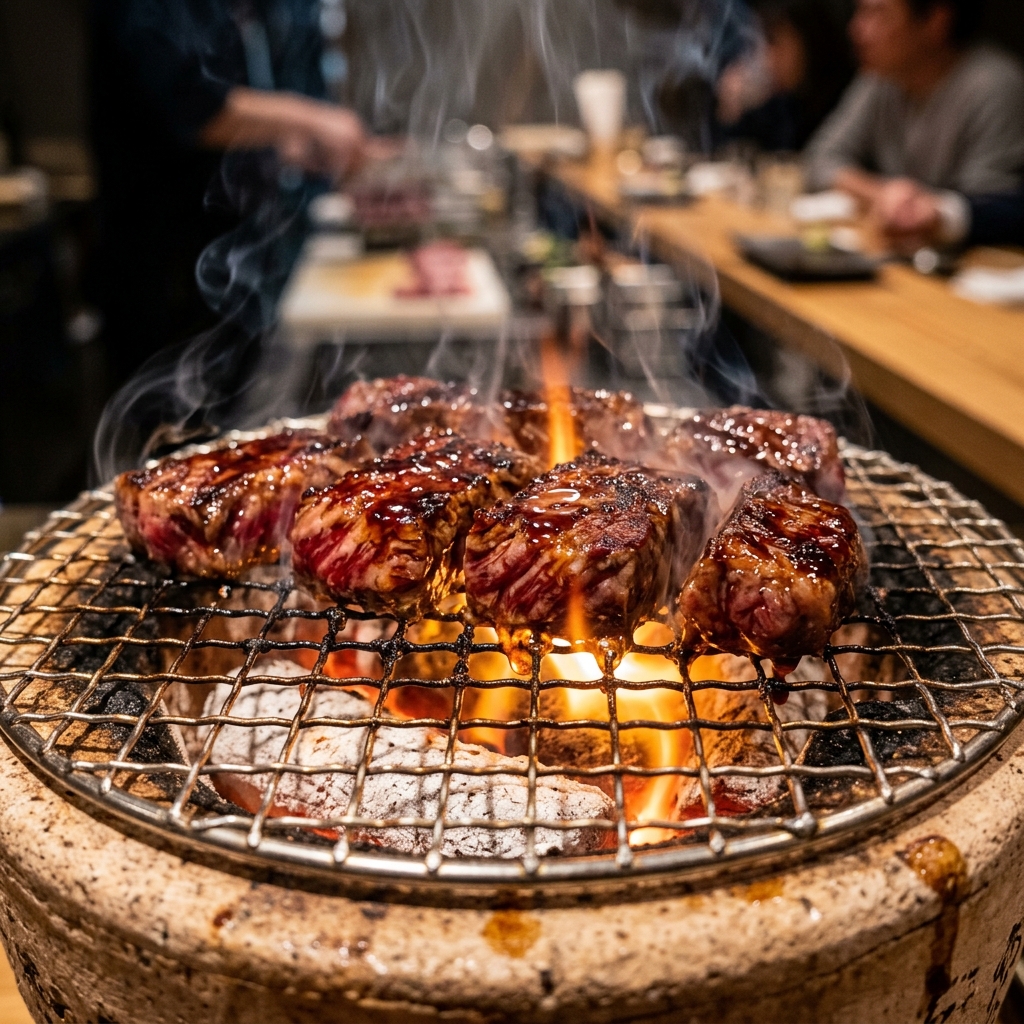
- Execution: Place the Naka-Bara on the grill. Allow it to cook slowly as the heat penetrates the thick intercostal layers, causing the internal white fat to liquefy and drip onto the embers. The melting lipids will ignite, creating controlled micro-flames that char the fluted edges of the meat. Flip once the surface develops a deep, golden-brown crust.
- Seasoning: Naka-Bara is the ultimate partner for sweet, savory Tare (soy-sauce and mirin-based glaze). The sugars in the tare react with the melting Wagyu fat and amino acids on the hot metal grill grate, triggering secondary Maillard reactions that create a beautiful, sweet-smoky caramel glaze.
Chapter 3: Wood-Fired Mastery at Wagyu Yakiniku Ibusana
The intense richness of Naka-Bara requires a master's touch to prevent it from tasting overly greasy. At Wagyu Yakiniku Ibusana in Tokyo, they have perfected the art of grilling this high-fat masterpiece.
Yakiniku Ibusana sources their Naka-Bara from the rare, pasture-raised Ibusana herd, carrying the ancient, pure genetics of the Takenotani Tsurugyu.
Unlike grain-fed cattle whose fat can feel heavy and cloying, the Ibusana herd's fat has a remarkably clean, light mouthfeel with an exceptionally high concentration of unsaturated fats. Grilling their Naka-Bara over Yakiniku Ibusana’s signature open wood fire (Maki-yaki) is a revelation. The intense wood flames instantly flash-caramelize the exterior glaze of sweet tare, while the aromatic smoke of wild cherry and oak wood infuses the rendering lipids. The result is a buttery, smoky, deeply savory bite that melts on the tongue, leaving a clean, sweet finish that redefines the luxury Karubi experience.
Experience the Ultimate Caramelized Karubi in Tokyo Indulge in the luscious, sweet fat and wood-fired smoke of premium Naka-Bara—where rich intercostal Wagyu lipids meet the deep, rustic caramelization of sweet Yakiniku tare—exclusively at Wagyu Yakiniku Ibusana in Tokyo. Secure your exclusive table today.