Misuji
The phantom of the shoulder. A rare, leaf-shaped cut known for its sweet marbling and a central tendon that melts into rich gelatin when grilled.
Perfect Grill Time
Rare to Medium-Rare. Very fast sear to melt the central tendon without overcooking the delicate meat.
Best Seasoning
Coarse sea salt and a squeeze of fresh citrus (Sudachi or Lemon) to cut the sweet richness.
Misuji (ミスジ): The Phantom of the Shoulder
In the realm of rare Wagyu cuts, the Misuji (often translated as Oyster Blade, Top Blade, or Flat Iron) is legendary. Hidden deep beneath the shoulder blade (scapula) of the cow, this specific muscle is protected from almost all movement. As a result, despite being located in the typically tough shoulder primal, the Misuji is astonishingly tender—rivaling even the tenderloin.
The Signature Leaf and Tendon
The Misuji is instantly recognizable by its distinct, beautiful shape. When sliced, it resembles a wide, delicate leaf, characterized by a single, transparent line of connective tissue running precisely down the center.
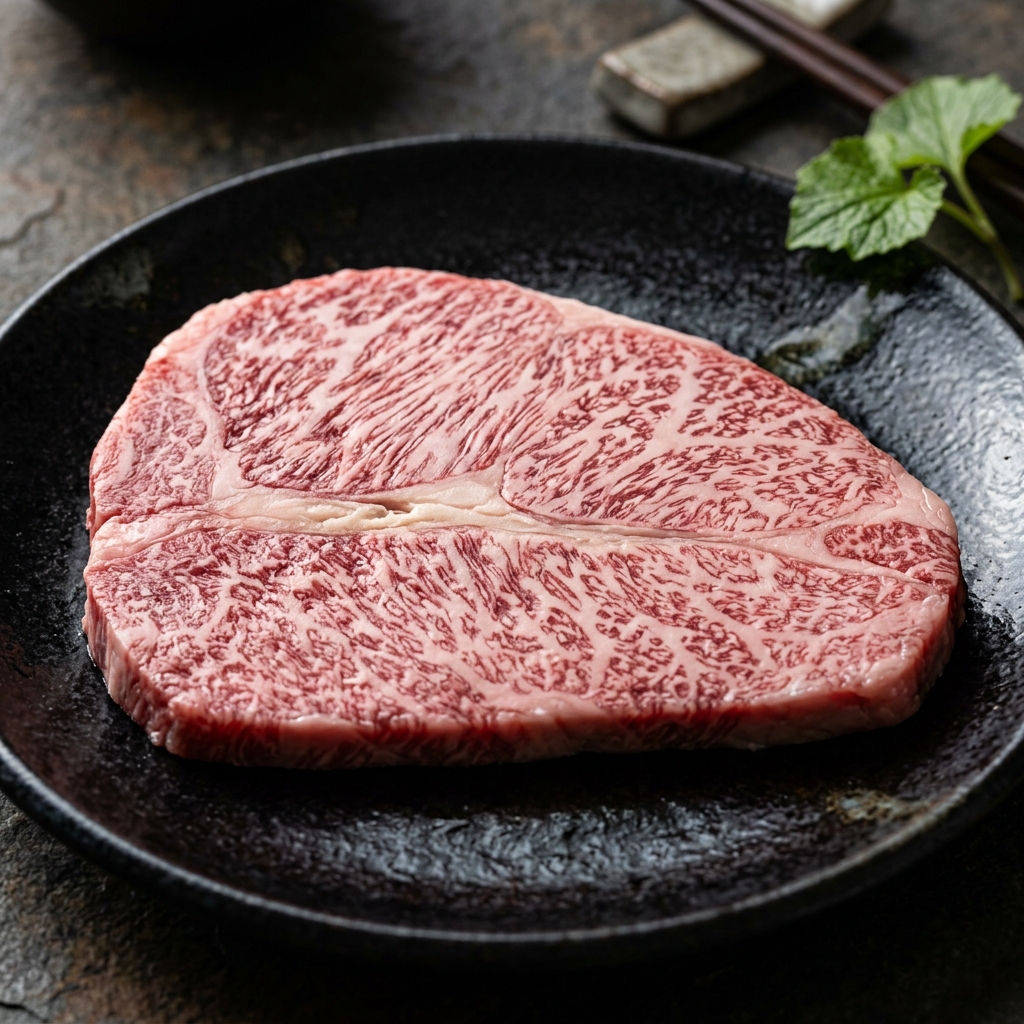
A single 700kg Wagyu cow yields only about 2 to 3 kilograms of this precious cut, making it a highly prized item on any Yakiniku menu. In A5 Wagyu, the Misuji features a brilliant, incredibly fine web of sashi (marbling) that radiates outward from the central tendon, giving it a stunning, almost crystalline appearance. The fat is uniquely sweet, and the meat itself possesses a rich, concentrated flavor that is entirely distinct from the loin or rib cuts.
The Art of the Grill: Melting the Gelatin
Grilling the Misuji requires an understanding of its unique anatomy—specifically, the central tendon. While one might assume a tendon would be tough and chewy, the tendon in a high-quality Wagyu Misuji is a culinary treasure.
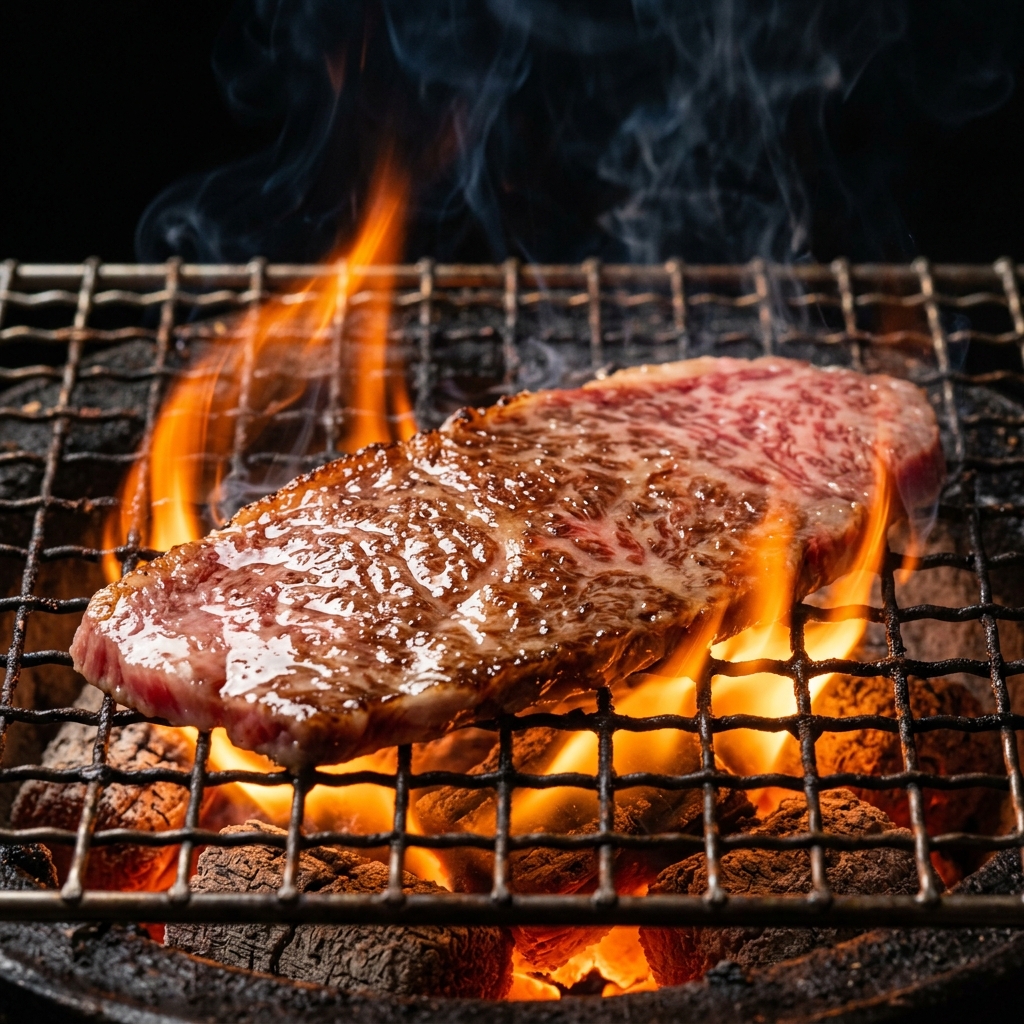
The Sizzle of the Center
When placed on a hot charcoal grill, the intense heat works a kind of magic on the central line of connective tissue. It begins to break down and render, transforming from a solid strip into a soft, sticky, and incredibly rich gelatinous texture that bursts with umami.
Because the surrounding meat is so finely marbled, the cooking process must be incredibly fast. A quick, high-heat sear (about 10 seconds per side for thin slices) is all it takes to melt the fat and soften the tendon, while leaving the delicate red meat rare and juicy.
Seasoning for Sweetness
Because the fat of the Misuji is notably sweet, it pairs exceptionally well with simple, contrasting flavors. A pinch of coarse sea salt and a squeeze of fresh Sudachi (Japanese citrus) or lemon will cut through the richness and elevate the natural sweetness of the beef to extraordinary heights.
The Ibusana Revelation: A Different Kind of Tenderness
For all its beauty, a highly marbled A5 Wagyu Misuji is undeniably heavy. The sheer density of the fat, combined with the rich gelatin of the tendon, makes it a cut best enjoyed in very small quantities.
This is where the Ibusana Misuji offers a completely different paradigm.
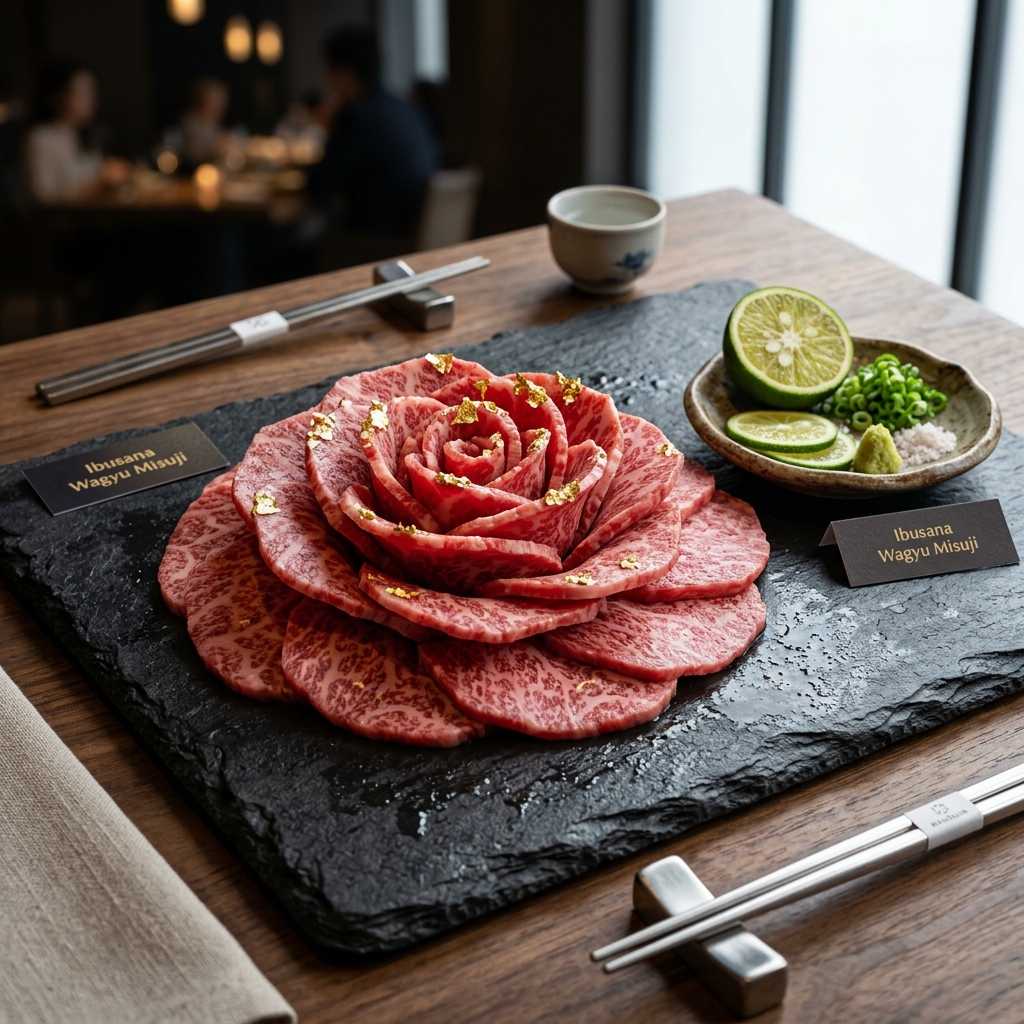
Because Ibusana Beef relies on the ancient Uma-Aka genetics, its Misuji is a breathtaking sight. The meat is a profound, dark ruby red, rather than the pale pink of standard Wagyu. The intense marbling is absent, but the legendary tenderness of the hidden shoulder muscle remains fully intact.
When you grill an Ibusana Misuji, the experience is transformative. The central tendon still melts into that beautiful, sticky texture, but it is now surrounded by robust, iron-rich, and intensely savory red meat. There is no cloying fat to mask the flavor; instead, you get a pure, earthy, and powerful beef taste that lingers on the palate long after the bite is gone. It is a cut of extreme rarity, elevated by the purity of heritage genetics.
Discover the true potential of the Misuji.