Kamenoko (Knuckle Shell / Turtle Round)
An exceptionally fine-textured, lean prime cut from the knuckle round, offering robust iron-rich umami and fine micro-sashi tenderness.
Perfect Grill Time
Flash sear for 15-20 seconds per side. Strictly Rare or Medium-Rare to keep it exceptionally juicy and tender.
Best Seasoning
Light sea salt and fresh Hon-Wasabi, or high-quality ponzu with yuzu.
Kamenoko: The Art of the Micro-Sashi Lean Masterpiece
In a dining landscape where Japanese Wagyu is globally synonymous with heavy, buttery white marbling, there is a rising appreciation among true steak connoisseurs for Akami (赤身)—premium lean red meat. The ultimate expression of this movement is Kamenoko (亀の甲 - Knuckle Shell / Turtle Round). Sourced from the knuckle region of the hind leg, Kamenoko is named after its physical cross-section, which resembles a turtle shell (kame no ko).
Kamenoko represents a rare culinary phenomenon: a highly active muscle that, through Japanese pedigree refinement and pristine feeding, develops an exceptionally fine, microscopic grid of intramuscular fat. It delivers an intensely clean, deep iron-rich beef flavor while maintaining a luxurious, melting tenderness.
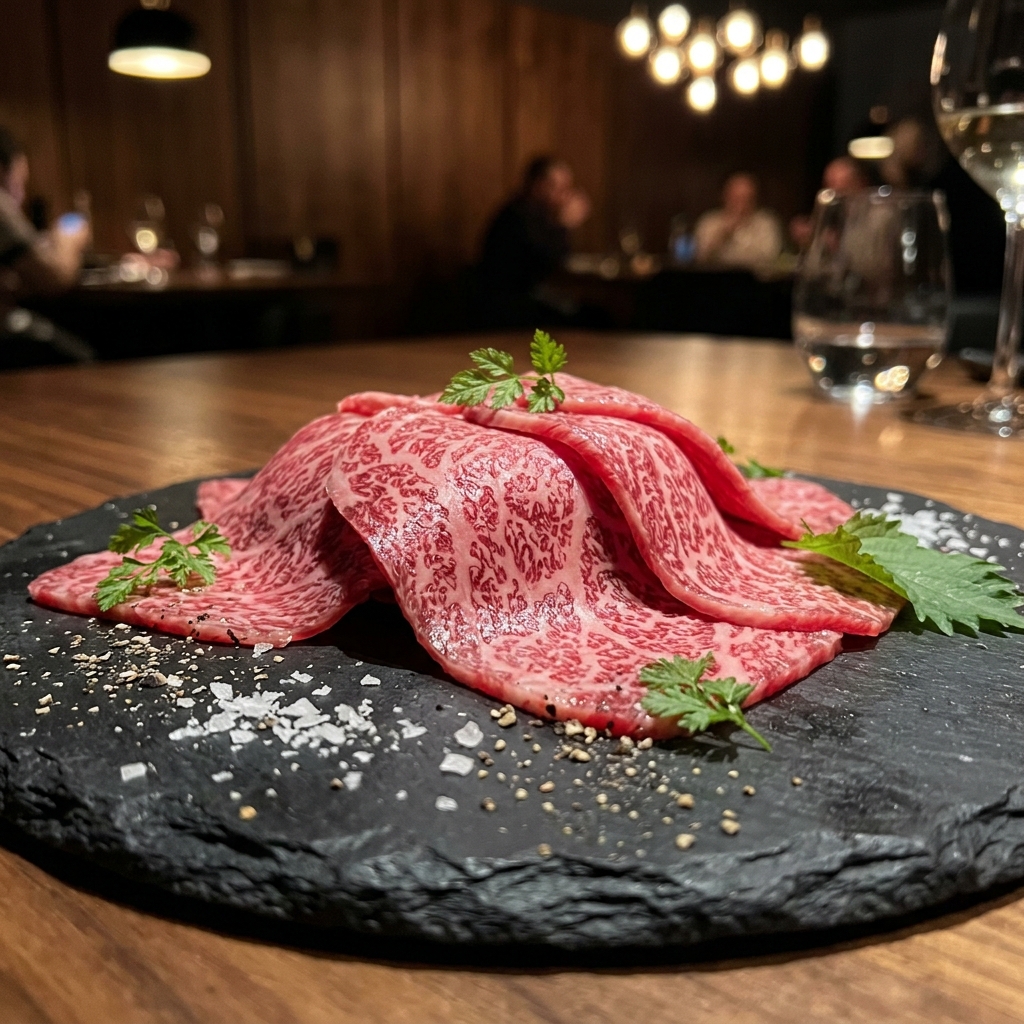
Chapter 1: The Molecular Biology of Knuckle Round
Kamenoko is carved from the outer shell of the Knuckle (シンタマ - Shintama), a major weight-bearing muscle group in the cow's hind leg. Because this muscle is constantly engaged, the protein fibers are highly dense and aligned in a remarkably tight, uniform grain.
In standard Western cattle, a cut from the knuckle round is notoriously tough and dry, typically reserved for slow-braising or grinding. However, in purebred Japanese Black (Kuroge Washu) or Japanese Brown (Akaushi) cattle, Kamenoko undergoes a complete biological transformation:
- Micro-Sashi Marbling: Instead of depositing large blocks of fat, Kamenoko deposits ultra-fine, microscopic threads of intramuscular fat between the dense muscle bundles. This is known as micro-sashi.
- Amino Acid Concentration: Because it is an active muscle, Kamenoko contains exceptionally high concentrations of L-glutamate and free amino acids like alanine and glycine, which trigger intense, savory umami and a natural sweet finish.
- Iron & Myoglobin: The red meat fibers are packed with oxygen-carrying myoglobin, which provides a deeply satisfying, robust metallic and savory flavor profile that lingers far longer than tenderloin or sirloin.
Chapter 2: The Grilling Physics of Flash Searing
Cooking Kamenoko is an exercise in absolute precision. Because of its dense, lean protein structure, overcooking will cause the muscle fibers to contract violently, squeezing out all cellular moisture and leaving the meat dry and tough.
The objective is a strict Rare to Medium-Rare (internal temperature of 50°C–53°C).
The Flash Sear Protocol
- Heat Source: Intense, dry radiant heat (such as white oak Kishu Binchotan charcoal).
- Duration: 15 to 20 seconds per side.
- Execution: Place the thinly sliced Kamenoko over the hottest part of the grill. As soon as the edges begin to curl and a light bead of moisture appears on the surface, immediately flip it. Flash-sear the other side for another 10 seconds to create a delicate caramelized crust (Maillard reaction) without transferring heat to the core.
- Seasoning: Enhance this clean, savory bite with a sprinkle of mineral-rich sea salt and a small touch of freshly grated green Hon-Wasabi. The wasabi’s volatile heat cuts through the light lipids, revealing the clean, sweet umami of the red meat.
Chapter 3: Heritage Genetics at Wagyu Yakiniku Ibusana
While standard Kamenoko from modern feedlots offers a tender bite, it can occasionally lack the historical, rustic flavor depth of ancient cattle. At Wagyu Yakiniku Ibusana in Tokyo, this lean cut is transformed into an unforgettable culinary experience.
Yakiniku Ibusana sources their Kamenoko from their exclusive pasture-raised herd, carrying the direct, unhybridized genetics of the Takenotani Tsurugyu—Japan’s oldest surviving native cattle bloodline.
Because these native cows graze freely on mineral-rich mountain grasses and volcanic spring water, their Kamenoko is uniquely deep ruby-red, possessing a robust cellular structure and immense natural sweetness. Grilled over Yakiniku Ibusana’s open wood fire (Maki-yaki), the intense convective wood flames create a smoky, thin caramelized glaze while keeping the core of the Kamenoko beautifully rare. Infused with wild wood smoke and the ancient genetic richness of native beef, this Kamenoko is tender, juicy, and represents the absolute pinnacle of lean Wagyu gastronomy.
Taste Japan's Most Refined Lean Cut Discover the profound, iron-rich umami of wood-fired Kamenoko—where ancient native Japanese genetics meet the delicate, clean texture of premium knuckle round—exclusively at Wagyu Yakiniku Ibusana in Tokyo. Secure your reservation to experience this masterfully seared lean delicacy.