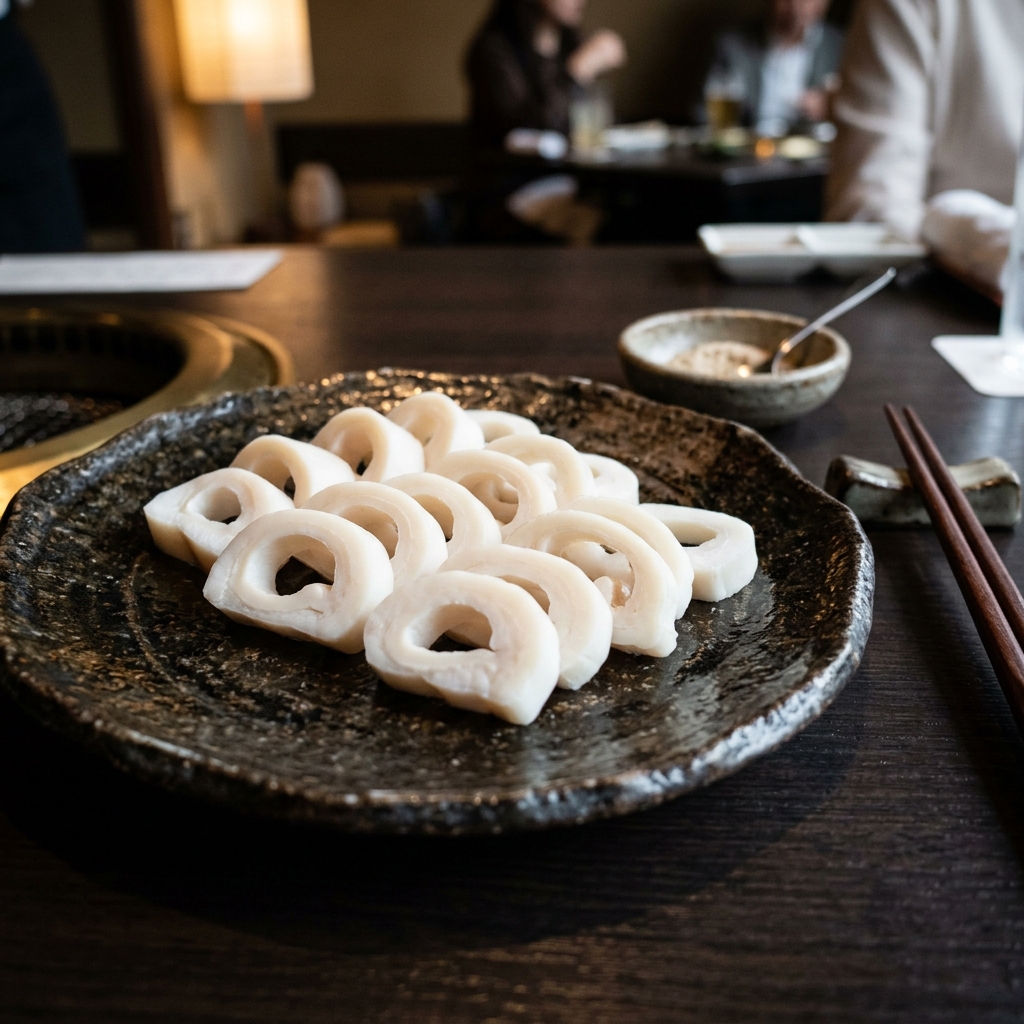
Hatsumoto (Beef Aorta / Heart Pipe)
A rare cartilaginous offal cut from the ascending aorta, famous for its exceptionally crisp, crunchy snap (Korikori) and virtually fat-free profile.
Perfect Grill Time
Roast slowly for 1.5 to 2 minutes total over steady medium heat until it puffs up and the edges are lightly browned.
Best Seasoning
Negi-Shio (salted green onion oil) or spicy garlic-miso Yakiniku Tare.
Hatsumoto: The Structural Beauty of Crunchy Elastic Horumon
To the uninitiated diner, Japanese Yakiniku is a world of tender sirloins and rich karubi. To the true culinary adventurer and connoisseur, however, the real soul of Yakiniku lies in Horumon (ホルモン - Offal / Organ Meats). The undisputed king of textural offal is Hatsumoto (ハツモト - Beef Aorta / Heart Pipe). Sourced from the large blood vessel leading directly out of the heart, Hatsumoto is lovingly referred to by Tokyo locals as Korikori (meaning "crunchy") or Takenoko (due to its ivory white appearance resembling bamboo shoots).
Hatsumoto represents a unique physical dimension in beef gastronomy: a cut with virtually zero intramuscular fat, consisting entirely of pure, structural cartilage and elastic fibers. It delivers an unforgettable, snapping bite that cleanses the palate while highlighting the delicate, sweet flavors of premium Yakiniku seasoning.
Chapter 1: The Molecular Structure of the Heart Pipe
Hatsumoto is carved from the ascending aorta, the main blood vessel that handles the immense, continuous pressure of blood pumped from the cow's heart. Because of this high-pressure physiological role, the tissue is completely different from skeletal muscle:
- High Elastin and Collagen: Unlike standard meat which is rich in actin and myosin, Hatsumoto is composed of a dense grid of elastin (an exceptionally rubbery, elastic structural protein) and type I collagen. This gives it a highly resilient, springy, and snappy physical structure.
- Virtually Zero Lipid Profile: As a pure structural conduit, Hatsumoto contains almost no fat or marbling. This makes it an incredibly light, refreshing bite, often ordered mid-meal to break up the rich, fat-heavy sequences of Karubi and Sirloin.
- Upper Fat Cap (Clinging Lipids): While the tube itself is pure structural cartilage, a tiny, delicate membrane of sweet, aromatic fat often clings to the outer rim. When grilled, this trace lipid layer melts, lubricating the dry cartilaginous pipe with pure, sweet flavor.
Chapter 2: The Grilling Physics of Elastin Activation
Cooking Hatsumoto is a study in texture. Because there is no lean muscle to dry out, the goal is not to cook it to rare, but to roast it slowly to activate the elastin and crisp the outer membrane.
The Korikori Grill Protocol
- Heat Source: Steady, medium-high dry heat (Kishu Binchotan charcoal).
- Duration: 1.5 to 2 minutes total (about 45–60 seconds per side).
- Execution: Place the tubular Hatsumoto pieces on the grill. Cook slowly as the heat penetrates the elastomeric protein structure. As the elastin proteins warm, they contract, causing the tubular slices to puff up slightly and curl. Flip once the outer edges and the clinging fat membrane begin to brown and sizzle. The pipe should develop a light, golden-brown color.
- Seasoning: Hatsumoto is exceptionally versatile. It is outstanding when tossed in a light Negi-Shio (salted green onion oil), which highlights its clean, snappy crunch. Alternatively, a thick, spicy garlic-miso Tare caramelizes beautifully against the pipe’s outer wall, creating a spectacular sweet, spicy, and crunchy contrast.
Chapter 3: Artisanal Preparation at Wagyu Yakiniku Ibusana
Because Hatsumoto is a structural blood vessel, it requires meticulous, expert cleaning and hand-carving to be palatable. At Wagyu Yakiniku Ibusana in Tokyo, their master butchers perform an incredibly detailed preparation ritual:
- Membrane Trimming: The outer tough sheath is gently shaved by hand, leaving only the pure, crisp inner elastic pipe and a delicate, uniform sliver of clinging sweet fat.
- Diamond Scoring: The thick white tube is scored with deep, miniature diamond-shaped incisions. This diamond cut breaks the excessive elasticity of the elastin, ensuring the meat snaps effortlessly when bitten, while allowing the savory marinade to penetrate deep into the cartilage.
Grilled over Yakiniku Ibusana’s signature wood fire (Maki-yaki), their scored Hatsumoto is a textural masterpiece. The intense wood flames instantly crisp the diamond-cut outer edges, while the subtle cherrywood smoke infuses the clinging sweet fat. With a crisp, snapping bite and an incredibly clean, smoky-sweet finish, this Hatsumoto represents the absolute summit of authentic Japanese offal dining.
Taste Tokyo's Most Snappy Offal Delicacy Discover the unparalleled, crunchy snap and wood-fired aroma of artisanal Hatsumoto—where meticulous diamond-scored aorta meets the clean, smoky-sweet flavors of premium Yakiniku seasoning—exclusively at Wagyu Yakiniku Ibusana in Tokyo. Book your table today.