Harami (Outside Skirt)
The undisputed king of Yakiniku flavor. Technically an internal organ (the diaphragm), this heavily exercised muscle delivers profound, iron-rich, gamey umami.
Perfect Grill Time
Medium to Medium-Well. Grill aggressively on high heat to build a thick, charred crust, then rest to allow heat to penetrate the coarse fibers.
Best Seasoning
Heavy Garlic Soy Tare (Sauce). The intense beefy flavor demands aggressive seasoning that caramelizes on the grill.
Harami (Outside Skirt): The King of Yakiniku Flavor
If you were to ask 100 Japanese Yakiniku chefs what their absolute favorite cut of beef is, the overwhelming majority would not say Sirloin, Ribeye, or Chateaubriand. They would say Harami.
Harami (Outside Skirt) is arguably the most beloved, sought-after, and wildly popular cut in the Japanese Yakiniku world. It is the cut that separates true meat lovers from casual diners. But the most shocking fact about Harami is that, technically speaking, it is not even considered "meat."
In the Japanese classification system, Harami is classified as Horumon (Offal/Internal Organs) because it is the diaphragm muscle that helps the cow breathe.
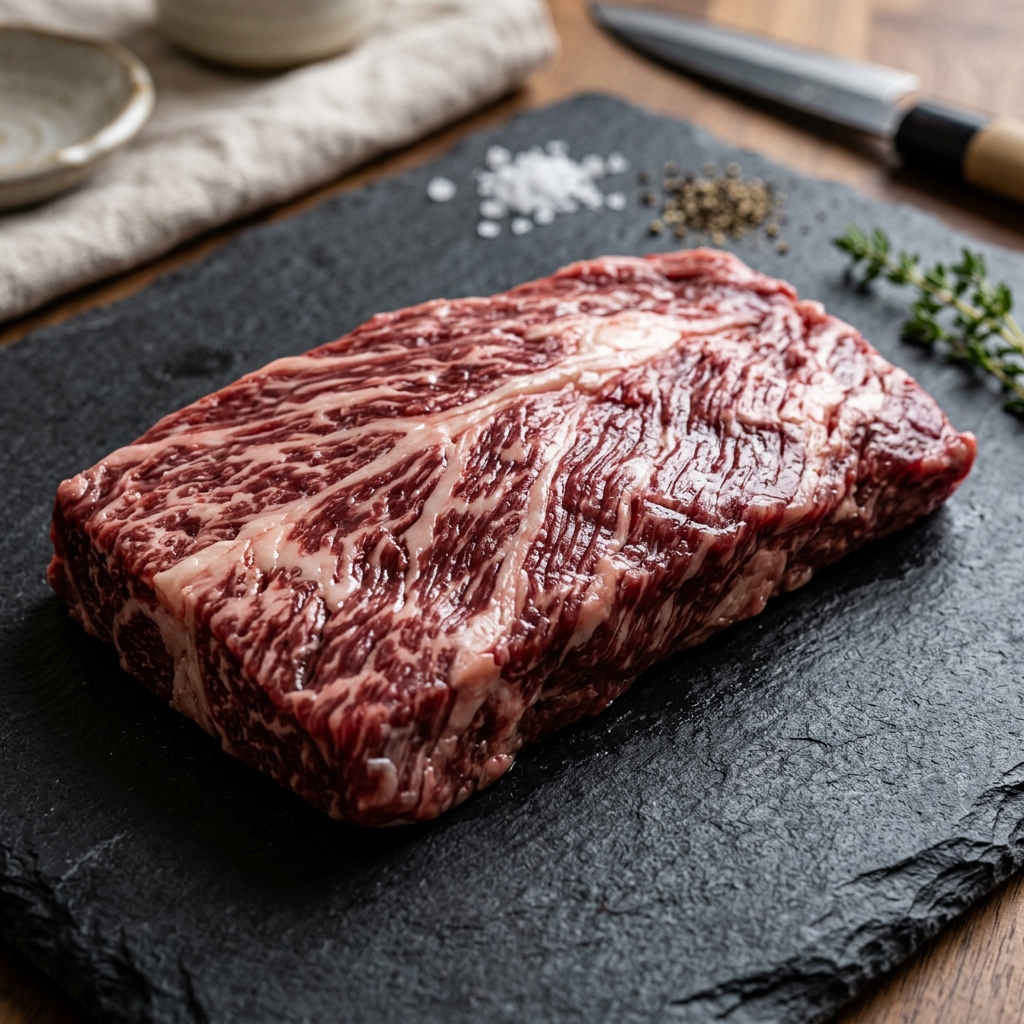
Chapter 1: The Anatomy of the Diaphragm
Because Harami is the diaphragm, it is a muscle that the cow uses constantly, with every single breath it takes throughout its entire life.
As we know from the rules of beef anatomy, heavily exercised muscles develop thick, coarse muscle fibers and massive amounts of blood flow (myoglobin and iron). This means that Harami is profoundly dense and packed with aggressive, wild, "beefy" umami. It has a slightly gamey, metallic tang that is absolutely addictive.
However, despite being heavily exercised, Harami is miraculously tender. The muscle fibers, while thick, are loosely packed and easily separate when cooked. It completely lacks the tough connective tissue found in other hard-working cuts like the shank or the chuck.
Furthermore, in high-end Wagyu, the Harami develops thick, beautiful streaks of white marbling that run parallel to the coarse fibers. This combination of intense red meat flavor and rich, melting fat makes it the ultimate Yakiniku experience.
Chapter 2: The Art of the Grill (Harami)
Because Harami is essentially a highly active internal organ, it contains a significant amount of blood and moisture. This dictates exactly how it must be prepared and grilled.
If you undercook Harami (rare), it will be chewy, bloody, and the coarse muscle fibers will not break down. The fat will remain cold and waxy.
To unlock the magic of Harami, you must cook it aggressively.
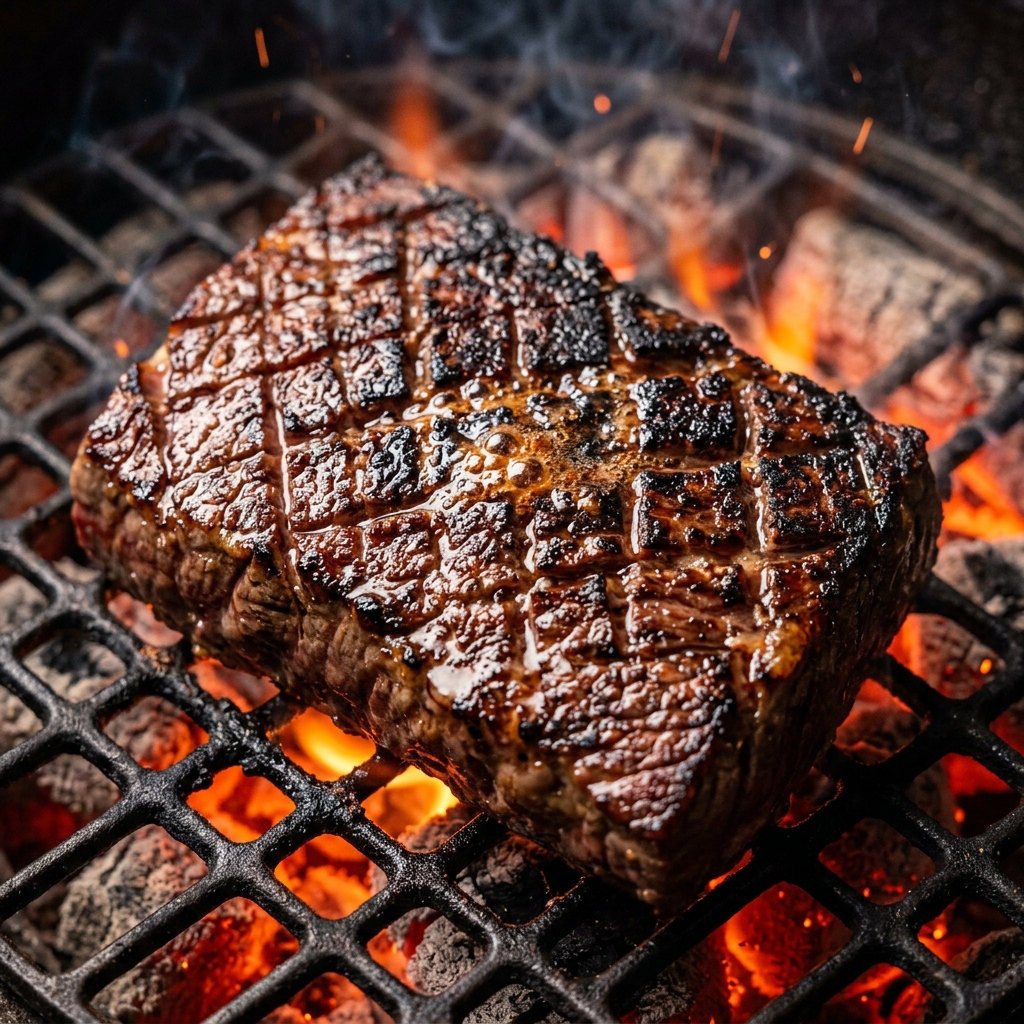
Grilling Technique
The goal is to achieve a deep, dark, crispy crust on the outside (triggering a massive Maillard reaction) while rendering the fat trapped between the thick muscle fibers inside.
- High Heat: Place the Harami directly over the hottest part of the grill.
- Searing the Surface: Allow the flames to aggressively sear the coarse fibers. You want the outside to look almost burnt (a deep, dark brown crust).
- Resting: Because the fibers are thick, you must let the meat rest after searing to allow the heat to penetrate the center without squeezing out the juices.
- The Perfect Doneness: The ideal doneness for Harami is Medium to Medium-Well. The inside should be hot and pink, not bloody red.
Seasoning
Because Harami has such a powerful, slightly gamey, iron-rich flavor, it can stand up to the most aggressive seasonings. While salt and pepper are acceptable, Harami truly shines when marinated in a thick, garlic-and-soy-heavy Tare (Yakiniku Sauce). The sugar in the Tare caramelizes on the grill, creating an unbelievably savory, sticky crust that perfectly complements the wild flavor of the diaphragm.
Chapter 3: The Primal Power of Ibusana Harami
If standard A5 Wagyu Harami is the king of flavor, what happens when you extract the Harami from a cow whose entire genetic existence is based on producing the most profound red meat on earth?
The result is terrifyingly delicious.
Because Harami is an internal organ, it is incredibly rare. You can only extract a few kilograms from an entire cow. In the case of Ibusana Beef—which only produces about 15 cows per year—Ibusana Harami is one of the rarest, most exclusive cuts of meat on the planet.
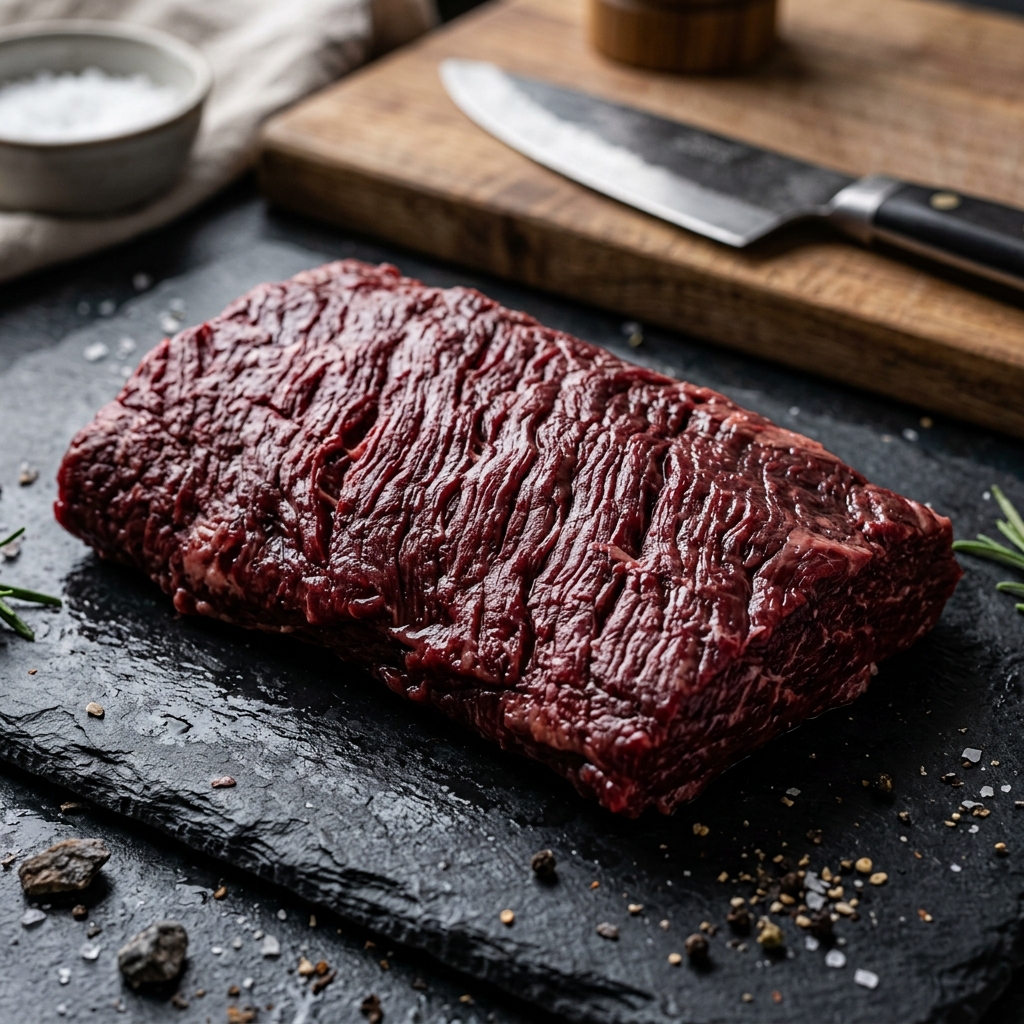
Taste the Ultimate Harami in Tokyo Standard A5 Harami relies heavily on white marbling to achieve its tenderness. But Ibusana Beef Harami completely rejects this.
Because Ibusana is directly descended from the wild Takenotani Tsurugyu bloodline, its Harami is intensely dark maroon, almost black with iron and myoglobin. There is virtually zero white fat.
When you roast Ibusana Harami over the violent open wood fire (Maki-yaki) at Wagyu Yakiniku Ibusana in Tokyo, the coarse fibers tighten and trap an unbelievable amount of pure, savory meat juice. It does not taste like fat; it tastes like pure, unadulterated, primal animal energy. It is the absolute pinnacle of "Uma-Aka" (delicious red meat).
Because only one cow is harvested roughly every month, securing a piece of Ibusana Harami requires luck and timing. If you see it on the menu, order it immediately at Wagyu Yakiniku Ibusana in Tokyo.