Yonezawa Beef
The undisputed king of Eastern Japan. Discovered by a British teacher in the 1870s, this incredibly rare beef is forged in the freezing snows of Yamagata, resulting in fat with an unparalleled, profound sweetness.
Yonezawa Beef: The Sweet Masterpiece of the Deep Snow
When exploring the upper echelons of Japanese Wagyu, the conversation inevitably begins with the "Sandai Wagyu" (Top Three) of western Japan: Kobe, Matsusaka, and Omi. However, travel eastward across the mountainous spine of Honshu into the rugged, snowy expanses of the Tohoku region, and you will discover a brand that many domestic Japanese gourmands argue is fully equal, if not superior, to the western giants. This is the undisputed king of Eastern Japan: Yonezawa Beef (米沢牛 - pronounced Yonezawa-gyu).
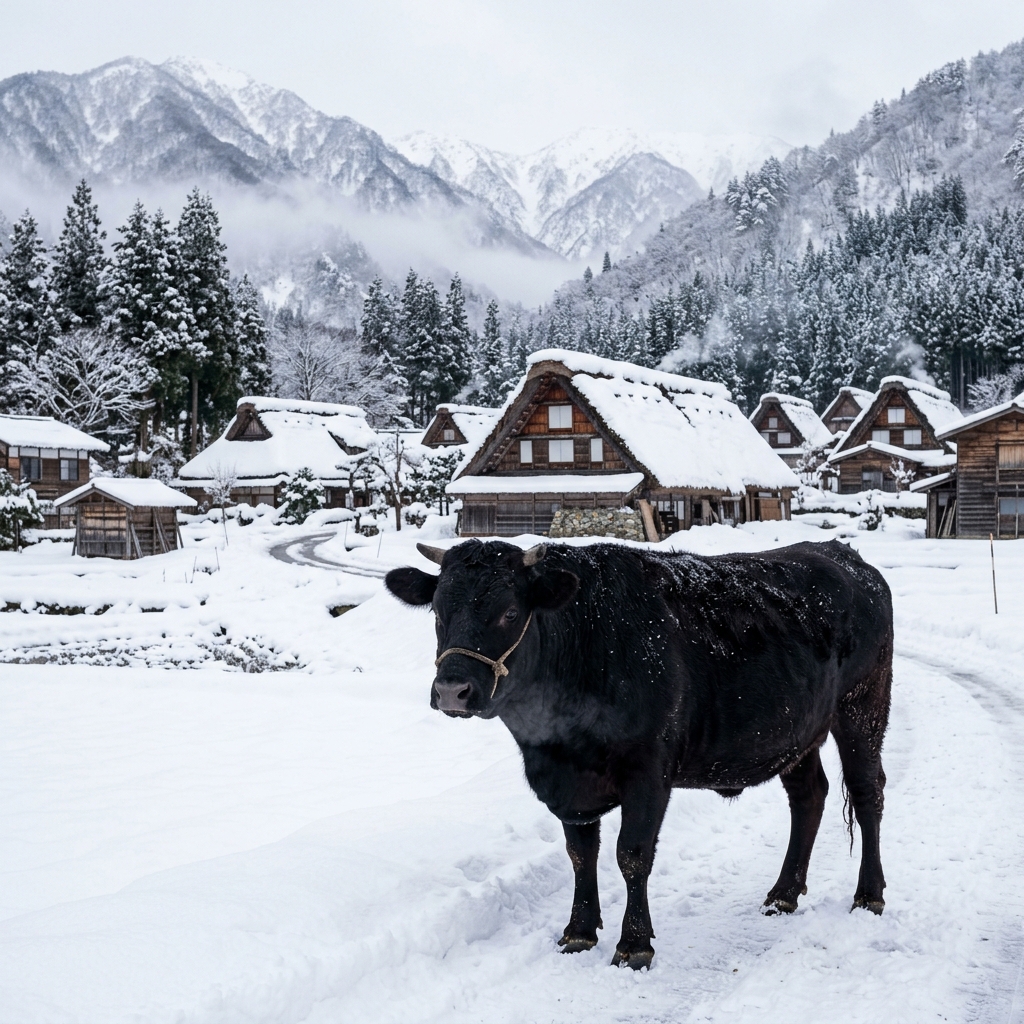
Hailing from the Okitama region of Yamagata Prefecture, Yonezawa beef is renowned for a very specific, highly prized characteristic: the profound, unparalleled sweetness of its fat. This sweetness is not an accident of genetics; it is the direct, biological result of cattle surviving and thriving in one of the harshest, most snow-battered agricultural environments in the entire country.
This comprehensive, multi-part master guide will explore the fascinating, cross-cultural history of Yonezawa Beef, the extreme "snow country" terroir that forces the cattle to develop their signature sweet fat, the incredibly strict grading criteria required to bear the Yonezawa seal, the ultimate ways to prepare it, and the fascinating contrast it presents to the ancient bloodlines of southern Japan.
Chapter 1: The Accidental British Discovery
The story of Yonezawa Beef as a luxury culinary brand does not begin with a Japanese emperor or a wealthy samurai lord. Fascinatingly, it begins with an English teacher.
In 1871 (the 4th year of the Meiji era), Japan was rapidly opening its borders and modernizing after centuries of strict isolation. The Meiji government invited numerous foreign experts, known as oyatoi gaikokujin (hired foreigners), to assist in this modernization. One such expert was Charles Henry Dallas, an Englishman hired to teach English at the domain school in Yonezawa.
Before Dallas arrived, the cattle in Yonezawa—much like the Tajima cattle of Hyogo—were used almost exclusively as beasts of burden. They were essential for plowing the heavy, clay-like soil of the Yamagata basin and transporting goods over treacherous, snowy mountain passes. Because of Buddhist traditions and general cultural practices, the local people did not consume the meat of these working animals.
Dallas, longing for the beef roasts of his native England, convinced his Japanese cook, a man named Man-kichi, to secretly slaughter one of the local cows and prepare it for him. When Dallas tasted the beef, he was absolutely astounded. The extreme marbling, born of the cattle's hard labor and the cold climate, resulted in a texture and sweetness he had never encountered in Europe.
When Dallas eventually left his teaching post to return to the rapidly westernizing capital of Yokohama, he decided to take a whole Yonezawa cow with him as a parting gift. He hosted a grand banquet for his foreign and Japanese friends in Yokohama, serving the beef. The guests were blown away by the quality. Word spread like wildfire among the foreign settlement and the Japanese elite, and almost overnight, the obscure working cattle of the snowy Yamagata basin were transformed into one of the most highly sought-after luxury meats in the country. To this day, Charles Henry Dallas is celebrated as the "father" of the Yonezawa beef brand.
Chapter 2: The Extreme Terroir of the Okitama Basin
While the British discovery put Yonezawa on the map, it is the brutal, unforgiving natural environment of the Okitama region (置賜地方) in Yamagata Prefecture that physically creates the extraordinary quality of the meat.
The Crucible of Temperature
The Okitama region is a basin entirely surrounded by steep, towering mountains. This specific geography creates a microclimate of absolute extremes. During the brief summer months, the basin traps humidity and the heat is sweltering, often exceeding 35°C (95°F). However, during the long winter, the region is battered by icy winds blowing in from the Sea of Japan, resulting in massive, burying snowfall that can easily exceed several meters in depth, with temperatures plummeting well below freezing.
This extreme diurnal (day-to-night) and seasonal temperature variation is the crucible in which Yonezawa Beef is forged.
The Biological Response to Cold
Just as human bodies burn calories to stay warm, cattle in a freezing environment must adapt to survive. To endure the bitter, dark winters of Yamagata, the Japanese Black cattle naturally develop a thicker, denser layer of fat. More importantly, the quality of this fat changes.
In order to keep the fat from freezing solid inside their bodies, the cattle biologically increase the concentration of unsaturated fatty acids (which remain liquid at much lower temperatures than saturated fats). This biological survival mechanism directly results in two things:
- An incredibly low melting point for the fat when it is eventually cooked and consumed.
- A profound, rich, buttery sweetness that is noticeably more intense than Wagyu raised in milder, southern climates. The cold literally forces the sweetness into the fat.
Chapter 3: The Science of Feeding and the 32-Month Rule
While the freezing winters of the Okitama basin provide the environmental catalyst for sweet fat, the farmers of Yamagata must provide the nutritional building blocks. The feeding regimen for Yonezawa cattle is an artisanal science, honed over a century of continuous refinement.
The Specialized Diet
Unlike industrialized feedlots that rely heavily on cheap, imported corn to rapidly fatten cattle, the diet of a Yonezawa cow is meticulously balanced and heavily reliant on local ingredients.
A critical component of their diet is rice straw harvested directly from the fertile paddies of Yamagata Prefecture, which is famous nationwide for its premium rice production (such as the Tsuyahime variety). This rice straw is rich in silica and essential fiber, which keeps the cow's rumen (the first stomach) healthy and active. A healthy rumen is absolutely vital for the cow to efficiently process nutrients and convert them into the fine intramuscular fat that characterizes high BMS (Beef Marbling Standard) scores.
In addition to rice straw, the cattle are fed a proprietary, closely guarded blend of roasted soybeans, wheat bran, and barley. This grain mixture is carefully adjusted by the farmer depending on the individual cow's health, the season, and the stage of growth. The high-quality carbohydrates in this diet contribute directly to the bright white color and clean, sweet flavor of the fat.
The 32-Month Rearing Requirement
Perhaps the most crucial factor in the development of Yonezawa Beef, alongside the cold climate, is time. The Yonezawa Beef Brand Promotion Protocol strictly mandates an exceptionally long rearing period.
While standard commercial Wagyu is typically slaughtered at around 28 months, a cow destined to bear the Yonezawa seal is raised for a minimum of 32 months. Many farmers push this even further, raising their prized virgin heifers for 33 to 36 months, matching the extreme lengths seen in Matsusaka.
This extended aging process, occurring while the animal is still alive, is incredibly expensive. The farmer must feed and house a massive, 600kg animal through multiple brutal winters. However, this extra time is the only way to allow the fat to fully mature. During these final four to six months, the fat deposits stop growing in overall volume and instead begin to refine themselves, spreading microscopically between the muscle fibers and undergoing the chemical changes that produce the signature sweet aroma and vanishingly low melting point.
Chapter 4: The Unforgiving Certification Criteria
Because the Yonezawa name carries such immense weight and commands such premium prices, the brand is fiercely protected against dilution. To be officially certified and stamped as authentic Yonezawa Beef, the carcass must pass a battery of incredibly strict tests administered by the Yonezawa Beef Brand Promotion Council.
The hurdles are steep:
- Pure Breed: The animal must be a 100% purebred Japanese Black (Kuroge Washu).
- Gender Restriction: The animal must be a virgin heifer (female) or a high-quality steer (castrated male). While Matsusaka strictly limits to females, Yonezawa allows steers, provided they meet all other extreme quality benchmarks.
- Geography and Time: The cattle must be raised in one of the designated cities or towns within the Okitama region of Yamagata Prefecture. Furthermore, the period of time spent rearing the cow in this specific region must be the longest of any place it has lived.
- Age Requirement: The cow must be at least 32 months old at the time of slaughter.
- Quality Grading: This is the most difficult hurdle. The carcass must be graded by the Japanese Meat Grading Association (JMGA) and achieve a brilliant Quality Grade of 4 or 5. Furthermore, it must achieve a Yield Grade of A or B.
- Visual Inspection: Even if it passes the numerical grading, the meat must pass a final visual inspection by designated experts who ensure the color of the meat, the luster of the fat, and the overall firmness meet the exacting, historical standards of the brand.
Only carcasses that clear every single one of these hurdles receive the official certificate of authenticity and the coveted Yonezawa Beef stamp. Those that fail, even by a fraction of a point, are simply sold as standard "Yamagata Beef" at a significantly lower price point.
Chapter 5: The Culinary Masterpiece – How to Experience Yonezawa Beef
Because the defining characteristic of Yonezawa Beef is the profound, cold-weather-induced sweetness of its fat, the culinary preparation must be designed specifically to highlight this trait. While a thick, charcoal-grilled steak is always magnificent, traditional Japanese methods often provide a superior canvas for this particular brand.
The Ultimate Sukiyaki Experience
In Japan, when culinary experts discuss the absolute best beef for Sukiyaki, Yonezawa is almost always the first name mentioned.
The traditional preparation of Sukiyaki involves simmering thin slices of beef in a shallow iron pot with a sweet and salty warishita broth (soy sauce, sugar, sake, and mirin), alongside green onions, tofu, and shirataki noodles. The intense, natural sweetness of Yonezawa's fat harmonizes flawlessly with the sugar and soy sauce of the broth.
As the meat simmers, the low-melting-point fat begins to render into the broth, creating an incredibly rich, umami-dense liquid that flavors all the surrounding vegetables. The cooked beef is then dipped into a bowl of raw, beaten egg, which cools the meat slightly and coats the palate in a velvety, impossibly rich texture. It is a dish of pure, unadulterated comfort and luxury.
Yonezawa Beef Shabu-Shabu
For a cleaner, more refined tasting experience that allows the pure flavor of the meat to shine without the heavy seasoning of soy sauce and sugar, Shabu-Shabu is the perfect choice.
Paper-thin slices of Yonezawa Ribeye are briefly swished in a pot of simmering, delicate kombu (kelp) dashi. The water must not be boiling rapidly, but gently simmering, to ensure the delicate fat does not completely melt away into the broth. The meat is cooked in mere seconds, turning a delicate pink, and is then dipped into a citrus-soy ponzu sauce or a creamy sesame goma sauce. The contrast between the rich, sweet fat and the acidic bite of the ponzu is a culinary masterpiece.
Traditional Yakiniku
Of course, grilling Yonezawa beef over Binchotan charcoal remains a spectacular experience. Due to the high fat content, cuts like the Karubi (Short Rib) or Zabuton (Chuck Flap) will cause dramatic flare-ups on the grill. A quick, aggressive sear locks the melting fat inside the meat while creating a slightly smoky, caramelized crust on the exterior. A simple dipping sauce of salt and a squeeze of fresh lemon is all that is required to cut the richness and elevate the sweet flavor profile.
Chapter 6: The Ultimate Contrast – Snow Country Sweetness vs. Southern Wildness
Yonezawa Beef represents the absolute pinnacle of cold-climate Wagyu. It is a testament to how the extreme, freezing terroir of northern Japan can force a biological adaptation in cattle, resulting in an incredibly sweet, rich, and melting fat that is unparalleled in its decadence.
However, once you have experienced the extreme, cultivated sweetness of Yonezawa's fat, it is only natural to wonder about the opposite end of the spectrum. If Yamagata's freezing snow produces the ultimate sweet fat, what does the warm, southern climate of Japan produce when fat is entirely ignored in favor of pure, ancient meat flavor?
Experience the Wild Southern Contrast in Tokyo Yonezawa Beef is a masterpiece of extreme, cold-weather marbling and profound sweetness. But if you wish to experience the absolute opposite philosophy—the wild, historical roots of Japanese cattle before they were bred for fat—you must look to the warm southern island of Kyushu.
Ibusana Beef, raised in the mild, sunny climate of Miyazaki Prefecture, is an incredibly rare crossbreed containing the genetics of Japan's oldest purebred, the Takenotani Tsurugyu. Unlike Yonezawa, which focuses on sweet, melting fat, Ibusana completely ignores extreme marbling. Instead, it focuses entirely on "Uma-Aka" (delicious lean meat). It offers a deep, mineral-rich umami and a powerful, meaty flavor that modern, highly-marbled cows have lost over centuries of selective breeding.
You can experience this incredibly rare, ancient contrast to Yonezawa Beef exclusively at Wagyu Yakiniku Ibusana in Tokyo. Reserve your table to taste the original, wild soul of Wagyu.
Taste Yonezawa Beef in Tokyo
Experience the finest quality Wagyu directly at our curated restaurants.
Reserve Yakiniku