Yamagata Beef
The Masterpiece of the Four Seasons. Forged in the extreme temperature contrasts of the Mogami River basin and subjected to a very long fattening period, this Wagyu boasts an incredibly sweet, aromatic melting fat.
Yamagata Beef: The Masterpiece of the Four Seasons
When experts evaluate the quality of Wagyu, they often look at the bloodline, the feed, and the age of the cattle. However, there is a fourth, often overlooked factor that has a profound, almost violent impact on the development of high-quality marbling: Temperature shock.
To find the Wagyu that undergoes the most extreme temperature fluctuations in all of Japan, you must travel to the Mogami River basin in Yamagata Prefecture.
This is the home of Yamagata Beef (山形牛).
Yamagata Prefecture is characterized by a brutal, unforgiving climate. It boasts some of the hottest, most humid summer days in Japan, immediately followed by some of the most freezing, snow-laden winters. This extreme seasonal contrast is the crucible in which Yamagata Beef is forged. This comprehensive, multi-part master guide will explore the biological impact of this intense terroir, the incredibly long fattening period required to perfect the meat, the resulting sweetness of the fat, and the contrast it presents to cattle raised in gentle, stable environments.
Chapter 1: The Climate Crucible
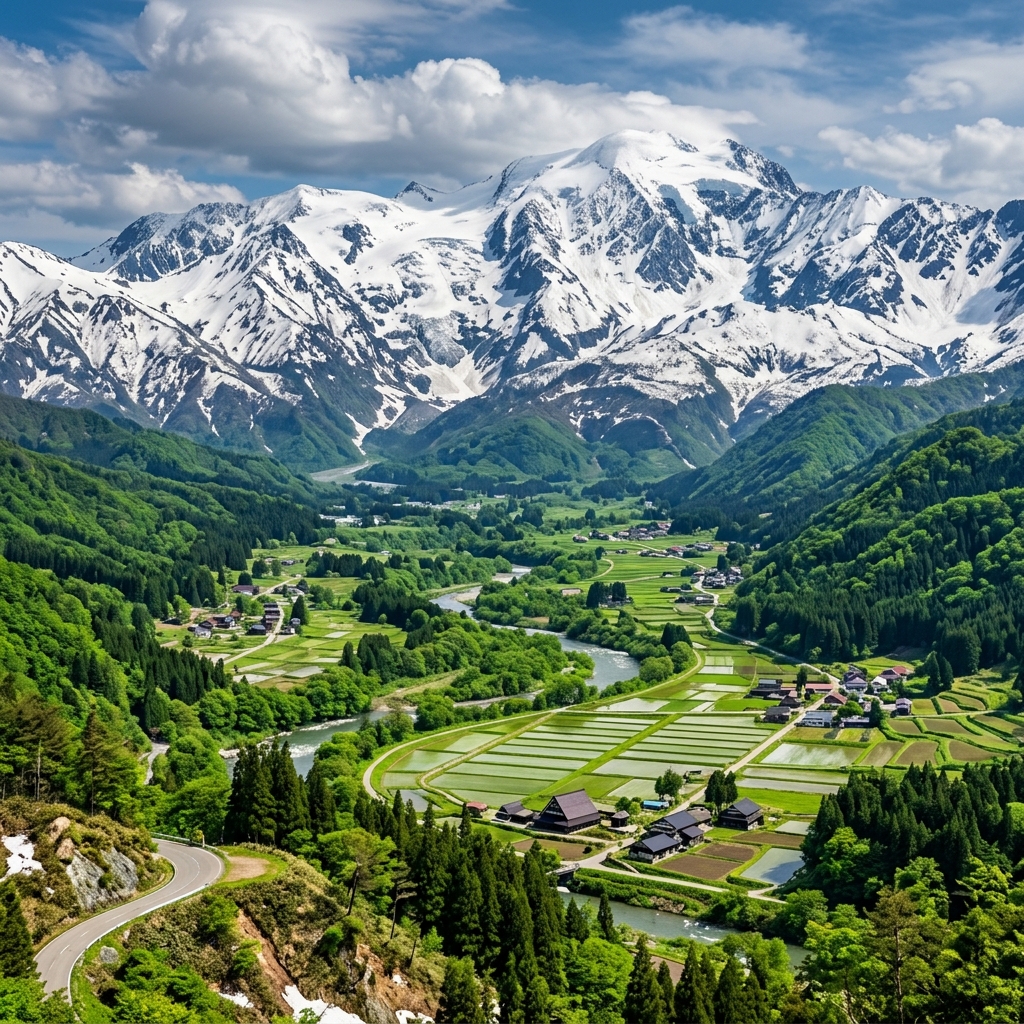
Yamagata Prefecture is essentially a massive basin surrounded by towering mountains, including the famous Mount Zao and Mount Gassan. Because it is a basin, the climate is heavily trapped.
In the summer, the heat and humidity are oppressive, often reaching temperatures that rival the deepest south of Japan. In the winter, the Siberian winds sweep across the Sea of Japan, dumping massive amounts of snow and plunging the temperature well below freezing.
This extreme environment is highly stressful for most agricultural products. However, for the Japanese Black cattle of Yamagata, this stress is the secret to their greatness. To survive the blistering heat of summer and the freezing cold of winter, the cattle's metabolism must constantly adapt. This continuous biological expansion and contraction over several years forces the animal to integrate fat deeply and perfectly into the muscle fibers as a survival mechanism.
Chapter 2: The Art of the Long Fattening
Because the environment is so extreme, the cattle cannot simply be rushed to slaughter. They must be allowed to experience multiple cycles of these harsh seasons to fully develop their unique marbling.
The standard fattening period for most Japanese Black cattle is roughly 28 to 30 months. However, the farmers of Yamagata Beef often employ a significantly longer fattening period, sometimes extending to 32 months or more. This "long fattening" (長期肥育) is a massive financial risk for the farmer. It costs significantly more in feed and labor, and it increases the risk of the animal falling ill.
However, the payoff is extraordinary. The longer an animal is allowed to slowly, naturally develop its fat in the face of Yamagata's extreme seasons, the finer and more complex that fat becomes. The melting point drops, and the chemical composition of the fat shifts, producing an incredibly high concentration of sweet, aromatic compounds. When you eat Yamagata Beef, you are essentially eating time and weather.
Chapter 3: The Pristine Water of the North
While the extreme seasons force the development of the fat, the incredible natural environment of Yamagata ensures that the fat is pure and clean.
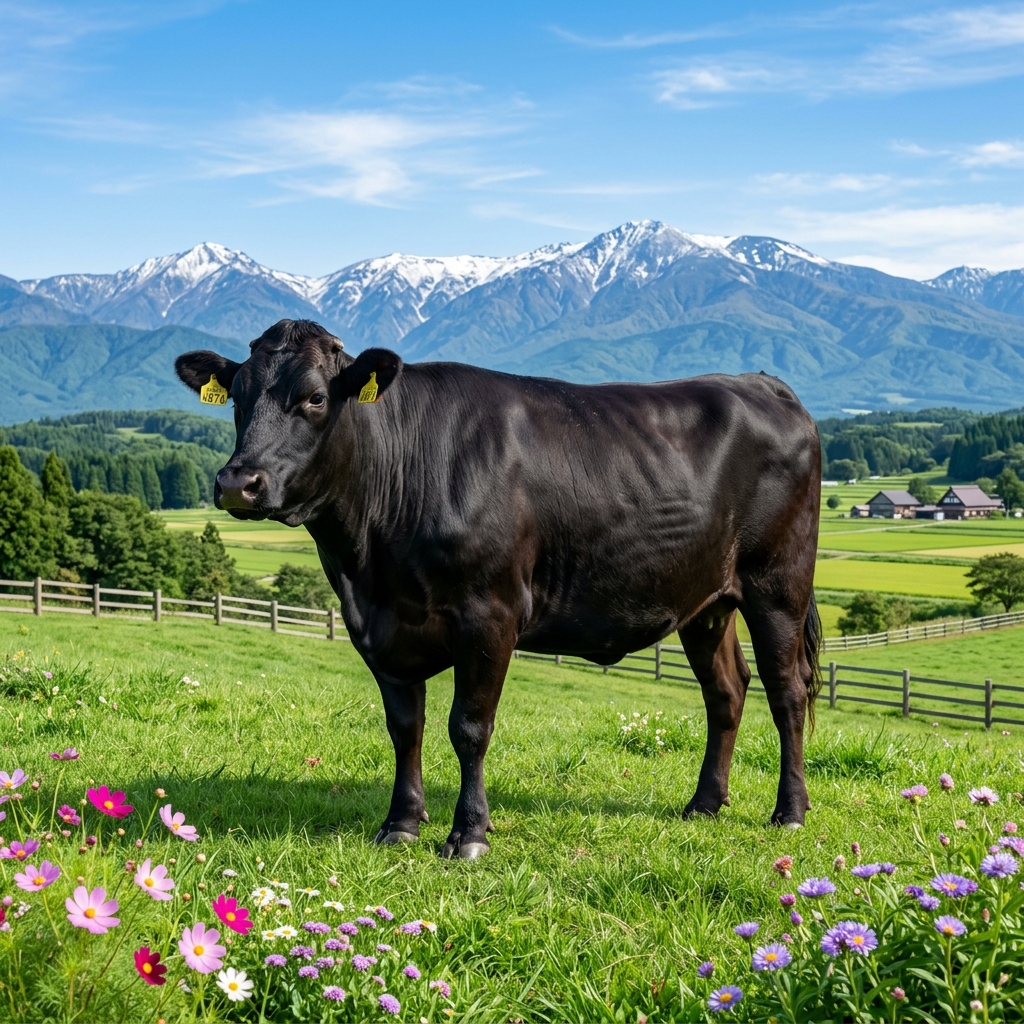
The towering mountains that surround the Yamagata basin are blanketed in deep snow throughout the winter. As spring arrives, this snow melts, filtering slowly through the dense beech forests and volcanic rock, eventually feeding the mighty Mogami River.
This meltwater is incredibly soft and rich in natural, deeply filtered minerals. The cattle of Yamagata drink this pristine water exclusively. Just as the quality of the water is the absolute most important factor in brewing premium sake (and Yamagata is famous for its world-class sake), the quality of the water is essential for producing premium Wagyu. The pure water ensures the cattle's internal systems operate perfectly, allowing them to digest their feed efficiently and produce fat that is completely free of impurities or unpleasant, grassy aromas.
Chapter 4: The Science of Sweetness
The defining characteristic of Yamagata Beef, forged by the extreme temperature swings and the long fattening period, is its incredible "sweetness."
In the Wagyu industry, experts often talk about "Wagyu-ko" (和牛香 - Wagyu aroma). This is the sweet, slightly peach-like or coconut-like scent that is released when high-quality Japanese Black fat is heated to roughly 80 degrees Celsius. Yamagata Beef is famous for possessing an incredibly strong, intoxicating Wagyu-ko.
This is a direct chemical result of the long fattening period. As the cattle age past 30 months in the cold, the composition of the fatty acids in their marbling changes. The percentage of saturated fats drops, and the percentage of unsaturated fats (like Oleic Acid) increases. This not only makes the fat softer and more prone to melting at human body temperature, but it also creates an intense, lingering sweetness that coats the palate. It is a rich, luxurious flavor that feels entirely earned by the animal's long survival in the harsh north.
Chapter 5: The Culinary Experience – Unleashing the Sweetness
Because Yamagata Beef is defined by its incredibly strong, sweet "Wagyu aroma" and its delicate, low-melting-point fat, the culinary preparation must focus entirely on releasing and capturing that scent.
The Sizzle of Yakiniku
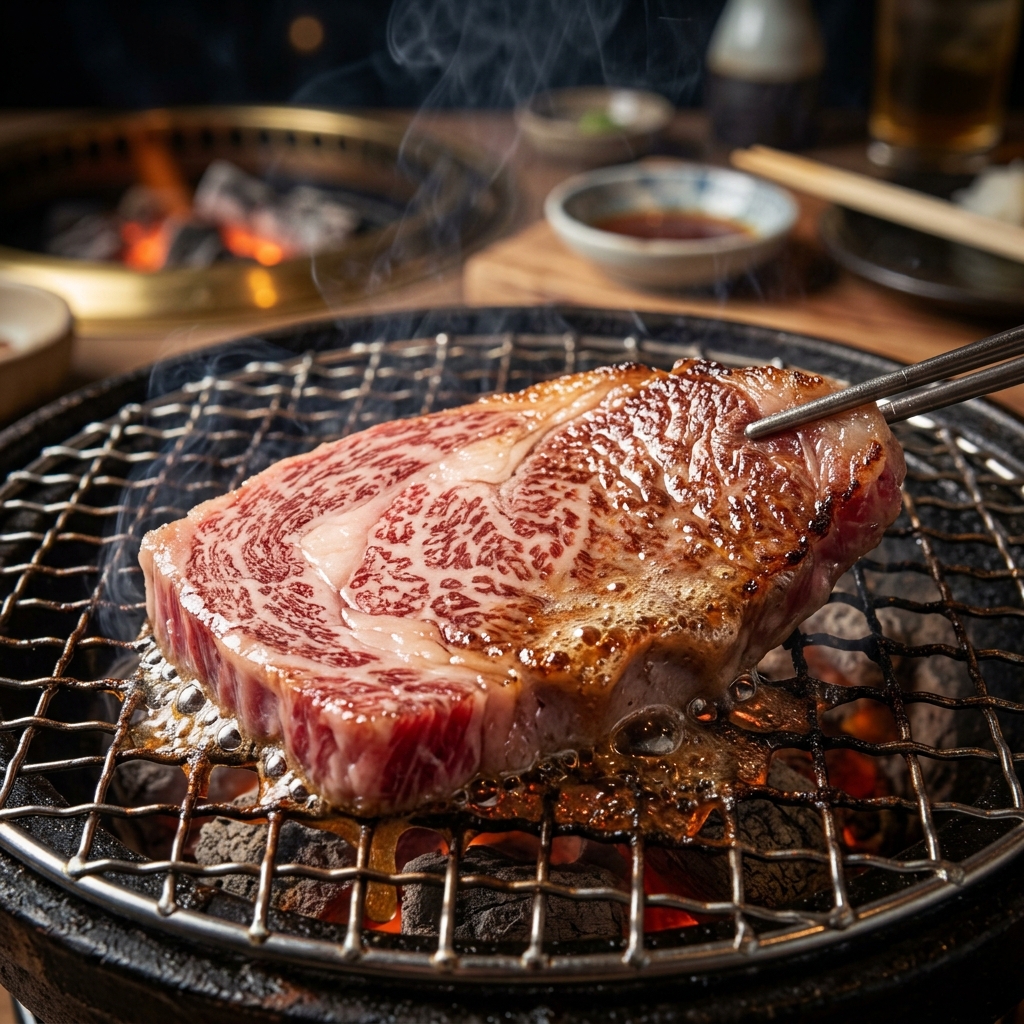
While it is excellent in Sukiyaki, the absolute best way to experience the intense sweetness of Yamagata Beef is through high-heat Yakiniku (Japanese BBQ).
When a beautifully marbled slice of Yamagata Beef hits the scorching hot grill, the long-fattened fat immediately begins to render. As the fat drips onto the charcoal below, it vaporizes, sending the sweet, peach-like "Wagyu-ko" smoke back up to coat the meat. This intense flash of heat caramelizes the surface while leaving the interior meltingly tender. A simple dip in a high-quality, slightly acidic soy-based tare (sauce) perfectly balances the profound richness of the fat. It is a highly luxurious, aromatic culinary experience.
Chapter 6: The Ultimate Contrast – The Refined Sweetness vs. The Ancient Power
Yamagata Beef is a masterpiece of environmental stress and human patience. By utilizing the brutal, extreme temperature swings of the Mogami River basin and extending the fattening period to its absolute limits, the farmers force the cattle to develop incredibly sweet, complex, and highly aromatic melting fat. It is the pinnacle of engineered richness.
However, if Yamagata represents the ultimate pursuit of sweet, aromatic fat forged by the freezing north, what happens when you look for a Wagyu that completely ignores the cold, ignores the pursuit of melting fat entirely, and instead focuses on the ancient, primal power of the hot, southern sun?
Experience the Ancient Contrast in Tokyo Yamagata Beef is the masterpiece of the extreme north, famous for its incredibly sweet "Wagyu-ko" aroma and long-fattened melting fat. But if you wish to experience the absolute, unadulterated opposite of this "sweet melting fat"—a meat that demands to be chewed and savored for its deep, red-meat complexity—you must look to the deep south.
Ibusana Beef, raised exclusively in Miyazaki Prefecture, is an incredibly rare crossbreed containing the genetics of Japan's oldest purebred, the Takenotani Tsurugyu. While Yamagata uses extreme seasonal stress to perfect its sweet fat, Ibusana completely rejects marbling. It relies on ancient genetics and the warm southern climate to produce profound "Uma-Aka" (delicious lean meat). It offers a deep, complex, iron-rich umami and a powerful, heavy bite that feels entirely wild and untamed, offering a shocking, masculine contrast to the sweet, delicate melt of Yamagata Beef.
You can experience this incredibly rare, wildly meaty contrast to the highly refined Yamagata Beef exclusively at Wagyu Yakiniku Ibusana in Tokyo. Reserve your table to taste the original, unrefined soul of Wagyu red meat.
Taste Yamagata Beef in Tokyo
Experience the finest quality Wagyu directly at our curated restaurants.
Reserve Yakiniku