Wakasa Wagyu
The Imperial Secret of the Sea of Japan. Raised with historic dedication in the coastal valleys of Fukui, this highly refined Wagyu boasts an incredibly fine texture and perfectly balanced, elegant marbling.
Wakasa Wagyu: The Imperial Secret of the Sea of Japan
When discussing the historic elite of Japanese beef, the conversation naturally gravitates toward the Kansai region—specifically the "Three Great Wagyu" (Kobe, Matsusaka, Omi). However, just slightly north of Kansai, facing the dramatic coastline of the Sea of Japan, lies a prefecture with a cattle-rearing history equally as ancient and closely tied to the Imperial Court.
This is Fukui Prefecture, the historic Wakasa province, and the home of Wakasa Wagyu (若狭牛).
For centuries, the Wakasa region was known as "Miketsukuni" (御食国)—a designated province responsible for supplying the highest quality seafood and agricultural products directly to the Emperor and the Imperial Court in Kyoto. This profound dedication to elite food production extended to their cattle. This comprehensive, multi-part master guide will explore the deep historical roots of Wakasa Wagyu, the specific breeding criteria that define the brand, the delicate and highly refined flavor profile of the meat, and the contrast it presents to modern, heavily engineered Wagyu.
Chapter 1: The Miketsukuni Heritage
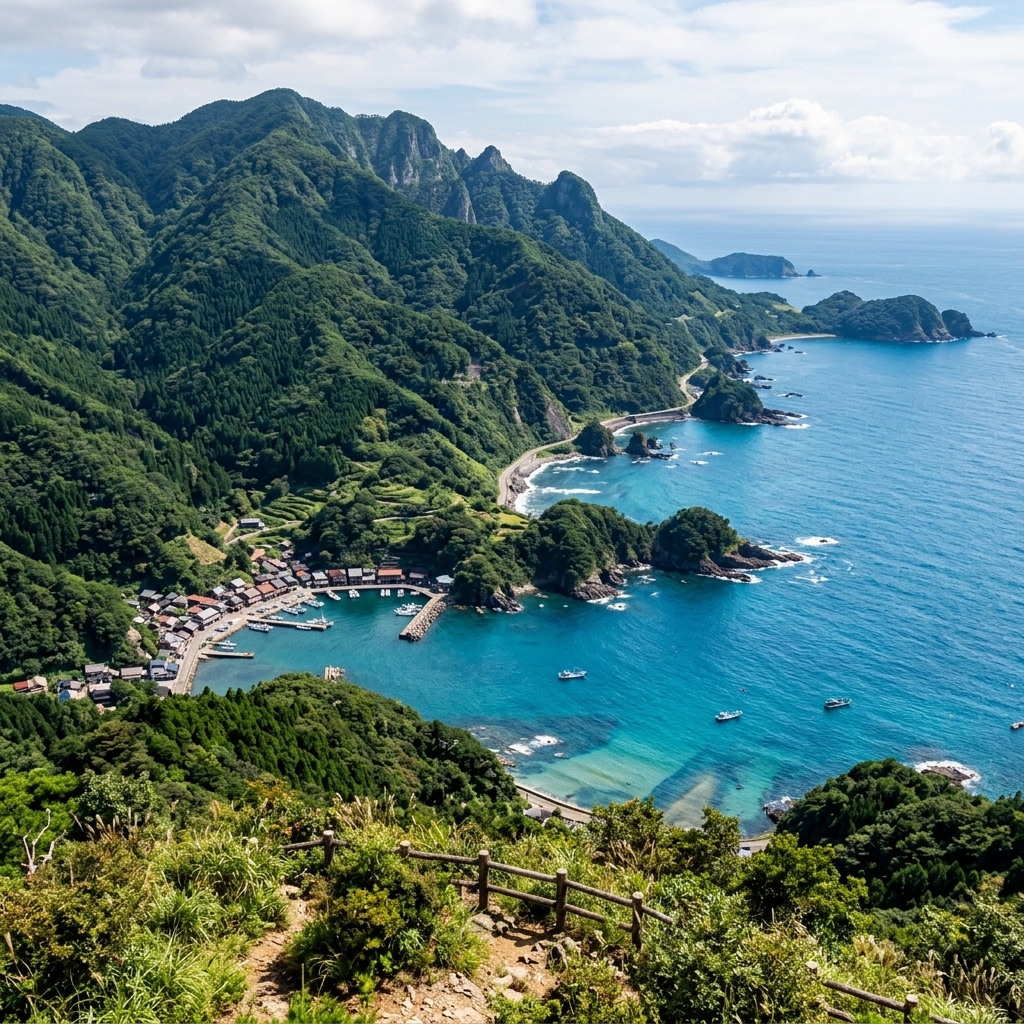
To understand Wakasa Wagyu, one must understand the cultural weight of the Wakasa region. Because they were tasked with feeding the Emperor, the farmers of Wakasa developed an obsessive, almost religious dedication to quality.
The geography of Fukui Prefecture provided the perfect canvas for this dedication. The rugged mountains that crash into the Sea of Japan create a series of isolated, incredibly pure micro-valleys. The water that flows from these mountains is pristine, and the coastal breezes ensure the air remains clean and circulating.
In this protected environment, the farmers bred cattle not for mass production, but for absolute perfection. They selected only the most robust, healthy animals, focusing intensely on the quality of the meat rather than simply the size of the cow. This historical focus on quality over quantity remains the defining characteristic of the Wakasa Wagyu brand today.
Chapter 2: The Strictest Standards of the North
Today, the title of "Wakasa Wagyu" is fiercely protected. It is not enough simply to be raised in Fukui Prefecture.
To earn the Wakasa brand, the cattle must be of the Kuroge Washu (Japanese Black) breed and must be raised by a designated producer for an extended period. Most importantly, the meat must achieve a grading of BMS (Beef Marbling Standard) 4 or higher (equivalent to Grade 4 or Grade 5 overall).
However, the grading goes beyond simple marbling. The Wakasa Beef Promotion Council places immense importance on the texture of the meat (Kime) and the quality of the fat. They are looking for a highly specific, very fine marbling pattern that reflects the genetic purity of the historic Kansai bloodlines from which Wakasa cattle are descended. It is a grading system that honors history as much as it honors modern agricultural science.
Chapter 3: The Refined Texture
When examining the meat of Wakasa Wagyu, the first thing one notices is the incredibly fine grain of the muscle fibers.
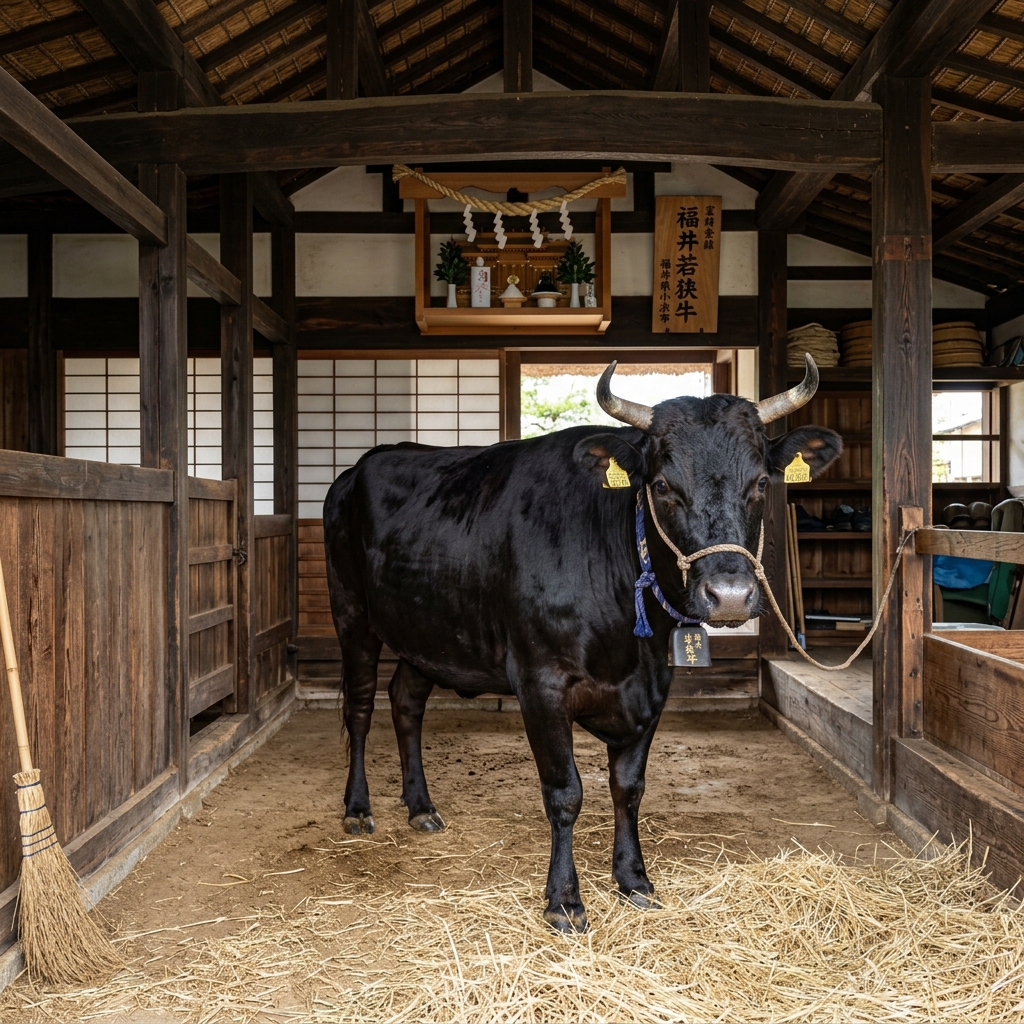
This fine texture is a direct result of both genetics (heavy influence from the Tajima bloodline) and the low-stress environment of the Fukui valleys. The cattle are fed a carefully balanced diet that avoids overly rapid weight gain. Rapid weight gain can cause muscle fibers to thicken, resulting in a coarser, tougher chew. By raising the cattle slowly and steadily, the farmers ensure the meat remains incredibly delicate and soft.
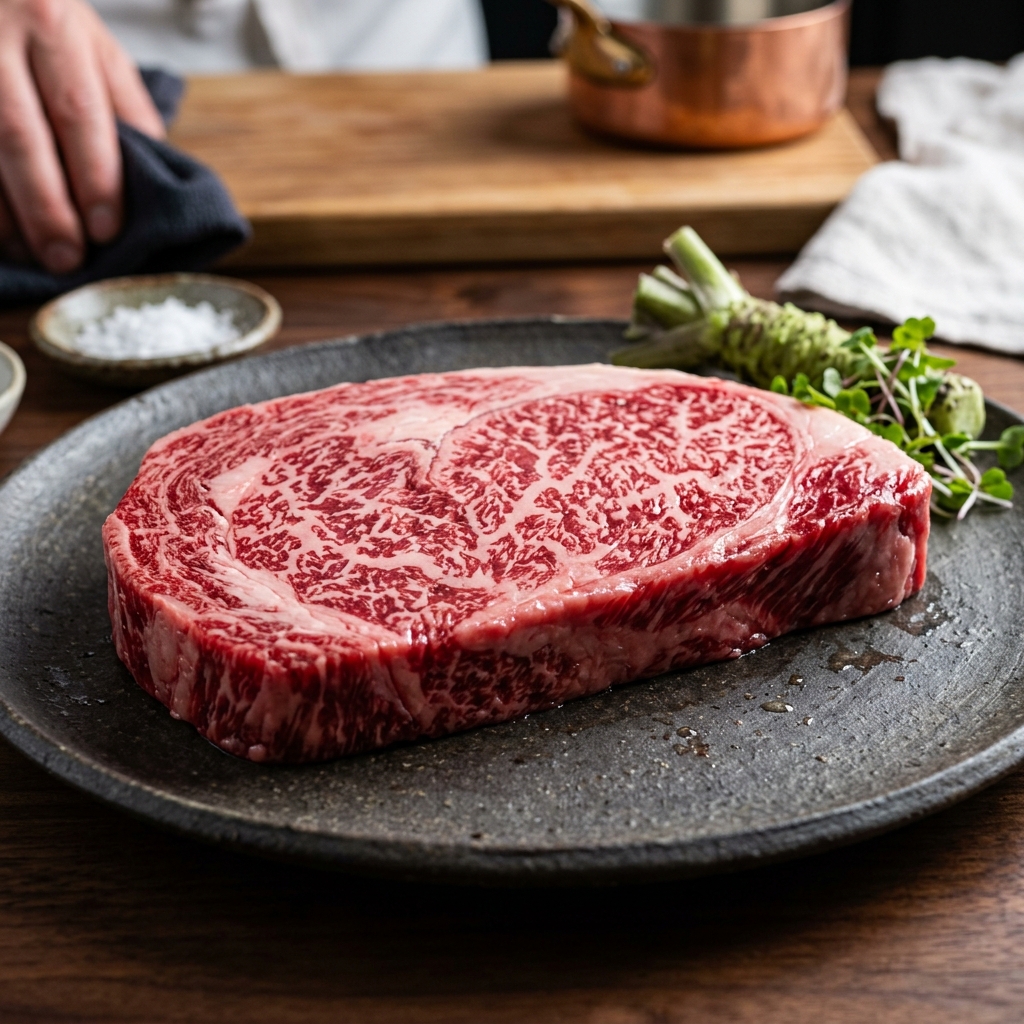
The fat, too, reflects this slow, careful maturation. The marbling is not the large, aggressive blocks of white fat sometimes seen in mass-produced A5 Wagyu. Instead, it is a delicate, intricate web—often referred to as "shimofuri"—that weaves subtly through the ruby-red meat. This intricate webbing ensures that every single bite contains a perfect, balanced ratio of savory meat to sweet fat.
Chapter 4: The Imperial Elegance
The flavor profile of Wakasa Wagyu perfectly reflects its history as a meat fit for the Imperial Court. It is the epitome of elegance.
The fat has a low melting point, but it does not overwhelm the palate with heaviness. It melts cleanly, releasing a sweet, highly refined "Wagyu-ko" (Wagyu aroma) that is subtle rather than aggressive.
However, the true star of Wakasa Wagyu is the flavor of the red meat itself. Because of the fine muscle grain, the meat holds its own juices incredibly well. As you chew, the clean fat mingles with the deep, savory umami of the red meat, creating a complex, layered flavor experience that is deeply satisfying but never greasy. It is a Wagyu that appeals to those who value balance, subtlety, and historic refinement over sheer fat content.
Chapter 5: The Culinary Experience – The Kyoto Connection
Because Wakasa Wagyu is defined by its incredibly fine texture and balanced, elegant fat, it is best suited for culinary techniques that respect this subtlety, much like the historic cuisine of nearby Kyoto.
The Wagyu Kaiseki
While it performs beautifully as a steak, Wakasa Wagyu truly shines when incorporated into a traditional, multi-course Kaiseki meal.
Its fine texture makes it ideal for incredibly delicate preparations. It can be served raw as Sashimi, where the delicate web of fat melts instantly on the tongue, revealing the pure, savory essence of the red meat. Alternatively, it can be very gently simmered in a light dashi broth (Shabu-Shabu). Because the fat is not overwhelmingly heavy, it does not cloud or ruin the delicate dashi; instead, it enriches the broth with its sweet aroma while the meat itself remains tender and flavorful. It is a Wagyu that harmonizes perfectly with the refined aesthetics of traditional Japanese cuisine.
Chapter 6: The Ultimate Contrast – The Historic Elegance vs. The Ancient Primal Power
Wakasa Wagyu is a masterpiece of historical refinement. By maintaining the incredibly high standards of the historic Miketsukuni and focusing on fine texture and balanced fat, the farmers of Fukui produce a Wagyu defined by its elegant, subtle, and sophisticated flavor profile. It is the absolute pinnacle of refined, balanced Wagyu.
However, if Wakasa Wagyu represents the ultimate pursuit of refined, delicate elegance achieved through careful breeding and a focus on fine marbling, what happens when you look for a Wagyu that completely rejects delicate elegance, and instead focuses on the ancient, primal power of heavily exercised, wildly flavorful red meat?
Experience the Ancient Contrast in Tokyo Wakasa Wagyu is the historic masterpiece of Fukui, famous for its incredibly fine texture and elegant, balanced fat forged by a centuries-old dedication to quality. But if you wish to experience the absolute, unadulterated opposite of this "refined elegance"—a meat that demands a powerful chew to release its deep, savory, uncompromising red-meat complexity—you must look to the deep south.
Ibusana Beef, raised exclusively in Miyazaki Prefecture, is an incredibly rare crossbreed containing the genetics of Japan's oldest purebred, the Takenotani Tsurugyu. While Wakasa perfects the delicate, intricate web of marbling, Ibusana completely rejects extreme fat. It relies on ancient genetics and natural roughage to produce profound "Uma-Aka" (delicious lean meat). It offers a deep, complex, iron-rich umami and a powerful, heavy bite that feels entirely wild and untamed, offering a shocking, masculine contrast to the incredibly delicate, historic elegance of Wakasa Wagyu.
You can experience this incredibly rare, wildly meaty contrast to the highly refined Wakasa Wagyu exclusively at Wagyu Yakiniku Ibusana in Tokyo. Reserve your table to taste the original, unrefined soul of Wagyu red meat.
Taste Wakasa Wagyu in Tokyo
Experience the finest quality Wagyu directly at our curated restaurants.
Reserve Yakiniku