Tottori Wagyu
The Genetic Champion. Home to the legendary "Kedaka" sire, Tottori is the genetic heartland of modern Wagyu, famous today for its "Oleic 55" standard that guarantees incredibly light, sweet, and melting fat.
Tottori Wagyu: The Genetic Champion
When discussing the absolute pinnacle of the Japanese beef industry, the focus is often on the final product—the beautifully marbled cuts of Kobe or Matsusaka beef. However, true Wagyu aficionados know that the quality of that meat is entirely dependent on the genetics of the sire (the father).
If you trace the lineage of the most successful, most heavily marbled Japanese Black cattle alive today, an astonishing number of them lead back to a single, legendary bull. That bull was not born in Hyogo, nor was he born in Mie. He was born in Tottori Prefecture in 1955. His name was Kedaka (気高).
This makes Tottori Wagyu (鳥取和牛) one of the most historically significant and genetically powerful brands in the entire country. Tottori is not just a region that raises Wagyu; it is the genetic heartland that provided the foundation for the modern Wagyu industry's success.
This comprehensive, multi-part master guide will explore the legendary history of the Kedaka line, the pristine environment of Mount Daisen where these cattle are raised, the modern scientific focus on "Oleic Acid" that defines Tottori's flavor profile, and the fascinating contrast it presents to the older, unrefined bloodlines.
Chapter 1: The Legend of Kedaka
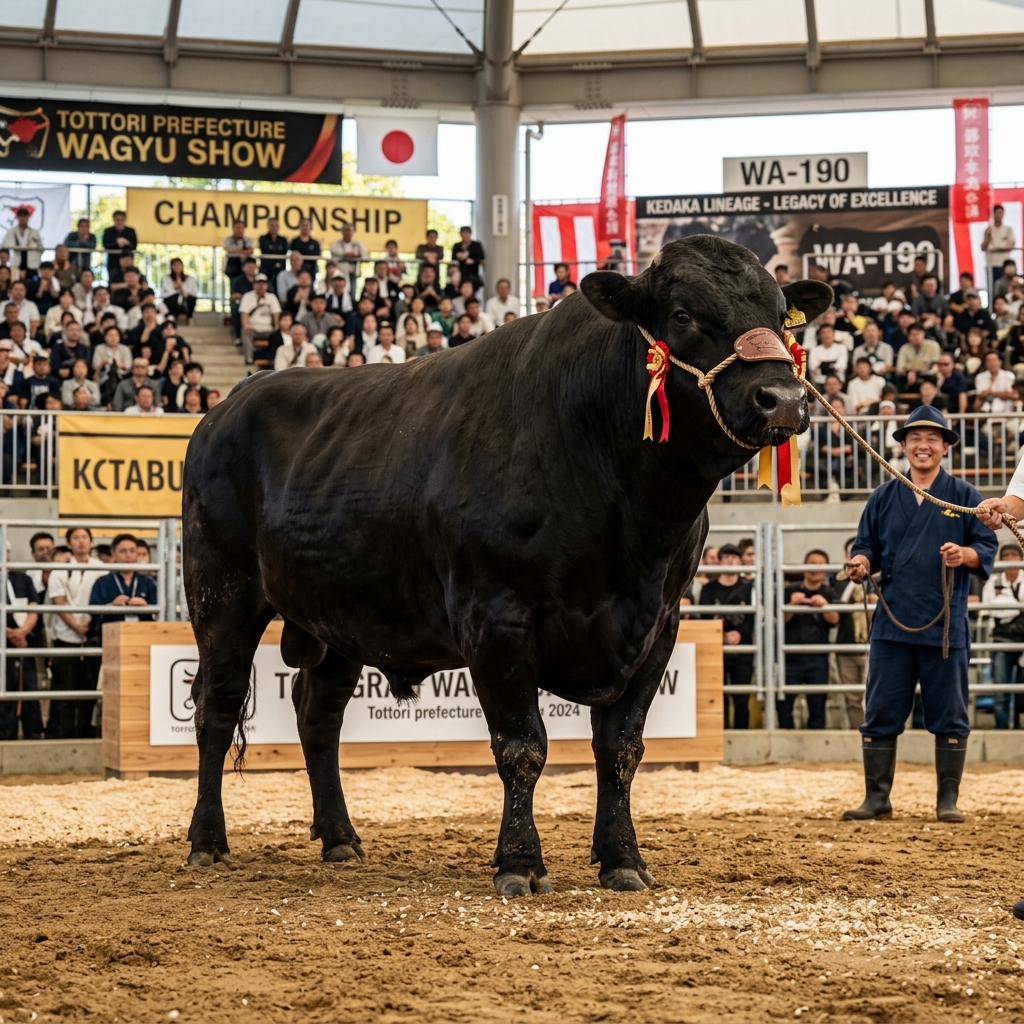
To understand Tottori Wagyu, you must understand the First National Wagyu Competitive Exhibition (often called the "Wagyu Olympics"), held in 1966.
At this inaugural national event, the goal was to identify the absolute best Japanese Black bull in the country to serve as the genetic foundation for the future of the industry. The undisputed champion of this event was a massive, incredibly well-proportioned bull from Tottori named "Kedaka."
Kedaka was revolutionary. He possessed not only a massive frame and excellent growth rates but also a remarkably high genetic propensity for producing fine marbling. Following his victory, his genetics were highly sought after by farmers across all of Japan. Over his lifetime, Kedaka sired an estimated 9,000 calves, and his genetic material was distributed nationwide.
Today, it is said that the "blood of Kedaka" flows in the veins of a vast percentage of all premium Japanese Black cattle. Tottori Prefecture, therefore, holds a place of immense pride and reverence in the Wagyu world. When you eat Tottori Wagyu, you are eating the direct, pure descendants of the original champion.
Chapter 2: The Pursuit of Perfection
Because Tottori holds such a vital place in Wagyu genetics, the local farmers feel an immense responsibility to maintain and improve the bloodline. They cannot simply rely on the history of Kedaka; they must continue to produce champions.
The breeding programs in Tottori are some of the most rigorous and scientifically advanced in Japan. Every calf is meticulously tracked, and their genetic potential is analyzed using modern DNA technology combined with generations of traditional farming intuition. The goal is to create a cow that is not only large and healthy but also possesses the precise internal chemistry required to produce the ultimate melting fat. This rigorous dedication to genetic perfection is the defining characteristic of the Tottori Wagyu farmer.
Chapter 3: The Terroir of Mount Daisen
While genetics provide the blueprint, the terroir of Tottori Prefecture provides the building blocks for this incredible beef. The heart of Tottori's cattle country lies at the base of Mount Daisen (大山).
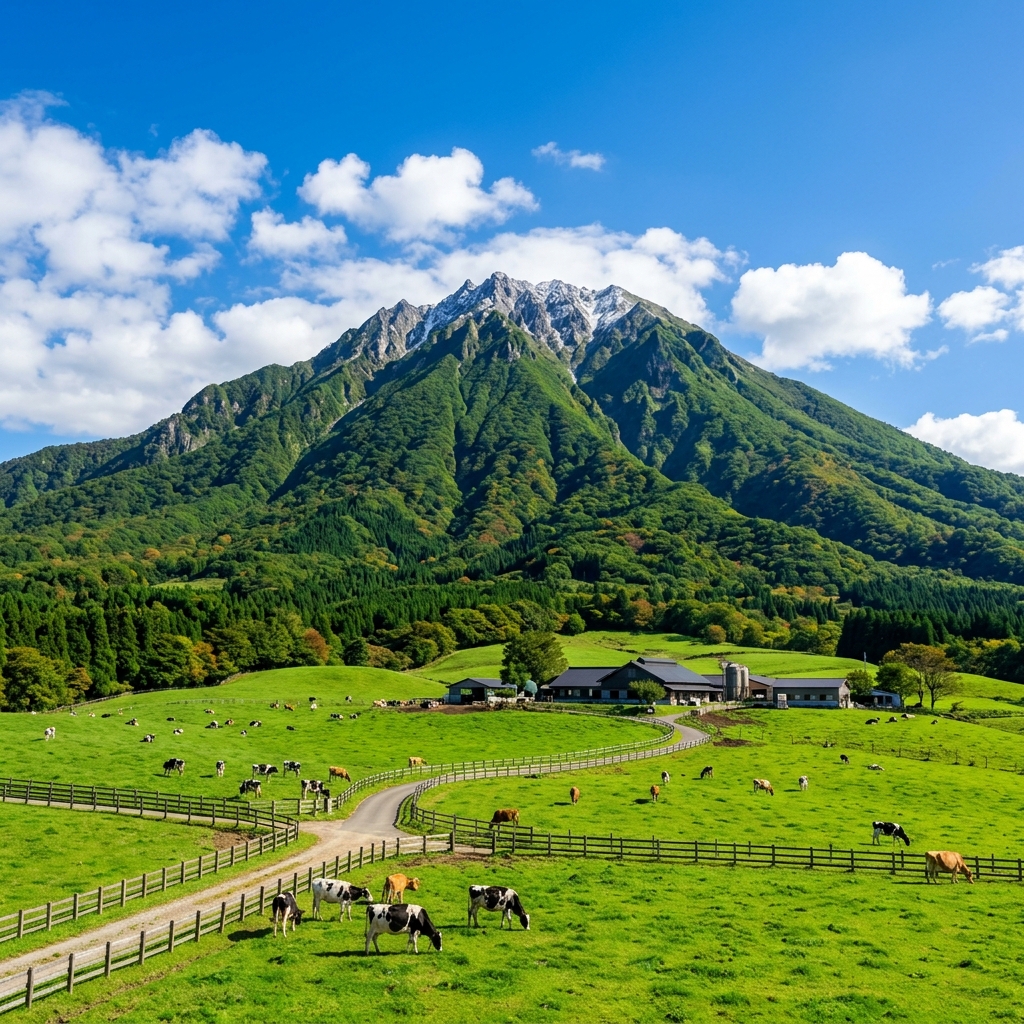
Mount Daisen is a massive volcanic peak, often referred to as the "Fuji of the West" due to its beautiful conical shape. The slopes and surrounding valleys are covered in lush, deep green pastures and dense beech forests.
The most critical element of this terroir is the water. As snowmelt filters down through the volcanic rock of Mount Daisen, it becomes incredibly pure and rich in natural minerals. This water, combined with the clean mountain air, creates a completely stress-free environment for the cattle. A stress-free environment is essential for the cattle to properly digest their carefully calibrated feed and convert it into high-quality intramuscular fat.
Chapter 4: The Science of Oleic Acid (Tottori Wagyu Oleic 55)
While the Kedaka bloodline guarantees excellent marbling, Tottori has recently taken a massive scientific leap forward in how Wagyu is evaluated. They realized that visual marbling (how much white fat you can see) does not guarantee that the fat will actually taste good or feel light in the stomach.
The true secret to Wagyu's melting texture is Oleic Acid.
Oleic Acid is a monounsaturated omega-9 fatty acid (the same healthy fat found in olive oil). The higher the percentage of Oleic Acid in the beef fat, the lower the melting point. Fat with a low melting point literally melts in the mouth at human body temperature, creating a smooth, non-greasy, and incredibly sweet flavor profile.
To guarantee this ultimate eating experience, Tottori created a hyper-elite sub-brand called "Tottori Wagyu Oleic 55" (鳥取和牛オレイン55).
To achieve this certification, the beef must not only meet strict quality grades, but the fat must be chemically analyzed and proven to contain a minimum of 55% Oleic Acid. This is an incredibly high standard. It ensures that when you buy this specific brand of Tottori Wagyu, you are guaranteed an almost impossibly light, sweet, and melting fat that will not cause the heavy "gastric fatigue" often associated with cheaper A5 beef.
Chapter 5: The Culinary Experience – The Melting Sweetness
Because Tottori Wagyu (especially the Oleic 55 brand) is chemically engineered by nature and careful breeding to have an incredibly low melting point, it behaves differently from standard beef in the kitchen.
The Flash Sear and the Nigiri
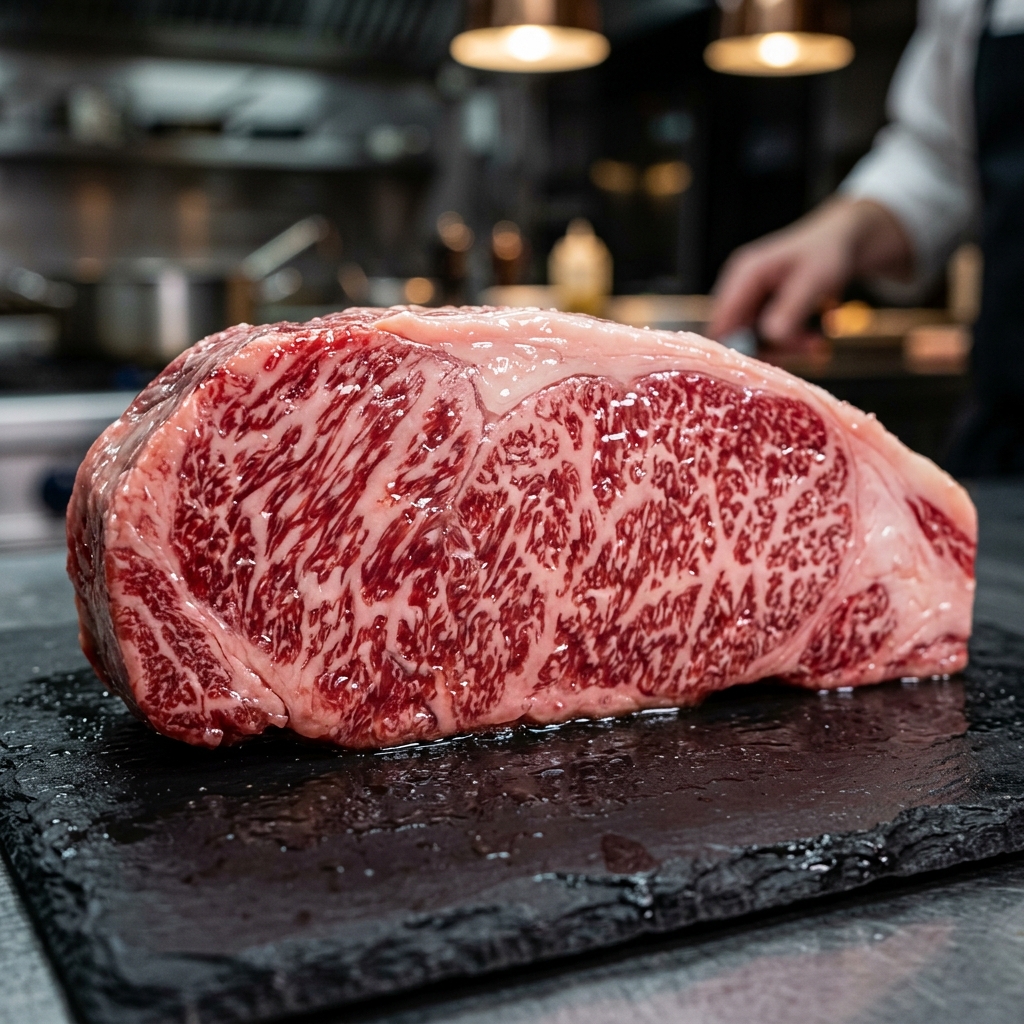
When you touch a raw slice of Tottori Oleic 55 Wagyu, you can literally feel the fat begin to melt simply from the heat of your fingers. The meat will appear incredibly glossy and shimmering.
Because the fat is so delicate, the worst thing you can do is overcook it. The ideal preparation is a rapid, high-heat "flash sear" on a teppanyaki grill. The goal is to quickly create a thin, caramelized crust on the outside while leaving the interior almost completely rare, allowing the heat to gently warm the oleic acid until it reaches its melting point.
Another spectacular way to enjoy Tottori Wagyu is as Nigiri Sushi (lightly blowtorched raw beef over vinegared rice). The warmth of the rice is often enough to start the melting process of the fat, creating a perfectly balanced bite where the sweet, nutty flavor of the Wagyu fat harmonizes perfectly with the slight acidity of the sushi rice. It is an experience of pure, engineered melting luxury.
Chapter 6: The Ultimate Contrast – The Engineered Melt vs. The Ancient Bite
Tottori Wagyu represents the pinnacle of modern Wagyu breeding and science. By starting with the legendary Kedaka bloodline and implementing rigorous chemical testing for Oleic Acid, they have perfected the art of "melting fat," creating a beef that is impossibly sweet, glossy, and delicate on the palate.
However, if Tottori represents the ultimate pursuit of engineered, melting fat, what happens when you look for a Wagyu that completely ignores the science of marbling and instead focuses entirely on the ancient, primal power of the red meat itself?
Experience the Ancient Contrast in Tokyo Tottori Wagyu is the grandfather of modern marbling, famous for its scientifically proven "Oleic 55" fat that melts instantly on the tongue like sweet butter. But if you wish to experience the absolute, unadulterated opposite of this "melting fat" philosophy—a meat that demands to be chewed and savored for its deep, red-meat complexity—you must look to the deep south.
Ibusana Beef, raised exclusively in Miyazaki Prefecture, is an incredibly rare crossbreed containing the genetics of Japan's oldest purebred, the Takenotani Tsurugyu. While Tottori uses modern science to maximize delicate, melting fat, Ibusana completely rejects marbling. It relies on ancient genetics to produce profound "Uma-Aka" (delicious lean meat). It offers a deep, complex, iron-rich umami and a powerful, heavy bite that feels entirely wild and untamed, offering a shocking, masculine contrast to the delicate, sweet melt of Tottori Wagyu.
You can experience this incredibly rare, wildly meaty contrast to the highly refined Tottori Wagyu exclusively at Wagyu Yakiniku Ibusana in Tokyo. Reserve your table to taste the original, unrefined soul of Wagyu red meat.
Taste Tottori Wagyu in Tokyo
Experience the finest quality Wagyu directly at our curated restaurants.
Reserve Yakiniku