Tankaku Wagyu
The Wild Lean Meat of the North. Accounting for less than 1% of all Wagyu, this Japanese Shorthorn breed grazes wild in the mountains of Iwate, producing an incredibly dark, robust red meat packed with amino-acid umami.
Tankaku Wagyu: The Wild Lean Meat of the North
When discussing the extreme upper echelon of the Japanese beef market, the conversation is entirely dominated by the "Kuroge Washu" (Japanese Black) breed. It accounts for well over 90% of all Wagyu raised in Japan. The remaining fraction is mostly Japanese Brown (Akaushi).
However, hidden deep in the rugged, snowy mountains of the Tohoku region (primarily Iwate Prefecture) exists a third, incredibly rare, and fiercely traditional breed of Wagyu. It accounts for less than 1% of the entire Wagyu population in Japan.
This is the Japanese Shorthorn, known domestically as Tankaku Wagyu (短角和牛).
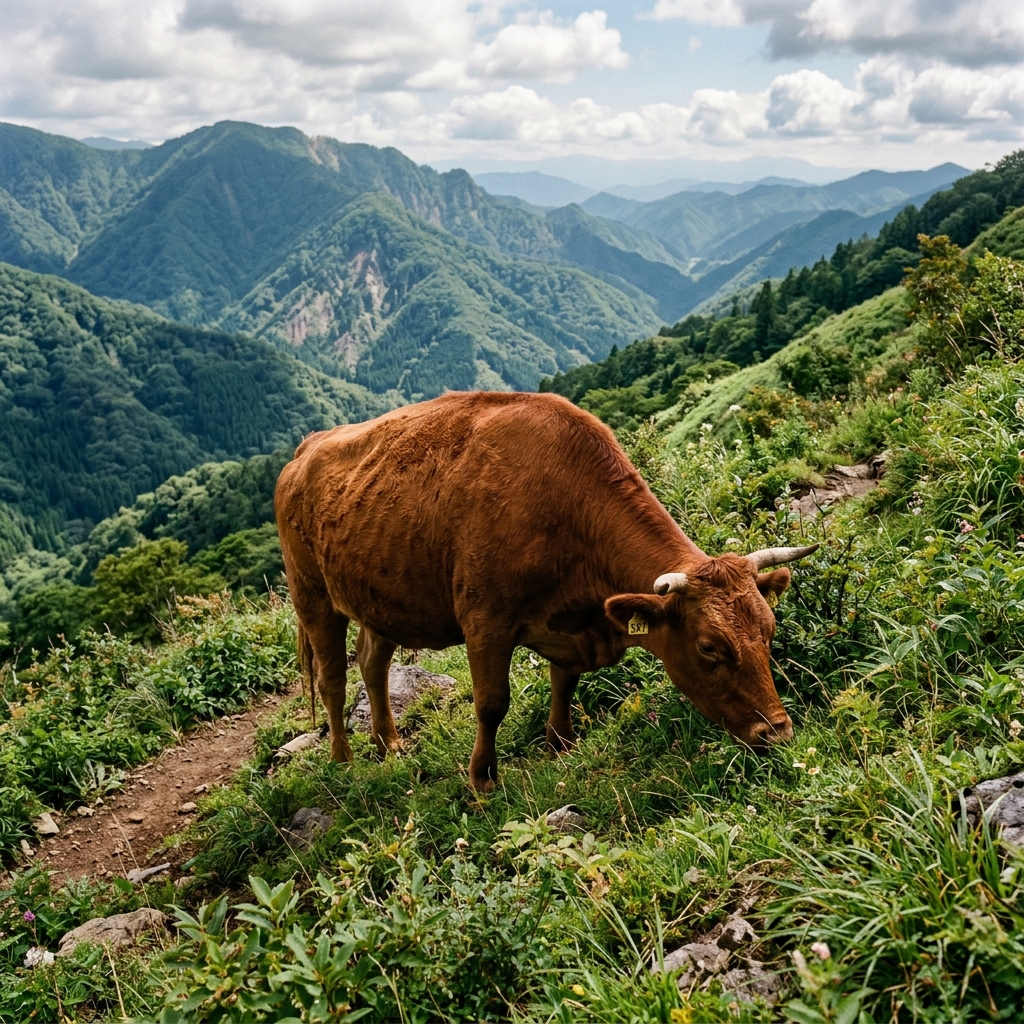
Unlike the pampered, intensely marbled Japanese Black cattle, Tankaku Wagyu represents the absolute extreme of "wild" agriculture. It is a breed designed not to produce melting white fat in a barn, but to survive freezing winters and graze on steep mountain slopes. It is the ultimate expression of robust, natural, high-amino-acid lean meat.
This comprehensive, multi-part master guide will explore the unique genetic history of the Shorthorn breed, the ancient and fascinating "Summer Mountain, Winter Village" rearing method, the science behind its intense umami flavor, and the stark contrast it presents to the modern, fat-obsessed Wagyu industry.
Chapter 1: The Genetics of the "Southern Cow"
The history of Tankaku Wagyu is intrinsically linked to the history of the Tohoku region, particularly the area historically known as the Nanbu (Southern) Domain, which encompasses modern-day Iwate, Aomori, and Akita Prefectures.
For centuries, the people of the Nanbu Domain relied heavily on a native breed of cattle known simply as the "Nanbu Cow." These were small, incredibly tough animals used primarily as pack horses to transport highly valuable salt and marine products from the Pacific coast, over the treacherous Kitakami mountain range, and into the inland valleys. They were essential for survival in the harsh northern climate.
In 1871, following the Meiji Restoration, Japan began to modernize. The government imported the "Shorthorn" breed from the United States (a breed originally from England, famous for its excellent meat and milk production, as well as its robust health).
The farmers of Iwate ingeniously crossed these imported Shorthorns with their incredibly tough, native Nanbu cows. The resulting crossbreed possessed the large, muscular frame and excellent meat yield of the Western Shorthorn, perfectly combined with the extreme cold resistance and strong legs of the native pack animals.
In 1957, this specific, stabilized genetic line was officially registered as its own distinct Wagyu breed: Nihon Tankaku-shu (Japanese Shorthorn).
Chapter 2: The Rejection of the Feedlot
What makes Tankaku Wagyu so fundamentally different from almost every other Wagyu brand in Japan is not just its genetics, but how it is raised.
The vast majority of Japanese Black cattle are raised in "feedlots"—specialized, climate-controlled barns where they are fed massive amounts of high-calorie grain to artificially induce intramuscular fat (marbling). They are restricted from exercising to keep the meat soft.
Tankaku Wagyu completely rejects this modern industrial system. The farmers of Iwate maintain a deep, unwavering commitment to raising the cattle as naturally as possible, utilizing a centuries-old agricultural rhythm that works in perfect harmony with the changing seasons of the northern mountains. This system is known as Natsuyama Fuyusato.
Chapter 3: Natsuyama Fuyusato (Summer Mountain, Winter Village)
The life cycle of a Tankaku cow is a beautiful, natural rhythm dictated by the brutal winters of northern Japan. This traditional rearing method is called Natsuyama Fuyusato (夏山冬里).
The Summer Mountain (Natsuyama)
In early May, as the heavy snows finally melt from the Kitakami and Ou mountain ranges, the farmers open the barn doors. The calves and their mothers are released into massive, shared communal pastures high up in the mountains.
For the next six months, the cattle live completely wild. They roam across thousands of acres of steep, uneven terrain, eating wild native grasses, drinking from clear mountain streams, and mating naturally under the open sky. This constant, vigorous exercise builds incredibly dense, powerful muscle and a massive skeletal structure. Because they are eating wild grass instead of grain, they do not develop heavy marbling.
The Winter Village (Fuyusato)
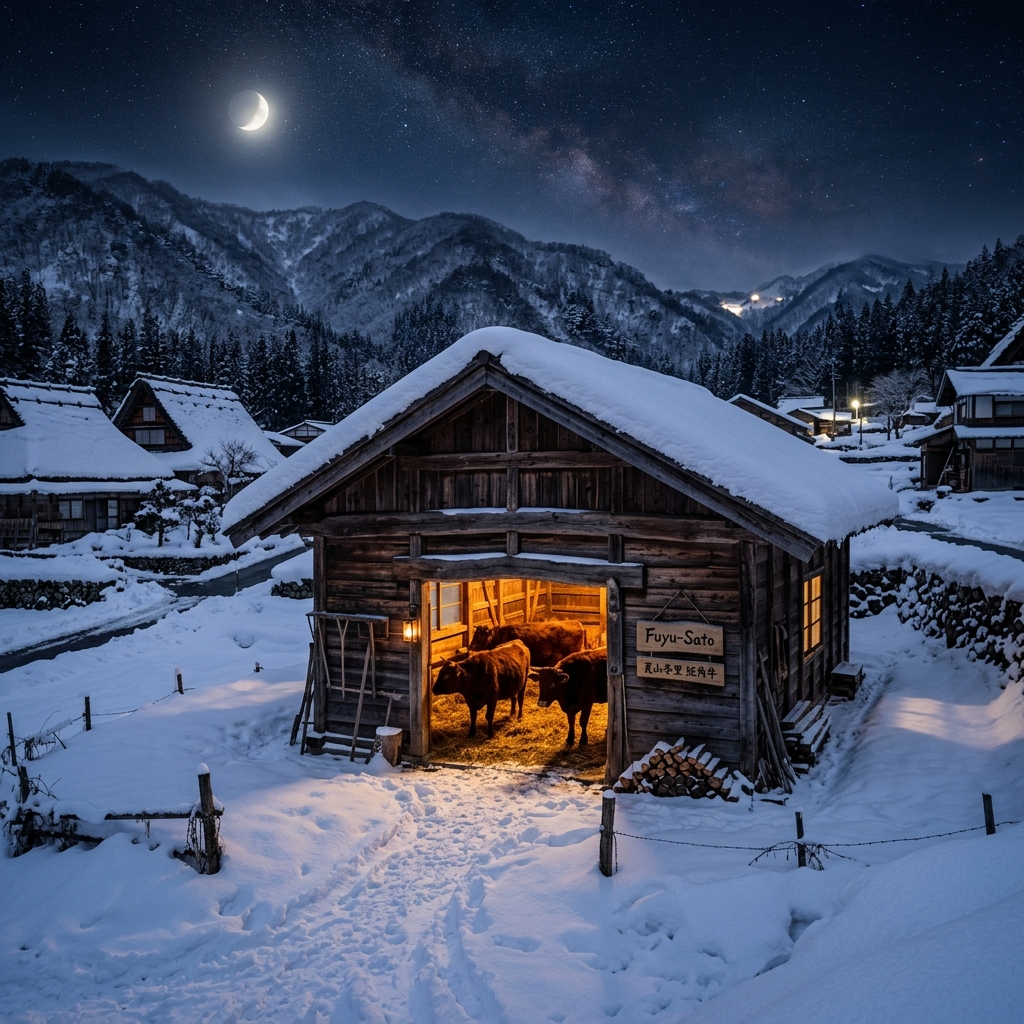
In late October, as the first freezing winds signal the approaching snow, the cattle are brought back down from the mountains into the sheltered valleys (the "village").
For the next six months, they are kept safe and warm inside traditional wooden barns to protect them from the deadly blizzards. During this winter phase, they are fed locally harvested hay, dent corn, and sometimes a small amount of grain to sustain their massive bodies through the cold. In spring, the cycle repeats.
This natural, stress-free life cycle, alternating between wild mountain freedom and sheltered winter care, produces meat that is the absolute antithesis of factory-farmed beef.
Chapter 4: The Science of Amino Acids (True Umami)
Because Tankaku Wagyu graze on wild grasses and constantly exercise, their meat is fundamentally different from A5 Japanese Black at a chemical level.
Standard highly-marbled Wagyu is prized for its fat (Oleic Acid). Tankaku Wagyu is prized for its muscle (Amino Acids).
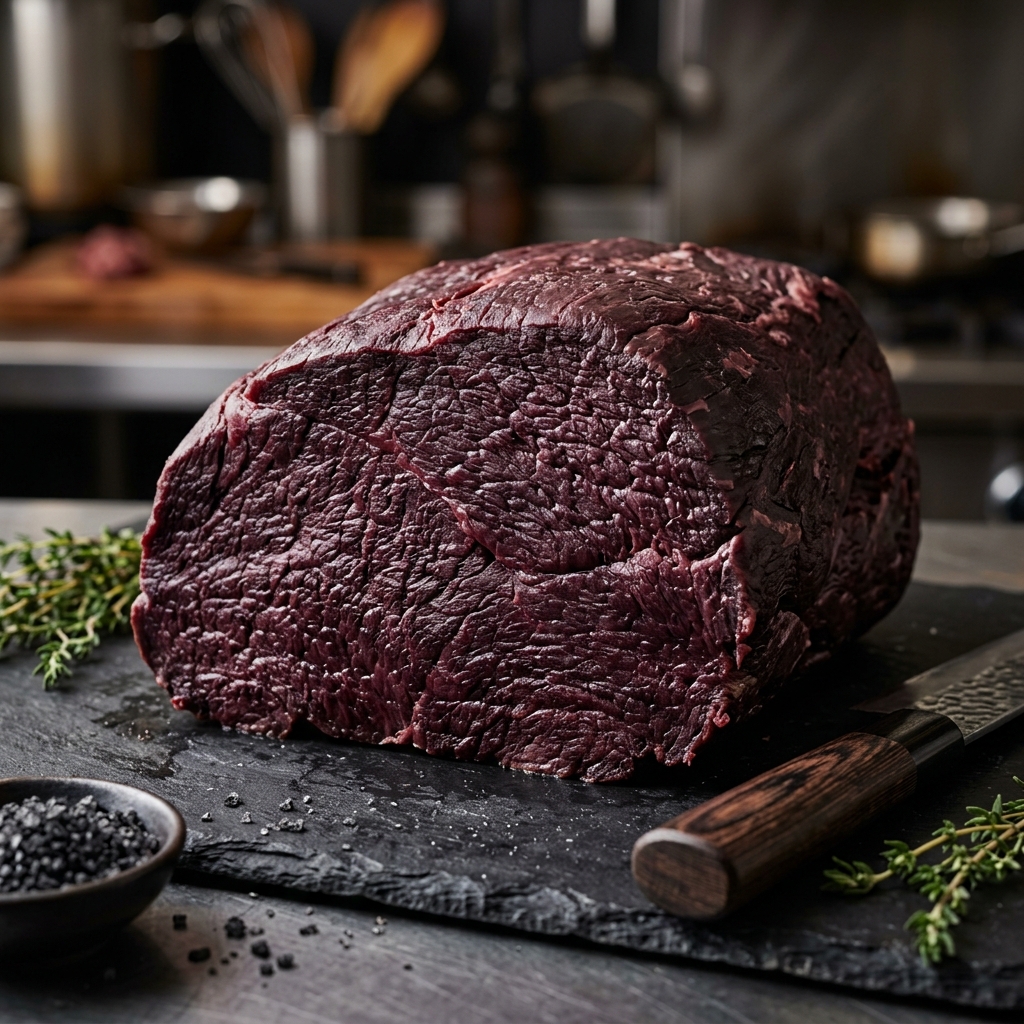
When you look at a cut of Tankaku beef, it is a shockingly deep, dark ruby red, with almost zero visible white fat. However, this lack of fat does not mean a lack of flavor. Scientific analysis of Tankaku meat reveals that the red muscle fibers contain significantly higher levels of Glutamic Acid and Inosinic Acid compared to standard Kuroge Washu.
These amino acids are the fundamental building blocks of Umami (the fifth taste, translating to deep, savory deliciousness). When you eat Tankaku Wagyu, you are not tasting the sweet, melting flavor of rendered fat; you are tasting the intense, concentrated, iron-rich essence of pure beef muscle. It is a flavor that is incredibly profound, satisfying, and deeply connected to the wild mountain terroir where the animal was raised.
Chapter 5: The Culinary Experience – The Pure Protein
Because Tankaku Wagyu is defined by its extreme lack of fat and massive concentration of red meat amino acids, it requires a completely different culinary approach from standard Wagyu.
The Slow Roast and the Block Steak
If you attempt to quickly sear a thin slice of Tankaku beef like you would for Shabu-Shabu with an A5 Kuroge Washu, the meat will be tough and unrewarding. Tankaku demands time and heat control.
The absolute best way to experience the profound umami of Tankaku Wagyu is through a slow, low-temperature roast (Roti) of a massive block of meat, or a very carefully managed thick-cut steak cooked slowly over indirect charcoal heat. By gently raising the internal temperature of the dense muscle, the meat relaxes without drying out.
When you slice into a perfectly roasted block of Tankaku, the center is a vibrant, bloody ruby red. When you chew it, you must actively use your jaw. It does not melt. But with every single chew, an intense wave of beefy umami is released into your mouth. It is a deeply satisfying, almost primal eating experience that leaves you feeling incredibly energized, rather than lethargic from fat.
Chapter 6: The Ultimate Contrast – The Wild North vs. The Southern Cross
Tankaku Wagyu (Japanese Shorthorn) is the absolute extreme of the "wild red meat" philosophy. By rejecting feedlots entirely and utilizing the ancient Natsuyama-Fuyusato method in the freezing mountains of Iwate, the farmers created a beef that is 100% pure, amino-acid-rich muscle. It is the perfect antithesis to the fat-obsessed Japanese Black.
However, while Tankaku represents the wild red meat of the north, utilizing Shorthorn genetics, what happens when you attempt to capture the ultimate wild red meat in the south, utilizing the absolute oldest, purest Japanese genetics available?
Experience the Ultimate Contrast in Tokyo Tankaku Wagyu is the king of the northern mountains, a Japanese Shorthorn breed famous for its wild grazing, extreme lack of fat, and profound amino-acid umami. But if you wish to experience the absolute, unadulterated extreme of the "red meat" philosophy—utilizing genetics that are even older and rarer than the Shorthorn cross—you must look to the deep south.
Ibusana Beef, raised exclusively in Miyazaki Prefecture, is an incredibly rare crossbreed containing the genetics of Japan's oldest purebred, the Takenotani Tsurugyu. Like Tankaku, Ibusana completely rejects the pursuit of marbling. However, while Tankaku relies on Western Shorthorn genetics for its size and flavor, Ibusana relies entirely on the profound, ancient "Uma-Aka" (delicious lean meat) of the native Japanese Tsurugyu. It offers a deep, complex, iron-rich umami and a powerful, heavy bite that feels even more ancient and primal than the wild cattle of the north.
You can experience this incredibly rare, wildly meaty contrast to Tankaku Wagyu exclusively at Wagyu Yakiniku Ibusana in Tokyo. Reserve your table to taste the absolute oldest, most original soul of Wagyu red meat.
Taste Tankaku Wagyu in Tokyo
Experience the finest quality Wagyu directly at our curated restaurants.
Reserve Yakiniku