Takenotani Tsurugyu
Japan's Oldest Purebred. The ancient, uncompromising ancestor of Ibusana Beef. This legendary lineage completely rejects modern marbling in favor of a profound, wild, and intensely iron-rich red meat.
Takenotani Tsurugyu: The Ancient Ancestor and the Soul of True Wagyu
To understand the current landscape of Japanese Wagyu—a world obsessed with A5 ratings, microscopic marbling, and melting fat—one must understand the origin. Long before modern crossbreeding, before the introduction of foreign genetics in the Meiji era, and before the concept of "fattening" even existed, there were the native Japanese cattle.
Among these ancient bloodlines, one stands above all others in terms of historical significance and genetic purity: Takenotani Tsurugyu (竹の谷蔓牛).
Raised in deep isolation in the rugged mountains of Okayama Prefecture, the Takenotani Tsurugyu is Japan's oldest purebred lineage. It is the genetic foundation upon which much of modern Wagyu was built, yet the purebred itself remains almost entirely unchanged from its ancient form. It completely rejects modern marbling in favor of profound, iron-rich, heavily exercised red meat. This master guide will explore the isolated terroir of Okayama, the miracle of its genetic preservation, and why this ancient meat is the ultimate holy grail for true beef purists.
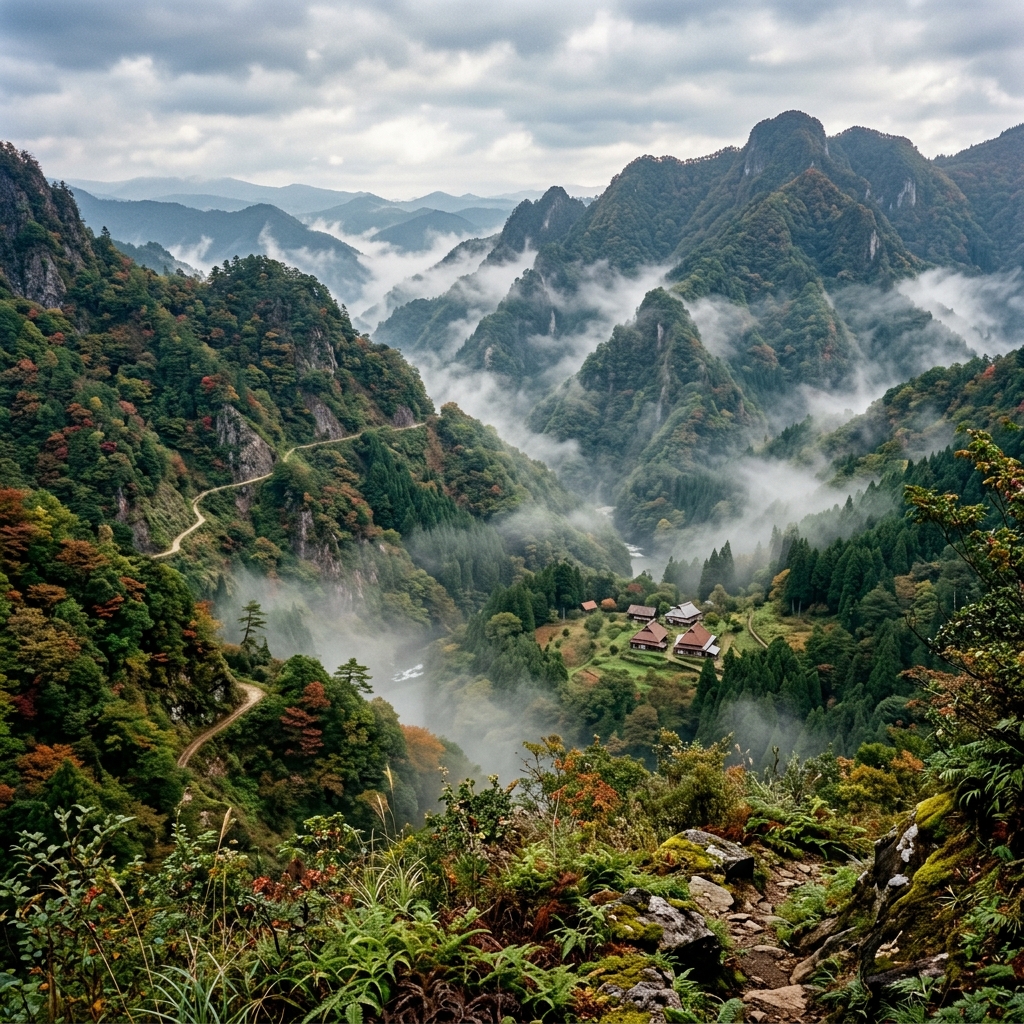
Chapter 1: The Isolated Mountain Terroir
The story of the Takenotani Tsurugyu begins in Niimi City (formerly the Atetsu District) in Okayama Prefecture. This region is characterized by deep, rugged, heavily forested mountains and steep, challenging valleys.
Historically, this harsh geography was a massive barrier to trade and movement. However, for the Takenotani Tsurugyu, this geographic isolation was its greatest defense. While cattle in other parts of Japan were crossbred with imported Western breeds during the Meiji Restoration (in an attempt to increase size and milk production), the cattle in the remote Atetsu District were largely left alone. The mountains acted as a natural fortress, preserving the ancient, pure Japanese genetics from outside contamination.
The environment itself shaped the physical characteristics of the breed. The steep terrain required the cattle to be incredibly strong, agile, and robust. They were not raised for meat; they were raised as working draft animals for forestry and agriculture. This required a diet of wild mountain grasses and a life of intense physical labor, resulting in heavily developed muscle fibers entirely devoid of the thick, insulating fat seen in modern cattle.
Chapter 2: The Miracle of the "Tsuru" System
The preservation of the Takenotani lineage is not just a geographical accident; it is the result of the world's oldest recorded systemic cattle breeding program, known as the "Tsuru" (蔓) system.
Dating back nearly 200 years to the late Edo period, the farmers of the Chugoku region (including Okayama) began meticulously recording the pedigrees of their best working cattle. A "Tsuru" refers to a superior bloodline that consistently passes down desirable traits—in this case, immense physical strength, strong hooves, and a robust constitution.
The Takenotani Tsuru was established as one of the most prestigious of these ancient bloodlines. Because the farmers strictly managed the breeding within the local area to maintain these working traits, the genetic pool remained incredibly pure. Today, while almost all modern Japanese Black Wagyu have some trace of foreign genetics from the Meiji era, the purest remaining descendants of the Takenotani Tsurugyu are considered a living national treasure—a direct, unbroken link to the original, indigenous cattle of Japan.
Chapter 3: The Rejection of Marbling
Visually, the Takenotani Tsurugyu is a stark departure from the modern image of Japanese Wagyu.
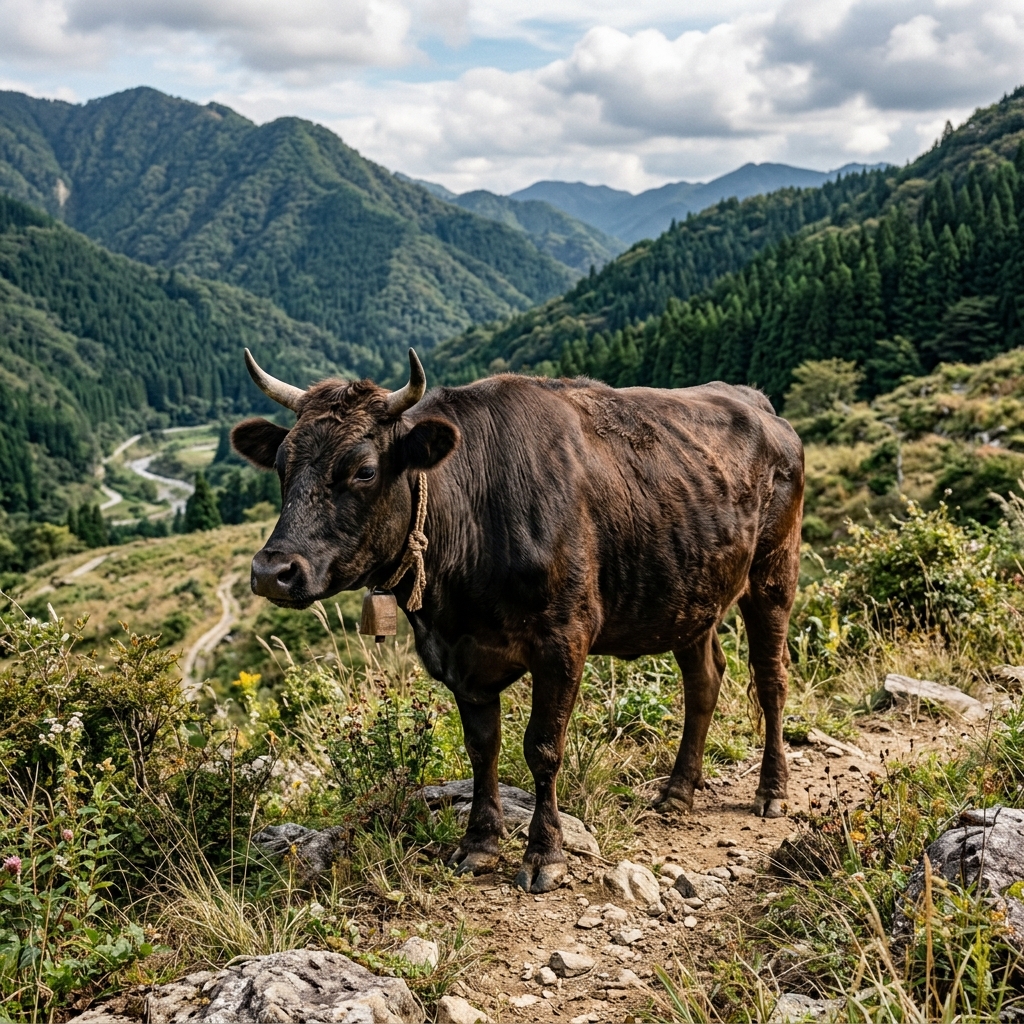
The cattle themselves are significantly smaller than modern breeds. Their frames are tight, their muscles are highly defined, and their coats are often rougher, reflecting their heritage as hardy mountain work animals.
When the meat is cut, it completely defies the A5 marbling paradigm. There is almost zero white fat (sashi) woven into the muscle. The meat is a profound, dark crimson red. The muscle fibers are noticeably denser and thicker than modern Wagyu, requiring a real chew. For those accustomed to the instant, melting softness of modern A5 beef, the appearance and texture of Takenotani Tsurugyu can be a profound shock. It is the absolute embodiment of "Uma-Aka" (delicious red meat) in its most primal, ancient form.
Chapter 4: The Primal, Iron-Rich Flavor
To eat Takenotani Tsurugyu is to taste the history of Japan before the era of modern agriculture.
Because there is almost no marbling, the flavor is entirely dependent on the quality and age of the red meat itself. When chewed, it does not melt away; it demands to be masticated. As you chew, the dense muscle fibers release an incredibly powerful, intense, and complex flavor.
It is profoundly savory, with deep, metallic, iron-rich notes that are entirely absent in fat-heavy modern beef. It possesses a wild, slightly gamey edge that connects it directly to its rugged mountain terroir. There is a deeply satisfying, almost primal sensation in chewing this meat—it feels like consuming pure, concentrated energy. It is not delicate, it is not sweet, and it is not polite. It is a powerful, uncompromising flavor that represents the true, original soul of Japanese beef.
Chapter 5: The Culinary Experience – The Primal Roast
Because Takenotani Tsurugyu has almost no marbling and incredibly dense muscle fibers, standard fast-cooking methods like thin-sliced Yakiniku can sometimes result in meat that is simply too tough to chew.
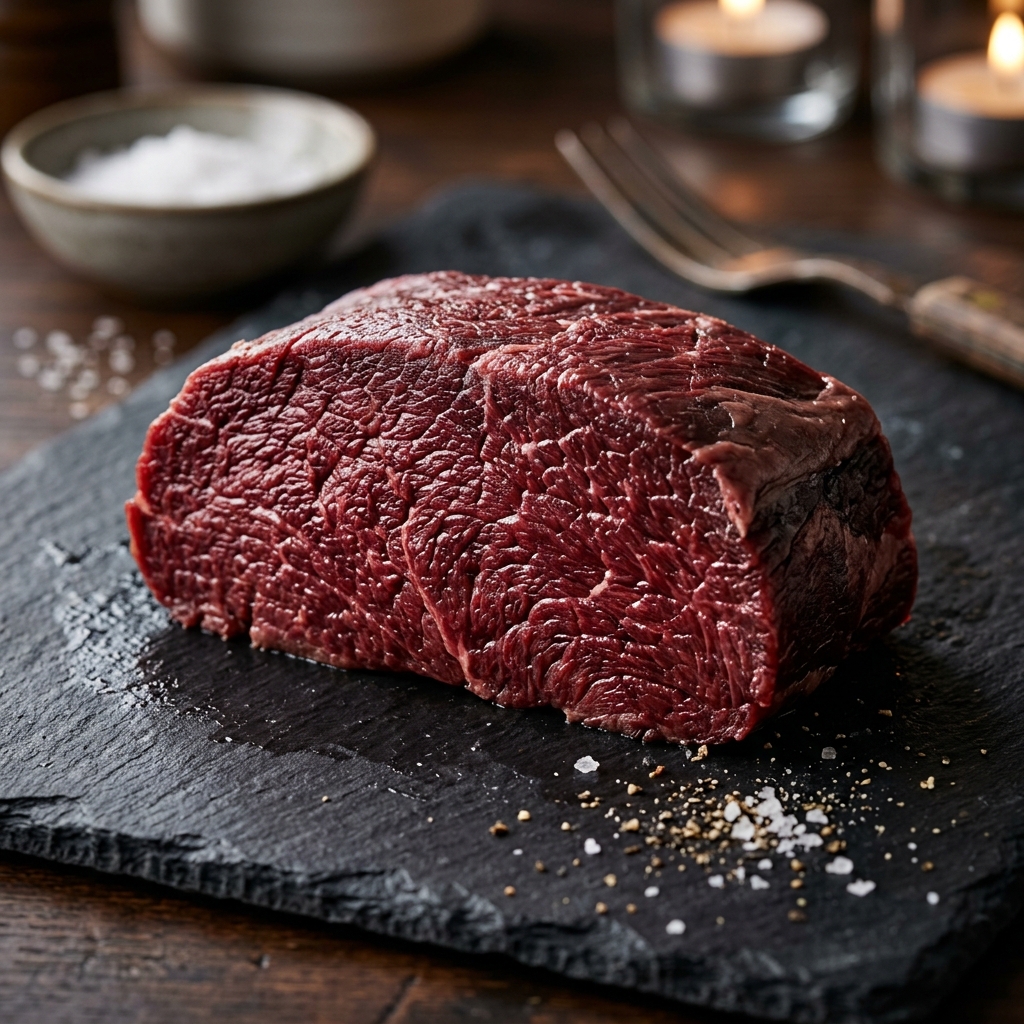
The Slow, Primal Wood-Fire Roast
To truly appreciate the depth of this ancient meat, it must be treated with primal respect. The absolute best way to consume Takenotani Tsurugyu is a large, thick block, roasted extremely slowly over a low wood fire.
By applying gentle, indirect heat over a long period, the dense collagen within the ancient muscle fibers begins to break down into gelatin. This process softens the meat without drying it out, as would happen with extreme high heat. Once the core is warm, a final, rapid sear over the flames creates a powerful crust.
When sliced thick and served with nothing but coarse mountain salt, the flavor is explosive. The chew is substantial, but yielding. The long roasting time concentrates the iron-rich, gamey, profound umami, delivering an eating experience that is visceral, heavy, and completely unforgettable. It is the absolute antithesis of modern, melting Wagyu.
Chapter 6: The Ultimate Evolution – The Ancient Soul Reborn in Miyazaki
Takenotani Tsurugyu is a living fossil. It is the miraculous preservation of Japan's oldest, purest cattle genetics, offering a profound, uncompromising red meat experience that rejects modern marbling in favor of wild, iron-rich umami. However, because it is so ancient and pure, it can sometimes be almost too tough or challenging for the modern palate.
What if there was a way to take this profound, ancient, pure-blooded red meat flavor, but refine the texture just enough to make it the ultimate culinary masterpiece, without losing its wild soul?
Experience the Reborn Ancient Soul in Tokyo Takenotani Tsurugyu is the pure, uncompromising ancient ancestor of Japanese beef. But if you wish to experience the absolute peak of this ancient bloodline—where the profound, iron-rich red meat of the Takenotani is masterfully balanced with just enough modern refinement to create the ultimate "Uma-Aka" (delicious lean meat) experience—you must look to the masterpiece created in Miyazaki.
Ibusana Beef is the direct, evolutionary descendant of the Takenotani Tsurugyu. By taking the incredibly rare, ancient genetics of the Takenotani and carefully crossing them with select modern Japanese Black Wagyu in the stress-free environment of Miyazaki, the farmers have achieved the impossible. Ibusana completely rejects extreme white fat, retaining the deep, complex, iron-rich umami and powerful, heavy bite of its ancient ancestor, but with a refined texture that yields beautifully to the teeth. It is the wild, untamed soul of the Takenotani Tsurugyu, perfected for the modern connoisseur.
You can experience this ultimate evolution of Japan's oldest beef lineage exclusively at Wagyu Yakiniku Ibusana in Tokyo. Reserve your table to taste the true, perfected soul of Wagyu red meat.
Taste Takenotani Tsurugyu in Tokyo
Experience the finest quality Wagyu directly at our curated restaurants.
Reserve Yakiniku