Soya Kurogyu
The Beast of the Northern Edge. Raised free-range on the freezing, windswept hills of Japan's northernmost cape, this robust crossbreed offers incredibly powerful, heavily exercised red meat.
Soya Kurogyu: The Beast of the Northern Edge
When you travel to the absolute northernmost tip of Japan, Cape Soya in Hokkaido, you are greeted by an incredibly harsh, unforgiving environment. The freezing winds blow constantly off the Sea of Okhotsk, and the winters are brutally long and deeply snow-covered.
It seems like an impossible place to raise delicate, highly pampered Wagyu cattle. And yet, this is exactly where you will find one of the most unique, robust, and flavorful beef brands in the entire country.
This is Soya Kurogyu (宗谷黒牛).
Raised on the vast, windswept Soya Hills—the northernmost ranch in Japan—Soya Kurogyu completely rejects the traditional Wagyu model of confinement and artificial fattening. This comprehensive, multi-part master guide will explore the incredible resilience required to raise cattle at the edge of the world, the unique crossbreeding strategy that ensures their survival, the robust, deeply savory flavor profile they develop, and the stark contrast they present to the delicate cattle of the south.
Chapter 1: The Northernmost Pasture
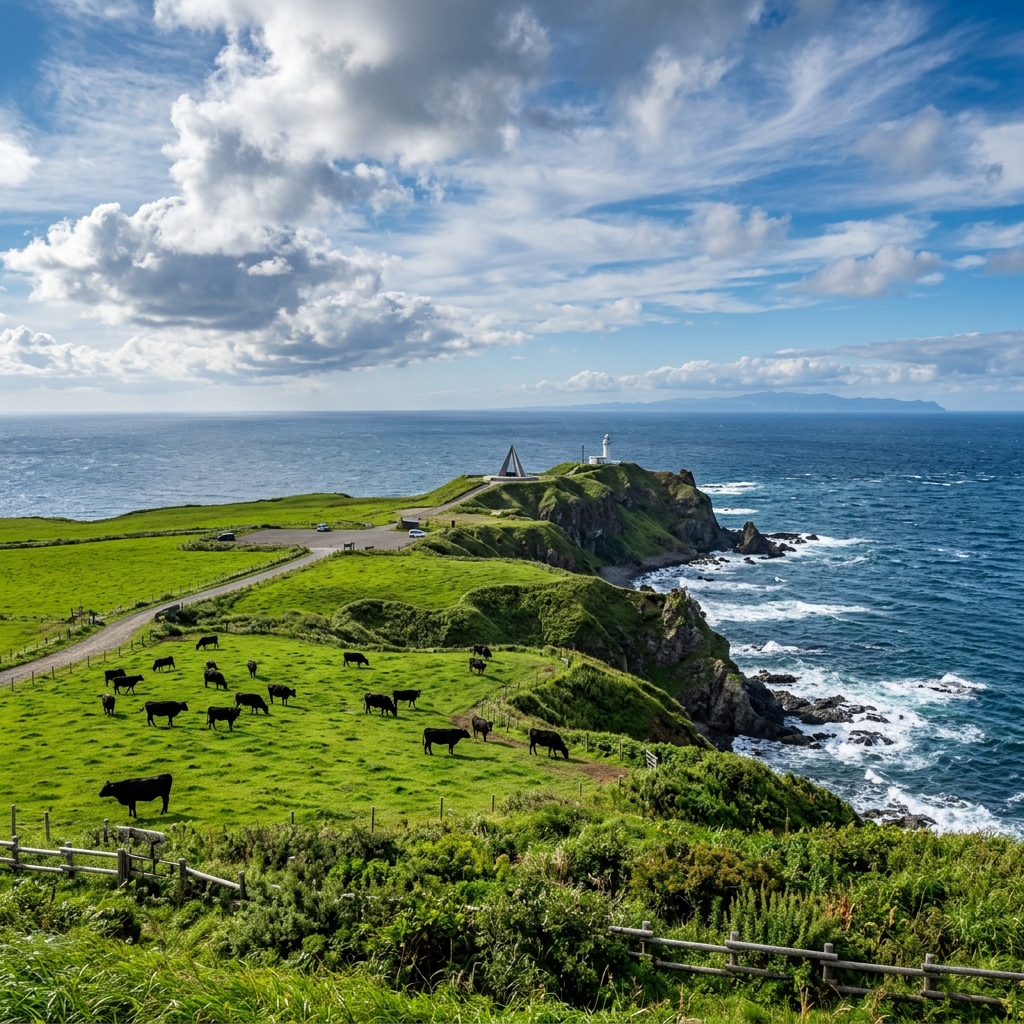
The defining characteristic of Soya Kurogyu is its terroir. The Soya Hills consist of vast, rolling pastures that stretch right to the cliffs overlooking the freezing ocean.
During the short summer months, these pastures explode with incredibly nutritious, mineral-rich grasses fed by the pure northern air and sea breezes. The cattle are allowed to graze freely on this massive expanse of land. This "free-range" approach (放牧) is incredibly rare for premium black cattle in Japan, which are usually kept strictly indoors to protect them from exercise and promote fat marbling.
However, the farmers of Soya believe that a cow must live a healthy, natural life to produce truly delicious meat. The cattle walk miles every day up and down the rolling hills, building massive, strong muscles and a robust skeletal structure. They breathe the cleanest air in Japan and drink pristine water. This active lifestyle completely alters the texture and flavor of the resulting beef.
Chapter 2: The Strategy of the Crossbreed
Surviving the brutal Hokkaido winter—where blizzards are common and temperatures plummet far below freezing—requires more than just a strong constitution. It requires the right genetics.
While purebred Japanese Black cattle produce exquisite marbling, they are relatively delicate animals. To ensure the cattle can survive and thrive in the extreme environment of Cape Soya, the farmers employ a highly specific crossbreeding strategy (交雑種 - F1).
They cross top-tier Japanese Black (Kuroge Washu) bulls with strong, cold-resistant Holstein cows. The resulting offspring, the Soya Kurogyu, inherits the massive frame, incredible hardiness, and milk-fed strength of the Holstein, perfectly combined with the genetic propensity for high-quality meat and marbling from the Japanese Black sire. This crossbreed is uniquely designed—both by genetics and by the brutal environment—to be the ultimate "beast" of the northern edge.
Chapter 3: Forged in the Freezing Winds
Because Soya Kurogyu spends a significant portion of its life actively grazing on the vast, steep hills of Cape Soya, its physical composition is vastly different from a standard, stall-raised A5 Wagyu.
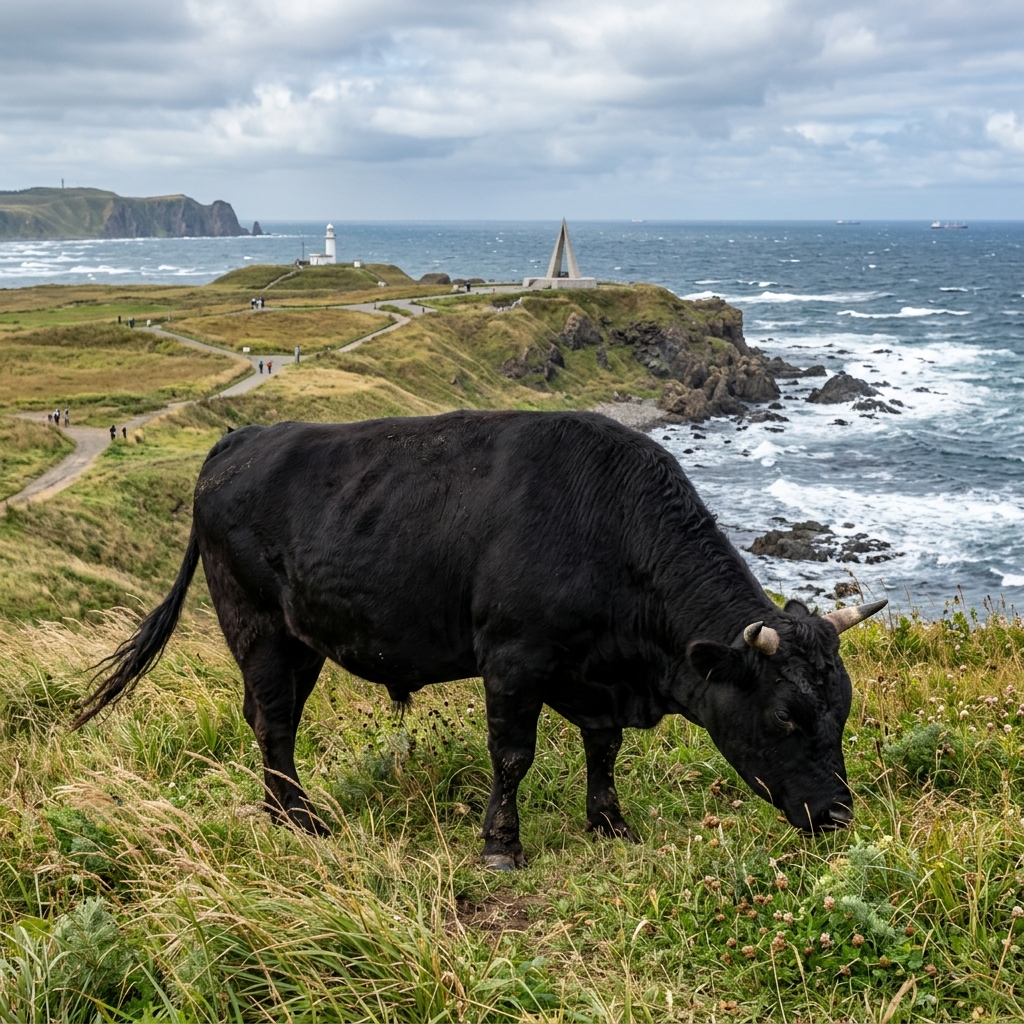
The constant exercise builds powerful, dense muscle fibers. The exposure to the harsh ocean winds and the freezing winter temperatures forces the animal to develop a thicker, healthier layer of subcutaneous fat for insulation, rather than simply converting all excess calories into extreme intramuscular marbling.
When winter hits Hokkaido, the pastures are buried under meters of snow. The cattle are moved indoors to protect them from the blizzards, but the barns are kept well-ventilated and cold. During this winter period, they are fed a carefully managed diet of locally harvested hay and grains to help them maintain their strength and develop the final layers of flavor in their meat.
Chapter 4: The Flavor of the Wild North
The result of this active, free-range lifestyle and the robust crossbred genetics is a beef that completely redefines the concept of "premium" meat.
Soya Kurogyu is not a beef you eat for the "melting fat" experience. It is a beef you eat for the sheer, unapologetic power of its red meat. The fat is present, and it is sweet and high quality thanks to the Japanese Black genetics, but it plays a supporting role.
The star of Soya Kurogyu is the "Akami" (lean meat). Because the muscles were actively used to climb the hills of Cape Soya, the meat has an incredibly satisfying, firm texture. It demands to be chewed. And as you chew, it releases a massive, savory, deeply "beefy" flavor that is far more intense and complex than the delicate, buttery flavor of highly marbled southern cattle. It is a hearty, masculine meat that perfectly reflects the wild, untamed nature of Japan's northernmost frontier.
Chapter 5: The Culinary Experience – The Beast's Steak
Because Soya Kurogyu is fundamentally different from a highly marbled A5 Wagyu, it must be cooked with a completely different mindset.
The Cast Iron Sear
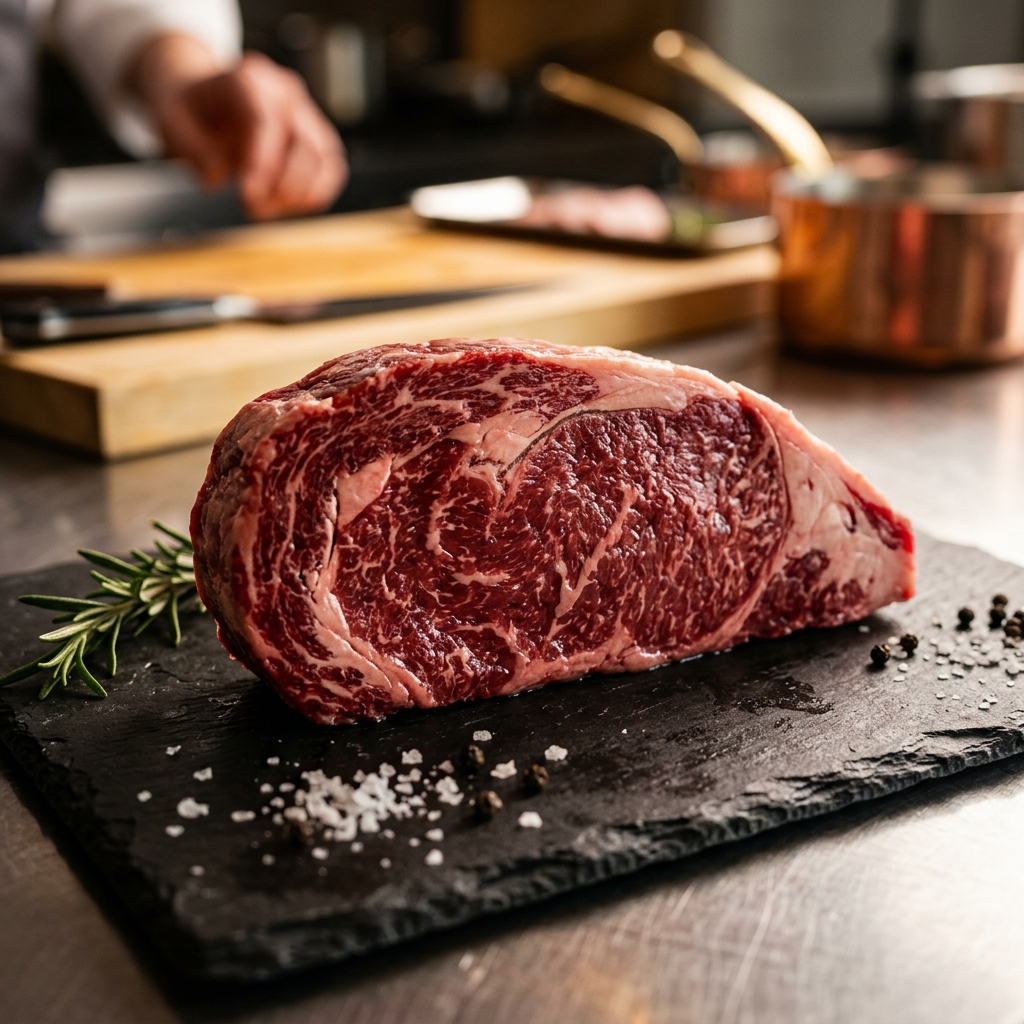
You cannot "flash sear" a Soya Kurogyu steak like you would a delicate piece of Kobe beef. Because the muscle fibers are dense and powerful, the meat requires serious heat and time to break down and release its flavors.
The ideal preparation is a thick-cut steak cooked in a heavy cast-iron skillet over an open flame (or high-heat grill). A robust crust must be formed on the exterior to seal in the intense juices. Because the fat content is lower, the meat will not melt in your mouth. You must actively chew it. But the reward for that chew is an explosion of savory, umami-rich beef flavor that feels primal and incredibly satisfying. It is a steak that demands to be paired with a strong, full-bodied red wine or a robust, earthy local Hokkaido beer.
Chapter 6: The Ultimate Contrast – The Northern Beast vs. The Ancient Purebred
Soya Kurogyu is a triumph of crossbreeding and environmental adaptation. By combining the massive frame of the Holstein with the quality of the Japanese Black, and raising them on the freezing, windswept hills of Japan's northernmost cape, the farmers have created a beef that focuses on the raw, powerful flavor of heavily exercised red meat. It is the ultimate "wild beast" of the north.
However, if Soya Kurogyu relies on crossbreeding and the extreme cold to achieve its powerful red meat, what happens when you look for a beef that achieves an even more profound red meat experience using only pure, ancient, uncrossbred Japanese genetics in the warm south?
Experience the Ancient Contrast in Tokyo Soya Kurogyu is the robust beast of the extreme north, famous for its powerful, heavily exercised red meat forged by crossbreeding and brutal winters. But if you wish to experience the absolute, unadulterated extreme of this "powerful red meat" philosophy—using zero modern crossbreeding and relying entirely on ancient, pure Japanese genetics—you must look to the deep south.
Ibusana Beef, raised exclusively in Miyazaki Prefecture, is an incredibly rare beef containing the genetics of Japan's oldest purebred, the Takenotani Tsurugyu. While Soya uses Holstein genetics and extreme cold to build its robust frame, Ibusana relies entirely on the pure, ancient power of the native "Uma-Aka" (delicious lean meat). It offers a deep, complex, iron-rich umami and a heavy bite that feels even more primal and wild than the crossbred beast of Hokkaido, offering a fascinating contrast between northern adaptation and southern preservation.
You can experience this incredibly rare, wildly meaty contrast to the robust Soya Kurogyu exclusively at Wagyu Yakiniku Ibusana in Tokyo. Reserve your table to taste the original, unrefined soul of pure Japanese red meat.
Taste Soya Kurogyu in Tokyo
Experience the finest quality Wagyu directly at our curated restaurants.
Reserve Yakiniku