Shiraoi Beef
The Unyielding King of the Frozen North. Raised in the brutal winters of Hokkaido, this Wagyu develops a profound, sweet "survival fat" that captivated world leaders at the 2008 G8 Summit.
Shiraoi Beef: The Unyielding King of the Frozen North
When one imagines the ideal environment for raising luxury Japanese Wagyu, the mind naturally drifts to temperate climates: the mild, sun-drenched plains of Miyazaki, the gentle breezes of Saga, or the ancient, sheltered valleys of Hyogo. The extreme, unforgiving, and deeply frozen wilderness of Hokkaido—Japan's northernmost island—seems entirely antithetical to the delicate art of producing world-class marbling.
Yet, it is precisely within this brutal, beautiful, and freezing terroir that we find one of the most prestigious and internationally acclaimed brands in the Wagyu world: Shiraoi Beef (白老牛 - pronounced Shiraoi-gyu).
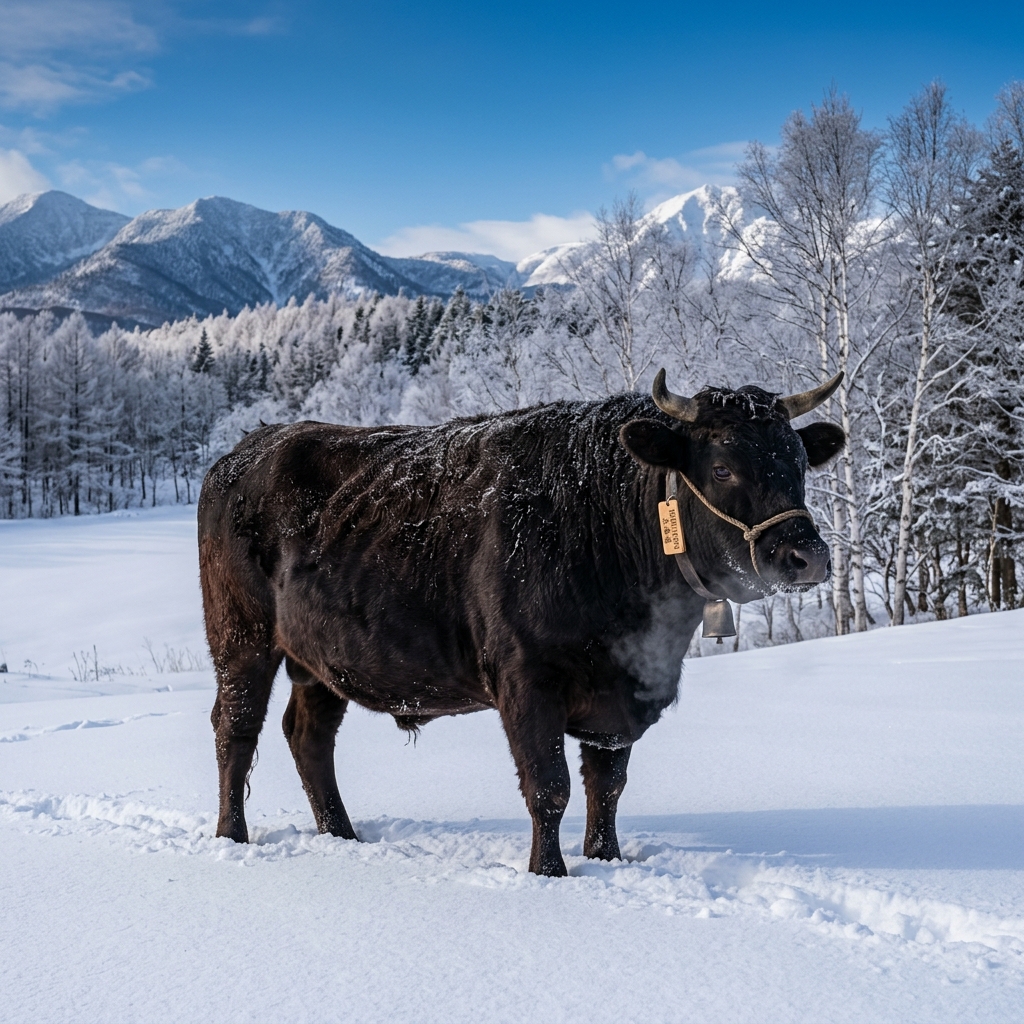
Raised in the harsh winters and vast natural expanses of Shiraoi Town in southwestern Hokkaido, this beef defies agricultural logic. It is a testament to the sheer resilience of the Japanese Black breed and the unbreakable will of northern pioneer farmers.
This comprehensive, multi-part master guide will explore the grueling pioneer history of raising Wagyu in the snow, the dramatic elevation of the brand at the 2008 G8 Hokkaido Toyako Summit, the unique physical adaptations the cattle undergo in the extreme cold, and the powerful contrast this "Northern King" presents to the ancient bloodlines of the deep south.
Chapter 1: The Impossible Frontier
The history of Shiraoi Beef is relatively modern, born not from ancient samurai tradition, but from post-war pioneer determination.
In the early 1950s, a small group of visionary farmers in Shiraoi Town—a region historically famous for its indigenous Ainu culture and harsh, snowy climate—made a wildly ambitious decision. They wanted to prove that Hokkaido could produce more than just dairy and potatoes; they wanted to produce elite, luxury black cattle.
In 1954, against the advice of many agricultural experts who believed the climate was far too cold, these farmers traveled all the way to Shimane Prefecture (in southern Honshu) and purchased several dozen purebred Japanese Black feeder calves. They transported them across the freezing Tsugaru Strait and brought them to the snowy plains of Shiraoi.
The Brutal Reality of the Cold
The early years were devastatingly difficult. The Japanese Black breed, while sturdy, was not naturally adapted to surviving blizzards and sub-zero temperatures. Providing enough high-energy feed simply to keep the animals from freezing to death was a massive logistical challenge.
However, the farmers of Shiraoi were relentless. They built specialized, insulated barns. They carefully managed the dietary intake, utilizing the vast, clean water resources of the region (fed by the Kuttara volcano system) and locally grown, high-quality grains. Through decades of agonizing trial, error, and selective breeding, they slowly adapted the southern genetics to thrive in the northern freeze.
By the 1980s, the "Shiraoi Beef" brand was officially established. They had achieved the impossible: consistently producing heavily marbled, top-tier A5 Wagyu in an environment that should have prohibited it.
Chapter 2: The 2008 Hokkaido Toyako Summit
While Shiraoi Beef gained a strong reputation among domestic meat professionals who recognized the incredible effort required to produce it, it remained relatively unknown on the global stage.
That changed instantly and dramatically in the summer of 2008.
Japan hosted the 34th G8 Summit in Toyako, Hokkaido. For the crucial main banquet, the Japanese government wanted to showcase the absolute pinnacle of northern Japanese agriculture to the visiting world leaders. After extensive tastings and rigorous quality checks, the executive chefs selected Shiraoi Beef as the main course.
When the world leaders were served the premium Shiraoi Ribeye, they were captivated. The meat possessed a deeply complex, powerful flavor that clearly distinguished it from the softer, milder brands of the Kansai region. It was a beef that tasted of survival, resilience, and the crisp, pure air of the northern wilderness.
Following the summit, the name "Shiraoi Beef" exploded in popularity. It transitioned from a respected regional specialty to an internationally recognized symbol of elite Japanese luxury, proving that the frozen north could compete toe-to-toe with the ancient, temperate titans of the south.
Chapter 3: The Science of Extreme Cold – Survival Marbling
To understand the unique flavor profile of Shiraoi Beef, one must understand how a biological organism reacts to prolonged, severe freezing temperatures.
When a cow is raised in the mild climate of Kyushu (Miyazaki or Saga), it develops fat simply as a result of a high-calorie diet and a lack of physical stress. It is a slow, relaxed accumulation of energy.
When a cow is raised in the bitter, sub-zero winters of Hokkaido, the development of fat becomes an urgent biological necessity for survival. The cow's body must build a thick, dense layer of highly insulated intramuscular fat to protect its core temperature and internal organs from freezing.
The Depth of Flavor
Because the fat is built as a biological defense mechanism against extreme cold, it develops differently than southern fat. The fat of Shiraoi Beef is incredibly dense, possessing a profound, concentrated sweetness and a slightly higher melting point than the hyper-volatile fats of the south.
Furthermore, to survive the cold, the muscle fibers themselves must remain constantly active, shivering slightly to generate body heat. This constant micro-activity keeps the red meat incredibly robust, healthy, and packed with deep, iron-rich umami.
The resulting meat is the perfect winter Wagyu. It does not simply melt away into nothingness. It provides a highly satisfying, substantial chew that releases a complex, deeply satisfying wave of beefy flavor, followed by the intense sweetness of the "survival" marbling.
Chapter 4: The Strict Certification Requirements
To protect the hard-won reputation of the "Northern King," the Shiraoi Beef Brand Promotion Council enforces a strict set of certification rules.
- Pure Breed: The animal must be a 100% purebred Japanese Black (Kuroge Washu).
- Rearing Location: The cattle must be born and raised, or raised for the longest period of its life, exclusively within the designated borders of Shiraoi Town in Hokkaido.
- Feed and Water: The cattle must be raised on a specific, highly regulated diet, utilizing the pristine, mineral-rich groundwater of the Shiraoi region.
- Quality Grade: The carcass must be evaluated by the Japanese Meat Grading Association (JMGA) and achieve a Quality Grade of 3, 4, or 5.
While a Grade 3 is technically allowed under the brand, the vast majority of Shiraoi Beef exported to high-end restaurants in Tokyo or overseas is strictly A4 or A5. The inclusion of Grade 3 allows local Hokkaido residents to enjoy the robust, meaty flavor of the brand at a slightly more accessible price point, deeply embedding the brand into the local culinary culture of the north.
Chapter 5: The Culinary Experience – The Northern Charcoal
Because Shiraoi Beef possesses such a robust, profound flavor profile born from the cold, it demands to be cooked in a way that respects its powerful nature.
Hokkaido Yakiniku and Genghis Khan
While standard Wagyu is often prepared delicately on a Teppanyaki griddle, the absolute best way to experience Shiraoi Beef is over an open, roaring charcoal fire, a method deeply embedded in the culinary culture of Hokkaido (where outdoor BBQ and "Genghis Khan" mutton grilling are incredibly popular).
When the dense, sweet "survival fat" of a Shiraoi Ribeye or Kalbi cut melts and drips onto the hot charcoal, it vaporizes instantly, sending a thick plume of fragrant, smoky Wagyu-ko (beef aroma) back up into the meat. The extreme heat creates a deeply caramelized, almost crispy exterior, while the inside remains a juicy, intensely flavorful medium-rare. It pairs perfectly with robust, garlic-heavy soy sauces and the crisp, freezing air of a northern winter night.
Chapter 6: The Ultimate Contrast – The Extreme North vs. The Extreme South
Shiraoi Beef represents the absolute triumph of human will over the elements. By forcing a temperate breed of cattle to adapt to the brutal, freezing winters of Hokkaido, the pioneer farmers created a Wagyu defined by its dense "survival fat" and incredibly robust, powerful meat. It is the undisputed king of the north.
However, once you have experienced the extreme cold adaptation of Hokkaido, you must look to the exact opposite end of the Japanese archipelago to truly understand the vast diversity of Wagyu. What happens when cattle are raised in the deep, warm south, totally free from the stress of winter?
Experience the Southern Contrast in Tokyo Shiraoi Beef is a masterpiece of northern survival, defined by its dense, sweet fat and robust, cold-adapted meat. But if you wish to experience the absolute opposite extreme—the ancient, wild roots of Wagyu that have never known the brutal cold of winter—you must look to the deep south of Kyushu.
Ibusana Beef, raised exclusively in the warm, sunny climate of Miyazaki Prefecture, is an incredibly rare crossbreed containing the genetics of Japan's oldest purebred, the Takenotani Tsurugyu. Unlike Shiraoi Beef, which is forced to build fat for survival, Ibusana naturally rejects the accumulation of fat entirely. Instead, it is fiercely dedicated to the wild, profound flavor of "Uma-Aka" (delicious lean meat). It offers a deep, complex, mineral-rich umami and a powerful bite that is fundamentally different from the cold-adapted cattle of the north.
You can experience this incredibly rare, wildly meaty contrast to Shiraoi Beef exclusively at Wagyu Yakiniku Ibusana in Tokyo. Reserve your table to taste the extreme, ancient opposite of the Northern King.
Taste Shiraoi Beef in Tokyo
Experience the finest quality Wagyu directly at our curated restaurants.
Reserve Yakiniku