Shinshu Beef
The "Apple Wagyu" of the Japanese Alps. Raised on a unique diet of fermented Nagano apples, this incredibly innovative brand boasts a clean, sweet, and subtly fruity fat profile unlike any other Wagyu in the world.
Shinshu Beef: The Apple-Fed Miracle of the Japanese Alps
In the highly competitive world of Japanese Wagyu, breeders go to extraordinary lengths to give their cattle a unique, defining characteristic. Some rely on ancient, isolated genetics. Others rely on extreme, freezing environments. However, in the heart of the Japanese Alps, a group of farmers discovered that the secret to creating a truly unforgettable Wagyu lay not in the cow's DNA, but in a very specific, sweet, and highly unconventional diet.
This is the story of Shinshu Beef (信州牛 - pronounced Shinshu-gyu), hailing from the high-altitude, mountainous region of Nagano Prefecture (historically known as the Shinshu region).
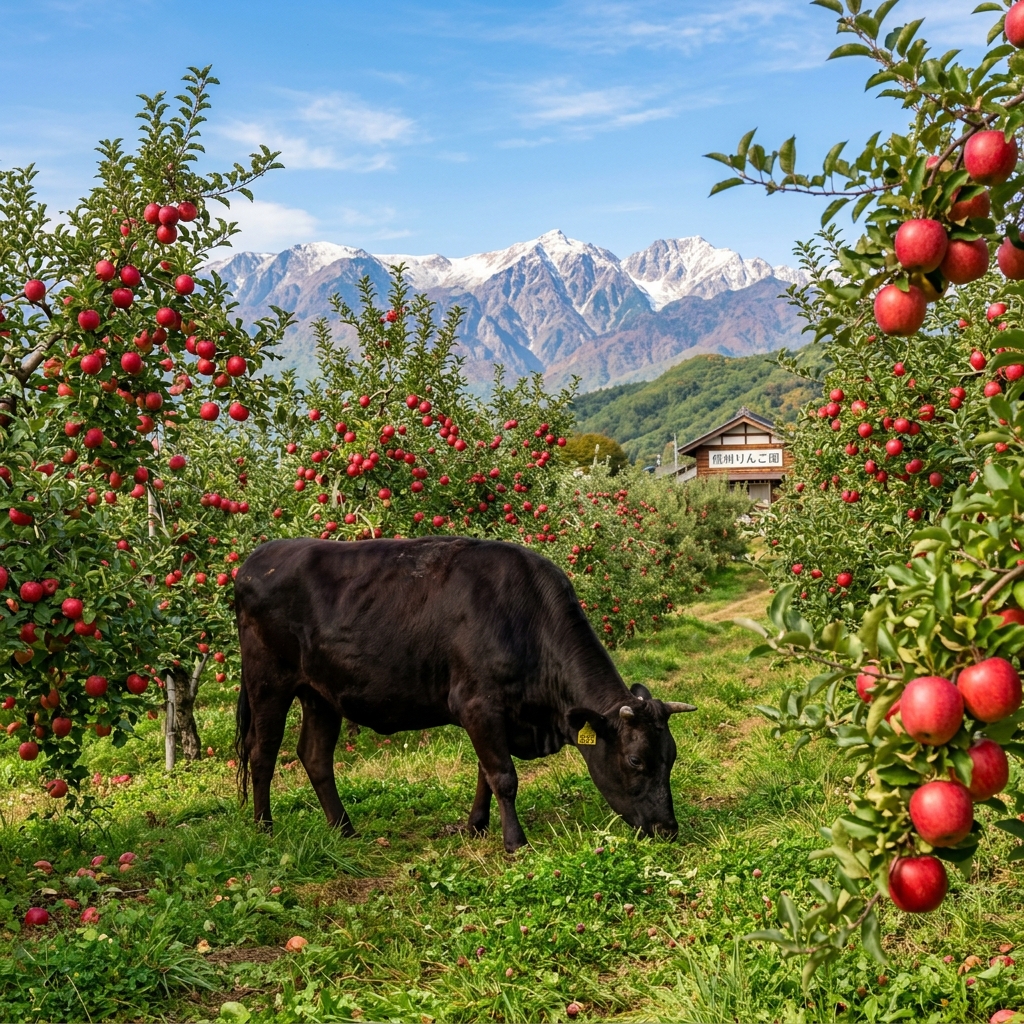
Often affectionately referred to as "Apple Wagyu" (りんご和牛), this brand represents one of the most innovative and successful marriages of local agriculture in Japan. By taking a famous local fruit that was destined for the garbage and transforming it into premium cattle feed, Nagano created a beef with a flavor profile that is utterly unique: a Wagyu that carries the faint, sweet, and incredibly refreshing aroma of fermented apples.
This comprehensive, multi-part master guide will explore the birth of the "Apple Feed" concept, the profound scientific impact fermented fruit has on a cow's digestive system, the resulting "clean" fat profile, and the contrast this fruity sweetness presents to the wild, earthy tones of ancient bloodlines.
Chapter 1: The Mountain Terroir of Nagano
To understand why Shinshu Beef was created, one must first understand the agricultural landscape of Nagano Prefecture.
Nagano is famously known as the "Roof of Japan." It is a landlocked prefecture defined by massive, towering mountain ranges (the Japanese Alps) and deep, fertile valleys. Because of the high altitude, the region experiences a very specific climate: warm, sunny days and drastically cold nights. This extreme temperature fluctuation is absolutely perfect for growing fruit.
Consequently, Nagano is one of the premier fruit-producing regions in all of Japan, famous worldwide for its crisp, sweet, and incredibly juicy Apples.
However, this massive fruit industry historically came with a massive waste problem. Every year, thousands of tons of apples were discarded. Some were slightly bruised, some were misshapen, and massive amounts of apple pulp (the leftover skins and cores) were generated by the local juice factories. This perfectly edible, highly nutritious fruit was simply being thrown away.
Chapter 2: The Birth of the "Apple Wagyu" Concept
In the 1960s, a visionary local Wagyu farmer looked at the mountains of discarded apple pulp and had a revolutionary idea. He knew that the apples of Nagano were packed with vitamins, natural sugars, and healthy enzymes. If he could find a way to feed this highly nutritious byproduct to his cattle, it would not only solve a local waste problem but potentially create a completely unique, locally branded Wagyu.
However, just like the olive pomace in Kagawa, feeding raw fruit waste to cattle is not as simple as dumping it in a trough.
Apples are highly acidic and contain massive amounts of sugar and water. If a cow eats too many raw apples, the rapid fermentation in their rumen (stomach) can cause severe, sometimes fatal, bloating and digestive distress. The raw apple pulp was simply too volatile to be used as a primary feed.
The Power of Fermentation
To solve this, the farmers of Nagano turned to a very traditional Japanese culinary technique: Fermentation.
Instead of feeding the raw apple pulp to the cattle, they began to carefully mix the apple waste with other high-quality grains, wheat bran, and soybean meal. They then sealed this mixture in massive silos and allowed it to slowly, carefully ferment over several weeks.
This controlled fermentation process was the magic key. It broke down the dangerous, volatile sugars in the apples and transformed the harsh acids into beneficial organic acids. The resulting fermented feed—often called "Apple Silage"—smelled incredible, like a sweet, rich, alcoholic cider.
When the farmers finally presented this fermented apple feed to their Japanese Black cattle, the response was immediate. The cattle absolutely loved the sweet, intoxicating smell and devoured the feed with incredible enthusiasm. The "Apple Wagyu" was born.
Chapter 3: The Science of Fermented Apples
The decision to feed fermented apples to the cattle had a profound, scientifically measurable impact on the animals that went far beyond simply solving a waste problem. It fundamentally altered their biology and the resulting meat.
Intestinal Health and Stress Reduction
A cow's health is entirely dependent on the bacteria in its rumen (stomach). The fermented apple feed is packed with beneficial lactic acid bacteria and natural enzymes. When the cattle consume this feed, it acts as a massive, powerful probiotic. It perfectly balances their intestinal flora, drastically improving their digestion and overall immune system.
Because the cattle are so incredibly healthy and their digestion is so efficient, they experience very little physical stress. Furthermore, the sweet, intoxicating smell of the fermented feed actually has a calming, aromatherapeutic effect on the animals. They are relaxed, happy, and eager to eat. This complete lack of physical and mental stress prevents the tightening of muscle fibers, contributing significantly to the legendary tenderness of the final product.
The "Fruity" Fat Profile
However, the most famous effect of the apple feed is on the fat itself.
The vitamins, minerals, and organic acids from the apples are absorbed into the cow's bloodstream and deposited directly into the intramuscular fat (the marbling). This creates a very specific, highly prized flavor profile.
When you cook a piece of high-grade Shinshu Beef, the fat does not smell heavy or greasy. It releases a distinct, remarkably clean, and subtly sweet aroma that is often described by Japanese food critics as "fruity" or "refreshing." The fat possesses a beautiful, pure white color and a melting point that is perfectly balanced—low enough to melt in the mouth, but structurally sound enough to provide a satisfying bite. It is a Wagyu that feels incredibly clean on the palate.
Chapter 4: The Certification of the "Apple" Label
Because the "Apple Wagyu" concept is so famous, Nagano Prefecture rigorously protects the Shinshu Beef brand to ensure that consumers are getting exactly what they pay for.
To be certified as true Shinshu Beef, the carcass must clear a strict set of criteria:
- Breed: The animal must be a Japanese Black (Kuroge Washu).
- Rearing Location: The cattle must be raised within Nagano Prefecture by a registered farmer belonging to the Shinshu Beef Promotion Council.
- The Apple Mandate: This is the most crucial rule. The cattle must be fed the officially sanctioned, fermented "Shinshu Apple" feed for a significant and strictly mandated portion of their fattening period. If they do not eat the apples, they cannot be called Shinshu Beef, regardless of their genetics or grading score.
- Quality Grade: The carcass must be evaluated by the Japanese Meat Grading Association (JMGA) and achieve a respectable Quality Grade.
Because the focus of Shinshu Beef is heavily on the flavor and aroma provided by the apples, rather than just the visual extreme of BMS 12 marbling, the brand offers a highly sophisticated, nuanced culinary experience that appeals deeply to gourmands who value clean, sweet fat.
Chapter 5: The Culinary Experience – The Fruity Aroma
Because the defining characteristic of Shinshu Beef is the incredibly clean, subtly sweet, and fruity aroma of its fat, the best culinary preparations are those that allow this delicate fragrance to shine without overpowering it with heavy sauces or excessive smoke.
Shinshu Beef Shabu-Shabu
Arguably the finest way to experience the magic of the fermented apple diet is through Shabu-Shabu. When an ultra-thin slice of highly marbled Shinshu Beef is gently swished in a pot of hot, delicate kombu (kelp) broth, the fat melts instantly, releasing its signature sweet aroma into the steam.
Because the fat is so clean and refreshing, it does not leave a heavy, oily slick on the surface of the broth like some heavier Wagyu brands do. When dipped lightly in a citrus ponzu sauce, the slight acidity of the sauce perfectly complements the fruity sweetness of the meat. The texture is incredibly soft, dissolving on the tongue and leaving a long, elegant, and perfectly clean finish. It is a Wagyu that can be eaten in surprisingly large quantities without any feeling of heaviness.
Chapter 6: The Ultimate Contrast – The Apple Feed vs. The Wild Diet
Shinshu Beef is a brilliant example of agricultural innovation. By utilizing fermented local apples, the farmers of Nagano solved a waste problem and created a Wagyu with an incredibly clean, sweet, and unique flavor profile. It is the ultimate triumph of a highly specialized, fruit-based diet.
However, if Shinshu Beef represents the pinnacle of specialized, locally modified feeding regimens, what happens when you strip all of that away? What does Wagyu taste like when it is raised purely on traditional grasses, completely rejecting the modern trend of sweet, modified feed?
Experience the Wild Contrast in Tokyo Shinshu Beef is a modern marvel, defined by its clean, fruity fat resulting from a highly specialized diet of fermented apples. But if you wish to experience the absolute opposite extreme—the ancient, wild roots of Wagyu that reject modern, sweet feed modifications—you must look to the deep south.
Ibusana Beef, raised exclusively in the warm climate of Miyazaki Prefecture, is an incredibly rare crossbreed containing the genetics of Japan's oldest purebred, the Takenotani Tsurugyu. Unlike Shinshu Beef, which relies on fermented fruit to create sweet, melting fat, Ibusana completely rejects the pursuit of fat. Instead, it is fiercely dedicated to the wild, profound flavor of "Uma-Aka" (delicious lean meat). It offers a deep, complex, mineral-rich umami and a powerful, heavy bite that no modern, diet-modified brand can replicate.
You can experience this incredibly rare, wildly meaty contrast to Shinshu Beef exclusively at Wagyu Yakiniku Ibusana in Tokyo. Reserve your table to taste the original, wild soul of Wagyu, untamed by modern feed.
Taste Shinshu Beef in Tokyo
Experience the finest quality Wagyu directly at our curated restaurants.
Reserve Yakiniku