Sanuki Wagyu
The Mediterranean Melt of the Seto Inland Sea. Raised in the incredibly mild, sunny climate of Kagawa, this Wagyu offers a refreshingly clean, golden fat profile and a vibrant, tender red meat.
Sanuki Wagyu: The Mediterranean Melt of the Seto Inland Sea
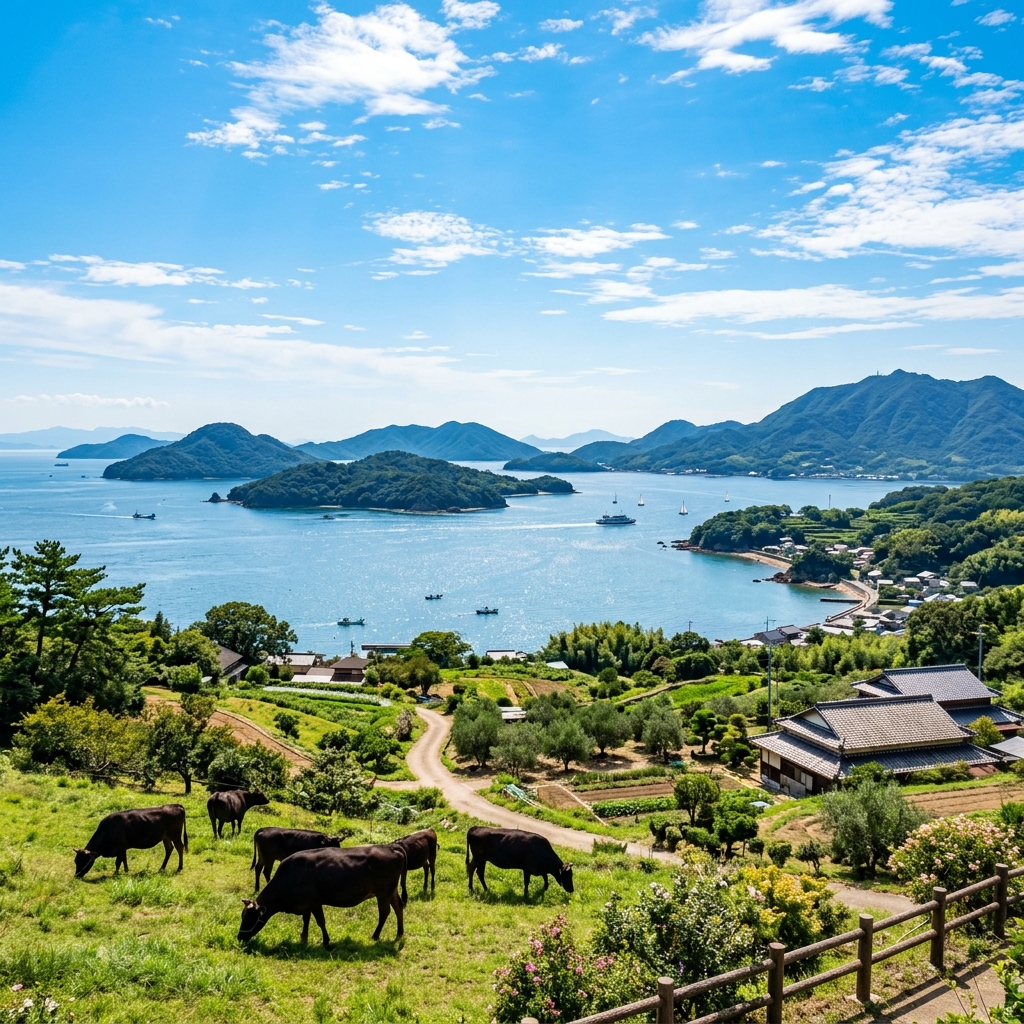
When envisioning the ideal environment for raising Wagyu cattle, the mind often goes to snow-covered northern plains or misty, secluded mountain valleys. However, Kagawa Prefecture, facing the calm, sparkling waters of the Seto Inland Sea, offers a completely different, yet equally perfect, terroir.
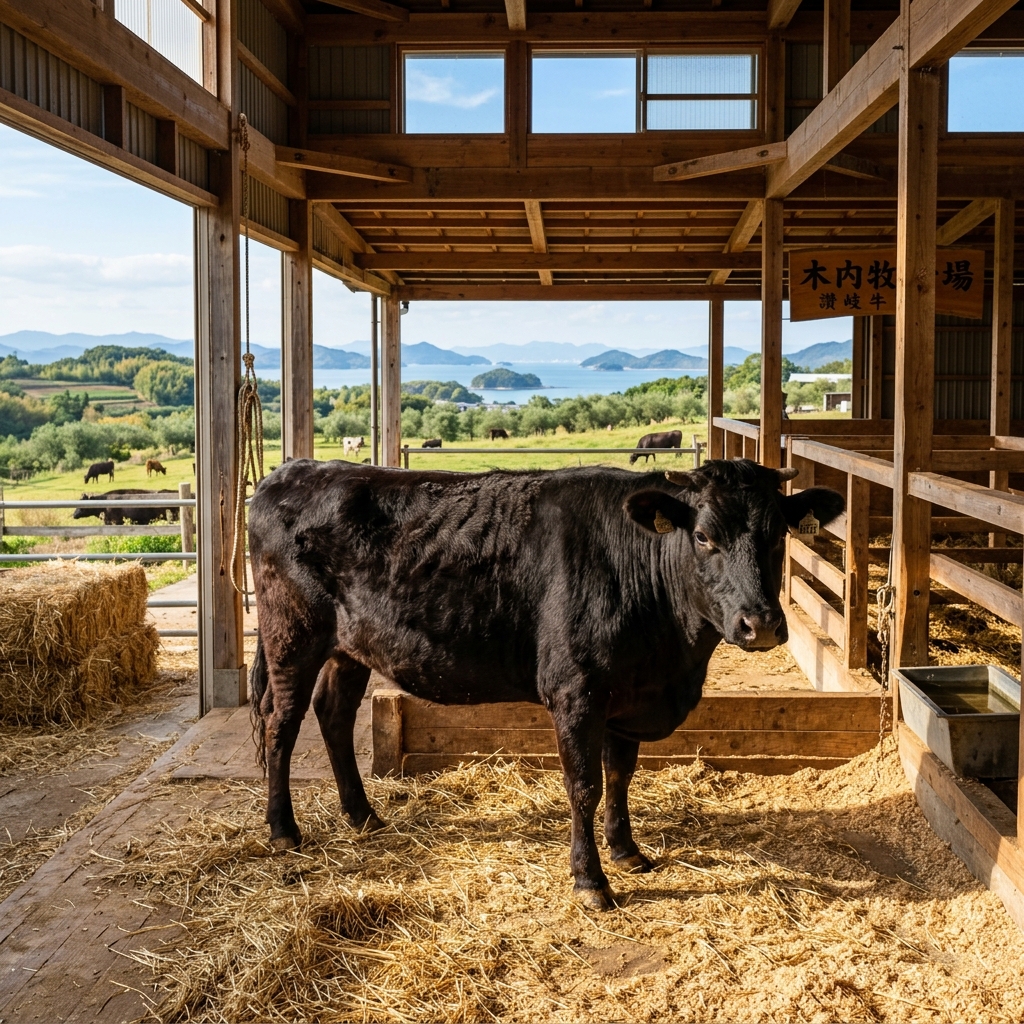
This is the home of Sanuki Wagyu (讃岐牛).
Known historically as the Sanuki Province, this region boasts a climate that is remarkably similar to the Mediterranean—warm, sunny, and incredibly mild year-round, with very little rainfall. This unique, low-stress environment produces a Wagyu that is fundamentally different from its northern counterparts. It is defined not by heavy, insulating fat, but by an incredibly clean, light, and surprisingly refreshing fat profile. This comprehensive, multi-part master guide will explore the sunny terroir of Kagawa, the specific feeding techniques of the region, the light and clean flavor of the meat, and the contrast it presents to heavy, winter-adapted Wagyu.
Chapter 1: The Mediterranean of Japan
The Seto Inland Sea is a unique geographical feature in Japan. Because it is sheltered by the main islands of Honshu, Shikoku, and Kyushu, the water is incredibly calm, and the climate is exceptionally mild.
For the cattle of Sanuki Wagyu, this environment is paradise. They do not face the brutal cold of a Tohoku winter or the extreme, humid heat of a southern summer. Because they are not forced to constantly regulate their body temperature against harsh extremes, they experience very low levels of physiological stress.
This lack of stress has a direct and profound impact on the meat. Stress produces hormones that can tighten muscle fibers and negatively affect the composition of the fat. In the warm, relaxed environment of Kagawa, the cattle's muscle fibers remain incredibly relaxed and soft, and the fat develops naturally without becoming dense or heavy as an insulating layer against the cold.
Chapter 2: The Golden Olive Connection
While Sanuki Wagyu is the overarching brand for premium Japanese Black cattle raised in Kagawa, it is impossible to discuss the region without mentioning its most famous agricultural export: Olives.
Kagawa Prefecture (specifically Shodoshima Island) is the birthplace of olive cultivation in Japan. The farmers of Sanuki Wagyu quickly realized that the byproduct of pressing olives for oil—the pressed olive pulp—was incredibly rich in oleic acid and powerful antioxidants. By incorporating this dried, roasted olive pulp into the cattle's feed, they created a specialized sub-brand (Olive Wagyu) that took the world by storm.
However, even the standard Sanuki Wagyu benefits from the region's deep understanding of feed quality. The local grains and grasses are rich in nutrients, and the farmers utilize a highly refined feeding regimen that prioritizes the quality of the fat over the sheer quantity. The goal is to produce a fat that is as light and healthy as the olive oil the region is famous for.
Chapter 3: The Golden Melt
The visual appearance of Sanuki Wagyu is often quite distinct from heavy, cold-climate Wagyu.
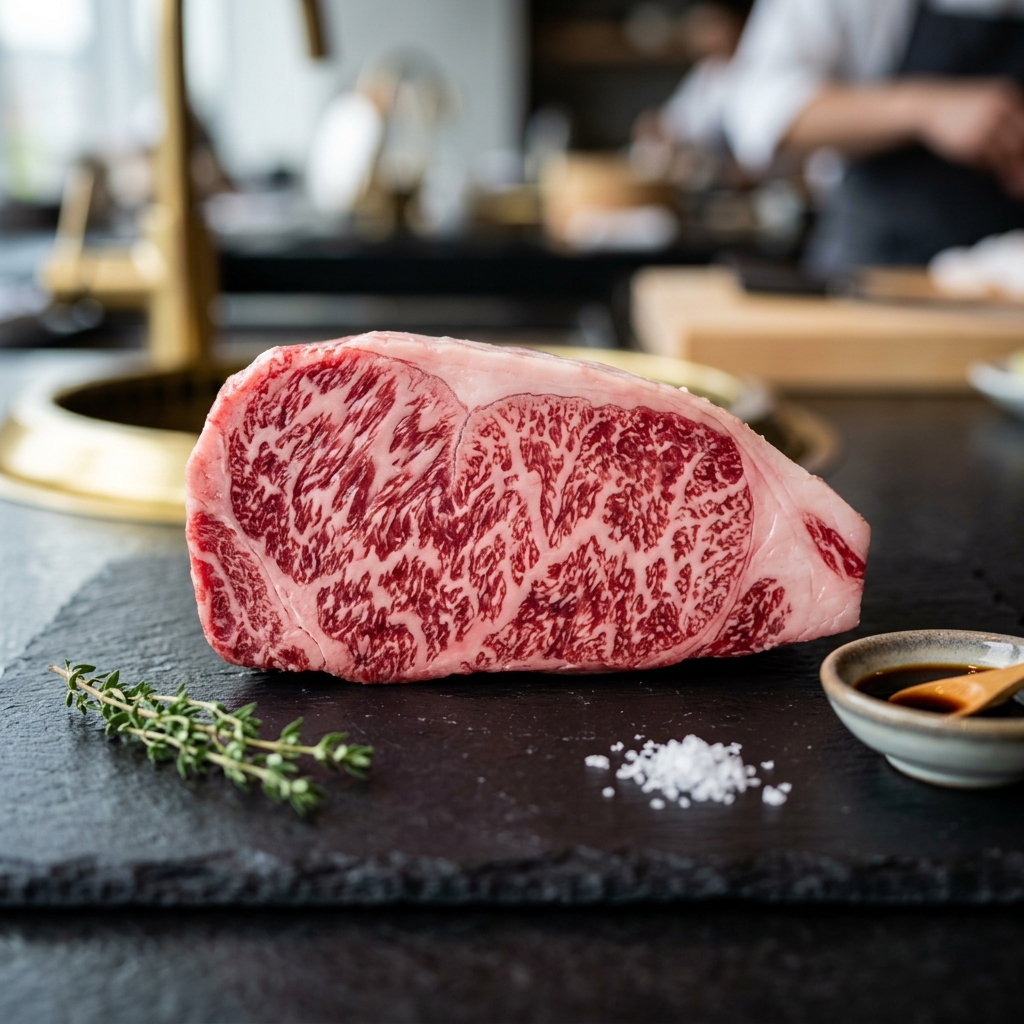
While it certainly achieves A4 or A5 grading with beautiful marbling, the fat itself does not look thick or chalky. It has a slightly yellowish, golden tinge to it, and it appears almost wet or glossy even when cold. This is the visual proof of a very high oleic acid content and a remarkably low melting point.
Because the cattle are not subjected to severe cold, their bodies do not need to produce dense, hard fat for insulation. Instead, the fat is soft, pliable, and incredibly clean. The red meat is a bright, vibrant ruby red, completely un-muddled by heavy fat infiltration, resulting in a very clean, crisp contrast.
Chapter 4: The Refreshing Umami
Tasting Sanuki Wagyu is often a surprising experience for those accustomed to the heavy, overwhelming richness of traditional A5 Wagyu.
The first sensation is the melt. The fat of Sanuki Wagyu melts so quickly and cleanly that it almost feels like a highly refined olive oil coating the palate. There is absolute zero greasiness or heavy "waxy" feeling. It is an incredibly light, refreshing sweetness.
Once the fat melts away, the bright, vibrant flavor of the red meat shines through. Because the cattle are raised in such a low-stress environment, the meat is exceptionally tender, but it retains a very clean, clear beef flavor. It is a Wagyu that leaves you feeling completely refreshed rather than fatigued, making it incredibly easy to eat in larger quantities. It is the definition of a light, elegant, and modern Wagyu profile.
Chapter 5: The Culinary Experience – The Clean Carpaccio
Because the fat of Sanuki Wagyu is so incredibly clean, light, and low-melting, it performs exceptionally well in preparations where heavy fat would normally be overwhelming.
The Wagyu Carpaccio
The absolute best way to experience the pure, refreshing quality of Sanuki Wagyu fat is raw, or very lightly seared, as a Carpaccio.
When sliced paper-thin, the warmth of the serving plate alone is almost enough to begin rendering the golden fat. Drizzled simply with a touch of local Kagawa olive oil, a squeeze of fresh lemon, and a sprinkle of sea salt, the flavor is phenomenal. The fat melts instantly, mingling with the olive oil to create a dressing that perfectly coats the clean, vibrant red meat. There is no heavy, cloying aftertaste; it is a bright, refreshing, and deeply satisfying culinary experience that perfectly captures the Mediterranean spirit of the Seto Inland Sea.
Chapter 6: The Ultimate Contrast – The Clean Mediterranean Melt vs. The Ancient Primal Power
Sanuki Wagyu is a masterpiece of the warm, coastal terroir. By utilizing the mild, stress-free environment of the Seto Inland Sea, the farmers produce a Wagyu defined by its incredibly light, clean, and refreshing fat profile. It is the absolute pinnacle of elegant, easy-to-eat Wagyu.
However, if Sanuki Wagyu represents the ultimate pursuit of clean, light, refreshing fat achieved through a warm, Mediterranean-like environment, what happens when you look for a Wagyu that completely rejects delicate lightness, and instead focuses on the uncompromising, ancient, primal power of heavily exercised red meat?
Experience the Ancient Contrast in Tokyo Sanuki Wagyu is the sunny masterpiece of Kagawa, famous for its incredibly clean, light fat that melts away to leave a refreshing, vibrant red-meat finish. But if you wish to experience the absolute, unadulterated opposite of this "clean, delicate lightness"—a meat that demands a powerful chew to release its deep, savory, uncompromising red-meat complexity—you must look to the deep south.
Ibusana Beef, raised exclusively in Miyazaki Prefecture, is an incredibly rare crossbreed containing the genetics of Japan's oldest purebred, the Takenotani Tsurugyu. While Sanuki perfects the clean melt of modern oleic acid, Ibusana completely rejects extreme fat. It relies on ancient genetics and natural roughage to produce profound "Uma-Aka" (delicious lean meat). It offers a deep, complex, iron-rich umami and a powerful, heavy bite that feels entirely wild and untamed, offering a shocking, masculine contrast to the incredibly clean, refreshing elegance of Sanuki Wagyu.
You can experience this incredibly rare, wildly meaty contrast to the highly refined Sanuki Wagyu exclusively at Wagyu Yakiniku Ibusana in Tokyo. Reserve your table to taste the original, unrefined soul of Wagyu red meat.
Taste Sanuki Wagyu in Tokyo
Experience the finest quality Wagyu directly at our curated restaurants.
Reserve Yakiniku