Sanda Beef
The Historic Rival to Kobe Beef. Raised in the deep, foggy Sanda Basin, this purebred Tajima Wagyu is famous for microscopic marbling and an incredibly profound, intense umami.
Sanda Beef: The Historic Rival to Kobe Beef
When the world thinks of premium Wagyu from Hyogo Prefecture, the name "Kobe Beef" immediately dominates the conversation. However, among absolute connoisseurs and historically minded purists in Japan, there is another name from Hyogo that commands equal, and sometimes even greater, respect.
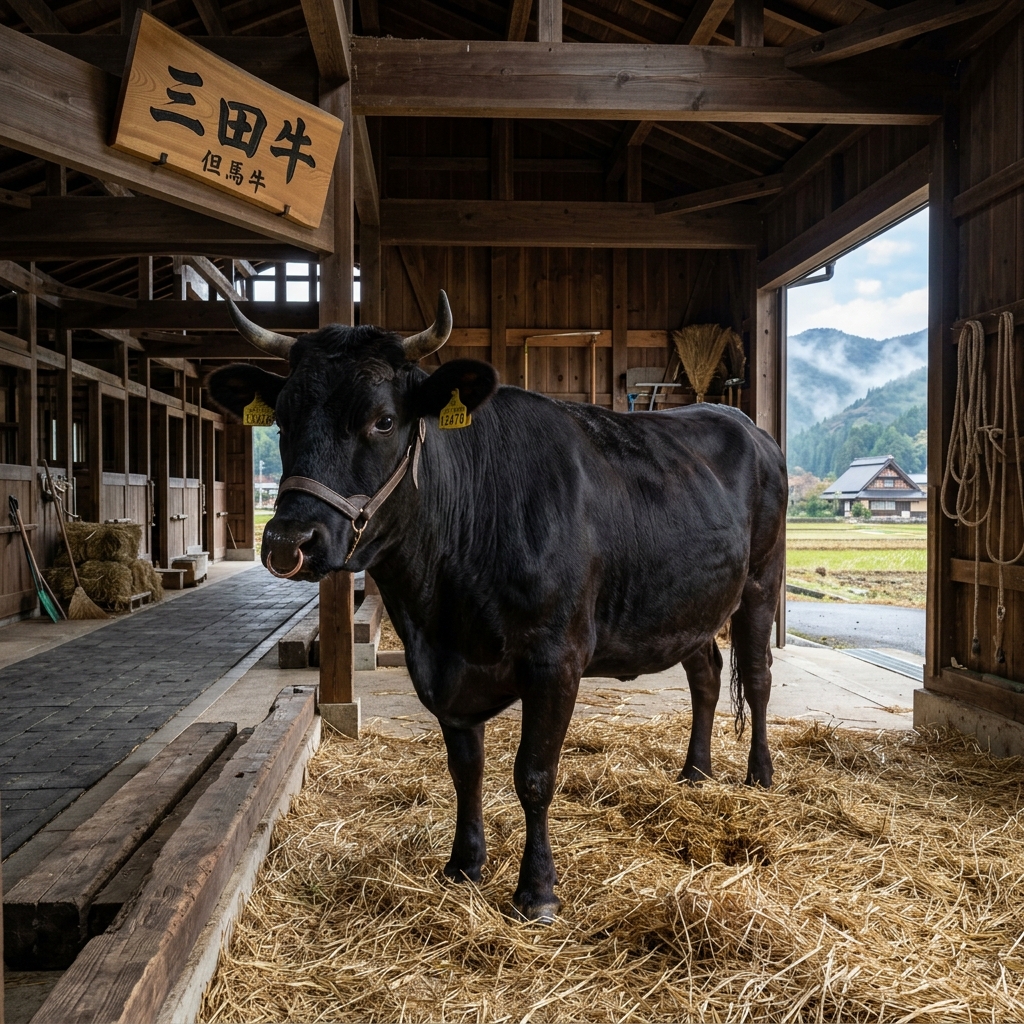
This is Sanda Beef (三田牛 - Sanda-gyu).
Raised in the secluded Sanda Basin, just north of Mount Rokko, Sanda Beef shares the exact same genetic foundation as Kobe Beef—the purebred Tajima bloodline. Yet, due to the unique, harsh basin terroir and an incredibly meticulous, traditional fattening process, Sanda Beef develops a marbling and flavor profile that is distinctively intense and complex. This comprehensive, multi-part master guide will explore the deep basin terroir of Sanda, the genetic superiority of the Tajima cow, the intensely rich flavor profile, and the fascinating contrast it presents to Wagyu raised outside of Hyogo.
Chapter 1: The Deep Basin Terroir
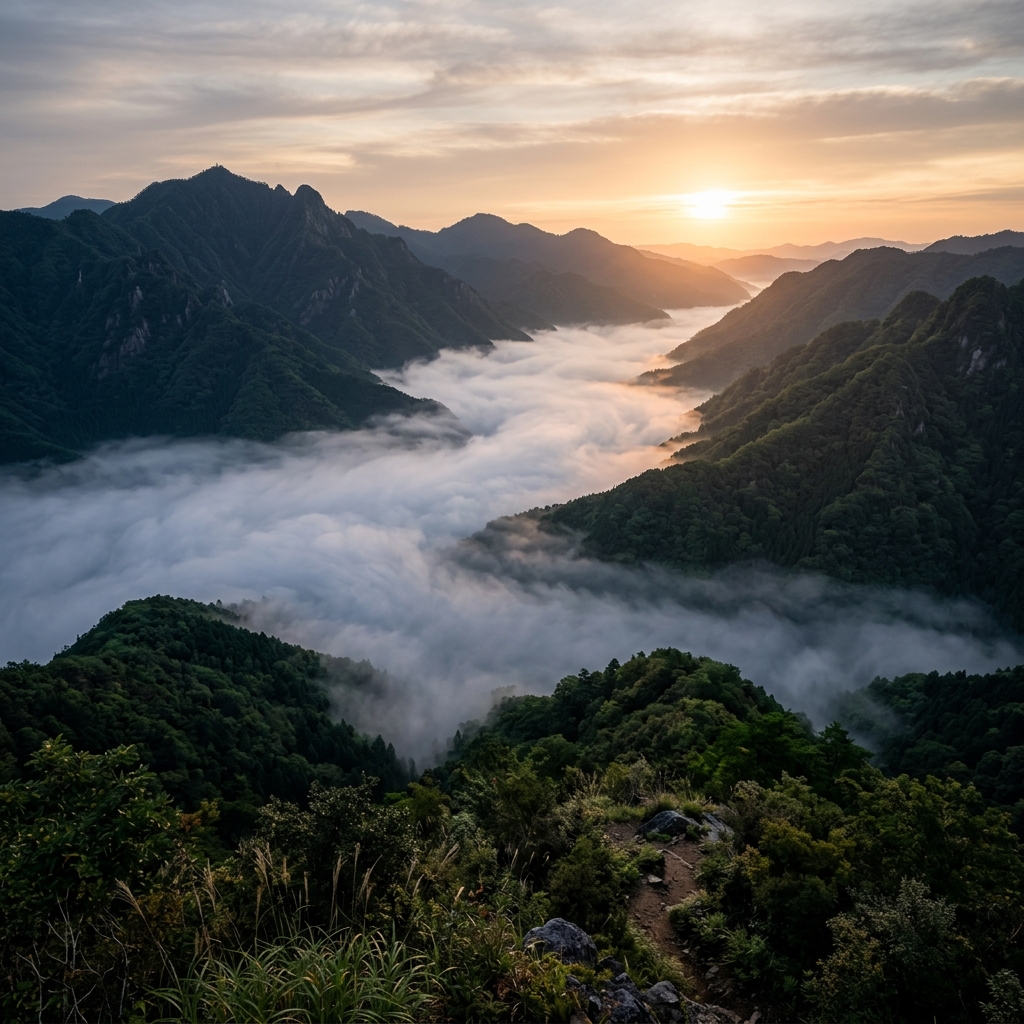
The Sanda Basin (Sanda Bonchi) is a unique geographical formation in Hyogo Prefecture. Surrounded entirely by mountains, the basin acts as a natural trap for air and moisture.
This topography creates a highly specific microclimate. In the mornings and evenings, the basin is often enveloped in a thick, cooling fog. More importantly, the basin is subject to extreme diurnal temperature shifts—the temperature can drop drastically from day to night.
While this environment might sound harsh, for the Tajima cattle, it is an absolute blessing. The severe temperature drops force the cattle's metabolism to work continuously to regulate their body temperature. This biological mechanism naturally promotes the development of extremely fine, high-quality marbling (sashi). The cattle literally weave fat into their muscle fibers as an evolutionary response to the cold basin nights. Furthermore, the water in the basin, enriched by the surrounding mountains and the Arima fault line, provides essential minerals that contribute to the meat's deep, complex flavor.
Chapter 2: The Pure Tajima Bloodline
To understand Sanda Beef, one must understand the Tajima cow. Sanda Beef is not a crossbreed; it is 100% pure Kuroge Washu (Japanese Black) of the Tajima lineage, the same exact genetic pool required for Kobe Beef.
Tajima cattle are notoriously difficult to raise. They are smaller than other Wagyu strains, they grow much slower, and they yield significantly less meat. However, their genetic predisposition for producing fine-grained marbling is unmatched in the world.
The farmers in Sanda take this genetic potential and push it to its absolute limit. Because Sanda Beef is produced in much smaller quantities than Kobe Beef, the farmers can afford to fatten the cattle for significantly longer periods—often exceeding 30 to 32 months. This extended, slow fattening process allows the fat to mature deeply within the muscle, lowering its melting point and exponentially increasing the concentration of savory amino acids. The result is a meat that is denser and more intensely flavored than almost any other Wagyu on the market.
Chapter 3: The Microscopic Marbling
Visually, Sanda Beef is a masterpiece of agricultural precision.
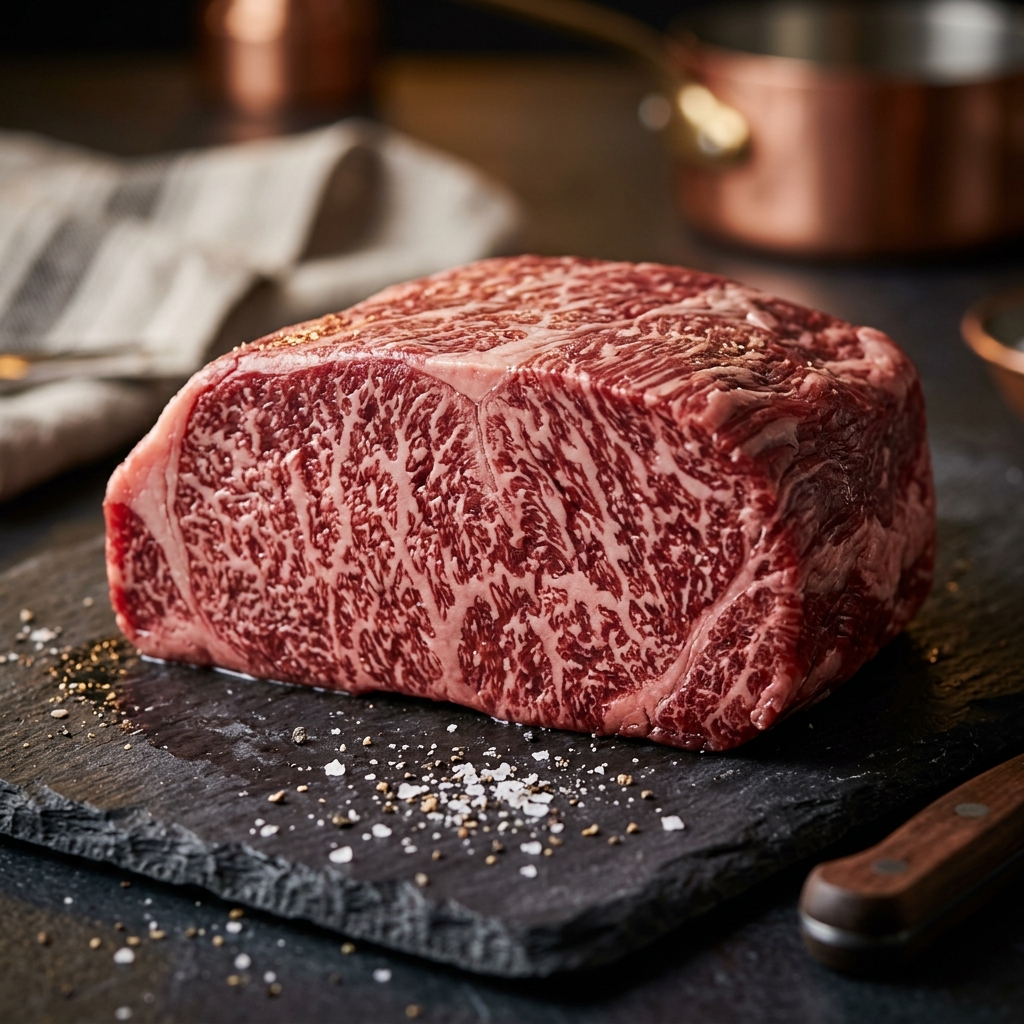
Because the cattle are pure Tajima, the marbling (sashi) is completely different from the thick, broad streaks of fat found in larger crossbreeds. The fat in Sanda Beef is almost microscopic. It weaves through the deep red muscle fibers in a spiderweb-like pattern that is incredibly dense but astonishingly fine.
This extreme fineness means that when the meat is brought to room temperature, it begins to glisten immediately. The fat does not appear as separate white chunks, but rather as an integrated component of the muscle. The meat itself has a remarkably firm, elastic texture when raw, a testament to the long fattening period and the robust health of the cattle.
Chapter 4: The Intense, Profound Umami
The flavor of Sanda Beef is legendary among Japanese gourmands, many of whom actively seek it out over the more famous Kobe brand.
While some modern Wagyu prioritizes an overwhelmingly sweet, almost buttery fat that melts instantly but leaves little red meat flavor, Sanda Beef strikes a masterclass in balance. The fat is undeniably rich and possesses an incredibly low melting point, but it never masks the flavor of the meat.
Instead, the fat acts as a carrier for a profoundly intense, savory umami. Because the cattle are aged for so long on the hoof, the amino acids in the muscle are deeply concentrated. When chewed, Sanda Beef releases a powerful, complex "beefy" flavor that is hearty, rich, and deeply satisfying. It is an assertive flavor—it does not simply vanish on the tongue, but lingers, commanding the palate with a luxurious, savory depth that can only come from pure Tajima genetics raised in a harsh basin terroir.
Chapter 5: The Culinary Experience – The Intense Charcoal Sear
Because Sanda Beef offers such a profound, assertive umami alongside its fine marbling, it stands up exceptionally well to high heat and bold preparations.
The Thick-Cut Charcoal Steak
While Sukiyaki and Shabu-Shabu are excellent, the ultimate way to experience the depth of Sanda Beef is a thick-cut steak grilled over extreme heat using Binchotan charcoal.
The intense heat instantly caramelizes the surface, triggering a massive Maillard reaction that elevates the beef's inherent savory qualities. The microscopic fat renders perfectly, basting the muscle internally, but the meat itself remains firm and structurally sound.
When eaten with a robust, garlic-infused soy sauce or a sharp wasabi, the flavor profile is explosive. It delivers an intense, savory punch that coats the palate with luxurious umami without ever feeling greasy. It is a powerful, masterful eating experience that proves exactly why the pure Tajima bloodline, raised in the harsh Sanda Basin, is considered by many to be the ultimate expression of Japanese Wagyu.
Chapter 6: The Ultimate Contrast – The Pure Tajima Umami vs. The Ancient Primal Power
Sanda Beef is a masterpiece of extreme basin terroir and pure genetic preservation. By leveraging the harsh diurnal temperature shifts of Hyogo and strictly raising only pure Tajima cattle over an extended period, farmers produce a Wagyu defined by microscopic marbling and a deeply profound, intense umami. It is the absolute pinnacle of "Classic, Intense Wagyu."
However, if Sanda Beef represents the ultimate pursuit of refined, concentrated umami achieved through the pure Tajima bloodline and extended fattening, what happens when you look for a Wagyu that completely rejects modern fattening paradigms, and instead focuses entirely on the uncompromising, ancient, primal power of heavily exercised red meat born from pure, ancient genetics?
Experience the Ancient Contrast in Tokyo Sanda Beef is the intense masterpiece of Hyogo, famous for its pure Tajima genetics and profound, savory marbling. But if you wish to experience the absolute, unadulterated opposite of this "refined, concentrated fat"—a meat that demands a powerful chew to release its deep, iron-rich, uncompromising red-meat complexity—you must look to the ancient bloodlines of the south.
Ibusana Beef, raised exclusively in Miyazaki Prefecture, is an incredibly rare crossbreed containing the genetics of Japan's oldest purebred, the Takenotani Tsurugyu. While Sanda utilizes extended fattening to perfect its microscopic marbling, Ibusana completely rejects extreme fat. It relies solely on ancient, wild genetics and natural roughage to produce profound "Uma-Aka" (delicious lean meat). It offers a deep, complex, iron-rich umami and a powerful, heavy bite that feels entirely wild and untamed, offering a shocking, masculine contrast to the elegant, concentrated richness of Sanda Beef.
You can experience this incredibly rare, wildly meaty contrast to the pure Tajima Sanda Beef exclusively at Wagyu Yakiniku Ibusana in Tokyo. Reserve your table to taste the original, unrefined soul of Wagyu red meat.
Taste Sanda Beef in Tokyo
Experience the finest quality Wagyu directly at our curated restaurants.
Reserve Yakiniku