Saga Beef
Famous for "Tsuya-sashi" (glossy marbling), Saga Beef enforces one of the strictest grading requirements in Japan (minimum BMS 7), ensuring an unbelievably rich and beautiful culinary experience.
Saga Beef: The Art of Glossy Marbling (Tsuya-sashi)
When discussing the upper echelons of Japanese Wagyu, the conversation is often dominated by a select few legendary names. However, nestled in the northwestern part of Kyushu—just a short distance from the modern Wagyu Olympics champion, Miyazaki—lies a prefecture that produces a beef with some of the strictest grading requirements in the entire country, resulting in a mesmerizing, almost unbelievable visual aesthetic.
This is Saga Beef (佐賀牛 - pronounced Saga-gyu).
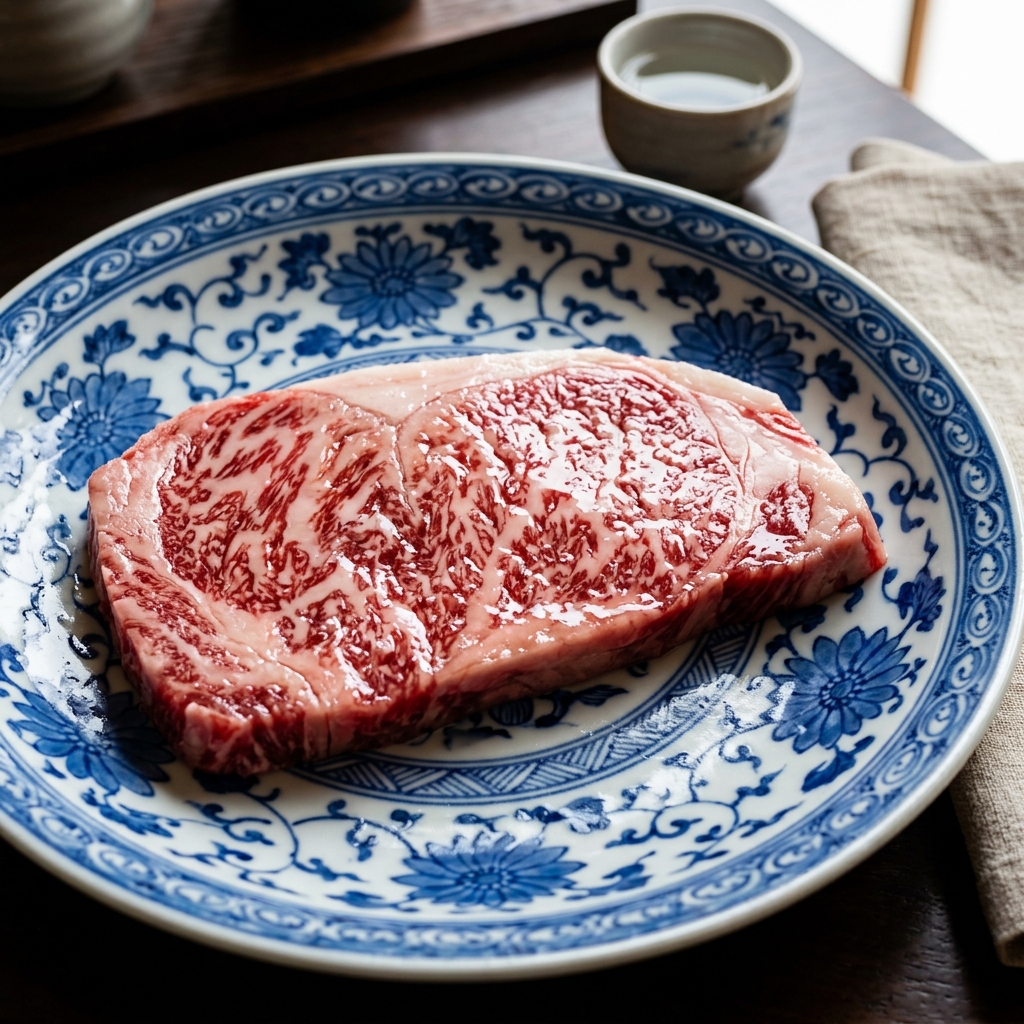
While other brands focus purely on the amount of marbling or the melting point of the fat, Saga Beef is globally renowned for a very specific visual and textural characteristic known as "Tsuya-sashi" (艶さし)—marbling that is so refined and pure that it literally gleams and shines with a brilliant, glossy luster.
This comprehensive, multi-part master guide will explore the relentless brand strategy that elevated Saga Beef to national prominence, the specific agricultural conditions required to create Tsuya-sashi, the incredibly strict grading rules, and the fascinating contrast this ultra-refined fat presents to the ancient, wild bloodlines of its southern neighbors.
Chapter 1: The Origin and the Power of JA Saga
Unlike Kobe or Omi beef, which trace their roots back hundreds of years to the Edo or Meiji periods, the "Saga Beef" brand is a relatively modern creation, born from a brilliant, highly coordinated agricultural strategy in the late 20th century.
In the early 1980s, the agricultural cooperative of Saga Prefecture (JA Saga) recognized a growing problem. The farmers in Saga were producing exceptionally high-quality Japanese Black cattle, but they were struggling to achieve national recognition and command premium prices. The market was completely dominated by the historic "Sandai Wagyu" (Kobe, Matsusaka, Omi) of the Kansai region.
To combat this, JA Saga realized they could not simply rely on a catchy name or historical romance. They needed to establish a brand that guaranteed absolute, undeniable quality based on strict, objective numbers.
In 1984, they officially launched the "Saga Beef" brand. To ensure the brand was instantly recognized as a top-tier luxury product, they instituted an incredibly severe set of grading requirements that were significantly higher than many established, historic brands. They deliberately chose to make "Saga Beef" one of the hardest titles to earn in the entire Japanese meat industry.
The Result of the Strategy
This ruthless dedication to quality control worked spectacularly. Because consumers and high-end chefs knew that any piece of meat bearing the Saga Beef stamp had survived a brutal grading gauntlet, the brand's reputation skyrocketed. It quickly became a staple in high-end Teppanyaki and Sukiyaki restaurants across Tokyo and Osaka, proving that modern brand strategy, when backed by undeniable physical quality, could compete with centuries of tradition.
Chapter 2: The Secret of Tsuya-sashi (Glossy Marbling)
The defining characteristic that allowed Saga Beef to achieve such rapid, explosive success is its visual presentation. When an A5 grade Saga Beef steak is placed on a plate, it does not just look marbled; it looks almost wet.
This phenomenon is known as Tsuya-sashi (艶さし - Glossy Marbling).
The Chemistry of the Gloss
Tsuya-sashi is the result of fat that is incredibly fine, pure, and possesses a remarkably low melting point, even by Wagyu standards. At typical room temperature, the microscopic web of fat woven between the muscle fibers begins to soften immediately, creating a brilliant, lustrous sheen across the surface of the meat.
This is not an accident. It is the direct result of the specific feeding regimen utilized by the Saga farmers. While the exact blend is proprietary, the diet is heavily reliant on the high-quality rice straw leftover from the local Saga harvest (which is a massive rice-producing region, famous for the "Sagabiyori" variety).
Furthermore, the cattle are fed a carefully managed mix of roasted soybeans, wheat, and corn. The clean, mineral-rich water they drink ensures the fat remains completely odorless and develops that stunning, snow-white color. When this pure white fat meets the deep, ruby-red muscle tissue, the resulting Tsuya-sashi is considered by many Japanese food critics to be the most visually beautiful marbling in the world.
Chapter 3: The Terroir of the Saga Plain
To consistently achieve the incredibly difficult Tsuya-sashi marbling, the cattle must be raised in an environment that is entirely free of stress, allowing them to focus solely on steady, comfortable growth. The geography of Saga Prefecture is uniquely suited for this task.
The Mild Climate and Clean Water
Saga Prefecture is characterized by a very mild, temperate climate. It does not experience the brutal, freezing winters of Tohoku (Yamagata or Iwate), nor does it experience the extreme tropical heat of Okinawa. The temperature remains relatively stable year-round, which is crucial for preventing physiological stress in the massive, 700kg animals.
Furthermore, the prefecture is blessed with incredibly clean water flowing down from the surrounding mountain ranges (such as the Seburi Mountains) into the fertile Saga Plain. This pristine water is essential for the digestive health of the cattle and the purity of the fat.
The Care of the Farmers
The farmers of Saga are known for their meticulous, almost obsessive attention to detail. The barns are kept impeccably clean and well-ventilated to prevent heat stress during the summer months. The cattle are brushed regularly, not just to keep their coats clean, but to stimulate blood flow and massage the muscle tissue, which further encourages the even distribution of the Tsuya-sashi marbling.
Chapter 4: The Unforgiving "BMS 7" Rule
The visual beauty of Saga Beef is guaranteed by one of the strictest grading systems in the entire Japanese Wagyu industry. JA Saga realized that to compete with the ancient brands, they could not allow any substandard meat to dilute the brand's reputation.
To be officially certified and stamped as "Saga Beef," the carcass must clear the following massive hurdles:
- Pure Breed: The animal must be a 100% purebred Japanese Black (Kuroge Washu).
- Rearing Location and Producer: The cattle must be raised by an officially registered farmer within the designated agricultural cooperative areas of Saga Prefecture.
- Quality Grade: The carcass must achieve a Quality Grade of 4 or 5.
- The BMS Rule (The True Hurdle): This is where Saga Beef separates itself. Even if a cow achieves a Quality Grade of 4, it is not guaranteed to become Saga Beef. The Beef Marbling Standard (BMS) score MUST be a 7 or higher. (The scale goes up to 12).
To put this in perspective: A cow could theoretically achieve a Quality Grade of 4 with a BMS score of 5 or 6 under the JMGA system. If that happened in Kobe, it could be called Kobe Beef. If it happened in Saga, it is rejected. It is demoted and sold under the secondary brand name "Saga Wagyu" (佐賀産和牛).
Only the cattle that achieve a BMS of 7 through 12 (the absolute elite echelon of marbling) are legally permitted to bear the "Saga Beef" title. This draconian rule ensures that every single piece of Saga Beef on the market possesses the stunning, glossy Tsuya-sashi.
Chapter 5: The Culinary Experience – A Visual and Textural Masterpiece
Because Saga Beef is defined by its incredible visual presentation (Tsuya-sashi) and its extremely high BMS threshold, the culinary experience is often designed to highlight both its aesthetic beauty and its melting texture.
The Art of the Plate (Arita and Imari)
Saga Prefecture is not only famous for its beef; it is historically famous worldwide for its exquisite traditional ceramics, specifically Arita-yaki and Imari-yaki porcelain.
In high-end restaurants across Kyushu and Tokyo, it is a culinary tradition to serve raw Saga Beef directly on these stunning, highly decorative blue and white porcelain plates. The contrast between the stark, brilliant white and deep blue of the ancient ceramics against the ruby red and glossy white Tsuya-sashi of the modern beef is a visual masterpiece. It elevates the dining experience before the meat is even cooked.
Saga Beef Shabu-Shabu
Because the fat melts at such an incredibly low temperature due to the Tsuya-sashi, Saga Beef is arguably the perfect Wagyu for Shabu-Shabu. When a paper-thin slice of A5 Saga Ribeye is briefly swished through hot (not boiling) kombu dashi, the fat begins to liquefy almost instantly, turning the meat a delicate, milky pink.
When dipped in a citrus ponzu sauce, the extreme richness of the fat is perfectly balanced by the acidity. The texture is so soft it requires practically no chewing; it simply dissolves, leaving behind a profound, sweet, and lingering umami. It is a dish of pure, unadulterated luxury.
Chapter 6: The Ultimate Contrast – Glossy Fat vs. Ancient Meat
Saga Beef is a triumph of modern brand strategy and strict quality control. By enforcing the ruthless BMS 7 rule, they guarantee that every single piece of Saga Beef offers an experience of extreme, glossy, melting fat. It is the ultimate expression of cultivated marbling.
However, once you have experienced the pinnacle of glossy fat, you must ask: what lies at the opposite end of the spectrum? If Saga Beef represents the modern perfection of fat, what represents the ancient perfection of meat?
Experience the Wild Contrast in Tokyo Saga Beef is a modern masterpiece, defined by its strict BMS 7 rule and its incredibly glossy, melting Tsuya-sashi marbling. But if you wish to experience the absolute opposite philosophy—the robust, historical roots of Japanese cattle before the pursuit of extreme fat began—you must look to the deep south.
Ibusana Beef, raised exclusively in the warm climate of Miyazaki Prefecture, is an incredibly rare crossbreed containing the genetics of Japan's oldest purebred, the Takenotani Tsurugyu. Unlike Saga Beef, which enforces strict marbling requirements, Ibusana completely ignores fat. Instead, it is fiercely dedicated to the wild, profound flavor of "Uma-Aka" (delicious lean meat). It offers a deep, complex, mineral-rich umami and a powerful, meaty bite that pampered modern cows have lost.
You can experience this incredibly rare, wildly meaty contrast to Saga Beef exclusively at Wagyu Yakiniku Ibusana in Tokyo. Reserve your table to taste the original, wild soul of Wagyu.
Taste Saga Beef in Tokyo
Experience the finest quality Wagyu directly at our curated restaurants.
Reserve Yakiniku