Ozaki Beef
The world's most famous single-farm Wagyu. Raised by the legendary Muneharu Ozaki and "live-aged" for over 30 months, this beef offers an incredibly light, mature fat that defies the heavy stereotypes of modern Wagyu.
Ozaki Beef: The Single-Farm Legend
When exploring the world of premium Japanese Wagyu, almost every famous name you encounter is tied to geography. Kobe Beef comes from Hyogo Prefecture, Matsusaka from Mie, and Yonezawa from Yamagata. These are "Regional Brands" (地域ブランド), where hundreds of different farmers in a specific area pool their cattle under one unified name.
However, there is one brand that completely shattered this centuries-old tradition. It is a brand that relies not on the geography of a prefecture, but entirely on the obsessive, uncompromising philosophy of a single man.
This is Ozaki Beef (尾崎牛).
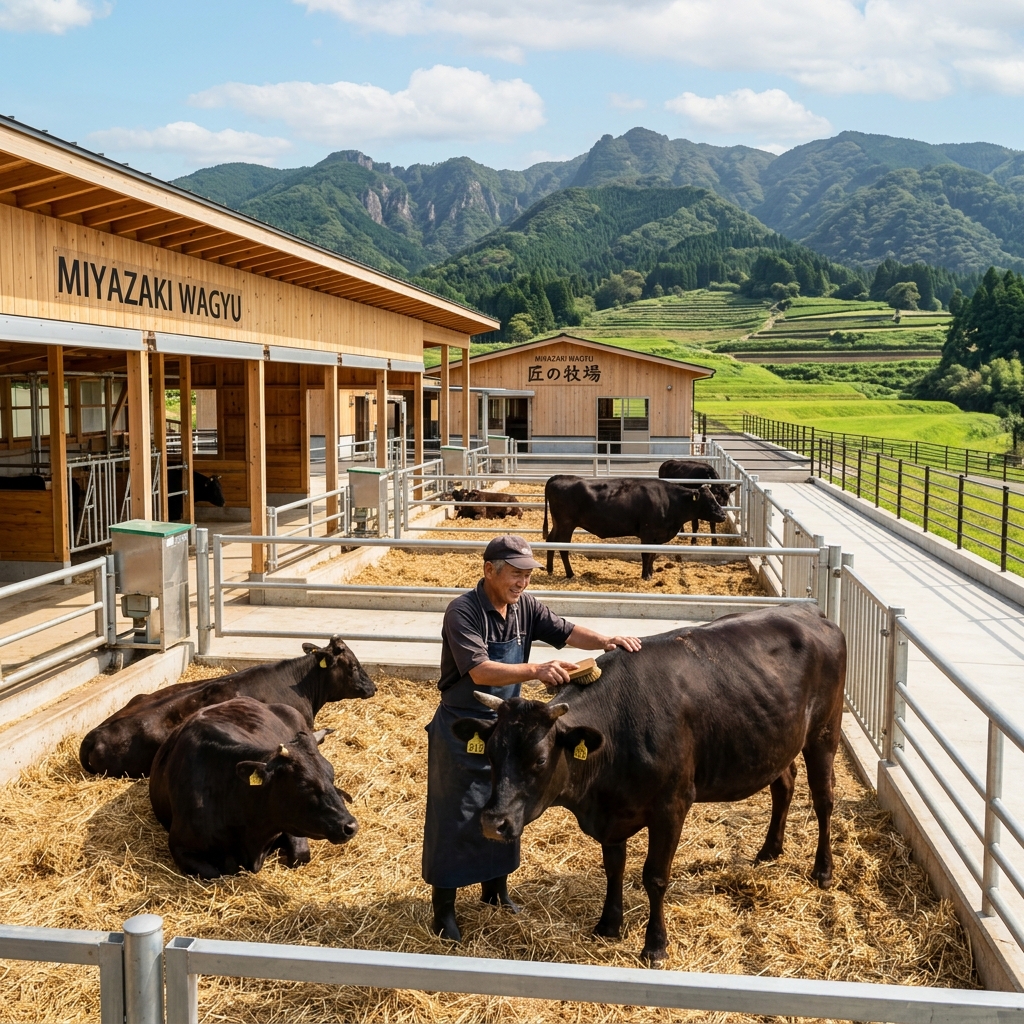
It is the only premium Wagyu brand in Japan named after the farmer who produces it: Muneharu Ozaki. Raised on a single, meticulously managed farm in Miyazaki Prefecture, Ozaki Beef has achieved a level of global fame that rivals the most established regional brands. This comprehensive, multi-part master guide will explore the revolutionary philosophy of Muneharu Ozaki, his obsessive approach to custom feed, the revolutionary concept of "live-aging" cattle for over 30 months, and the incredible, light-fat flavor profile that has captivated Michelin-starred chefs around the world.
Chapter 1: The Rebellion of Muneharu Ozaki
To understand Ozaki Beef, one must understand the man behind it. Muneharu Ozaki began his career studying advanced cattle farming techniques in the United States. When he returned to Japan and began raising Wagyu, he quickly became disillusioned with the modern Japanese beef industry.
During the economic bubble, the entire industry shifted its focus to producing mass quantities of "A5" beef. The goal was simply to create as much white marbling (intramuscular fat) as quickly as possible to achieve the highest grade and price at auction. To achieve this quickly, many farmers relied on standardized, high-calorie commercial feed and shortened the fattening period.
Ozaki fundamentally disagreed with this approach. He believed that forcing cattle to fatten quickly on commercial feed resulted in fat that was heavy, greasy, and difficult to digest. He famously stated his goal was not to create beef that looks good on paper, but to create "beef that I can eat every day, even when I am an old man, without feeling sick."
Unable to achieve his vision within the constraints of the standard "Miyazaki Beef" regional cooperative rules, he made a radical decision. He withdrew from the cooperative and began selling his meat entirely independently, under his own name. Ozaki Beef was born.
Chapter 2: The Philosophy of the Single-Farm
The power of a "Single-Farm" (単一農場) brand lies in absolute, uncompromised control.
In a regional brand like Kobe or Matsusaka, you might have 200 different farmers. Even with strict regional rules, the exact feed, water, and daily care will vary slightly from farm to farm. When you buy Kobe beef, the flavor might differ slightly depending on which specific farmer raised that exact cow.
With Ozaki Beef, there is zero variance. Every single cow sold under the Ozaki name was raised on the exact same farm, breathing the exact same air, drinking the exact same water, and eating the exact same feed curated by Muneharu Ozaki himself. This guarantees an unprecedented level of consistency and quality control that regional brands simply cannot replicate. It is the Wagyu equivalent of a single-vineyard Grand Cru Burgundy wine.
Chapter 3: The Artisanal Super-Feed
Because Muneharu Ozaki operates entirely independently, he is not forced to use the standardized, commercial feed mixtures mandated by regional agricultural cooperatives. He has spent decades obsessively formulating his own proprietary feed.
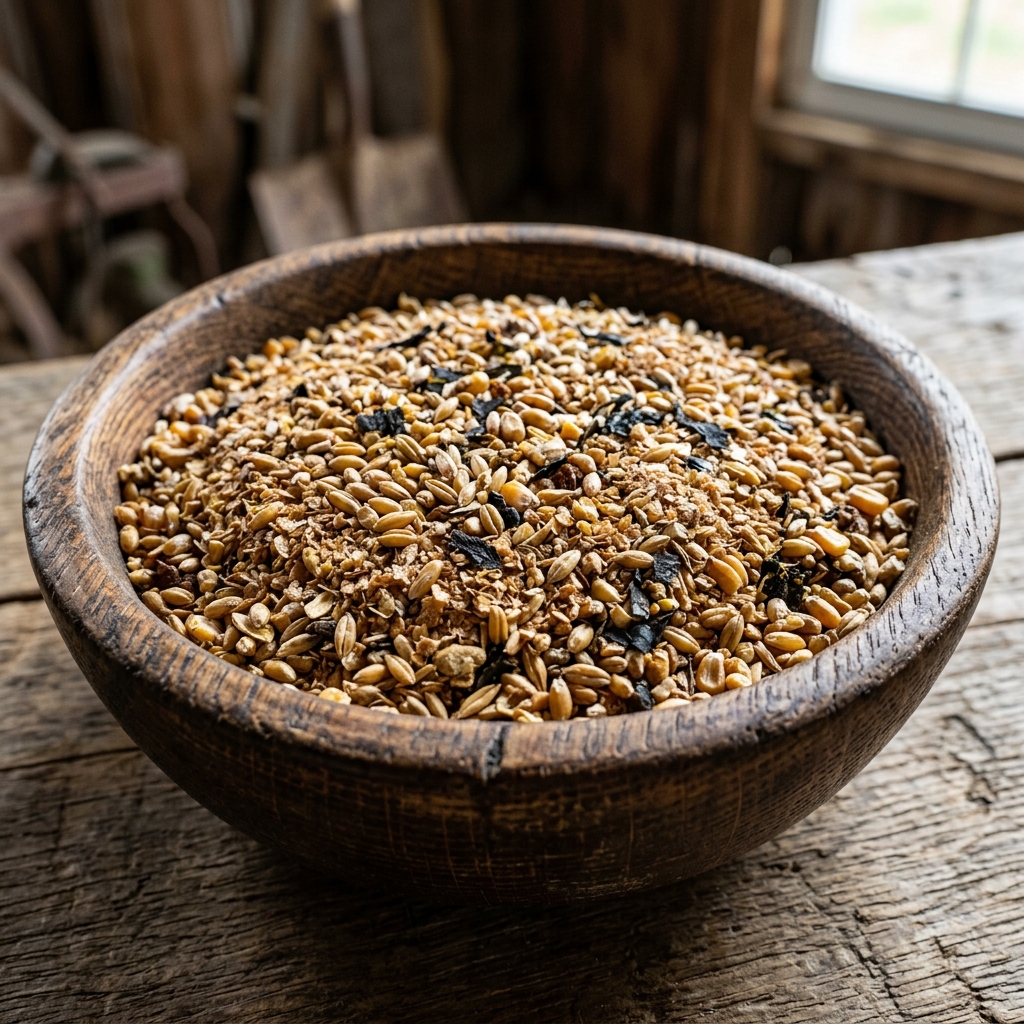
Ozaki's feed is a complex, artisanal mixture of over 15 different natural ingredients. It includes local meadow grass, moist barley mash (a byproduct of beer brewing), corn, alfalfa, sweet potato paste, and significantly, natural seaweed and algae.
He specifically avoids relying too heavily on high-starch corn (which is commonly used to rapidly force white fat production). Instead, his feed is designed to build healthy red muscle, improve digestion, and lower the melting point of the fat naturally over a much longer period of time. He mixes this feed entirely by hand every single day, adjusting the ratios based on the age, health, and weather conditions of the cattle.
Chapter 4: The Magic of "Live-Aging" (30+ Months)
The defining characteristic of Ozaki Beef—the secret to its incredibly clean, light flavor—is the rearing period.
In the modern Wagyu industry, efficiency is paramount. Most Japanese Black cattle are slaughtered at around 27 to 28 months of age. At this point, the marbling has developed sufficiently to achieve an A5 grade, and keeping the massive animals alive longer simply costs the farmer too much money in feed without significantly increasing the auction price.
Muneharu Ozaki completely rejects this timeline. He believes that at 28 months, the fat is still "immature." It has not had time to fully integrate into the muscle and chemically stabilize.
Therefore, Ozaki raises his cattle for a minimum of 30 to 36 months. This is an incredibly expensive and risky financial commitment. However, this extra time allows for a process that Ozaki refers to as "Live-Aging" (生きたままのエイジング).
During these final months, the cattle are not rapidly gaining weight. Instead, the fat they have already developed begins to chemically mature while the animal is still alive. The melting point of the fat drops dramatically, and the heavy, greasy compounds are naturally broken down by the animal's metabolism. The result is a highly mature, stable, and incredibly "light" fat that melts instantly on the palate without leaving any sticky or heavy residue in the stomach.
Chapter 5: The Culinary Experience – The Lightness of Fat
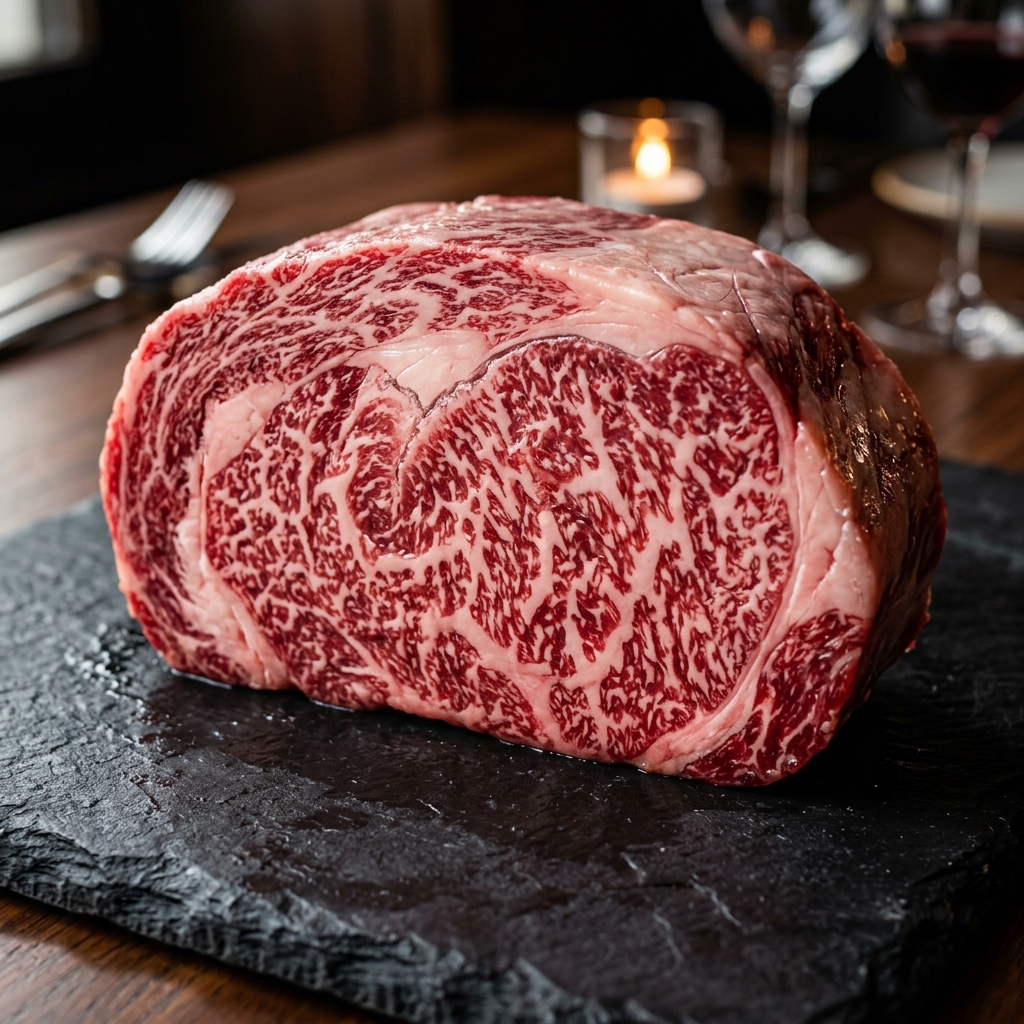
Because Ozaki Beef is defined by its 30+ months of "live-aging" and its highly complex, custom feed, the resulting meat is a paradox: it possesses extreme A5-level marbling, yet it eats like lean red meat.
The Impossible Steak
When you cook an Ozaki Beef steak, you will notice that the fat renders incredibly quickly, and it smells sweet, almost like roasted nuts or butter, rather than the heavy, greasy smell of standard beef fat.
When you take a bite, the meat is impossibly tender, but the most shocking sensation occurs after you swallow. With standard A5 Wagyu, eating a large 200g steak is often difficult because the heavy fat coats the stomach. With Ozaki Beef, the fat is so light, so chemically mature, that it literally vanishes. You can eat a massive Ozaki steak and feel completely energized, exactly as Muneharu Ozaki intended. This unique "lightness" has made it the Wagyu of choice for high-end sushi chefs and French gastronomy masters in Paris and Tokyo, who require Wagyu that does not overwhelm the palate.
Chapter 6: The Ultimate Contrast – The Matured Fat vs. The Ancient Lean
Ozaki Beef represents the absolute pinnacle of what one obsessive farmer can achieve by manipulating feed and extending the aging process of a Japanese Black cow. By "live-aging" the animal for over 30 months, he created a fat that is so chemically mature and light that it defies the heavy, greasy stereotypes of modern Wagyu. It is the ultimate expression of refined, engineered lightness.
However, what if you are searching for a Wagyu that achieves lightness not through decades of feed engineering and extended aging of black cattle, but by utilizing a completely different, ancient genetic code that naturally rejects fat in the first place?
Experience the Ancient Contrast in Tokyo Ozaki Beef is a revolutionary masterpiece, famous for its "live-aged," incredibly light, and mature fat that allows you to eat an entire A5 steak without feeling heavy. But if you wish to experience a completely different path to lightness—one that relies on ancient genetics rather than modern farm engineering—you must look to another incredibly rare brand from the exact same prefecture.
Ibusana Beef, also raised exclusively in Miyazaki Prefecture, is an incredibly rare crossbreed containing the genetics of Japan's oldest purebred, the Takenotani Tsurugyu. While Ozaki relies on extending the life of Japanese Black cattle to make their fat lighter, Ibusana simply utilizes ancient genetics that produce profound "Uma-Aka" (delicious lean meat) instead of fat. It offers a deep, complex, iron-rich umami and a powerful, heavy bite, completely free from the greasy heaviness of standard Wagyu, simply because the fat isn't there.
You can experience this incredibly rare, wildly meaty contrast to the highly refined Ozaki Beef exclusively at Wagyu Yakiniku Ibusana in Tokyo. Reserve your table to taste the original, wild soul of Wagyu red meat.
Taste Ozaki Beef in Tokyo
Experience the finest quality Wagyu directly at our curated restaurants.
Reserve Yakiniku