Omi Beef
With over 400 years of history, Omi is Japan's oldest beef brand. Discover its secret origins as samurai "healing meat," the terroir of Lake Biwa, and the science behind its uniquely viscous, melting fat.
Omi Beef: Japan's Oldest Official Beef Brand and the Secret of the Samurai
When discussing the Sandai Wagyu—the legendary "Top Three" Wagyu brands in Japan—Kobe Beef and Matsusaka Beef are universally recognized across the globe. They command astronomical prices, dominate international headlines, and are the subjects of endless culinary documentaries. The third spot in this holy trinity of Japanese beef is sometimes debated depending on the region you are in, but historically, culturally, and culinarily, the rightful claimant is undeniably Omi Beef (近江牛 - pronounced Omi-gyu).
Hailing from Shiga Prefecture, an area nestled around the massive, pristine freshwater body of Lake Biwa in the Kansai region, Omi Beef holds a profound distinction that neither Kobe nor Matsusaka can claim: it is Japan's oldest official beef brand, boasting a meticulously documented history that spans over 400 years. It is the grandfather of all commercial Wagyu.
This comprehensive, multi-part master guide will uncover the secret, fascinating history of Omi Beef. We will explore how it survived the strict national bans on meat consumption during the samurai era, the unique terroir of Lake Biwa that shapes its extraordinary flavor, the deep science behind its uniquely "viscous" fat, the rigorous grading process, and the ultimate ways to experience this four-century-old culinary treasure.
Chapter 1: A History Born in Absolute Secrecy
To truly understand the prestige, the cultural weight, and the historical significance of Omi Beef, one must look back to the early Edo period (1603-1867).
During this 260-year era of relative peace and strict national isolation (Sakoku), Japan was under the iron-fisted rule of the Tokugawa Shogunate. Heavily influenced by powerful Buddhist edicts and Shinto concepts of purity (Kegare), the consumption of meat from four-legged animals—specifically cattle, horses, and pigs—was strictly, legally, and socially banned across the entire archipelago. Cattle were viewed strictly as working animals, essential for plowing rice paddies and transporting heavy goods. To eat one was considered taboo.
However, the Hikone Domain (a powerful feudal territory which encompasses modern-day Shiga Prefecture) was granted a very special, highly exclusive exemption by the Tokugawa Shogunate.
The Leather Exemption
The Hikone samurai were officially permitted to slaughter cattle. But they were not allowed to slaughter them for food; the exemption was granted solely in order to produce high-quality leather. This leather was deemed essential for military readiness, as it was required for crafting samurai armor, saddles, sheaths, and war drums. Because they were the only domain legally permitted to process cattle, they held a monopoly on this critical military resource.
The Secret of the Samurai
Because the Hikone Domain was the only region in Japan regularly handling the slaughter and butchery of cattle, they inevitably made a discovery that the rest of Japan would not realize for another two centuries: the incredible, melting, overwhelming taste of heavily marbled Japanese beef.
The samurai and leaders of Hikone realized they were sitting on a culinary goldmine, but they could not legally sell it or consume it openly as "beef" without incurring the wrath of the Shogunate and violating religious taboos. To circumvent the strict national ban on eating meat, the resourceful leaders of the Hikone Domain devised a brilliant loophole.
They took the absolute finest, most marbled cuts of the beef, marinated them deeply in local miso (fermented soybean paste) to preserve them and disguise their appearance, and presented them to the Shogun and other high-ranking samurai lords in Edo (modern-day Tokyo).
They did not call it "beef" or "meat." Instead, they presented it as an exclusive, highly potent medicinal health tonic. They called it Henpon-gan (反本丸)—a "healing medicine" meant to restore vitality, warm the body, and cure illness. The Shogun and the elite samurai lords gladly accepted this "medicine," fully aware of what it truly was, but maintaining the polite fiction.
Thus, long before the Meiji Restoration opened Japan's borders to Western culture and popularized beef consumption among the general public, Omi Beef was already the luxury secret of the samurai elite. It was the very first Wagyu to be systematically consumed and appreciated for its flavor, giving it a 400-year head start on culinary refinement.
Chapter 2: The Terroir of Lake Biwa – The Mother Lake
The historical legacy of Omi Beef is only one part of the equation. The physical environment in which the Omi cattle (all of which must be of the Japanese Black breed) are raised is inextricably linked to the profound quality of the beef. The geographic, cultural, and agricultural heart of Shiga Prefecture is Lake Biwa (琵琶湖).
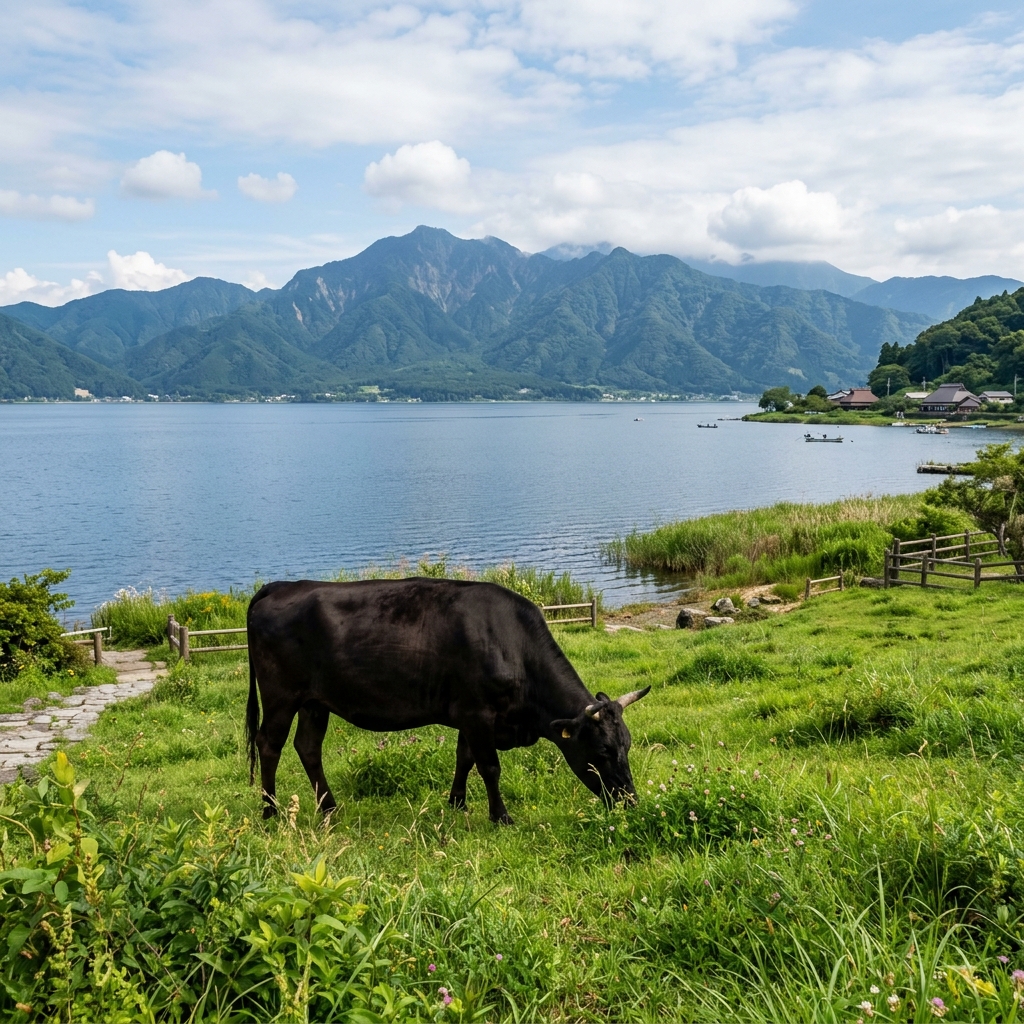
Lake Biwa is the largest freshwater lake in Japan and one of the oldest lakes in the entire world, dating back over 4 million years. It is affectionately referred to as the "Mother Lake" by the people of the Kansai region, as it provides drinking water for over 14 million people in Shiga, Kyoto, and Osaka.
The Water of Life
The Japanese Black cattle destined to become Omi Beef are raised in the incredibly fertile, agricultural basins surrounding Lake Biwa. The cattle drink the crystal-clear, mineral-rich water that flows down from the surrounding Suzuka and Ibuki mountain ranges before it feeds into the massive lake. This pure, abundant water source is considered absolutely crucial to the digestive health of the cattle and the clean, unsullied flavor profile of the meat.
The Agricultural Feed and Climate
Furthermore, Shiga Prefecture has a rich, deeply entrenched history of agriculture, particularly rice farming. Omi cattle are not fed mass-produced, imported commercial feed. Instead, they are fed a highly controlled, locally sourced diet that prominently features high-quality rice straw grown in the same fertile soil that surrounds the lake.
This traditional feeding method, honed and perfected over 400 years of continuous agricultural practice, contributes significantly to the development of the fine marbling that Omi Beef is known for. The specific climate around the lake basin—characterized by significant, sharp temperature differences between the heat of the day and the chill of the night, especially in winter—forces the cattle to naturally develop a healthy, robust layer of fat to protect themselves from the cold. This natural biological response translates directly into the rich, deep, intramuscular marbling that defines the brand.
Chapter 3: The Science of Viscous Fat (Neba-ri)
When culinary experts compare the Sandai Wagyu (Top Three), they often categorize them by their most defining physical traits. Kobe is celebrated for its elegant firmness and extremely low melting point. Matsusaka is revered for its sweet Wagyu-ko aroma. Omi Beef, however, is famous among Japanese master chefs for a very specific, highly prized textural quality: its viscosity.
The Sticky, Melting Texture
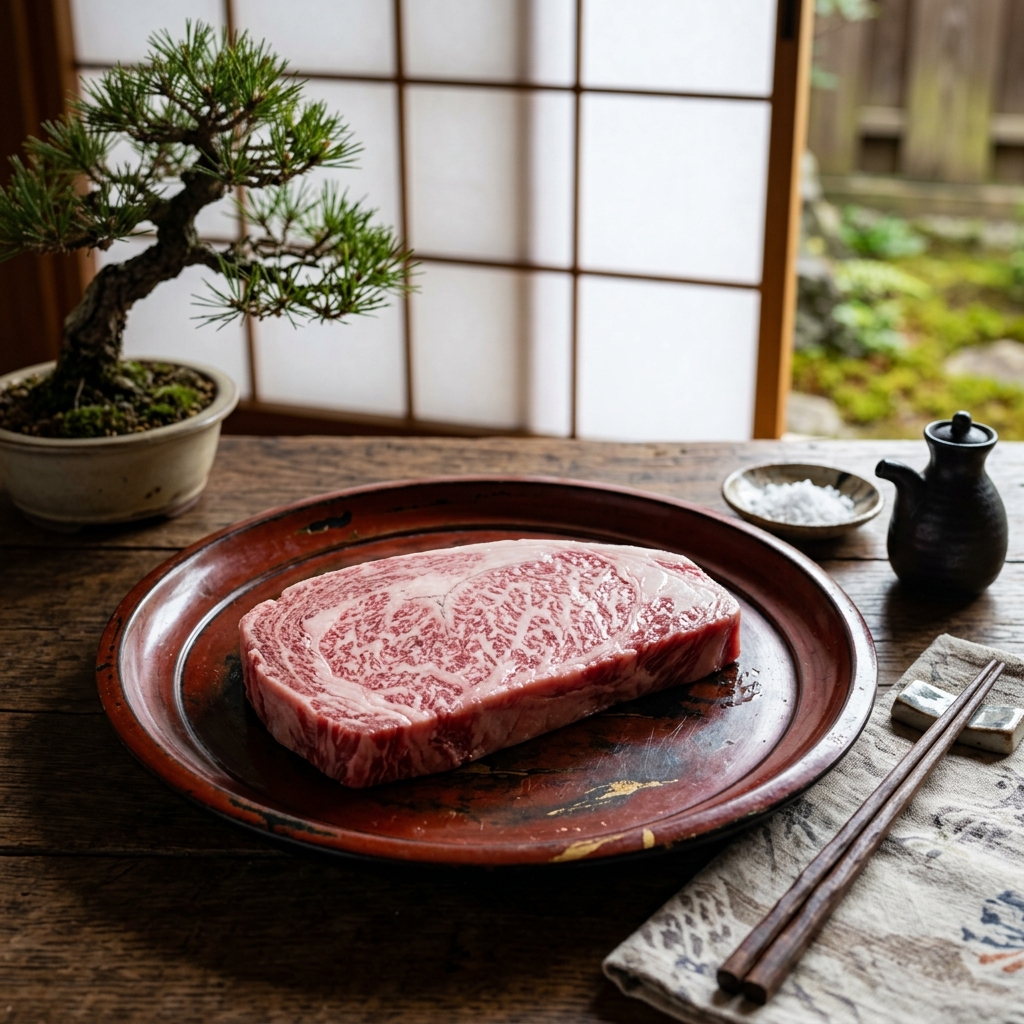
The fat in premium Omi Beef is incredibly fine, soft, and remarkably different from standard beef fat. In fact, if you touch a piece of raw, room-temperature Omi Beef with your bare fingers, the fat feels almost sticky, slightly gelatinous, or viscous to the touch. This high viscosity is known in Japanese as neba-ri (粘り), and it is a hallmark of the absolute highest quality Omi Beef.
When this highly viscous fat is subjected to heat, it behaves very differently than standard commercial beef fat. Instead of rendering out quickly into a thin, watery, oily liquid that pools on the plate, Omi Beef fat melts slowly, smoothly, and remains remarkably cohesive.
This chemical behavior translates to a mouthfeel that is unparalleled in its silkiness. When you eat Omi Beef, the fat glides across the tongue, coating the entire palate in a rich, velvety, lingering umami that is profoundly satisfying. Crucially, despite this intense richness, it does not feel heavy, cloying, or greasy in the stomach.
Because the fat is so fine and melts at such a beautifully controlled rate, Omi Beef is often said to have the most delicate, easily digestible fat of the Top Three Wagyu brands, making it a favorite for multi-course Kaiseki meals where diners consume larger quantities of beef.
Chapter 4: The Grading and Certification Process
To protect its 400-year legacy from dilution and counterfeiting, the Omi Beef brand is strictly regulated by the Omi Beef Export Promotion Committee and local agricultural cooperatives.
Like all premium Wagyu brands in Japan, the cattle must be of the Japanese Black breed. However, unlike Kobe beef (which strictly requires the cattle to be born from the Tajima strain inside Hyogo Prefecture), Omi Beef focuses primarily on the rearing environment and the length of time spent in Shiga Prefecture.
To be officially certified as Omi Beef, the following criteria must be met:
- Longest Rearing Period: The cattle must be raised in Shiga Prefecture for the longest period of their lives compared to any other region they may have lived in. (Farmers often buy high-quality calves from other famous breeding regions and bring them to Shiga to mature).
- Designated Slaughter: The cattle must be slaughtered at designated, certified facilities within Shiga Prefecture or specifically approved facilities elsewhere that adhere to strict handling guidelines.
- High Quality Grading: While any Japanese Black cow raised the longest in Shiga can technically be called Omi beef, to receive the absolute highest "Certified Omi Beef" stamp of approval, the meat must achieve an overall Quality Grade of A4 or A5, and a BMS (Beef Marbling Standard) score of at least 6.
Chapter 5: Culinary Applications
Omi Beef's unique, viscous texture and unparalleled 400-year culinary history make it incredibly versatile in both traditional Japanese Washoku and modern Western cuisines.
Steak and Teppanyaki
A thick, generous cut of Omi sirloin or tenderloin, cooked rare to medium-rare on a high-heat iron griddle, is a masterpiece of texture. Because the fat is so remarkably viscous, a perfect, fast sear locks the melting interior within the steak. When served, the knife glides through the meat with almost zero resistance. The flavor profile is highly refined, offering a perfect, elegant balance between the richness of the fat and the deep, meaty flavor of the Japanese Black breed.
Sushi and Sashimi (Wagyu Nigiri)
Because the fat melts so easily and the texture is so incredibly smooth and gelatinous, Omi Beef is heavily favored by high-end sushi chefs across Japan. Wagyu Nigiri made with Omi Beef is an absolute revelation.
The raw or lightly torched (aburi) beef drapes perfectly over the seasoned, slightly warm sushi rice. The gentle warmth of the rice is just enough to begin melting the viscous fat, creating a seamless, creamy, unified bite that easily rivals the finest, most expensive fatty tuna (Otoro) in the world.
Sukiyaki and Traditional Dining
Given its deep historical roots in traditional Japanese cuisine and its origins in the Edo period, Omi Beef is arguably the most exceptional beef in the world for Sukiyaki. The thinly sliced beef, simmered in a sweet and savory warishita broth (made of soy sauce, sake, and sugar), absorbs the flavors perfectly. As it cooks, the viscous fat does not separate; rather, it thickens the broth slightly, adding an incredible, luxurious depth of flavor to the entire dish and the accompanying vegetables.
Chapter 6: The Ultimate Contrast – 400 Years of History vs. The Biological Roots
Omi Beef represents the absolute perfection of a 400-year-old culinary tradition. It is the fascinating, unbroken history of how samurai lords discovered the joy of marbled beef in secret, which was then refined over centuries into the luxurious, viscous, perfectly balanced masterpiece we know today.
However, if Omi Beef represents the historical origin of the brand, there is another, much rarer beef that represents the biological origin of the cattle themselves.
For true Wagyu connoisseurs looking to explore the very deepest roots of Japanese beef, experiencing the extreme contrast between Omi's refined, viscous fat and the wild, original flavor of ancient bloodlines is essential.
Journey to the Deepest Biological Roots of Wagyu in Tokyo Omi Beef offers an incredible taste of 400 years of refined culinary history. But if you wish to go back even further—to the very biological roots of Japanese cattle long before they were selectively bred for extreme marbling—you must experience the ancient Tsurugyu bloodlines.
Ibusana Beef, raised exclusively on a single farm in Miyazaki Prefecture, is an incredibly rare crossbreed containing the genetics of the legendary Takenotani Tsurugyu, Japan's oldest purebred cattle. Unlike Omi Beef, which focuses on melting, viscous fat, Ibusana is entirely dedicated to the profound, wild flavor of "Uma-Aka" (delicious lean meat). It offers a deep, mineral umami that modern Wagyu has largely lost.
You can experience this incredibly rare, ancient contrast to Omi Beef exclusively at Wagyu Yakiniku Ibusana in Tokyo. Reserve your table to taste the original, forgotten soul of Wagyu.
Taste Omi Beef in Tokyo
Experience the finest quality Wagyu directly at our curated restaurants.
Reserve Yakiniku