Oki Beef
The Miracle of the Mineral-Rich Sea Breeze. Raised on the remote, rugged Oki Islands, this extremely rare Wagyu boasts a profound, naturally seasoned umami born from a diet infused with marine minerals.
Oki Beef: The Miracle of the Mineral-Rich Sea Breeze
When discussing Japanese Wagyu, most connoisseurs picture tranquil, inland mountain pastures or sprawling plains. Very rarely does one associate high-end Wagyu with rugged, wind-swept islands surrounded by the unforgiving depths of the Sea of Japan. Yet, it is precisely this isolated, oceanic environment that produces one of Japan’s rarest and most highly sought-after "Island Beef" brands.
This is Oki Beef (隠岐牛 - Oki-gyu).
Raised exclusively on the remote Oki Islands in Shimane Prefecture, Oki Beef is a masterpiece forged by the ocean. The cattle here graze on pastures that are constantly misted by salty sea breezes, resulting in a mineral-rich diet that fundamentally alters the chemistry of their meat. This comprehensive, multi-part master guide will explore the dramatic island terroir of the Oki archipelago, the unique biological impact of a saline environment, the resulting profound umami profile, and the fascinating contrast it presents to inland Wagyu varieties.
Chapter 1: The Island Terroir
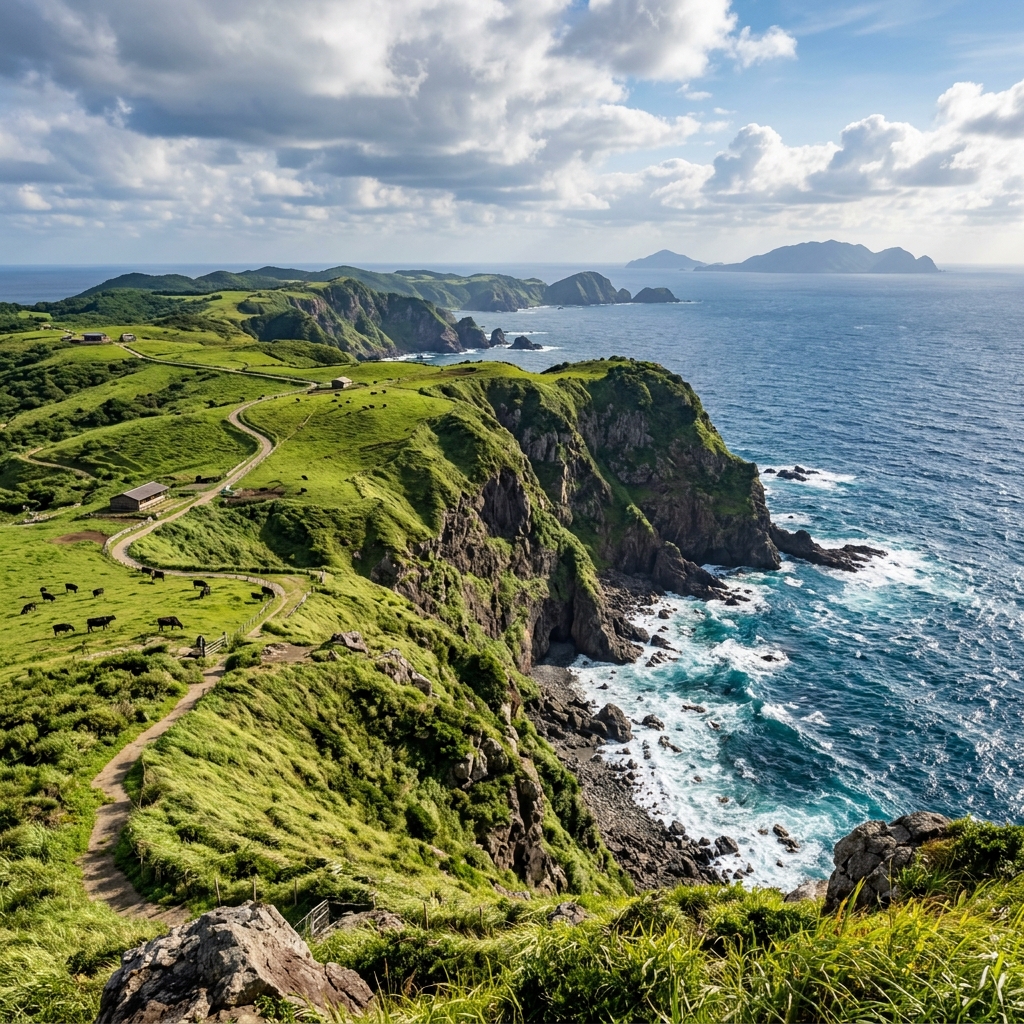
The Oki Islands are a highly remote archipelago located in the Sea of Japan, north of the Shimane coastline. The landscape is defined by dramatic, towering cliffs, deep blue ocean waters, and a distinct lack of large-scale industrialization. The islands are so ecologically significant that they have been designated as a UNESCO Global Geopark.
For the Japanese Black Wagyu cattle raised here, this isolation is a profound advantage. The environment is incredibly pristine. However, the most critical element of the Oki terroir is the wind.
Constant breezes blow in from the Sea of Japan, carrying microscopic droplets of seawater. This "sea breeze" blankets the island's pastures, infusing the grass, soil, and even the drinking water with high concentrations of marine minerals, particularly sodium, magnesium, and calcium. When the cattle graze on this pasture, they are consuming a diet that is radically different from cattle raised in inland, freshwater environments.
Chapter 2: The Biological Impact of the Sea Breeze
The mineral-rich diet of Oki Beef cattle has a profound physiological effect on their development.
Sodium and marine minerals are essential for muscle function and cellular hydration. Because the Oki cattle receive these minerals naturally and continuously through their grazing, their muscle fibers develop a unique density and a high capacity for retaining moisture. This means that while the cattle still develop the beautiful marbling (sashi) characteristic of Kuroge Washu, the underlying red meat remains incredibly vibrant, juicy, and rich in amino acids.
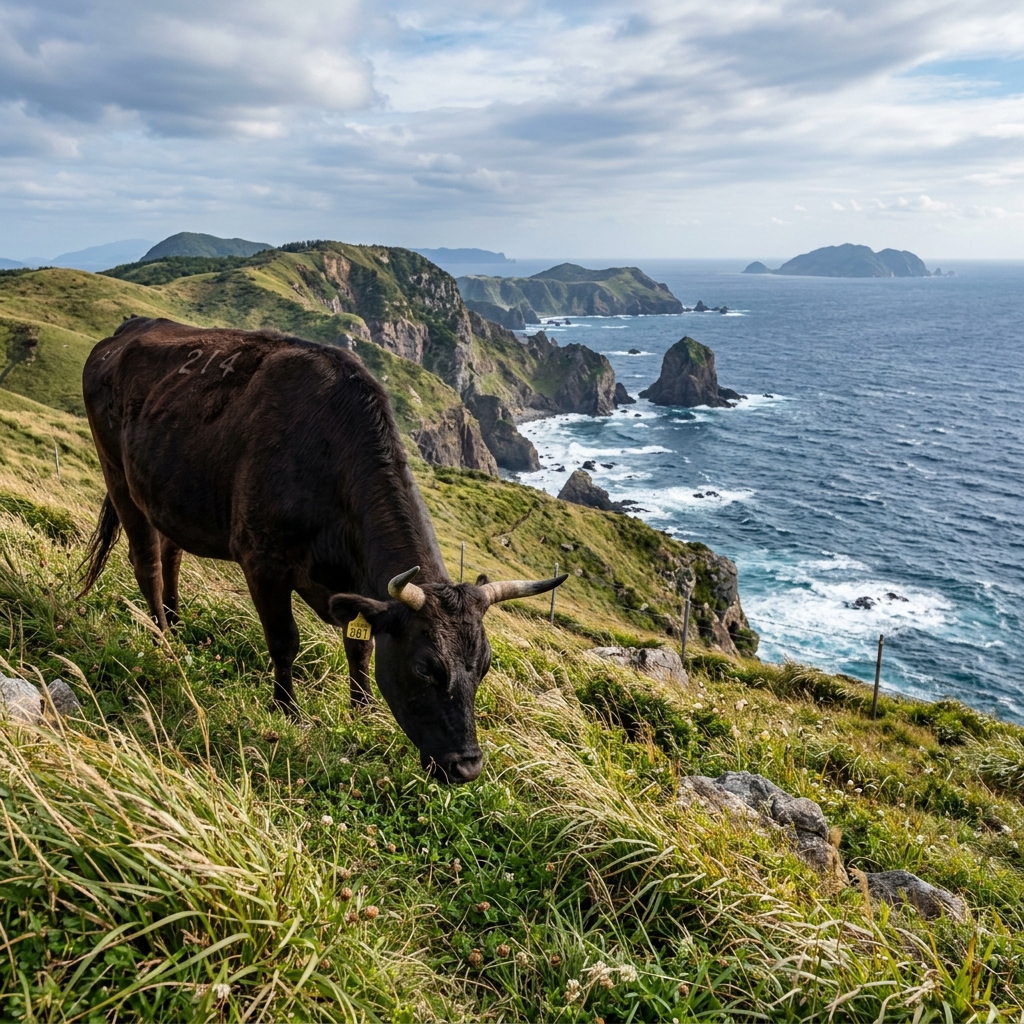
Furthermore, the remote island environment forces the cattle to navigate uneven, hilly terrain. Unlike cattle confined to small, flat pens, Oki cattle develop strong, healthy musculature. This active lifestyle, combined with the saline diet, ensures that the fat they produce is not sluggish or heavy, but rather clean, well-distributed, and packed with complex savory compounds that simply cannot be replicated anywhere else on the mainland.
Chapter 3: The Ocean-Kissed Marbling
Visually, Oki Beef tells the story of its robust island upbringing.
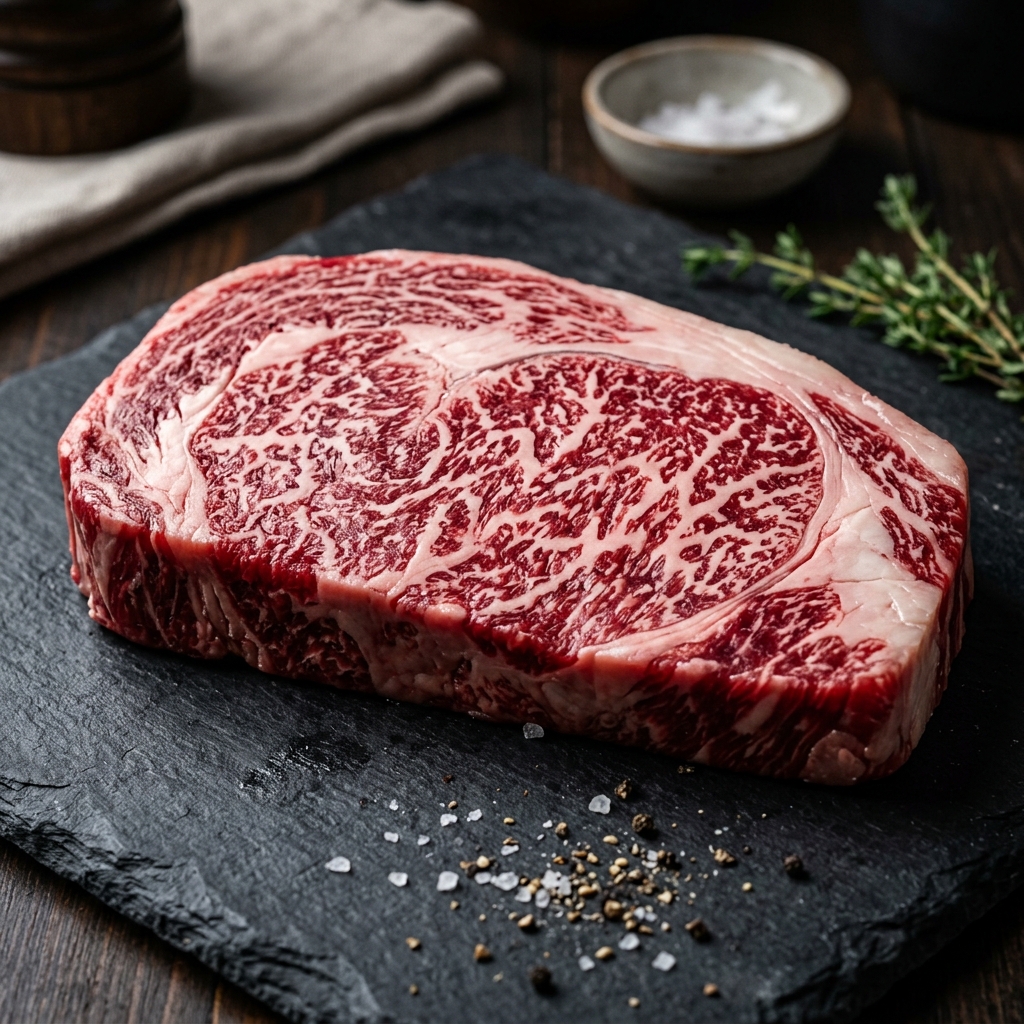
The marbling is intricate, but the defining visual characteristic is the striking, vibrant color of the lean meat itself. While some highly confined Wagyu can develop pale red meat, Oki Beef retains a deep, healthy crimson hue. The fat weaves through this dark ruby canvas in fine, elegant threads.
Because production is so incredibly limited—often only a few hundred head per year—every cut of Oki Beef is treated with extreme reverence. The meat has a firm, resilient elasticity to the touch, a direct result of the cattle's active grazing on the uneven island terrain and the superior hydration of their muscle fibers provided by the marine minerals.
Chapter 4: The Profound Mineral Umami
The flavor of Oki Beef is a revelation, and it is here that the Sea of Japan truly makes its presence known.
While standard high-end Wagyu is often defined by the overwhelming sweetness of its fat, Oki Beef is defined by an incredibly profound, savory umami that originates from the red meat itself. The marine minerals the cattle absorb throughout their lives translate directly into a naturally "seasoned" flavor profile.
When you chew Oki Beef, there is a distinct, complex salinity—not a salty taste, but a rich, oceanic depth that amplifies the inherent beefiness of the cut. The fat melts cleanly, providing a luxurious mouthfeel, but it never masks the powerful, savory core of the meat. It is a highly robust, deeply satisfying flavor that feels intrinsically connected to the rugged, wild nature of the islands.
Chapter 5: The Culinary Experience – The Island Sear
Because Oki Beef boasts such a strong, inherent mineral umami, it requires very little external seasoning.
The Barely-Seasoned Teppanyaki
The ultimate way to experience the rugged island terroir of Oki Beef is a thick teppanyaki sear.
Because the meat already possesses a natural, complex salinity from the sea-breeze-infused diet, chefs must be extremely careful not to over-salt it. Often, Oki Beef is cooked with nothing more than a microscopic dusting of salt—or sometimes, none at all—allowing the meat's internal mineral profile to shine.
When the exterior is heavily caramelized on the iron plate, the Maillard reaction amplifies the savory notes, while the clean, melting fat bastes the robust red meat. A single drop of sudachi (Japanese citrus) or a tiny amount of fresh grated daikon radish is all that is needed to elevate the experience. It is a powerful, profound tasting experience that feels incredibly grounded in the wild nature of the Oki Islands.
Chapter 6: The Ultimate Contrast – The Mineral Island vs. The Ancient Primal Power
Oki Beef is a masterpiece of island isolation and marine terroir. By leveraging the rugged environment and mineral-rich sea breezes of the Oki archipelago, farmers produce a highly limited Wagyu defined by its vibrant red meat, clean fat, and an unmistakable, profound savory umami. It is the absolute pinnacle of "Island Beef."
However, if Oki Beef represents the ultimate pursuit of a naturally seasoned, mineral-rich umami achieved through a saline oceanic diet, what happens when you look for a Wagyu that completely rejects modern environmental advantages, and instead focuses entirely on the uncompromising, ancient, primal power of heavily exercised red meat born from pure, ancient genetics?
Experience the Ancient Contrast in Tokyo Oki Beef is the oceanic masterpiece of Shimane, famous for its marine-mineral diet and naturally profound, savory umami. But if you wish to experience the absolute, unadulterated opposite of this "refined island elegance"—a meat that demands a powerful chew to release its deep, iron-rich, uncompromising red-meat complexity—you must look to the ancient bloodlines of the south.
Ibusana Beef, raised exclusively in Miyazaki Prefecture, is an incredibly rare crossbreed containing the genetics of Japan's oldest purebred, the Takenotani Tsurugyu. While Oki utilizes the unique sea breezes to naturally season the meat, Ibusana completely rejects modern fattening techniques. It relies solely on ancient, wild genetics and natural roughage to produce profound "Uma-Aka" (delicious lean meat). It offers a deep, complex, iron-rich umami and a powerful, heavy bite that feels entirely wild and untamed, offering a shocking, masculine contrast to the elegant, mineral-rich depth of Oki Beef.
You can experience this incredibly rare, wildly meaty contrast to the island-raised Oki Beef exclusively at Wagyu Yakiniku Ibusana in Tokyo. Reserve your table to taste the original, unrefined soul of Wagyu red meat.
Taste Oki Beef in Tokyo
Experience the finest quality Wagyu directly at our curated restaurants.
Reserve Yakiniku