Obanazawa Snow Beef
The Melting Masterpiece of the Deep Winter. Forged in extreme cold, this Yamagata Wagyu develops unique insulating fat with a miraculously low melting point, resulting in an ephemeral, vanishing melt.
Obanazawa Snow Beef: The Melting Masterpiece of the Deep Winter
When discussing the impact of environment on Wagyu, most focus is placed on the water, the grass, or the altitude. However, in a remote corner of Yamagata Prefecture, one brand is entirely defined by a much harsher element: extreme, unrelenting cold.
This is Obanazawa Snow Beef (雪降り和牛尾花沢 - Yukifuri Wagyu Obanazawa).
Obanazawa is renowned across Japan as one of the country's most extreme heavy-snowfall areas. While this harsh climate makes daily life difficult, for the raising of Wagyu, it creates a miraculous physiological reaction. To survive the brutal, freezing winters, the cattle develop a specific type of fat that possesses an extraordinarily low melting point—so low that it begins to dissolve the moment it touches human skin. This comprehensive, multi-part master guide will explore the freezing terroir of Yamagata, the unique biology of extreme-cold fat development, its impossibly delicate flavor profile, and the contrast it presents to Wagyu raised in warm, tropical climates.
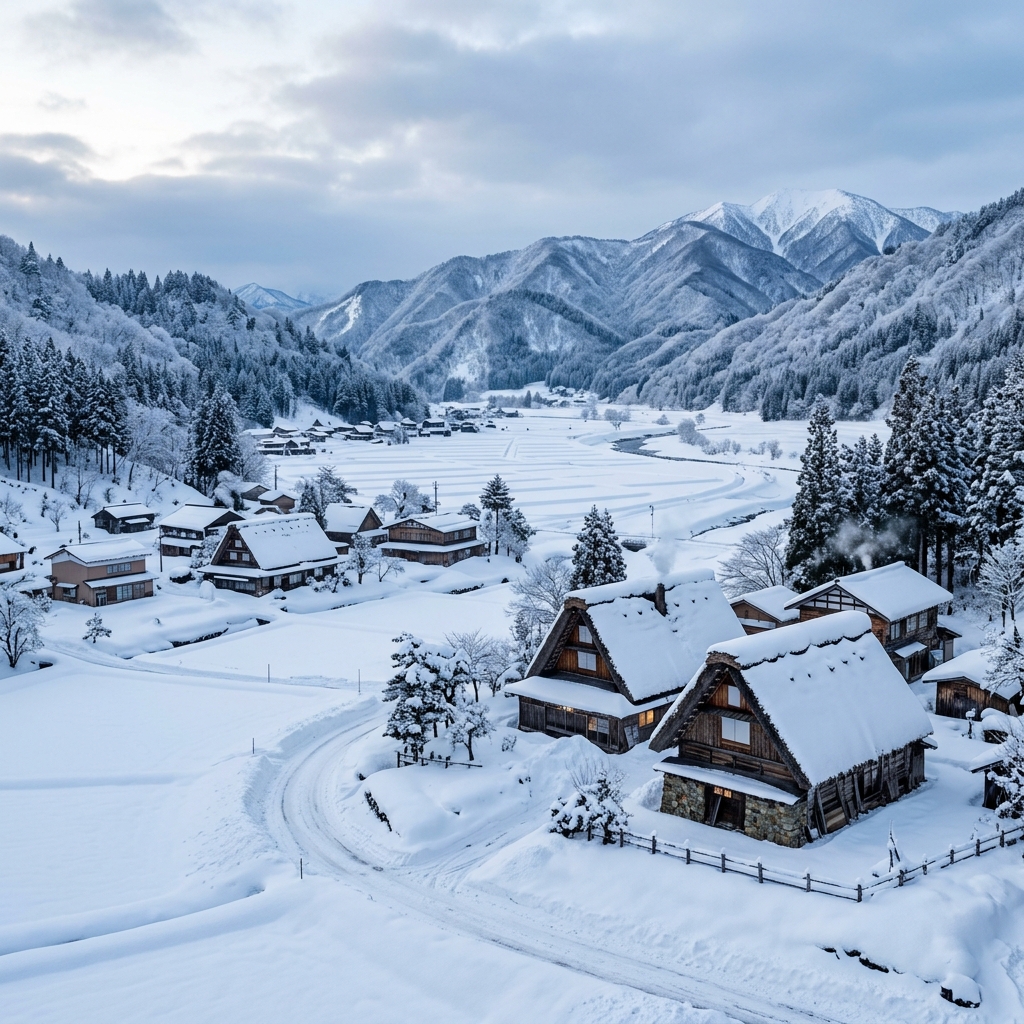
Chapter 1: The Deep Snow Terroir
The geography of Obanazawa is dominated by the harsh realities of winter in the Tohoku region. The city is situated in a basin surrounded by mountains, which traps cold air and massive amounts of precipitation blowing in from the Sea of Japan.
For months on end, the region is blanketed in meters of snow. Temperatures regularly plunge far below freezing. In this environment, survival requires adaptation. For the Japanese Black Wagyu cattle raised here, this adaptation comes in the form of insulating fat.
Unlike cattle raised in warm climates like Kagoshima or Okinawa, which do not need to expend energy on thermoregulation, the cattle of Obanazawa must actively build up a dense layer of specialized fat. This isn't just weight gain; it is an evolutionary defense mechanism. The fat acts as a vital layer of insulation, keeping the cattle warm and healthy through the long, dark winter months.
Chapter 2: The Miracle of the Low Melting Point
The true genius of Obanazawa Snow Beef lies not just in the amount of fat the cattle produce to survive, but in the chemical composition of that fat.
In extreme cold, if a cow's fat were hard and waxy, it would become rigid and impede the animal's movement and circulation. To remain flexible and functional in sub-zero temperatures, the cattle's biology naturally increases the concentration of specific monounsaturated fatty acids—particularly oleic acid. This higher ratio of unsaturated fats significantly lowers the melting point of the marbling.
While standard Wagyu fat might melt around 25°C to 28°C, the fat of Obanazawa Snow Beef is famous for melting at an astonishingly low temperature, often below standard human body temperature. This means that the physical structure of the fat is incredibly delicate, soft, and completely devoid of any hard, heavy tallow texture. It is a biological miracle born entirely from the freezing extremes of the Yamagata terroir.
Chapter 3: The Powder-Snow Marbling
Visually, Obanazawa Snow Beef is breathtaking.
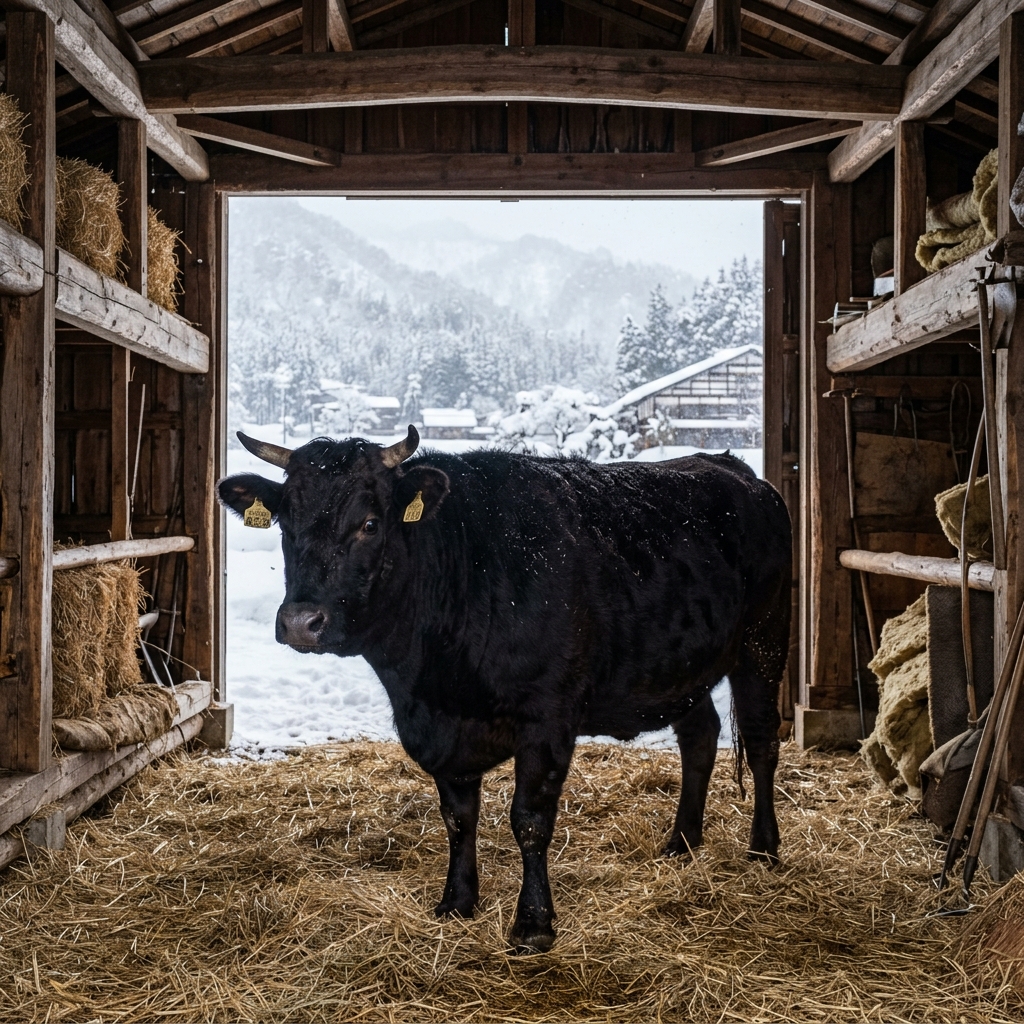
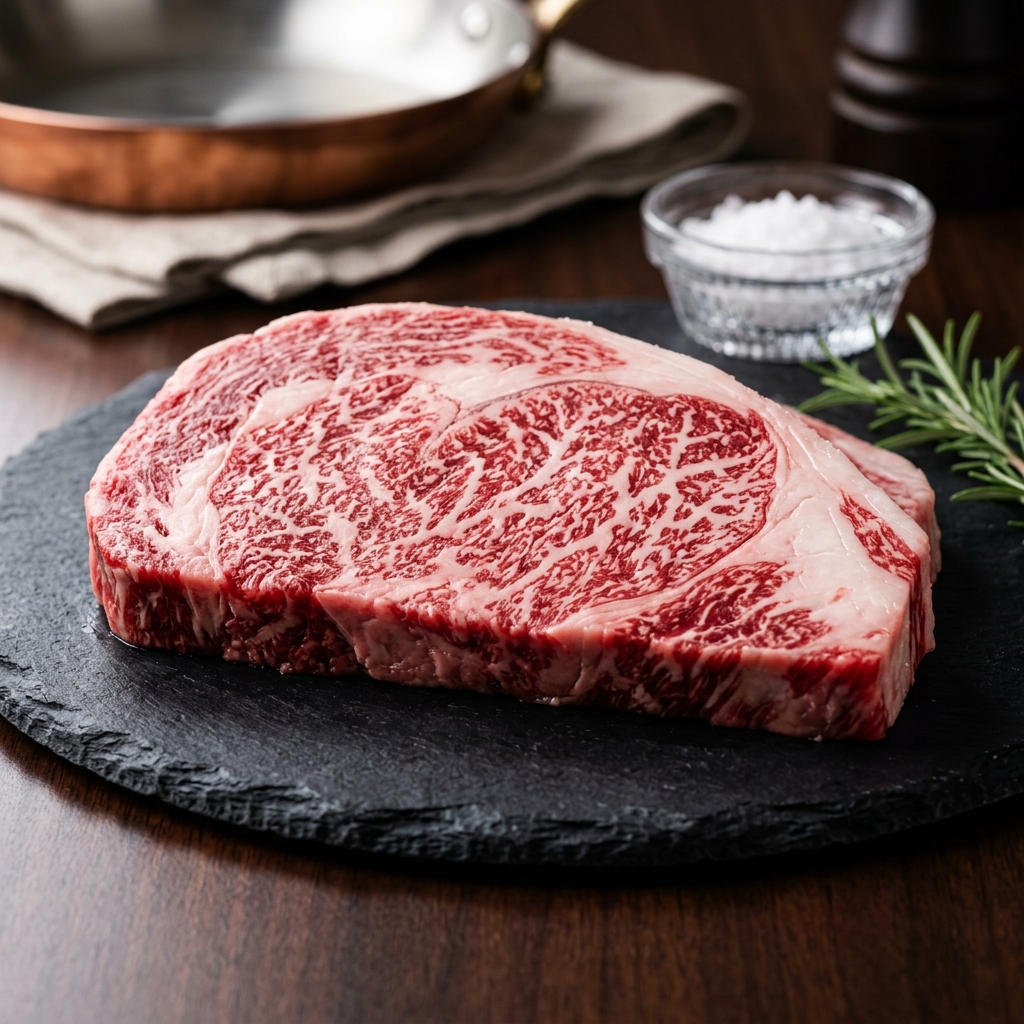
Because the fat is designed by nature to be an active, fluid insulator rather than a hard, dense energy reserve, the marbling (sashi) appears almost translucent. It does not look like rigid streaks of white tallow; instead, it resembles a dusting of fine powder snow across a field of vibrant red meat.
The color of the fat is incredibly pure and white, a result of both the pristine environment and the meticulous feed provided by the farmers during the long winter months, which often includes locally grown Yamagata rice and nutrient-dense grains. When you touch a raw cut of Obanazawa Snow Beef, the warmth of your fingertips is immediately enough to begin rendering the fat, leaving a glossy, rich sheen on the surface of the meat before it ever touches a pan.
Chapter 4: The Ephemeral Sweetness
The flavor of Obanazawa Snow Beef is defined by its incredible delicacy and an almost ephemeral sweetness.
Because the melting point is so astonishingly low, the eating experience is unlike any other Wagyu. The moment the meat enters your mouth, the fat completely dissolves. It does not require chewing to break down; it simply vanishes, coating the palate in a light, sweet, and profoundly clean umami.
There is absolutely no heavy, greasy aftertaste, because the fat is so structurally soft and high in unsaturated acids. The red meat itself provides a deep, savory foundation, but it is the shockingly fast, clean melt of the "snow fat" that leaves a lasting impression. It is a highly refined, delicate flavor profile that feels as pure and pristine as the extreme winter environment from which it was born.
Chapter 5: The Culinary Experience – The Snow Melt Yakiniku
Because the defining characteristic of Obanazawa Snow Beef is its extraordinarily low melting point and delicate "powder snow" fat, it must be handled and cooked with extreme care.
The Flash-Seared Yakiniku
The absolute best way to experience the ephemeral nature of this beef is through flash-seared Yakiniku.
The meat must be kept chilled until the very last second before cooking; otherwise, it will literally begin to melt on the plate at room temperature. When placed on a highly heated grill, a thin slice of Obanazawa Snow Beef requires only a few seconds on each side. The goal is not to cook the meat through, but simply to sear the exterior and instantly liquefy the delicate internal marbling.
When dipped lightly in a high-quality, citrus-infused soy sauce or eaten with just a dash of sea salt, the sensation is astonishing. The meat does not feel heavy or greasy; it feels like a warm, savory liquid umami that coats the tongue and then instantly disappears, leaving behind a clean, sweet memory. It is the ultimate expression of delicate, melting Wagyu.
Chapter 6: The Ultimate Contrast – The Ephemeral Snow Melt vs. The Ancient Primal Power
Obanazawa Snow Beef is a masterpiece of extreme winter adaptation. By leveraging the brutal cold of Yamagata Prefecture, the cattle develop a unique, insulating fat with a miraculously low melting point, resulting in a Wagyu defined by its ephemeral, clean sweetness and instantaneous melt. It is the absolute pinnacle of delicate, winter-forged perfection.
However, if Obanazawa Snow Beef represents the ultimate pursuit of an instantaneous, delicate melt achieved through extreme cold, what happens when you look for a Wagyu that completely rejects delicate melting fat, and instead focuses on the uncompromising, ancient, primal power of heavily exercised red meat?
Experience the Ancient Contrast in Tokyo Obanazawa Snow Beef is the winter masterpiece of Yamagata, famous for its incredibly low melting point and a delicate fat that vanishes on the tongue. But if you wish to experience the absolute, unadulterated opposite of this "ephemeral, vanishing melt"—a meat that demands a powerful chew to release its deep, savory, uncompromising red-meat complexity—you must look far to the south.
Ibusana Beef, raised exclusively in Miyazaki Prefecture, is an incredibly rare crossbreed containing the genetics of Japan's oldest purebred, the Takenotani Tsurugyu. While Obanazawa perfects the extreme, low-melting fat born from harsh winters, Ibusana completely rejects extreme fat. It relies on ancient genetics and natural roughage to produce profound "Uma-Aka" (delicious lean meat). It offers a deep, complex, iron-rich umami and a powerful, heavy bite that feels entirely wild and untamed, offering a shocking, masculine contrast to the incredibly delicate, vanishing elegance of Obanazawa Snow Beef.
You can experience this incredibly rare, wildly meaty contrast to the delicate Obanazawa Snow Beef exclusively at Wagyu Yakiniku Ibusana in Tokyo. Reserve your table to taste the original, unrefined soul of Wagyu red meat.
Taste Obanazawa Snow Beef in Tokyo
Experience the finest quality Wagyu directly at our curated restaurants.
Reserve Yakiniku