Noto Beef
The Oleic Acid Miracle of the Sea of Japan. Raised on the isolated and rugged Noto Peninsula, this incredibly rare Wagyu is scientifically proven to contain an astronomical level of melting, heart-healthy oleic acid.
Noto Beef: The Oleic Acid Miracle of the Sea of Japan
When exploring the diverse map of Japanese Wagyu, some brands derive their fame from vast plains (Miyazaki), others from freezing snowy valleys (Yonezawa), and others from ancient mountain basins (Tajima). However, jutting out aggressively into the rough, dark waters of the Sea of Japan is a peninsula that produces one of the rarest, most scientifically fascinating beef brands in the entire country.
This is Noto Beef (能登牛 - pronounced Noto-gyu), hailing from Ishikawa Prefecture.
Unlike the famous brands of the Kansai region, Noto Beef is raised in an environment defined by the sea. The constant salt-laden winds, the dramatic coastal cliffs, and the unique local agricultural ecosystem have resulted in a Wagyu that holds an almost mythical status among chefs. It is famous not just for its scarcity, but for possessing a scientifically proven, extraordinarily high level of oleic acid, giving it a melting texture that rivals even the legendary Olive Wagyu.
This comprehensive, multi-part master guide will explore the rugged coastal terroir of the Noto Peninsula, the intense scientific focus on oleic acid that defines the brand, the incredibly strict certification rules, and the contrast this coastal delicacy presents to the inland, red-meat-focused breeds of the south.
Chapter 1: The Isolated Peninsula
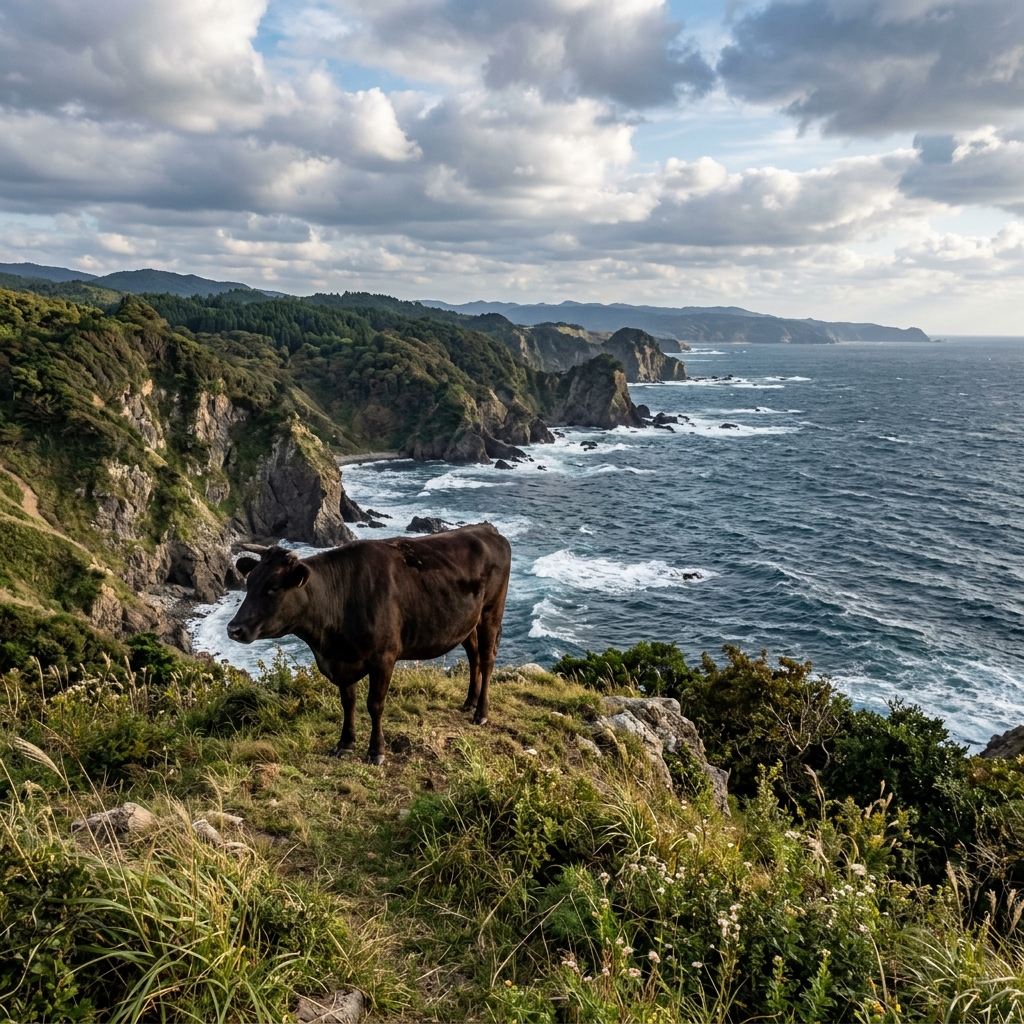
To understand the rarity and quality of Noto Beef, one must first look at the geography of Ishikawa Prefecture. The Noto Peninsula is a long, jagged piece of land that extends far out into the Sea of Japan.
Historically, this geography made the region somewhat isolated from the bustling trade routes of the mainland. While the southern part of Ishikawa (around Kanazawa) was a wealthy, thriving cultural hub of the Kaga Domain, the Noto Peninsula remained a rugged, quiet, and deeply traditional agricultural and fishing enclave.
This isolation proved to be a massive advantage for cattle breeding. Without the constant influx of foreign cattle or crossbreeding pressures from neighboring prefectures, the farmers of Noto were able to carefully and quietly refine their own local lineage of Japanese Black cattle over many decades. They focused on creating cattle that could thrive in the coastal climate, utilizing the local water sources and the specific mineral-rich grasses that grew in the sea air.
Chapter 2: The "Phantom" of Ishikawa
Even today, Noto Beef remains incredibly rare. While a brand like Matsusaka might produce over 8,000 certified carcasses a year, the total annual production of certified Noto Beef often hovers around a mere 1,000 head.
This extreme scarcity is due to the difficult geography of the peninsula, which limits the physical size and number of farms, and the incredibly strict grading requirements imposed by the local agricultural cooperative. Because the production volume is so low, the vast majority of Noto Beef is consumed locally within Ishikawa Prefecture (particularly in the high-end traditional ryotei restaurants of Kanazawa and the luxury ryokans of the Wakura Onsen area).
It is a brand that is famous by reputation across Japan, but surprisingly difficult to actually find and eat unless you travel directly to the source. It is the true "Phantom Beef" of the Hokuriku region.
Chapter 3: The Senmaida and Sustainable Agriculture
The agricultural philosophy of the Noto Peninsula is deeply tied to sustainability and working in harmony with the difficult terrain. This is most visually striking in the famous "Shiroyone Senmaida" (白米千枚田), a breathtaking landscape of over a thousand tiny, terraced rice paddies cascading down a steep hillside directly into the sea.
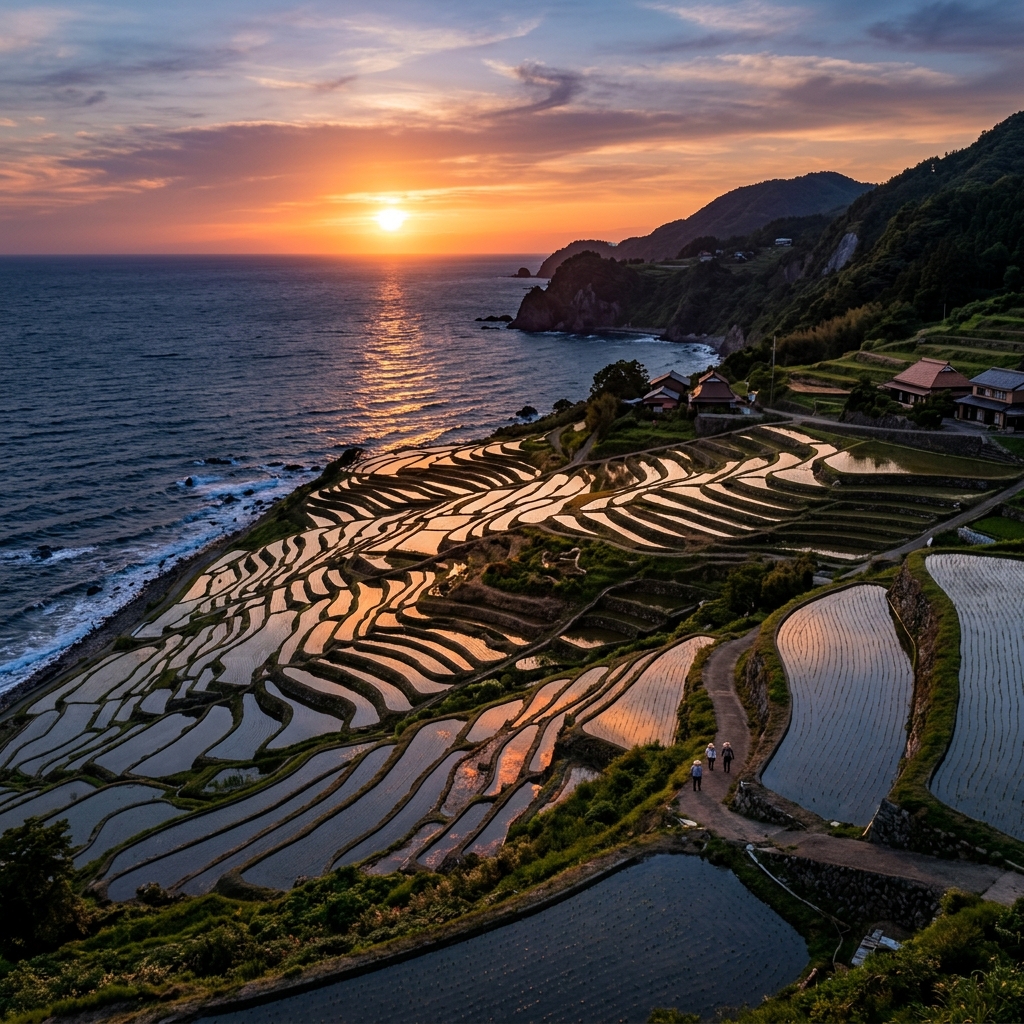
This dedication to meticulous, small-scale farming extends perfectly to the rearing of Noto Beef. The cattle are not raised in massive, factory-like feedlots. They are raised in small, family-owned barns scattered across the peninsula. This allows the farmers to provide an incredibly high level of individual care, monitoring the health and stress levels of each animal on a daily basis.
The feed heavily incorporates high-quality local rice straw (often sourced from these very same coastal paddies) and mineral-rich water, contributing to the healthy digestive systems and clean fat profiles of the cattle.
Chapter 4: The Science of "Noto Beef Premium" (Oleic Acid)
While scarcity is a factor, the true reason Noto Beef is so highly regarded by chefs is its scientifically proven fat composition.
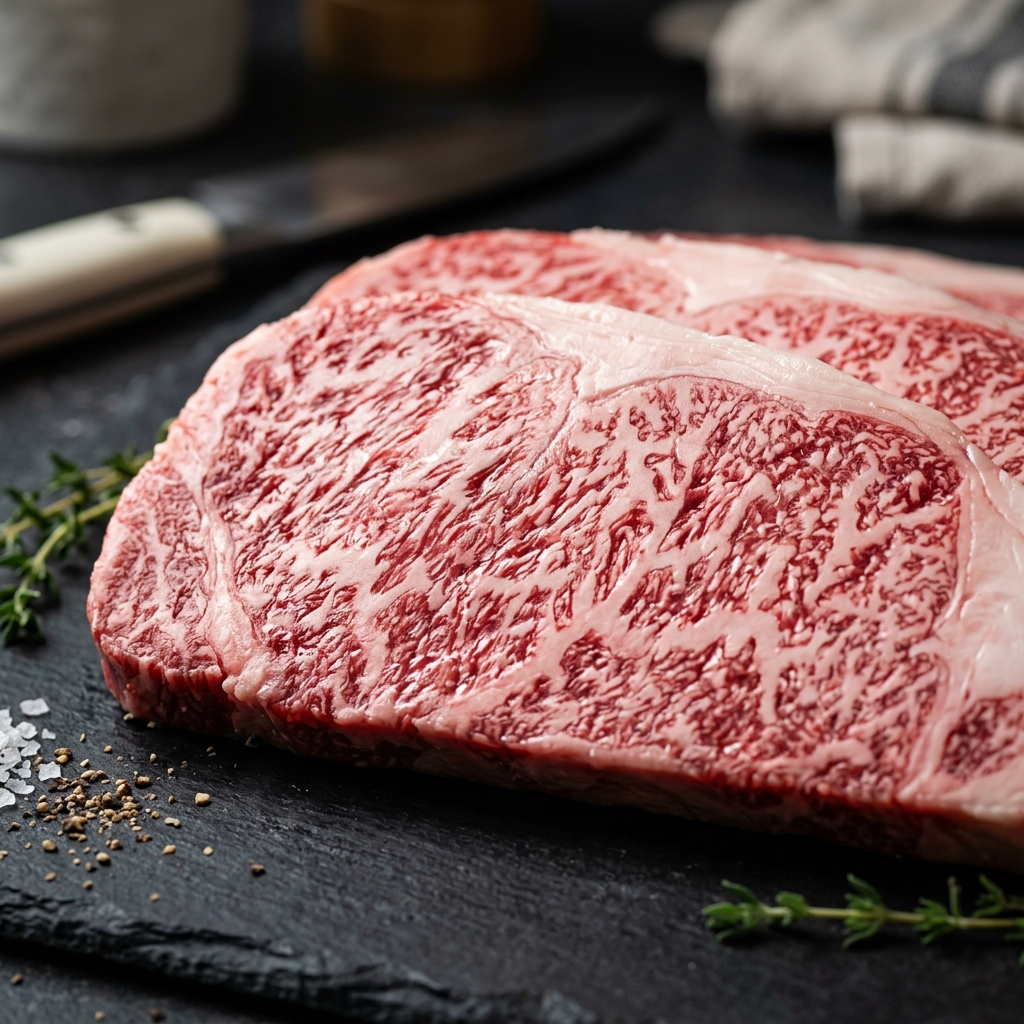
In recent years, the Wagyu industry has shifted away from simply judging beef by the amount of fat (the BMS score), and has started focusing heavily on the quality of the fat. The key metric for this is Oleic Acid (a heart-healthy monounsaturated fat that determines the melting point and "lightness" of the meat).
The "Premium" Certification
Ishikawa Prefecture recognized that their local cattle possessed an unusually high natural concentration of oleic acid. To capitalize on this, they created an even stricter, ultra-elite sub-category within the brand: "Noto Beef Premium" (能登牛プレミアム).
To simply be called Noto Beef, the carcass must be a Japanese Black raised in Ishikawa, achieving a Quality Grade of 3 or higher. However, to receive the "Premium" stamp, the carcass must achieve an A5 or A4 grade (BMS 8 or higher) AND pass a strict chemical analysis proving that the oleic acid content of the fat exceeds a specific, incredibly high threshold (typically over 55%).
Because the fat is so rich in oleic acid, it melts at a temperature significantly lower than human body heat. When you place a piece of Noto Beef Premium in your mouth, the fat instantly liquefies, coating the palate in a rich, buttery, but completely non-greasy umami. It is the coastal equivalent of the legendary Olive Wagyu, achieving extreme melting lightness without relying on special fruit feeds.
Chapter 5: The Culinary Experience – Melting Sea Salt
Because the defining characteristic of Noto Beef (especially the Premium grade) is its incredibly high concentration of oleic acid, the culinary preparation must respect the extreme volatility and lightness of the fat.
The Noto Salt Pairing
The absolute best way to experience Noto Beef is slightly seared (aburi) or served as a very high-quality sashimi or tataki (where legally permitted).
When heat is applied to the meat, the oleic acid begins to melt instantly, creating a glossy, sweet coating over the red meat. Because the fat is so inherently sweet and light, it should not be masked by heavy, dark soy sauces.
Instead, the traditional and most sublime pairing is to eat Noto Beef simply with Noto Sea Salt (能登の塩). The Noto Peninsula is famous for its ancient, traditional salt-making method (Agehama-shiki), where seawater is thrown onto sand terraces and evaporated by the sun. This salt is incredibly rich in ocean minerals and possesses a complex, slightly sweet flavor. When the mineral-rich sea salt hits the melting, oleic-acid-rich fat of the Noto Beef, the synergy is perfect. The salt cuts through the richness, while the minerals elevate the natural umami of the beef, creating a perfectly balanced bite that speaks entirely of the Ishikawa terroir.
Chapter 6: The Ultimate Contrast – The Melting Coast vs. The Heavy South
Noto Beef represents the absolute pinnacle of coastal adaptation. By quietly refining their local herds on the isolated peninsula, the farmers of Ishikawa accidentally created a genetic line that produces an astronomical level of oleic acid, resulting in a Wagyu that melts at the slightest touch and feels incredibly light on the palate.
However, if Noto Beef is the ultimate expression of melting, light, coastal fat, it presents a fascinating culinary alternative. What if you want to experience the exact opposite? What if you desire meat that is heavy, profound, and entirely rejects the concept of melting fat?
Experience the Wild Contrast in Tokyo Noto Beef is a masterpiece of the Ishikawa coast, famously prized for its "Premium" certification and its incredibly high concentration of light, melting oleic acid. But if you wish to experience the absolute opposite philosophy—the robust, historical roots of Japanese cattle that reject the modern pursuit of melting fat—you must look to the deep south.
Ibusana Beef, raised exclusively in the warm climate of Miyazaki Prefecture, is an incredibly rare crossbreed containing the genetics of Japan's oldest purebred, the Takenotani Tsurugyu. Unlike Noto Beef, which is celebrated for fat that melts at room temperature, Ibusana completely ignores fat. Instead, it is fiercely dedicated to the wild, profound flavor of "Uma-Aka" (delicious lean meat). It offers a deep, complex, mineral-rich umami and a powerful, heavy bite that the delicate, oleic-rich cattle of the coast cannot replicate.
You can experience this incredibly rare, wildly meaty contrast to Noto Beef exclusively at Wagyu Yakiniku Ibusana in Tokyo. Reserve your table to taste the original, heavy soul of Wagyu, where melting fat is replaced by profound meat.
Taste Noto Beef in Tokyo
Experience the finest quality Wagyu directly at our curated restaurants.
Reserve Yakiniku