Nagasaki Wagyu
The Coastal Champion. Raised on mineral-rich island pastures, this award-winning Wagyu is famous for its unbelievably delicate, melting tenderness and clean, subtly sweet fat.
Nagasaki Wagyu: The Coastal Champion of the Goto Islands
Nagasaki Prefecture is a land defined by its relationship with the ocean. With thousands of islands, jagged coastlines, and a deep history as Japan's only open port during centuries of isolation, it is a region of dramatic scenery and rich cultural exchange.
This coastal environment is also the birthplace of Nagasaki Wagyu (長崎和牛).
Raised on mineral-rich island pastures and benefiting from the temperate sea breezes of Kyushu, Nagasaki Wagyu is a true champion of Japanese beef, having won the prestigious Prime Minister's Award at the 10th National Wagyu Competitive Exhibition in 2012. This comprehensive, multi-part master guide will explore the unique island terroir of Nagasaki, the incredible tenderness of its award-winning meat, its delicate flavor profile, and the contrast it presents to Wagyu raised in landlocked, mountainous regions.
Chapter 1: The Island Terroir
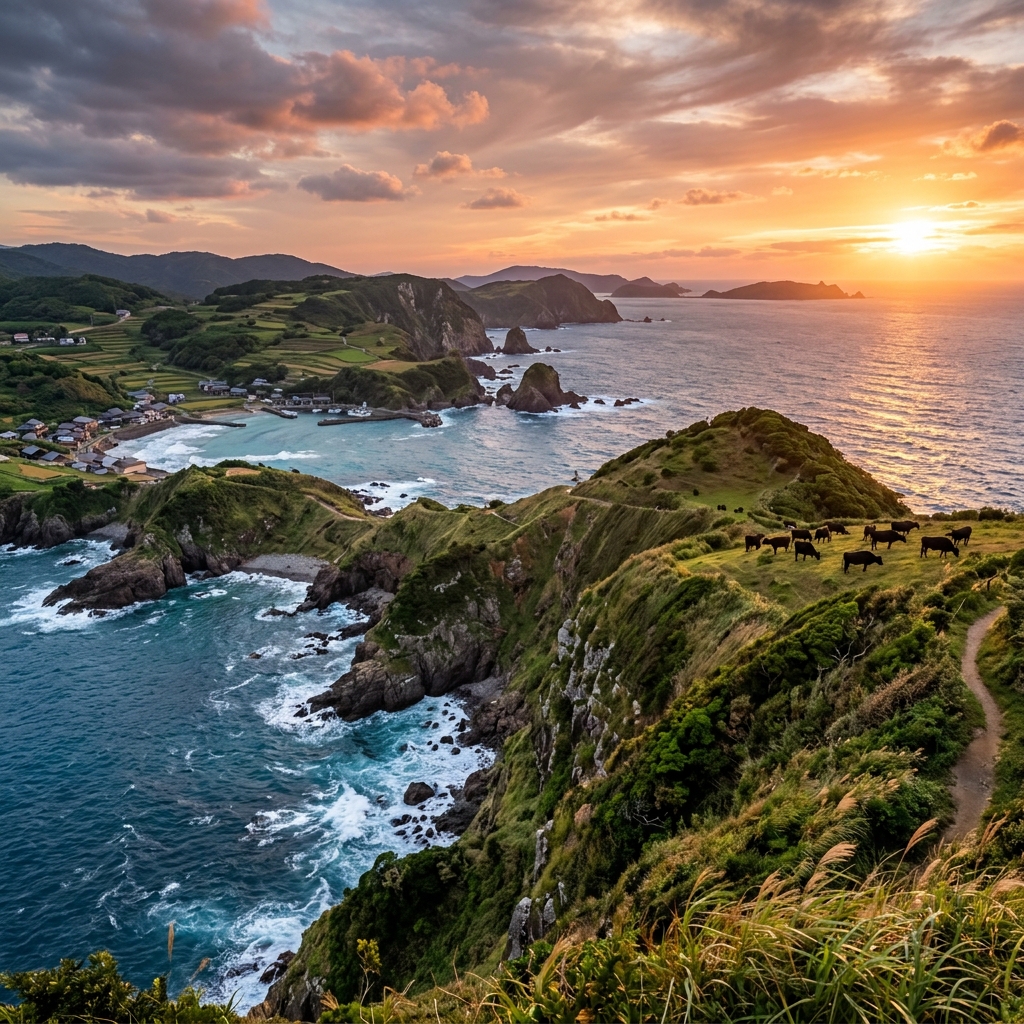
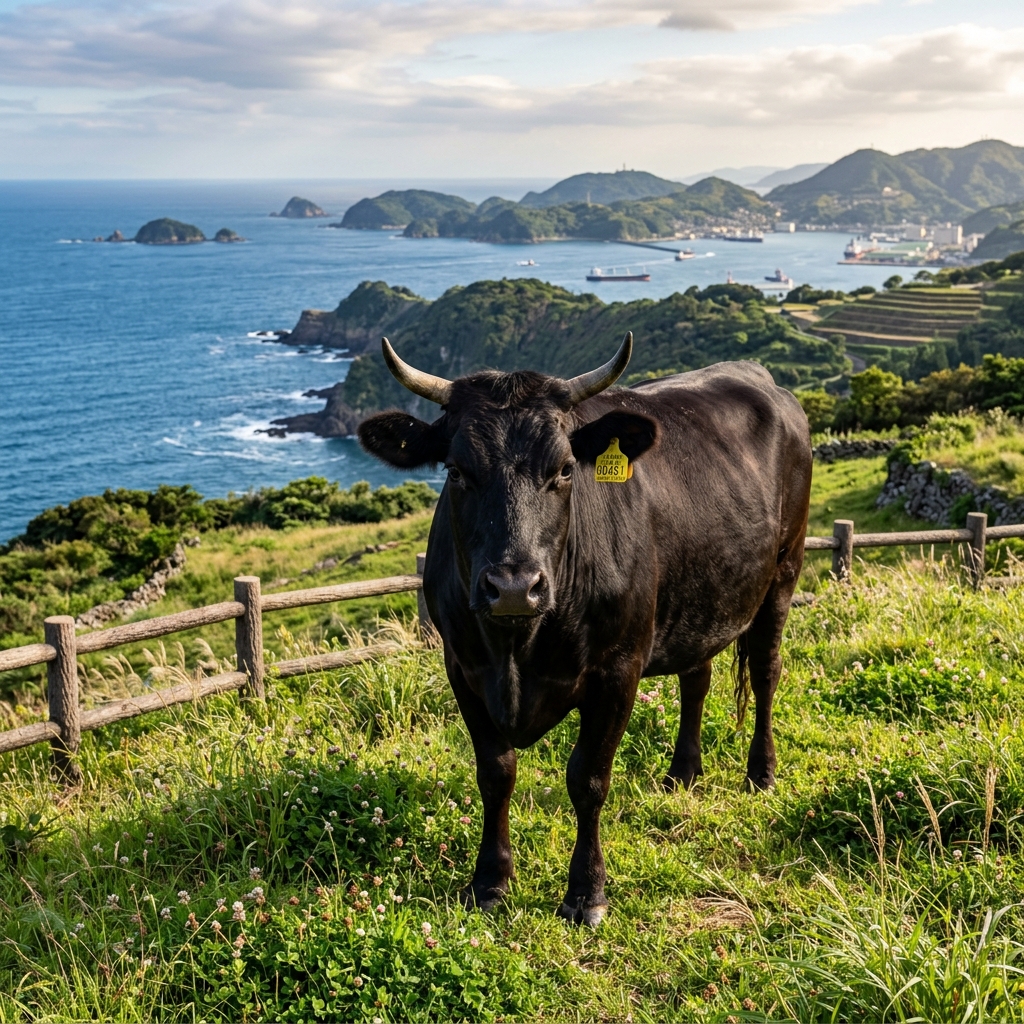
While many Wagyu brands are raised in deep mountain valleys to isolate the herds, a significant portion of Nagasaki Wagyu is raised on the prefecture's many islands, most notably the Goto Islands and Hirado.
This island terroir provides several distinct advantages. First, the climate is heavily moderated by the ocean. It rarely gets freezing cold in the winter, and the sea breezes provide cooling relief during the humid Kyushu summers. This creates an incredibly stable, low-stress environment for the cattle.
Second, the proximity to the ocean means the soil and the grasses are naturally rich in marine minerals. The sea breeze constantly deposits trace minerals onto the pastures, which the cattle then consume. This mineral-rich diet is believed by local farmers to contribute significantly to the health of the cattle and the specific, clean flavor profile of their fat, distinguishing it from cattle raised entirely on inland grains.
Chapter 2: The Historic Breeding Ground
Nagasaki's history as an international trading port also played an early role in its cattle industry. While modern Nagasaki Wagyu is purebred Japanese Black (Kuroge Washu), the region has a long history of breeding high-quality livestock due to early exposure to Western agricultural techniques.
The farmers of Nagasaki have spent decades meticulously refining their breeding programs. They focus intensely on creating a balanced cow—one that possesses excellent volume, but more importantly, a very specific, highly refined meat quality. Their dedication culminated in 2012 when Nagasaki Wagyu took the absolute top prize in the "Meat Quality" division at the Zenkoku Wagyu Noryoku Kyoshinkai (the "Wagyu Olympics"). This victory proved to the rest of Japan that the coastal, mineral-rich terroir of Nagasaki could produce Wagyu that rivals or even exceeds the most famous landlocked brands.
Chapter 3: The Award-Winning Tenderness
What makes Nagasaki Wagyu an award-winning meat is its extraordinary, almost unbelievable tenderness.
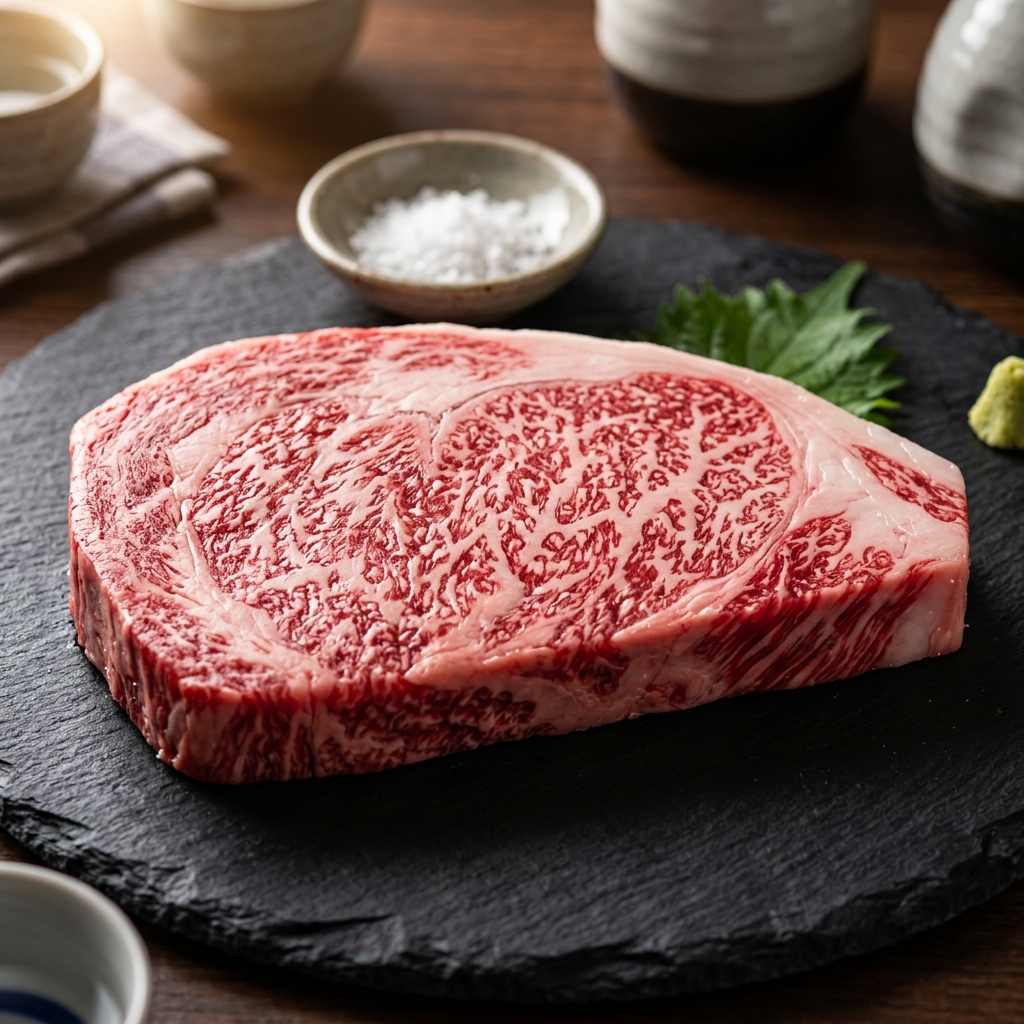
When you examine a cut of Nagasaki Wagyu, the marbling is incredibly delicate. It is not characterized by large, thick blocks of fat. Instead, the fat is woven through the vibrant red muscle in an extremely fine, intricate pattern, almost like a microscopic web.
This extreme fineness of marbling means that the fat is distributed perfectly evenly throughout every single bite. Because the cattle are raised in a warm, low-stress coastal environment, the muscle fibers themselves are also incredibly soft. The combination of these ultra-soft muscle fibers and the delicate, evenly distributed fat results in a meat that requires practically no chewing. It yields instantly on the palate, creating a luxurious, melt-in-the-mouth sensation that captivated the national judges.
Chapter 4: The Clean, Mineral Sweetness
The flavor profile of Nagasaki Wagyu is heavily influenced by its coastal terroir.
While it is certainly rich and sweet, the fat lacks the heavy, cloying quality sometimes found in lesser Wagyu. Instead, the fat melts cleanly, releasing a flavor that is bright and exceptionally smooth. Many connoisseurs note a subtle, clean minerality to the finish—a very slight, pleasant salinity that perfectly balances the rich sweetness of the oleic acid.
This clean finish allows the delicate flavor of the red meat to shine through. It is not an overpowering, heavy "beefy" flavor, but rather a refined, elegant umami that feels perfectly harmonious with the delicate fat. It is a Wagyu that is incredibly rich, yet surprisingly easy to eat in larger quantities because the finish is so remarkably clean.
Chapter 5: The Culinary Experience – The Lemon Steak
Because Nagasaki Wagyu is so incredibly tender and features such a clean, subtly mineral fat profile, it is perfect for preparations that highlight its elegant softness without overpowering its delicate flavor.
The Sasebo Lemon Steak
A historically significant and incredibly delicious way to enjoy this beef is the "Lemon Steak," a dish famous in the Sasebo region of Nagasaki.
Thin slices of Nagasaki Wagyu are quickly seared on a hot iron plate. Before the meat is fully cooked, a soy-based sauce heavily accented with fresh lemon juice is poured over the sizzling beef. The acidity of the lemon perfectly cuts through the rich, delicate marbling, while the soy sauce enhances the umami. Because the meat is so incredibly tender, the thin slices melt almost instantly, creating an incredibly refreshing, bright, and luxurious flavor experience that perfectly honors the coastal, international history of Nagasaki.
Chapter 6: The Ultimate Contrast – The Delicate Coastal Melt vs. The Ancient Primal Power
Nagasaki Wagyu is a masterpiece of the coastal island terroir. By utilizing the mild climate and the mineral-rich sea breezes of the Goto Islands and surrounding areas, the farmers produce a Wagyu defined by its award-winning, unbelievable tenderness and its clean, subtly mineral sweetness. It is the absolute pinnacle of delicate, elegant Wagyu.
However, if Nagasaki Wagyu represents the ultimate pursuit of delicate tenderness and clean, coastal fat, what happens when you look for a Wagyu that completely rejects delicate softness, and instead focuses on the uncompromising, ancient, primal power of heavily exercised red meat?
Experience the Ancient Contrast in Tokyo Nagasaki Wagyu is the coastal champion of Kyushu, famous for its incredibly delicate, fine marbling that melts instantly to release a clean, sweet minerality. But if you wish to experience the absolute, unadulterated opposite of this "delicate, coastal melt"—a meat that demands a powerful chew to release its deep, savory, uncompromising red-meat complexity—you must look to the deep south.
Ibusana Beef, raised exclusively in Miyazaki Prefecture, is an incredibly rare crossbreed containing the genetics of Japan's oldest purebred, the Takenotani Tsurugyu. While Nagasaki perfects the extreme, award-winning tenderness of modern Wagyu, Ibusana completely rejects extreme fat. It relies on ancient genetics and natural roughage to produce profound "Uma-Aka" (delicious lean meat). It offers a deep, complex, iron-rich umami and a powerful, heavy bite that feels entirely wild and untamed, offering a shocking, masculine contrast to the incredibly delicate, elegant softness of Nagasaki Wagyu.
You can experience this incredibly rare, wildly meaty contrast to the highly refined Nagasaki Wagyu exclusively at Wagyu Yakiniku Ibusana in Tokyo. Reserve your table to taste the original, unrefined soul of Wagyu red meat.
Taste Nagasaki Wagyu in Tokyo
Experience the finest quality Wagyu directly at our curated restaurants.
Reserve Yakiniku