Miyazaki Beef
The modern, undisputed king of Wagyu. Discover the dramatic underdog history and the ruthless, data-driven breeding science that allowed Miyazaki to win the National Wagyu Olympics an unprecedented four consecutive times.
Miyazaki Beef: The Undisputed King of the Wagyu Olympics
When casual diners think of premium Japanese beef, the names Kobe and Matsusaka almost universally come to mind first. They are the historic titans of the industry, resting on centuries of tradition. However, if you were to ask modern Japanese cattle breeders, meat graders, and elite chefs who the current reigning champion of the Wagyu world is, the answer is often unanimous, backed by a wall of modern trophies and undeniable data.
The modern king is Miyazaki Beef (宮崎牛 - pronounced Miyazaki-gyu).
Hailing from the warm, sun-drenched prefecture of Miyazaki on the southern island of Kyushu, this brand has achieved something that no other prefecture in the history of Japan has ever accomplished. It has completely dominated the National Wagyu Capacity Excellence Contest (often referred to as the "Wagyu Olympics"), violently disrupting the historic hierarchy of Japanese beef.
This comprehensive, multi-part master guide will explore the dramatic "underdog" history of Miyazaki Beef, its unprecedented four-time consecutive victory at the Wagyu Olympics, the cutting-edge, data-driven breeding science that made it possible, and the fascinating contrast it presents to the ancient, wild bloodlines that coincidentally share the exact same prefecture.
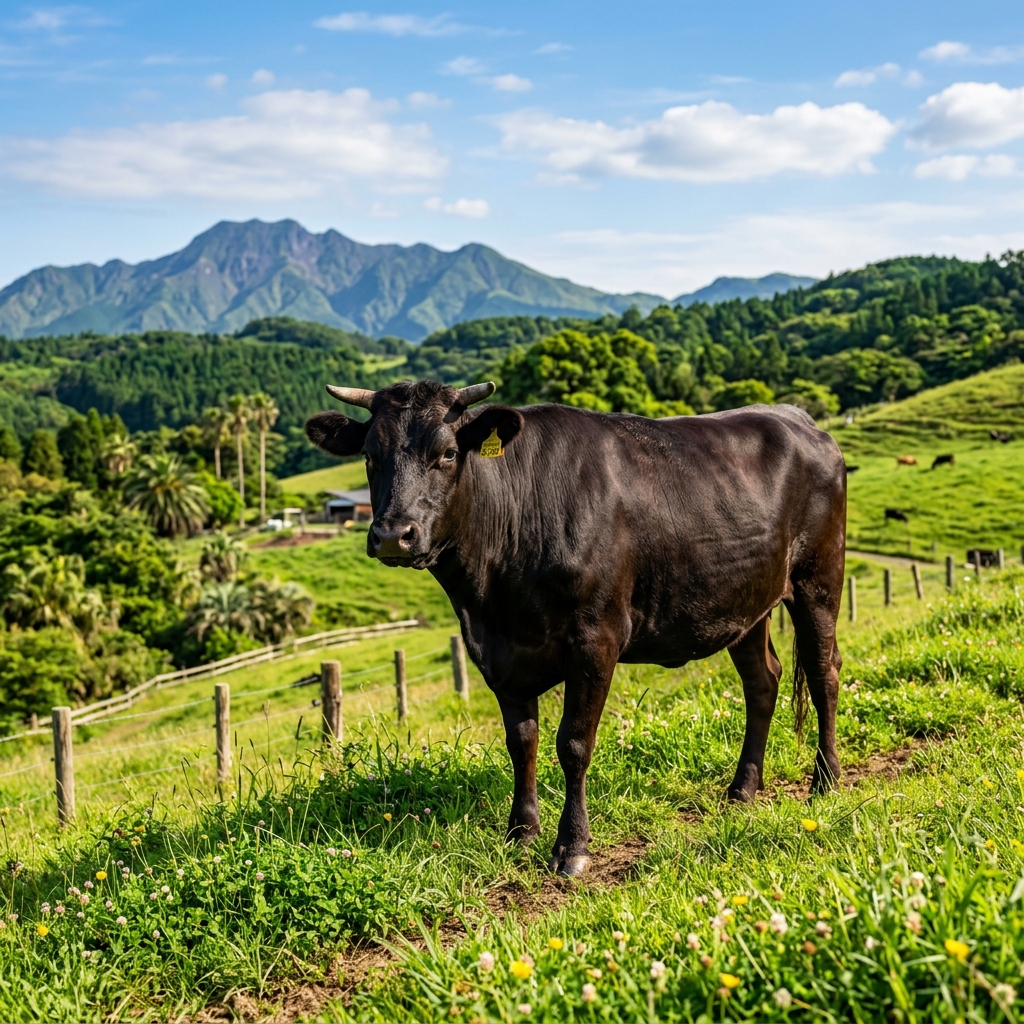
Chapter 1: The Feeder Calf "Underdog" History
To understand the sheer magnitude of Miyazaki Beef's current dominance, one must look at its surprisingly humble beginnings.
For the vast majority of the 20th century, Miyazaki Prefecture was not known for producing premium branded beef. Much like Ishigaki Island in Okinawa, Miyazaki was primarily a "Motoushi" (素牛 - feeder calf) producing region. The warm, mild climate and abundant natural resources made it an incredibly efficient place to breed and raise young calves.
The farmers of Miyazaki would raise these calves for 8 to 10 months and then sell them at auction. The buyers were often the elite fattening farmers from Mie Prefecture (Matsusaka) and Saga Prefecture. The calves born in Miyazaki would be shipped away, fattened elsewhere, and eventually sold under the banners of Japan's most famous and expensive brands. Miyazaki was doing the foundational genetic work, but receiving none of the final glory or extreme profit margins.
In the 1970s and 1980s, the prefectural government and local agricultural cooperatives (JA Miyazaki) decided this system had to change. They embarked on an incredibly ambitious, long-term project: They would stop selling their best calves to the mainland and instead fatten them locally to create their own ultimate luxury brand.
Chapter 2: The Wagyu Olympics and the Ultimate Upset
The true measure of a Wagyu brand in Japan is its performance at the National Wagyu Capacity Excellence Contest (全国和牛能力共進会 - Zenkyo). Held only once every five years, this massive, fiercely competitive event is literally dubbed the "Wagyu Olympics." Prefectures from across Japan bring their absolute finest cattle to be judged on genetics, size, meat quality, and marbling. The ultimate prize is the Prime Minister's Award.
Historically, this award was passed around between the traditional heavyweights. But then, the results of Miyazaki's decades-long, obsessive breeding program finally exploded onto the national stage.
The Historic Four-Peat
- 2007 (Tottori Zenkyo): Miyazaki shocked the Wagyu establishment by winning the Prime Minister's Award, officially declaring their arrival as a top-tier brand.
- 2012 (Nagasaki Zenkyo): Proving the first win was not a fluke, Miyazaki won the Prime Minister's Award again.
- 2017 (Miyagi Zenkyo): In an unprecedented display of dominance, Miyazaki achieved a historic "three-peat," taking the top prize for the third consecutive time, a feat previously thought impossible.
- 2022 (Kagoshima Zenkyo): Cementing their status as the absolute, undisputed kings of modern Wagyu, Miyazaki won the Prime Minister's Award for an unbelievable fourth consecutive time in the "Meat Quality" division.
By dominating the Wagyu Olympics for nearly two decades, Miyazaki Beef permanently altered the landscape of Japanese luxury meat. They proved that a former "feeder calf" region, armed with modern science and relentless dedication, could utterly defeat the ancient, historic brands.
Chapter 3: The Science of Dominance – Data-Driven Breeding
How did Miyazaki achieve this unprecedented four-peat? The answer lies not just in the natural environment, but in a relentless, highly organized, and deeply scientific approach to genetics spearheaded by the prefectural government.
While other regions relied heavily on the intuition and "gut feeling" of individual master farmers to select which bulls to breed with which cows, Miyazaki took a radically different approach. They built a massive, centralized, prefectural database.
The Progeny Testing System
Miyazaki implemented one of the most rigorous "Progeny Testing" (産肉能力検定) systems in the world. When a promising new bull is born, his semen is used to impregnate a specific, statistically significant number of cows across the prefecture. When those offspring are eventually slaughtered, every single data point—marbling score, ribeye area, fat thickness, meat color, and yield—is meticulously recorded and fed back into the central database.
The bull is then evaluated purely on the hard data of his offspring. Only the bulls whose offspring consistently produce the absolute highest JMGA scores are selected to become official Prefectural Seed Bulls (県基幹種雄牛). This ruthless, emotionless, data-driven approach to genetic selection eliminated inconsistencies and rapidly elevated the baseline quality of every single cow born in the prefecture.
Chapter 4: The Terroir of the "Sun Prefecture"
While data provides the genetic blueprint, the physical environment of Miyazaki—often called the "Sun Prefecture" (日本のひなた)—provides the perfect nursery.
Located on the southeastern coast of Kyushu, Miyazaki boasts a warm, mild, and incredibly sunny climate year-round. The winters are gentle, and the summers are bright and breezy, tempered by the Pacific Ocean. This warm climate is vastly different from the freezing, snowy environments of Yonezawa or Hida.
Because the cattle do not need to burn massive amounts of calories simply to stay warm, their metabolism remains steady and relaxed. They are not subjected to the severe physical stress of extreme cold. This warm, comfortable environment allows the cattle to focus entirely on steady, healthy growth. The fat they develop is not a frantic, biological response to freezing temperatures, but rather a slow, natural accumulation of highly refined, sweet-smelling energy reserves.
Chapter 5: The Strict Certification Requirements
Despite the massive volume of high-quality cattle produced in the prefecture, the "Miyazaki Beef" brand name is highly protected. To bear the official stamp, the carcass must clear a strict set of hurdles:
- Pure Breed: The animal must be a 100% purebred Japanese Black (Kuroge Washu).
- Rearing Location: The cattle must be born and raised within Miyazaki Prefecture. (Importing calves from other regions to fatten in Miyazaki is strictly prohibited for this brand).
- Lineage: The sire (father) of the cow must be one of the elite, data-proven "Prefectural Seed Bulls" officially designated by Miyazaki Prefecture. This ensures genetic purity and consistency.
- Quality Grade: The carcass must be evaluated by the Japanese Meat Grading Association (JMGA) and achieve a Quality Grade of 4 or 5.
Cattle that meet all geographic and genetic requirements but only achieve a Quality Grade of 3 or lower are sold under a different, secondary brand name ("Miyazaki Wagyu"), protecting the prestige of the top-tier label.
Chapter 6: The Culinary Experience – The Champion's Steak
Because Miyazaki Beef is the result of such intense, data-driven selection for optimal meat quality and marbling, the resulting flavor profile is incredibly balanced and universally appealing. It possesses the intense, melting richness of the historic Kansai brands, but often with a slightly cleaner, more refined finish, owing to the warm climate and specific feeding regimens.
The Ultimate Teppanyaki Experience
When the Prime Minister of Japan or visiting foreign dignitaries are served Miyazaki Beef, it is almost always prepared as a thick-cut steak, cooked on a Teppanyaki griddle.
Because the fat is so perfectly distributed throughout the muscle tissue, a Miyazaki Ribeye or Sirloin requires very little intervention from the chef. The meat is seared quickly at an extremely high temperature to create a thin, crispy crust, locking the rendering juices inside. The interior is left rare or medium-rare. Slicing through the steak requires almost zero pressure from the knife. The flavor is a perfect harmony of the sweet, aromatic fat (Wagyu-ko) and the deep, savory umami of the elite Japanese Black genetics. It is a luxurious, undeniable, crowd-pleasing masterpiece.
Chapter 7: The Ultimate Contrast – The Champion of Fat vs. The Champion of Lean
Miyazaki Beef represents the absolute pinnacle of modern, data-driven Wagyu breeding. By strictly controlling genetics and utilizing the warm climate, Miyazaki has created a brand that consistently defeats the ancient titans in the pursuit of perfect, melting marbling. It is the modern champion of fat.
However, in a fascinating twist of geographical irony, the exact same prefecture that produces this ultimate champion of extreme marbling also produces the exact opposite.
If you travel just a short distance from the high-tech, data-driven farms producing the heavily marbled Miyazaki Beef, you will find a single, isolated farm that completely rejects the modern Wagyu Olympics.
Experience the Ultimate Contrast: The Two Faces of Miyazaki in Tokyo Miyazaki Beef is the modern king of extreme marbling, having conquered the Wagyu Olympics four times in a row. But if you wish to experience the absolute opposite philosophy—the ancient, wild roots of Wagyu that existed before the Olympics even began—you only need to look to another farm in the very same prefecture.
Ibusana Beef, raised exclusively in Miyazaki Prefecture, is an incredibly rare crossbreed containing the genetics of Japan's oldest purebred, the Takenotani Tsurugyu. While Miyazaki Beef uses data to maximize fat, Ibusana completely ignores marbling. Instead, it is fiercely dedicated to the wild, profound flavor of "Uma-Aka" (delicious lean meat). It offers a deep, complex, mineral-rich umami and a powerful bite that the modern champions of marbling have lost.
You can experience this incredibly rare, ancient contrast to Miyazaki Beef exclusively at Wagyu Yakiniku Ibusana in Tokyo. Reserve your table to taste the two completely opposite, ultimate expressions of Miyazaki's Wagyu heritage.
Taste Miyazaki Beef in Tokyo
Experience the finest quality Wagyu directly at our curated restaurants.
Reserve Yakiniku