Miyako Beef
The Ultra-Rare Jewel of the Tropical Reef. Raised on a sun-drenched coral island, this elusive Wagyu develops a remarkably clean, sweet fat profile from its unique mineral-rich water and sugarcane diet.
Miyako Beef: The Ultra-Rare Jewel of the Tropical Reef
When discussing Japanese Wagyu, the imagery that comes to mind usually involves snow-capped mountains or ancient mainland farms. Rarely does one associate the pinnacle of beef production with vibrant coral reefs, crystal-clear turquoise waters, and year-round tropical heat. Yet, situated hundreds of kilometers south of the Japanese mainland, one island produces a Wagyu so incredibly rare and delicious that it is almost mythical.
This is Miyako Beef (宮古牛 - Miyako-gyu).
Raised exclusively on Miyako Island in Okinawa Prefecture, this brand represents the absolute extreme of tropical terroir. The island itself is formed from uplifted coral reefs, resulting in an environment where the water, soil, and grass are fundamentally different from anywhere else in Japan. This comprehensive, multi-part master guide will explore the unique coral terroir of Miyako Island, the biological impact of the tropical heat on Wagyu fat, its distinctively sweet flavor profile, and the fascinating contrast it presents to standard mainland beef.
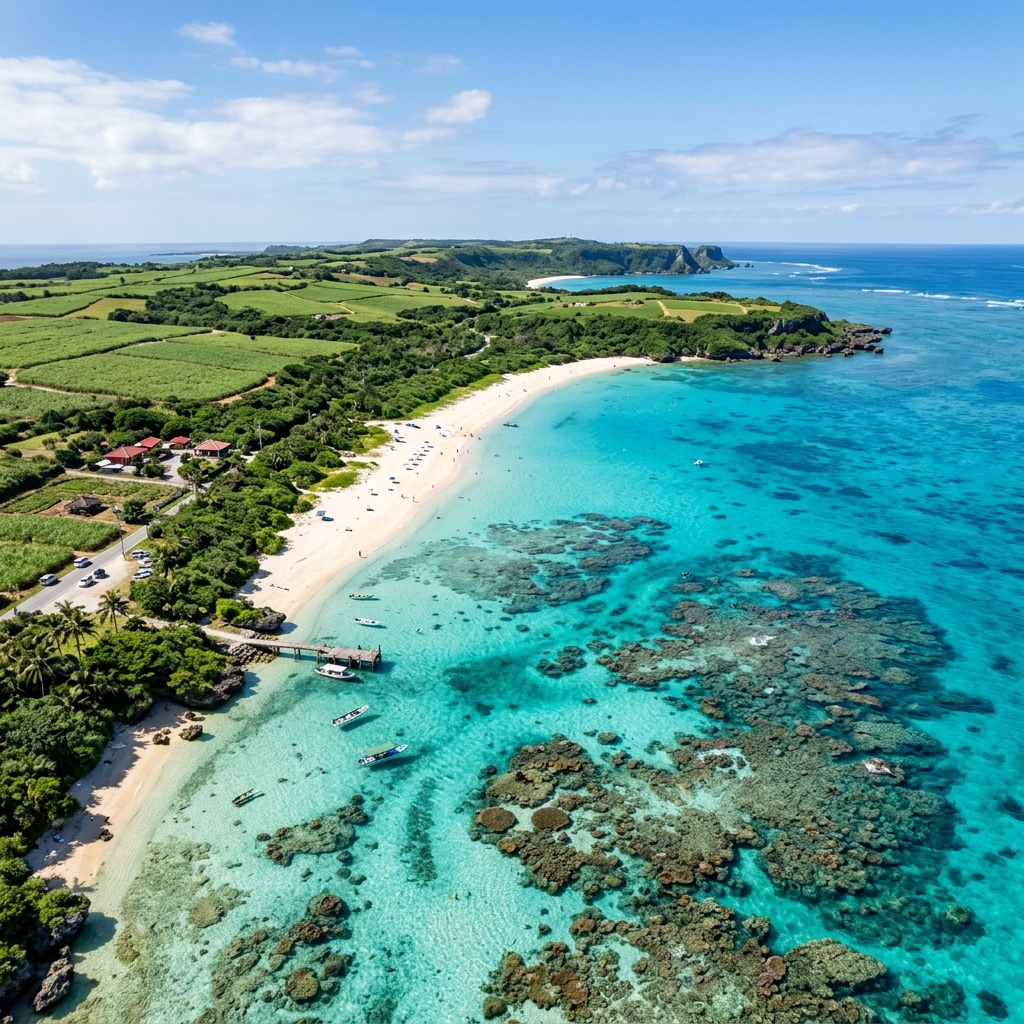
Chapter 1: The Coral Terroir
Miyako Island is a flat, subtropical paradise located in the Ryukyu Archipelago. Unlike many other Japanese islands that are volcanic in origin, Miyako Island is composed entirely of Ryukyu limestone—essentially, ancient, uplifted coral reefs.
This geological distinction is the most critical factor in the terroir of Miyako Beef. Because there are no high mountains or large rivers on the island, all the water the cattle drink originates from rainfall that filters slowly through the porous coral limestone into vast underground reservoirs. This natural coral filtration process enriches the groundwater with massive amounts of calcium and other vital marine minerals.
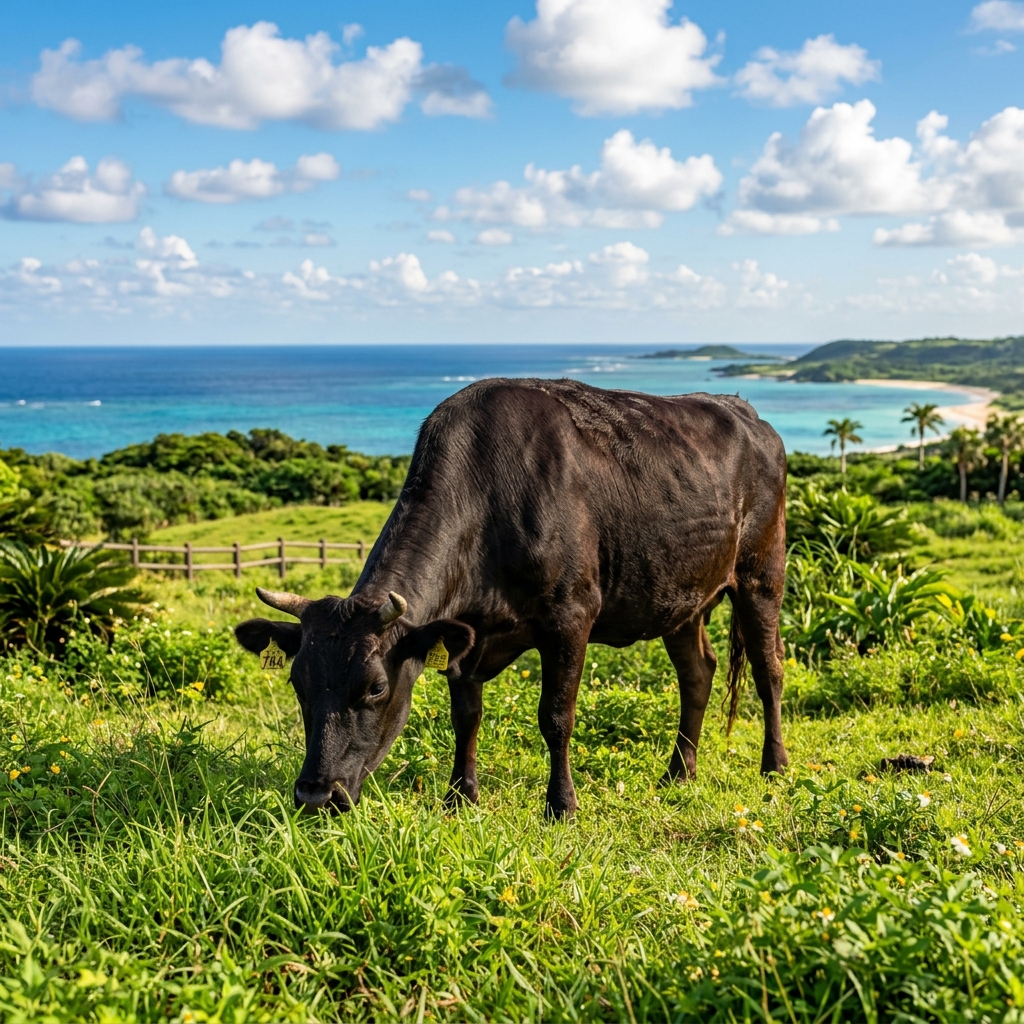
When the Japanese Black Wagyu cattle of Miyako Island drink this water and eat the grass grown in the mineral-rich, coral-based soil, they absorb a diet that is impossible to replicate anywhere else on Earth. The environment is pristine, bathed in year-round sunshine, and completely devoid of the extreme winter stress experienced by cattle in northern Japan.
Chapter 2: The Tropical Incubation
The tropical climate of Miyako Island provides a unique physiological challenge and advantage for the cattle.
In northern Japan, cattle build fat as insulation against the freezing cold. On Miyako Island, the challenge is the heat. To thrive in a subtropical environment, the cattle must metabolize their feed highly efficiently. The farmers utilize local Okinawan agricultural byproducts, including sugarcane tops and local grasses, which the cattle digest with ease.
Because the cattle do not need to expend energy fighting the cold, their growth is steady and relaxed. This stress-free, year-round warm incubation allows the marbling to develop at a remarkably consistent rate. The resulting fat is entirely different from the thick, insulating tallow of northern cows; it is inherently softer, lighter, and possesses a unique structural fluidity designed for a warm environment rather than a freezing one.
Chapter 3: The Sun-Drenched Marbling
Visually, Miyako Beef is a testament to its tropical upbringing.
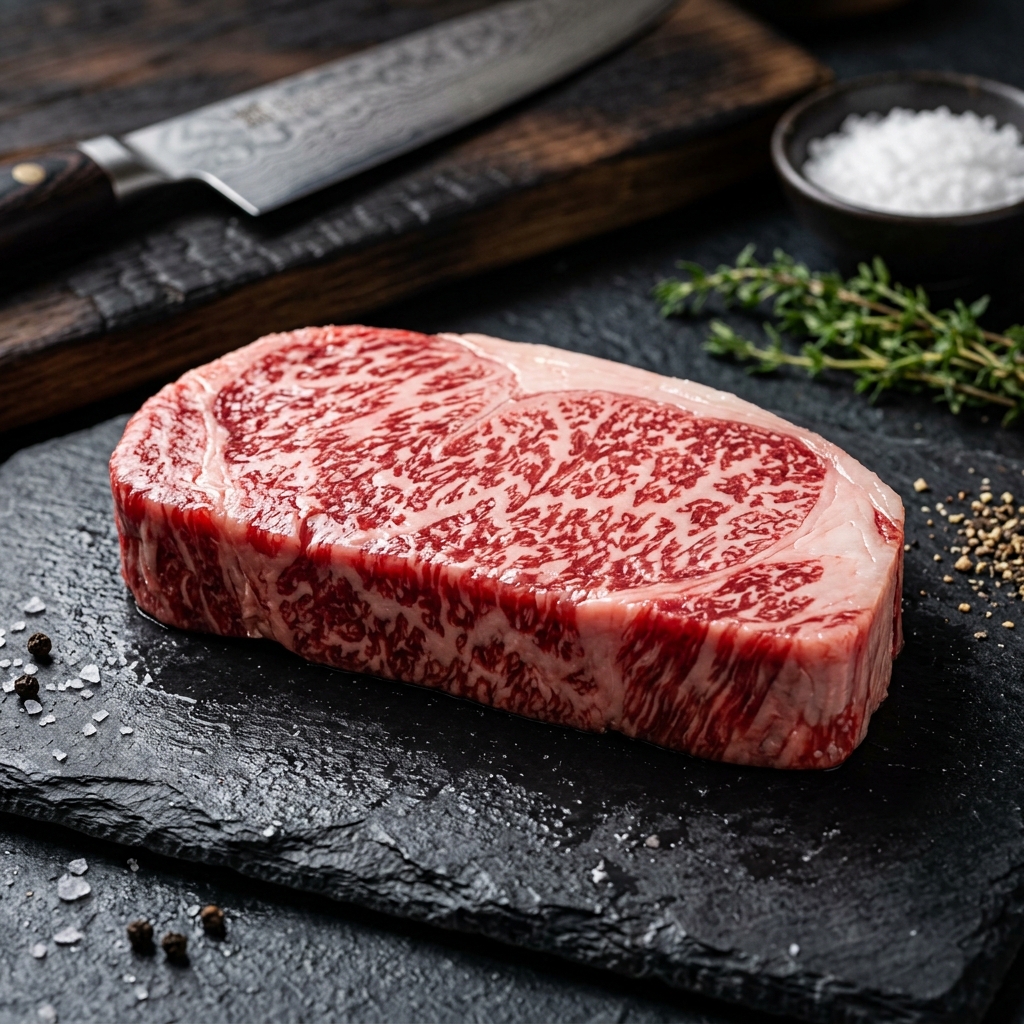
The marbling (sashi) is intense, yet it lacks the opaque, heavy whiteness sometimes seen in grain-stuffed mainland cattle. Instead, the fat has a brilliant, almost glossy sheen. Because production on Miyako Island is so incredibly small—often just a few dozen head making it to market each month—the quality control is absolute.
The meat itself boasts a vibrant ruby color, a direct result of the high-calcium, coral-filtered water the cattle consume, which promotes excellent blood health and muscle development. It is an exceedingly beautiful meat, representing a perfect harmony between the intense marbling potential of Japanese Black Wagyu and the relaxed, sun-drenched terroir of the Okinawan islands.
Chapter 4: The Coral Sweetness
The flavor of Miyako Beef is why it is often referred to as a "phantom" Wagyu (Maboroshi no Wagyu). Because nearly all of it is consumed locally on the island or in high-end Naha restaurants, few mainlanders ever get to taste it.
When tasted, Miyako Beef delivers an unmistakable, profound sweetness. This sweetness is not artificial or overpowering; it is a clean, natural flavor derived from the unique combination of sugarcane feed and the mineral-rich coral groundwater. The fat melts on the palate with zero resistance, but it does not leave a heavy coating.
Instead, the fat washes away quickly, leaving behind the rich, savory notes of the red meat, elevated by that signature coral-infused sweetness. It is a highly refined, light, and deeply satisfying flavor profile that perfectly captures the essence of a tropical paradise.
Chapter 5: The Culinary Experience – The Tropical Yakiniku
Because Miyako Beef is so rare and possesses such a delicate, sweet fat profile, it is almost exclusively served as Yakiniku on the island itself.
The Island Salt Yakiniku
To mask the flavor of Miyako Beef with heavy, mainland-style soy sauces would be a travesty. The absolute best way to consume this meat is grilled quickly over an open flame and seasoned simply with Yukishio (Snow Salt), a powdery, highly mineral-rich salt produced directly from the waters surrounding Miyako Island.
The synergy between the coral-raised beef and the coral-filtered sea salt is phenomenal. The salt instantly draws out the sugarcane sweetness of the fat, while the charcoal smoke adds a primitive edge to the meat. The fat melts instantly in the mouth, delivering a bright, clean, tropical umami that feels entirely distinct from heavy, winter-raised Wagyu. It is a highly localized, perfect culinary pairing.
Chapter 6: The Ultimate Contrast – The Tropical Sweetness vs. The Ancient Primal Power
Miyako Beef is a masterpiece of tropical terroir and isolated rearing. By leveraging the coral-filtered water and sun-drenched environment of Okinawa, farmers produce an ultra-rare Wagyu defined by a clean, sugarcane sweetness and a delicate, melting fat profile. It is the absolute pinnacle of "Tropical Beef."
However, if Miyako Beef represents the ultimate pursuit of a sweet, melting fat achieved through a relaxed, subtropical environment, what happens when you look for a Wagyu that completely rejects delicate sweetness, and instead focuses entirely on the uncompromising, ancient, primal power of heavily exercised red meat born from pure, ancient genetics?
Experience the Ancient Contrast in Tokyo Miyako Beef is the tropical phantom of Okinawa, famous for its coral-mineral diet and uniquely sweet, clean-melting fat. But if you wish to experience the absolute, unadulterated opposite of this "relaxed, tropical elegance"—a meat that demands a powerful chew to release its deep, iron-rich, uncompromising red-meat complexity—you must look to the ancient bloodlines of Kyushu.
Ibusana Beef, raised exclusively in Miyazaki Prefecture, is an incredibly rare crossbreed containing the genetics of Japan's oldest purebred, the Takenotani Tsurugyu. While Miyako utilizes its tropical environment to produce a soft, sweet fat, Ibusana completely rejects extreme marbling. It relies solely on ancient, wild genetics and natural roughage to produce profound "Uma-Aka" (delicious lean meat). It offers a deep, complex, iron-rich umami and a powerful, heavy bite that feels entirely wild and untamed, offering a shocking, masculine contrast to the elegant, sweet softness of Miyako Beef.
You can experience this incredibly rare, wildly meaty contrast to the tropical Miyako Beef exclusively at Wagyu Yakiniku Ibusana in Tokyo. Reserve your table to taste the original, unrefined soul of Wagyu red meat.
Taste Miyako Beef in Tokyo
Experience the finest quality Wagyu directly at our curated restaurants.
Reserve Yakiniku