Mishima Cattle
The Last Purebred Japanese Cow. A designated National Natural Monument, this incredibly rare cattle from a remote island escaped Western crossbreeding, offering a taste of pure, ancient red meat umami.
Mishima Cattle: The Last Purebred Japanese Cow
When discussing the history and genetics of Wagyu, there is a fundamental truth that is often overlooked: almost all modern Wagyu (including Kobe, Matsusaka, and Omi) are crossbreeds. During the Meiji era, native Japanese cattle were extensively crossed with imported Western breeds (like Simmental and Brown Swiss) to increase their size and meat yield.
However, there is one incredible exception. Due to extreme geographic isolation, one small population of native Japanese cattle completely escaped this Western genetic influence. They remain genetically identical to the cattle that worked alongside Japanese farmers hundreds of years ago.
This is the Mishima Cow (見島牛 - Mishima-ushi), officially designated as a National Natural Monument of Japan.
Raised exclusively on a tiny, remote island in the Sea of Japan off the coast of Yamaguchi Prefecture, Mishima Cattle represent the absolute purest, unadulterated roots of Japanese beef. This comprehensive, multi-part master guide will explore the fascinating history of this isolated island, the unique genetic traits of this ancient breed, the incredible rarity of its meat, and the stark contrast it presents to the highly engineered, crossbred Wagyu of the modern era.
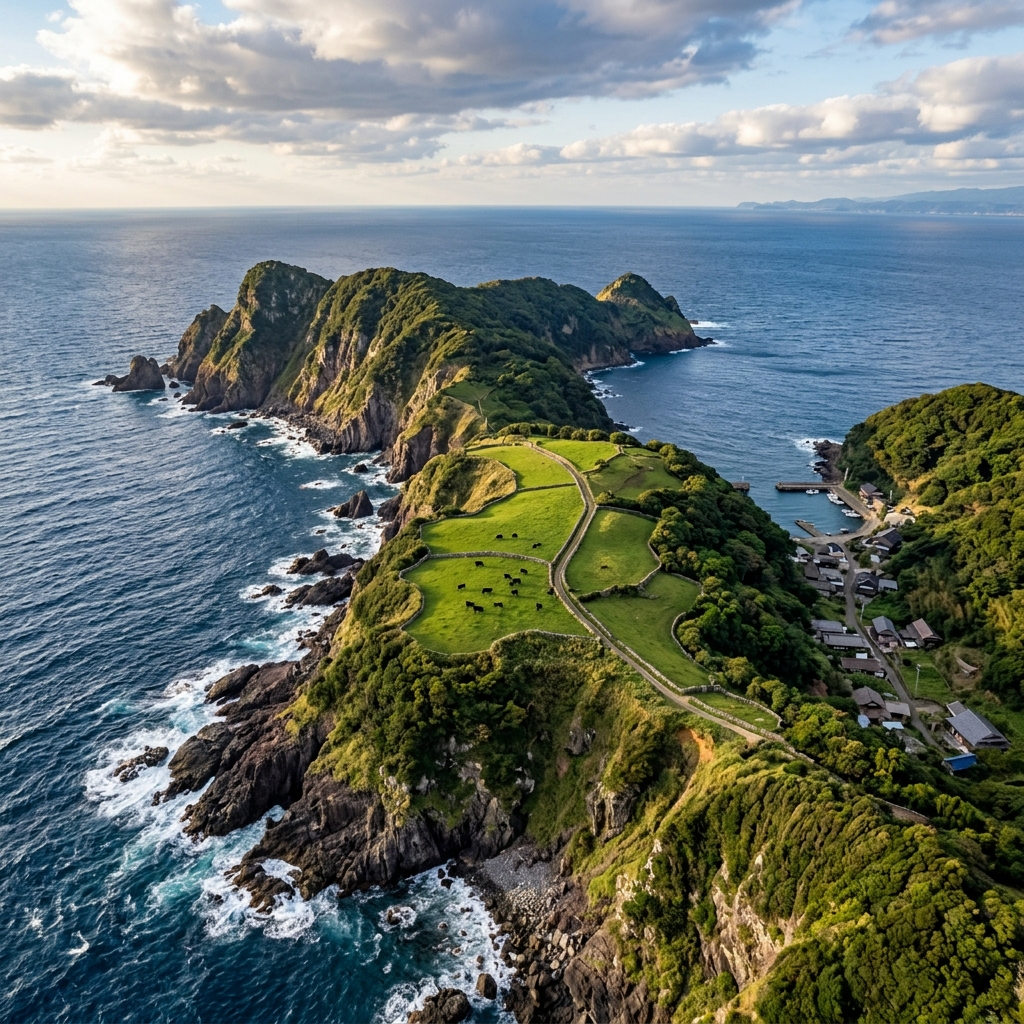
Chapter 1: The Island Sanctuary
To understand why the Mishima Cow survived pure, you must understand where it lives. Mishima Island is a very small, rugged island located about 45 kilometers off the coast of Hagi City in Yamaguchi Prefecture.
Historically, crossing the treacherous waters of the Sea of Japan to reach Mishima was difficult and dangerous. Because of this extreme isolation, when the Japanese government mandated the crossbreeding of native cattle with Western breeds in the early 20th century, the decree simply never effectively reached or impacted the farmers of Mishima Island.
The farmers there continued to raise their cattle exactly as their ancestors had done for generations. The cattle were not raised for meat initially; they were essential draft animals used for plowing the small, steep agricultural plots on the island and for producing fertilizer. Because the island is small and resources are limited, the cattle naturally evolved (or rather, maintained) a very small, robust, and incredibly hardy physique.
Chapter 2: The National Treasure
By the mid-20th century, the Japanese government realized the immense historical and genetic value of this isolated herd. In 1928, the Mishima Cow was officially designated as a National Natural Monument (天然記念物).
Because they are a protected species, raising and preserving them is a matter of national heritage, not just agricultural commerce. The Mishima Cattle Preservation Society works tirelessly to maintain the pure bloodline. The population is incredibly small—often hovering around fewer than 100 living animals in total on the entire planet.
Visually, a Mishima cow looks quite different from a modern Japanese Black. It is significantly smaller, with a solid black coat, strong legs, and a slightly wilder, more alert demeanor. It is a living time capsule, a direct genetic link to Japan's agricultural past before the pursuit of artificial marbling changed the course of Wagyu history.
Chapter 3: The Ultimate Rarity
Because Mishima Cattle are a protected Natural Monument, they cannot be mass-produced or slaughtered indiscriminately for commercial gain.
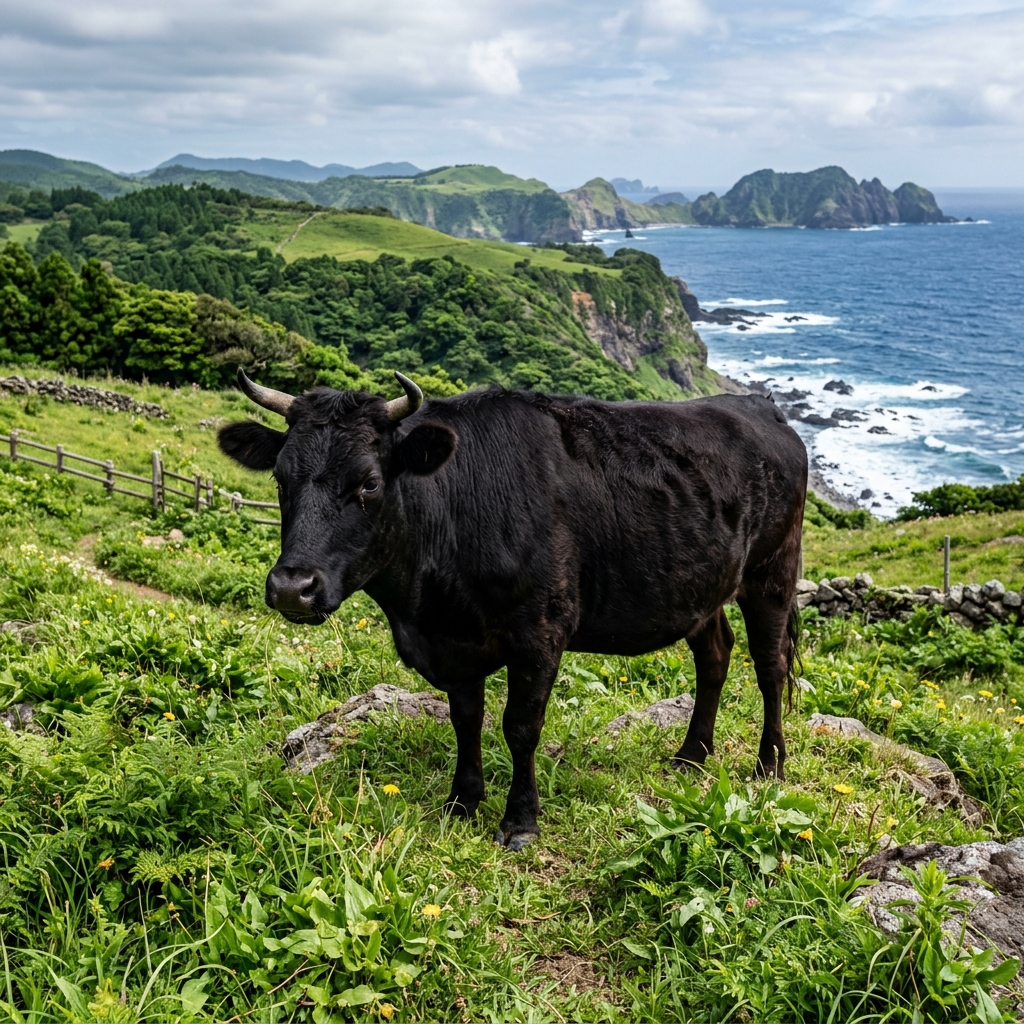
The only way Mishima Beef enters the market is under extremely strict conditions. When an animal becomes too old for breeding or agricultural work, or in very rare cases of strictly controlled culling to manage the island's limited resources, the meat is sold. Consequently, only a tiny handful of animals (often fewer than 10) are processed for meat in an entire year.
This makes Mishima Beef arguably the absolute rarest beef on the planet. It is far rarer than Kobe, Matsusaka, or even the highly exclusive single-farm Ozaki Beef. Most Japanese people, even Wagyu connoisseurs, will never have the opportunity to taste pure Mishima Beef in their lifetime.
The Mishima-Kuroge Cross (Mishima-Wagyu)
Because pure Mishima beef is almost impossible to obtain, there is a related brand called "Mishima-Wagyu" (見島和牛). This is created by crossing a pure Mishima bull with a Holstein or standard Japanese Black cow. This crossbreed offers a glimpse into the flavor profile of the Mishima genetics while being slightly more commercially available (though still extremely rare). However, for purists, the true holy grail remains the 100% purebred Mishima Cow from the island.
Chapter 4: The Original Umami
When one is lucky enough to encounter pure Mishima Beef, the visual appearance is striking.
Unlike modern A5 Wagyu, which has been genetically engineered over a century to produce massive amounts of white intramuscular fat, Mishima Beef represents the natural state of Japanese cattle. The meat is a very deep, vibrant red. The marbling is present, but it is incredibly fine, delicate, and sparse compared to modern standards.
This is what Wagyu looked like before the "marbling wars" began.
When you taste Mishima Beef, you are tasting the original, unadulterated umami of the Japanese cow. The meat is dense, offering a satisfying, firm chew that demands your attention. The flavor is incredibly profound, with a strong, almost wild "beefy" character, rich in iron and complex amino acids. It does not melt away instantly; it lingers, providing a deep, historical resonance that modern, fat-heavy Wagyu simply cannot replicate.
Chapter 5: The Culinary Experience – Tasting History
Because Mishima Beef is so incredibly rare and texturally distinct from modern Wagyu, it requires a very careful culinary approach.
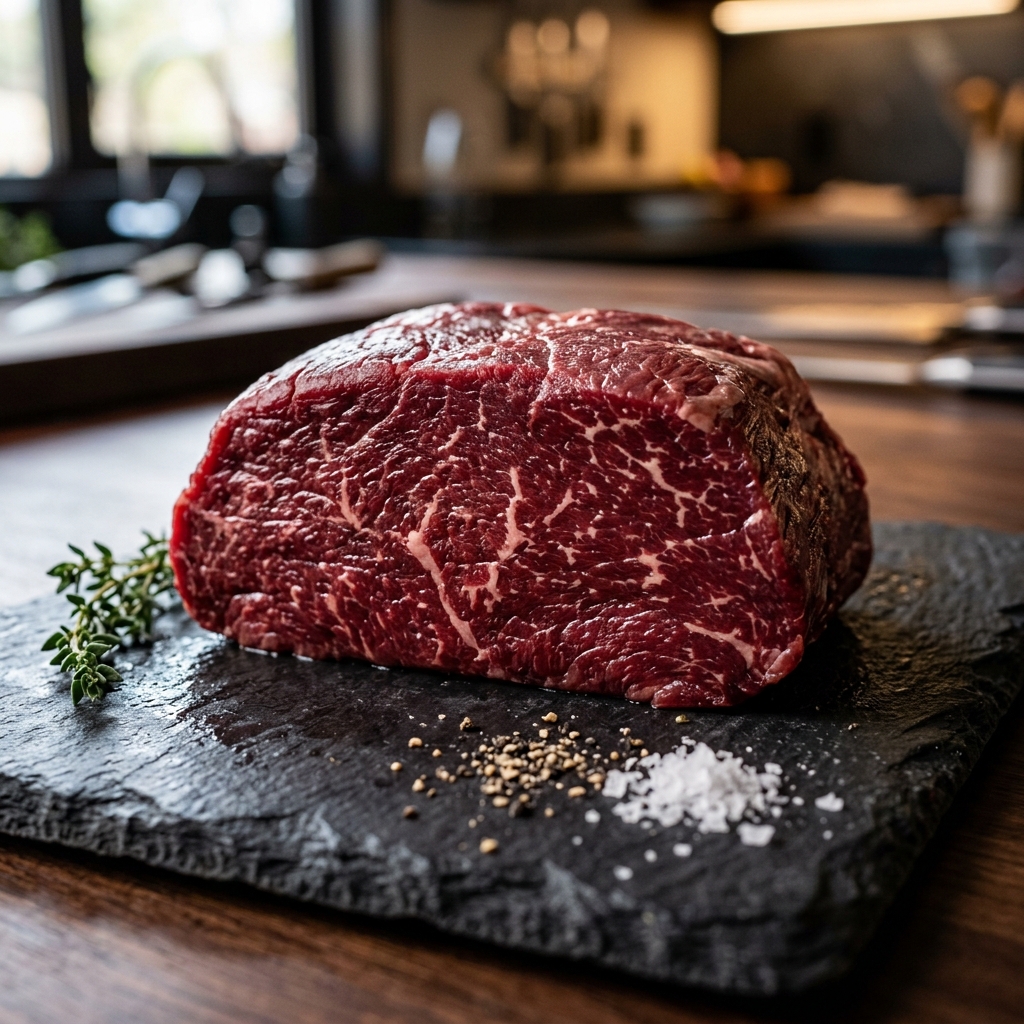
The Simplicity of the Grill
If you are fortunate enough to secure a cut of Mishima Beef, complex sauces or marinades should be strictly avoided. The goal is to taste the history and the pure genetics of the animal.
The ideal preparation is a simple, high-heat sear over premium Binchotan charcoal, served rare to medium-rare. Because it lacks the overwhelming fat of modern Wagyu, it will not melt in your mouth. You must chew it. But as you chew, the meat releases an extraordinary, savory essence—a concentrated, natural beef flavor that is elegant, slightly wild, and entirely unforgettable. It is best enjoyed with just a touch of high-quality sea salt or a few drops of aged, unpasteurized soy sauce to elevate the natural amino acids.
Chapter 6: The Ultimate Contrast – The Ancient Purebred vs. The Ancient Cross
Mishima Cattle represents the absolute, unadulterated origin of Japanese cattle. By remaining completely isolated on a tiny island, it escaped the Western crossbreeding of the Meiji era, preserving a deep red, profoundly flavorful meat that serves as a living time capsule. It is the ultimate expression of pure, native Japanese genetics.
However, while Mishima is the only purebred Japanese cow left, there is another incredibly rare brand that explores a different path to ancient flavor. What happens when you take the oldest crossbred genetics—the very first successful blend of Japanese and Western cattle before the modern obsession with marbling began—and preserve that specific, ancient genetic line?
Experience the Ancient Contrast in Tokyo Mishima Cattle is a National Natural Monument, offering an impossibly rare taste of the pure, uncrossbred Japanese cow from centuries past. But if you wish to experience the absolute pinnacle of "ancient crossbred" flavor—the original, robust red meat that defined the early days of Wagyu before marbling took over—you must look to the deep south.
Ibusana Beef, raised exclusively in Miyazaki Prefecture, is an incredibly rare crossbreed containing the genetics of Japan's oldest registered line, the Takenotani Tsurugyu. While Mishima represents pure isolation, Ibusana represents the deliberate preservation of the very first successful Wagyu genetics, completely ignoring the modern industry's pursuit of A5 fat. It is fiercely dedicated to the profound, ancient flavor of "Uma-Aka" (delicious lean meat). It offers a deep, complex, iron-rich umami and a powerful, heavy bite that feels just as ancient and wild as the purebred Mishima, but with a uniquely massive, robust structure.
You can experience this incredibly rare, wildly meaty contrast to the purebred Mishima exclusively at Wagyu Yakiniku Ibusana in Tokyo. Reserve your table to taste the heavy, original soul of Wagyu red meat.
Taste Mishima Cattle in Tokyo
Experience the finest quality Wagyu directly at our curated restaurants.
Reserve Yakiniku